 Semiahmoo Siding
 Semiahmoo Resort Sits in One of Whatcom County's Toughest Spots for Siding
Semiahmoo Resort sits out on a narrow spit with open water on both sides, which means homes here take a heavier, more constant dose of wind-driven salt air than houses just a few miles inland in Blaine or elsewhere in Whatcom County. Add the Pacific Northwest's long wet season and shaded, tree-lined lots that stay damp for days after a storm, and you get a siding environment that's genuinely different from a typical suburban lot. Salt air, driving rain, and a long moss season don't just make siding look worse faster — they attack it in specific, predictable ways that a repair has to actually address, not just patch over.
This page is about one job: siding repair for homes in and around Semiahmoo Resort. Not a general siding overview, not a full-replacement pitch — what actually goes wrong with siding out here, how to tell a real repair need from a cosmetic one, and what a correct fix looks like.
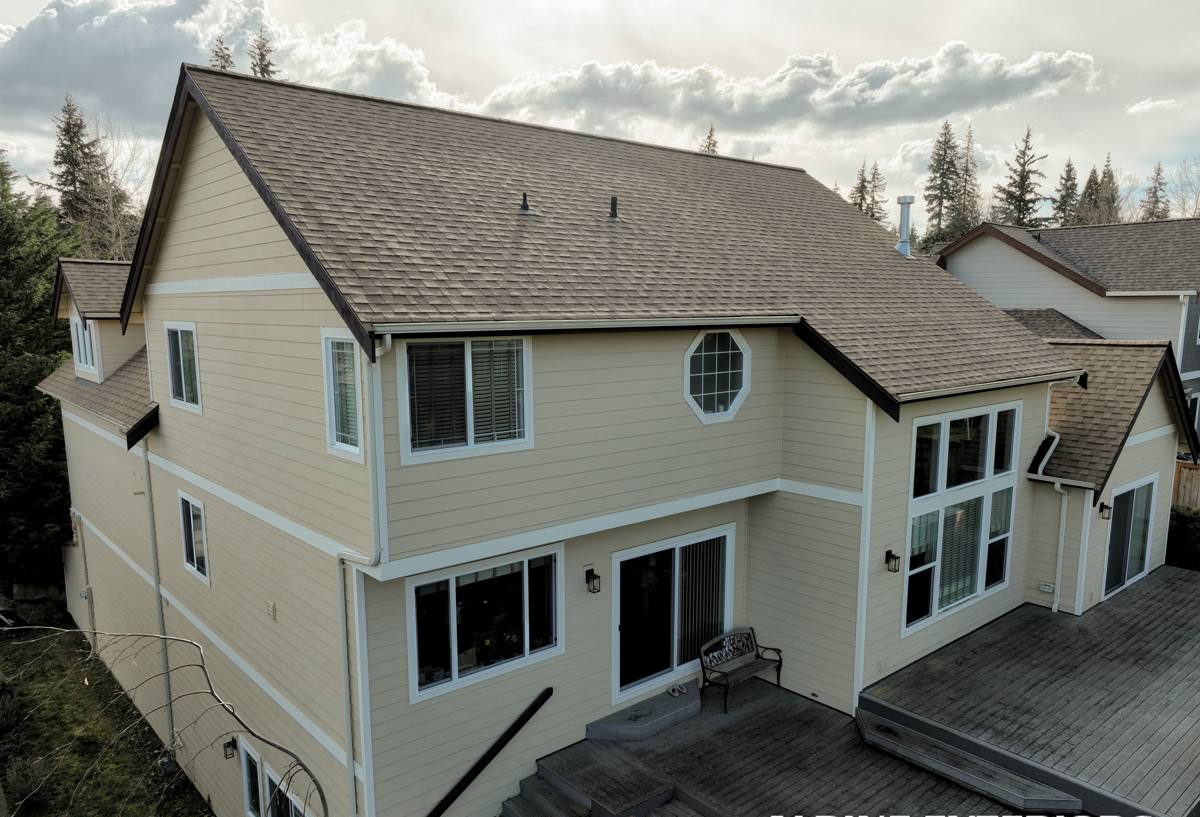
What Salt Air and Moisture Actually Do to Siding
Salt is hygroscopic — it pulls moisture out of the air and holds it against whatever surface it lands on. On a house near open water, that means siding, trim, and fasteners stay damp longer after every rain and every foggy morning than they would a few miles inland. That extra dwell time is what accelerates the real damage:
- Fastener corrosion. Nails and screws that aren't rated for coastal exposure can rust from the inside out, leaving surface stains and, eventually, siding that's no longer actually held on.
- Caulk and sealant breakdown. The joints and seams take the brunt of salt exposure and UV together, and they're usually the first thing to fail — long before the siding panels themselves show damage.
- Wood-fiber swelling. On products with a wood-based core — engineered wood siding, primed spruce, cedar — trapped moisture causes swelling, softening, and eventually delamination at the edges and butt joints.
- Moss and algae colonization. Shaded, north-facing walls near the water stay damp long enough for moss to actually root into the surface texture of some siding materials, not just sit on top of it.
None of this is unique to Semiahmoo Resort — it's Puget Sound geography doing what it does. But the combination of salt exposure, wind-driven rain, and shade is more concentrated here than on an inland lot, so the same siding mistakes show up faster.
Signs Your Siding Needs Repair — Not Just a Cleaning
A lot of siding problems near the water get written off as "just needs a wash," when they're actually early moisture damage. Before you assume a pressure wash will fix it, check for these:
- Soft or spongy spots when you press on the siding, especially near the ground or under windows
- Panels that look swollen, bulged, or slightly warped compared to the wall around them
- Paint or caulk that's peeling or pulling away right at the seams and joints
- Dark staining that comes back within weeks of cleaning it off
- Visible gaps opening up at corners, trim boards, or butt joints
- Rust streaks running down from fastener heads
- Moss or algae that's established itself in the texture of the siding, not just sitting on the surface film
If you're seeing more than one or two of these, it's worth having someone look at what's happening behind the siding, not just the surface.
Repair or Replace? What Actually Determines the Call
Homeowners near the water often assume any siding damage means a full re-side. Sometimes that's true — but often a section can be properly repaired if the damage is caught before it spreads. Here's what actually drives that decision:
| Factor | Repair Usually Makes Sense | Replacement Usually Makes Sense |
|---|---|---|
| Extent of damage | Isolated panels or a single wall section | Damage spread across multiple sides of the house |
| Sheathing underneath | Dry, sound framing once siding is opened up | Soft or rotted sheathing discovered behind the siding |
| Age and material | Newer fiber cement with isolated impact or seam damage | Original wood-based siding or aging material near the end of its service life |
| Moisture history | A one-time event — impact damage, a now-fixed leak | Chronic, recurring moisture intrusion or mold |
| Color and profile match | Factory-finished panels that can be closely matched | Older or faded siding where new panels would look visibly patched |
A repair is only worth doing if it actually solves the problem. If the sheathing underneath is already compromised, patching the siding over it just hides the damage for another season.
Why Color Match Matters More on a Repair
Repair work lives or dies on whether the patched section blends in. Factory-applied finishes hold their color far more consistently over time than field-painted siding, which is one of the practical reasons a repair on a home with a factory-finished product tends to look clean, while a repair on field-painted wood siding almost always shows a visible seam between old and new.
What a Correct Siding Repair Actually Involves
Finding the Real Cause, Not Just the Symptom
Swollen or stained siding is a symptom. The cause is almost always a water path — a failed seam, a gap at a penetration, missing or damaged flashing above a window or door, or a caulk joint that gave out months before anyone noticed. A repair that just replaces the visible damaged panel without finding and closing that water path will fail again, usually in the same spot.
Matching Material and Finish
A patch that doesn't match the surrounding siding in profile, exposure, and color sticks out immediately, especially on a home with a factory finish. Getting the reveal, fastener pattern, and joint layout consistent with the existing wall is part of doing the repair correctly, not just cosmetics.
Flashing, Water-Resistive Barrier, and Sealant Detail
Every seam we open back up gets proper flashing and a correctly lapped water-resistive barrier behind it before new siding goes back on — never siding-over-siding, and never caulk used as a substitute for flashing. Near open water, this step matters more than it does on an inland lot, because driving rain has more force behind it here.
Fastening for a Salt-Air Site
Corrosion-resistant fasteners, installed to the manufacturer's spec for exposure and spacing, are non-negotiable on a repair this close to the water. It's a small line item that determines whether the repair holds for years or starts showing rust streaks again within a season or two.
How Our Process Works for Semiahmoo Resort Jobs
- On-site assessment. We look at the damage, open up the affected section if needed, and check the sheathing and framing behind it before quoting anything.
- Honest scope and quote. You get a clear explanation of what's actually wrong, whether it's a repair or points toward a larger issue, and a straightforward price — no upsell to a full re-side unless the damage genuinely calls for it.
- Repair execution. We remove only what needs to come off, correct the underlying water path, and install matched material with proper flashing and fastening.
- Cleanup and walkthrough. We walk the finished repair with you so you can see exactly what was done and why.
Why We Repair and Re-Side With James Hardie Fiber Cement
We install James Hardie fiber cement siding exclusively — we don't install LP SmartSide, vinyl, Cemplank, Allura, primed spruce, or cedar. For repair work specifically, that standard matters: Hardie's fiber cement composition doesn't swell or rot the way wood-based siding can when it takes on moisture, and it's non-combustible, which is a real consideration on a Pacific Northwest coastline where wind and dry summer stretches both happen. Hardie's ColorPlus factory finish also means a repair section can be matched far more reliably than a field-painted product, and Hardie's HZ product lines are specifically engineered for climate zones like ours — wet winters, salt exposure, and temperature swings. Where a repair calls for new material, or where damage has spread enough that replacement makes more sense than patching, Hardie fiber cement is what we put on the wall.
Why It Matters That We Already Work in Semiahmoo Resort
A crew that's worked this specific area knows what salt exposure and moss actually do to siding out here versus a few miles inland, and that changes how we diagnose a problem the first time we look at it instead of guessing. We're also familiar with the color palettes and siding profiles common in communities like this one, which makes matching a repair section to existing siding faster and more accurate. Many waterfront and resort communities also have design or architectural expectations for exterior work, and knowing that going in — rather than finding out mid-project — keeps a repair job simple instead of turning into a paperwork delay.
None of that replaces doing the actual repair correctly. But it does mean fewer surprises, a faster accurate diagnosis, and a finished repair that actually blends into the house instead of sticking out.
If you're seeing swelling, staining, gaps, or moss taking hold on your Semiahmoo Resort home, we're glad to take a look and give you a straight answer on what it needs. Fill out the form below for a free, no-pressure estimate.