 Semiahmoo Siding
 Sumas Siding Has to Work Harder Than the Brochure Photos Suggest
Sumas sits inland in Whatcom County, but the weather here doesn't care about distance from the water. Homes still take on salt-tinged air moving through the region, driving rain that comes in sideways more often than straight down, and a moss season that can stretch for most of the year on shaded walls and north-facing elevations. Siding here isn't decorative — it's the first line of defense against moisture that's looking for any seam, nail hole, or butt joint to work its way behind the cladding and into the sheathing.
Cheap or poorly installed siding doesn't fail all at once. It fails slowly, behind the wall, where nobody sees it until there's a soft spot near a window or a musty smell in a closet on an exterior wall. That's the reality that shapes how we approach every siding job in this area, not just which product we hang.
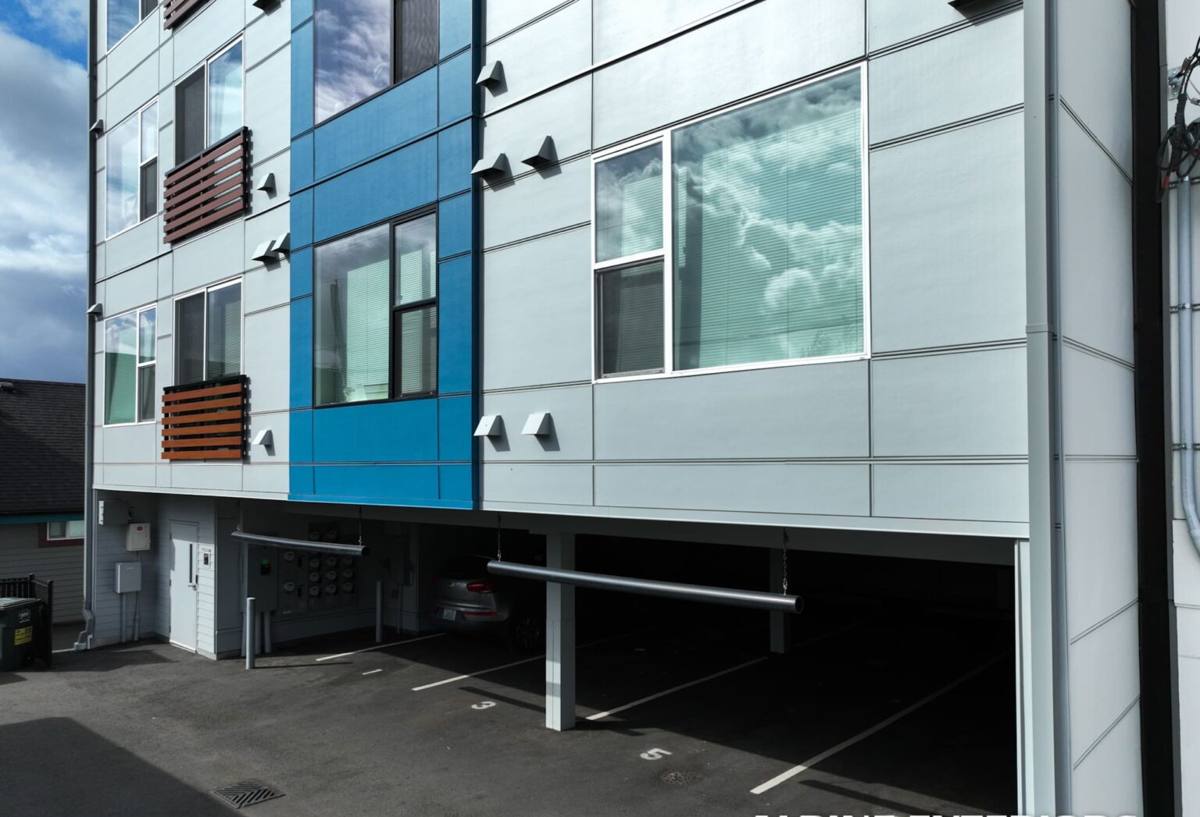
Why We Only Install James Hardie
Semiahmoo Siding Company installs James Hardie fiber cement siding exclusively. We don't install vinyl, LP SmartSide, Cemplank, Allura, primed spruce, or cedar. That's not a marketing angle — it's a standard we hold because of what we've seen happen to other products in exactly this kind of climate over a decade or two.
Vinyl expands and contracts with temperature swings and can crack in cold snaps. Wood and primed spruce need consistent repainting and are vulnerable to moisture and insect damage if maintenance ever slips. Other fiber cement brands may be reasonable products on paper, but we've standardized on one manufacturer, one set of installation details, and one warranty structure so we can guarantee our work with confidence instead of hedging. James Hardie is non-combustible, engineered specifically for wet climates, and finished at the factory rather than in the field — all things that matter more here than in a dry climate where siding has an easier job.
What "Climate-Engineered" Actually Means
James Hardie makes region-specific product formulations rather than one universal siding. The HZ5 formulation, built for the Pacific Northwest, is engineered to resist moisture absorption and freeze-thaw stress better than a version built for a hot, dry climate. For a Sumas home, that distinction isn't a footnote — it's the difference between siding that shrugs off a wet winter and siding that was never designed for one.
What a Correct James Hardie Installation Actually Involves
The product is only half the equation. We've reworked failed siding jobs where the boards were genuine James Hardie material but the installation ignored the manufacturer's own specifications — and the house paid for it in moisture damage a few years later. A correct install means:
- Proper water-resistive barrier and flashing installed and lapped correctly before a single board goes up
- Minimum clearance maintained between siding and grade, decks, patios, and roof lines so water has somewhere to go
- Correct fastener type, spacing, and placement — not just "close enough," since under- or over-driven nails are one of the most common causes of early failure
- Proper gaps at butt joints and trim, caulked and sealed per manufacturer specification rather than jammed tight
- Factory-cut edges kept exposed wherever possible, since field-cut edges need to be primed and sealed to hold up long term
None of this is exotic. It's all published in James Hardie's own installation guidelines. The problem is that skipping steps is faster and cheaper in the short run, and most homeowners can't tell the difference by looking at a finished wall — until the difference shows up as a repair bill five or ten years later.
Choosing the Right Hardie Product Line for a Sumas Home
James Hardie makes several product lines, and the right one depends on the home's architecture as much as the climate. Most Sumas homes we work on end up on HardiePlank lap siding or a HardiePanel vertical system, sometimes with HardieShingle accents on gables or dormers.
| Product | Typical Use | Why It Fits This Area |
|---|---|---|
| HardiePlank Lap Siding | Full-wall replacement, most common style | Sheds driving rain efficiently with proper lap and overlap |
| HardiePanel Vertical Siding | Modern facades, accent walls, garages | Fewer horizontal joints for water to find |
| HardieShingle | Gables, dormers, accent sections | Traditional look without wood's moisture and moss vulnerability |
| HardieTrim | Corners, window and door casings, fascia | Matches expansion behavior of the field siding, reducing seam gaps over time |
ColorPlus Technology — Hardie's factory-applied, baked-on finish — matters more here than in a dry climate. A factory finish resists the fading and moisture intrusion at the paint film that field-applied paint is prone to, which is exactly the failure point that moss and driving rain exploit over time.
Our Process, Start to Finish
- Walkthrough and assessment — we inspect the existing siding, sheathing, flashing, and any problem areas (soft spots, moss buildup, staining) before quoting anything
- Written estimate — a clear scope covering removal, product line and color, trim work, and any sheathing or flashing repair we expect to need
- Tear-off and inspection — once old siding comes off, we check the sheathing underneath; this is where hidden moisture damage from a previous installation often shows up
- Weather barrier and flashing — installed and lapped correctly around every window, door, and penetration before any Hardie board is hung
- Installation to manufacturer spec — correct fastening, gapping, and clearances, not shortcuts
- Trim, caulking, and final detailing — the small details that determine whether water sheds away from the house or finds a way in
- Final walkthrough — we go over the finished job with the homeowner before calling it done
Why a Crew That Already Works Sumas Matters
A lot of siding problems in Whatcom County trace back to installers who normally work in drier regions and treat every job the same regardless of climate. A crew that works this area regularly knows which walls take the worst of the driving rain, where moss builds up fastest, and how the local moisture cycle actually behaves through the wet season and into summer.
That local familiarity also matters for the practical side of the job — knowing what county permitting expects for re-siding work, understanding how older Whatcom County homes were originally built and where their weak points tend to be, and having already worked through the seasonal scheduling realities of doing exterior work in this climate. It's the difference between a contractor learning on your house and one who already knows the answers.
Maintenance and Longevity After Installation
James Hardie siding is genuinely low-maintenance compared to wood or vinyl, but "low-maintenance" doesn't mean "no maintenance," especially with a moss season this long. A few habits keep it performing the way it's designed to:
- Rinse siding annually to clear pollen, dust, and early moss growth before it takes hold
- Keep gutters clear so overflow doesn't run down the wall face repeatedly
- Trim back landscaping that keeps siding shaded and damp for long stretches
- Re-caulk trim joints if you notice gaps or cracking over the years
- Watch for any soft spots, staining, or bubbling paint, which can signal moisture getting behind the siding rather than a surface issue
Done right, a James Hardie installation should need very little beyond this for a long time. James Hardie backs its siding with a 30-year non-prorated limited warranty on the substrate and a separate finish warranty on ColorPlus products — one of the stronger, more straightforward warranty structures in the industry, and part of why we build our business around this one manufacturer instead of juggling several.
What Drives Cost on a Sumas Siding Job
| Factor | Why It Matters |
|---|---|
| Home size and story count | More wall area and staging complexity for two-story homes |
| Condition of existing sheathing | Hidden moisture damage found at tear-off can add repair scope |
| Trim and architectural detail | Gables, dormers, and multiple roof lines add cutting and flashing work |
| Product line selection | HardiePanel, HardiePlank, and HardieShingle carry different material and labor costs |
| Access and site conditions | Tight lots, slopes, or landscaping close to the home affect staging and setup time |
We won't quote a number without seeing the house — anyone who does is guessing, and on a re-siding job that guess usually gets revised once the old siding comes off and the sheathing underneath tells the real story.
Get a Straight Answer on Your Home
If moss, staining, or aging siding is starting to show on a Sumas home, it's worth getting a real look before winter weather makes the problem worse. We'll walk the exterior, tell you honestly what we find, and put together a clear, no-pressure estimate for James Hardie siding done to spec — no hard sell, just what your house actually needs.