 Semiahmoo Siding
 Deck Replacement in Bellingham: Built for the Water, Not Against It
Bellingham sits close enough to Semiahmoo Bay and the Salish Sea that a deck here lives a different life than a deck fifty miles inland. Salt-laden air, long wet stretches through fall and winter, and a moss season that can run eight months out of the year all work on wood, fasteners, and footings in ways that a generic "deck company" from outside the area doesn't always plan for. When we replace a deck in Bellingham, we're not just swapping old boards for new ones — we're rebuilding the structure underneath so it can actually stand up to this specific climate for the next few decades.
This page is about one job, done right, in this one area: full deck replacement for Bellingham homes. Not a repair, not a resurfacing — a real replacement that starts at the ledger board and works out.
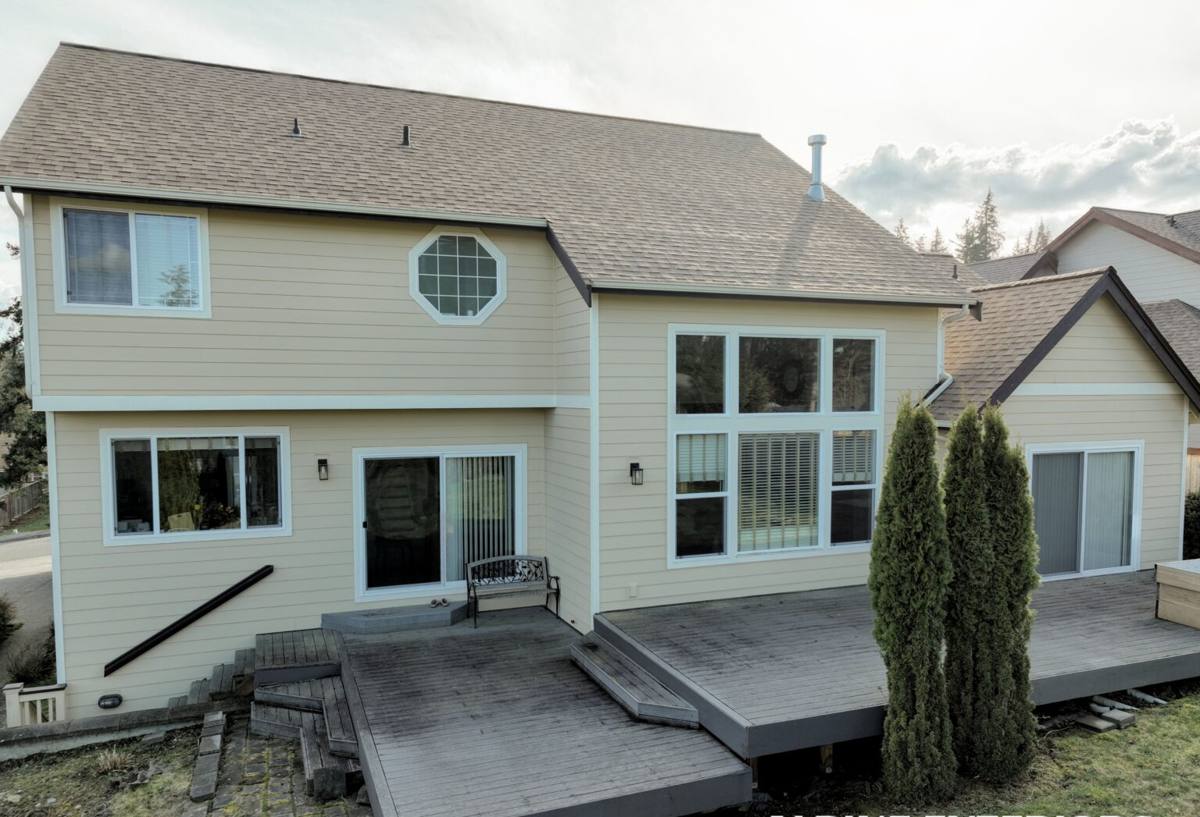
Why Bellingham's Climate Is Hard on Decks
Salt air and moisture
Homes closer to the water pick up airborne salt that accelerates corrosion on fasteners, hardware, and any metal flashing that isn't rated for it. Combine that with Whatcom County's rainfall pattern — long stretches of steady, driving rain rather than short heavy downpours — and you get wood that stays damp for days at a time instead of drying out between storms.
Moss and organic buildup
Shaded decks, north-facing decks, and anything under overhanging trees will grow moss here almost as a default condition. Moss holds moisture against the deck surface and framing, which is exactly what accelerates rot in untreated or poorly finished lumber. A deck that isn't detailed for drainage and airflow will hold onto that moisture long after the rain stops.
Freeze-thaw cycling
Bellingham doesn't get brutal winters, but it does get enough freeze-thaw cycling to stress footings, fasteners, and any joints where water has already gotten in. Small cracks and loose connections get worse every winter, not better.
Signs a Bellingham Deck Needs Full Replacement, Not a Repair
- Soft or spongy spots in the decking boards, especially near the house or in shaded corners
- Visible rust streaking or corroded fasteners around joist hangers and ledger bolts
- Persistent moss or algae that comes back within weeks of cleaning
- Gaps or movement where the ledger board meets the house siding or rim joist
- Railings that flex, wobble, or feel less solid than they used to
- Footings or posts that show cracking, heaving, or visible settling
- A deck more than 20-25 years old that has never had the substructure inspected
If most of what's failing is the surface boards and the framing underneath is still sound, a resurfacing or partial repair might be the honest answer — we'll tell you that during the inspection instead of selling a full replacement you don't need.
What a Correct Deck Replacement Actually Involves
Starting at the ledger connection
The ledger board — where the deck attaches to the house — is the single most common failure point on decks in wet climates, and it's the one homeowners can't see. A correct replacement means proper flashing between the ledger and the house wall, lag bolts or through-bolts rated for the load, and a clear gap or flashing detail that keeps water from wicking into the house framing itself. This is not optional detailing; it's the difference between a deck that lasts and one that quietly rots the wall behind it.
Framing and fasteners suited to a marine-influenced climate
We frame with pressure-treated lumber rated for ground contact where it's relevant, and we use hot-dip galvanized or stainless-steel hardware rather than standard coated fasteners, since salt air and chronic moisture will corrode undersized or mismatched hardware years before the wood itself gives out.
Joist protection and drainage
Joist tape over the top of each joist keeps standing water from sitting directly on cut lumber, which is one of the cheapest and most effective upgrades available on a modern deck rebuild. We also grade and space framing to let water actually leave the structure instead of pooling against ledgers, posts, or blocking.
Footings built for this ground and this weather
Post footings are set below frost depth and sized for the actual load of the deck, not the minimum. Whatcom County soil and moisture conditions mean under-built footings show their weakness over years, not months — settling and cracking that a homeowner won't notice until the deck itself starts to feel unstable.
Decking, railing, and finish
Whether you go with wood or composite (more on that below), the finish work — board spacing, fastener pattern, railing attachment, stair stringers — is where a rushed crew cuts corners that show up as squeaks, gaps, and premature wear within a few winters.
Choosing Decking Material for a Bellingham Home
There's no universally "right" decking material — the right choice depends on how much maintenance you want to do, your budget, and how exposed the deck is to sun, shade, and moisture.
| Material | Upfront Cost | Maintenance | How It Handles This Climate |
|---|---|---|---|
| Pressure-treated wood | Lowest | Annual cleaning, periodic sealing/staining | Needs consistent upkeep to resist moss and moisture; skipped maintenance shows fast in this climate |
| Cedar | Moderate | Regular sealing to maintain color and resist moisture | Naturally moisture-resistant but still needs care in a wet, mossy environment |
| Composite decking | Higher | Occasional washing, no sealing/staining | Resists rot and moisture absorption well; some early composite products had issues with moisture and mold in shaded, damp conditions, so board selection and installation detail matter |
| PVC decking | Highest | Minimal — washing only | Fully resists moisture absorption and rot; best long-term option for heavily shaded or moss-prone decks |
Our standard is to recommend the material that fits how you'll actually maintain the deck, not the highest-margin option. For a heavily shaded, moss-prone deck, we'll often steer toward composite or PVC precisely because wood in that spot requires upkeep most homeowners don't keep up with. For a sunny, well-ventilated deck, wood remains a perfectly good, less expensive option as long as you're willing to maintain it.
Our Deck Replacement Process
- On-site inspection: We check the ledger connection, framing, footings, and existing decking to determine what's actually failing and whether full replacement is warranted.
- Honest scope and estimate: You get a written estimate that separates structural work from surface/material choices, so you can see exactly what you're paying for.
- Permitting: Deck replacement typically requires a permit through the local jurisdiction; we handle that process rather than leaving it to the homeowner.
- Demo and structural rebuild: Old decking, framing, and any compromised footings come out. We rebuild the ledger flashing, framing, and footings to current standards.
- Decking, railing, and finish work: Installation of your chosen decking material, railing system, and stairs, with attention to fastener pattern and drainage detail.
- Final walkthrough: We walk the finished deck with you before calling the job done.
Why a Local Semiahmoo Crew Matters for This Job
Deck replacement done by a crew that already works around Semiahmoo and Bellingham means the ledger flashing detail, fastener selection, and drainage planning are second nature — not something re-learned on your project. We already know what moss-prone, salt-air conditions do to an under-detailed deck because we've seen it fail on other homes in this area. That local familiarity also means we're not guessing at permitting requirements or inspection expectations for Whatcom County jobs; we've been through that process before and know what inspectors are looking for.
A crew based elsewhere may build a deck to a generic spec that works fine in a drier climate but skips the marine-air detailing this region actually needs. That shows up as premature fastener corrosion, ledger rot, or moss buildup within a handful of years — problems that cost more to fix than they would have to prevent at the start.
What Affects the Cost of a Deck Replacement
| Factor | Why It Matters |
|---|---|
| Deck size and layout | Square footage, multiple levels, and stairs all add material and labor |
| Decking material | Wood, composite, and PVC carry different material costs and installation labor |
| Substructure condition | Footings or framing that need full rebuilding add cost beyond surface-level replacement |
| Railing system | Basic wood railing versus composite, metal, or cable railing changes both material and labor cost |
| Site access | Difficult access, grade changes, or tight side-yards can add time to demo and material handling |
| Permitting requirements | Structural changes, height, or attachment to the home may trigger additional permit review |
Because these factors vary so much house to house, we don't quote deck replacements over the phone — we look at the actual structure first.
Maintaining Your New Deck in This Climate
However well a deck is built, a little seasonal attention keeps it performing for decades in this environment:
- Clear leaves and debris from between boards before fall rains set in, so moisture doesn't sit trapped against the surface
- Wash off moss and algae growth before it has time to establish and hold moisture against the decking
- Check railing connections and stair fasteners annually for any looseness or corrosion
- Re-seal or re-stain wood decking on the schedule appropriate to the product — skipping this in a wet climate shortens the material's life significantly
- Keep gutters and downspouts near the deck clear so runoff isn't draining directly onto or under the structure
If your deck is showing its age or you're just not sure whether it needs repair or full replacement, we're happy to take a look. Reach out for a free, no-pressure estimate using the form below.