 Semiahmoo Siding
 Why Birch Bay Decks Wear Out Faster Than the Manual Says
Every deck manufacturer publishes a maintenance schedule based on a generic climate that doesn't exist in Birch Bay. Here, you're dealing with a marine environment where salt-laden air off the water sits on wood and fastener heads year-round, rainfall arrives sideways during winter storms, and shaded, north-facing decks under tree cover can stay damp for weeks at a stretch. Add in a moss season that can run from October through April in a wet year, and you have conditions that shorten the realistic service life of ledger boards, joists, and fasteners well below what a homeowner in a drier inland county would experience.
We're not telling you this to sell fear — we're telling you because it changes what "deck repair" actually means out here. A repair that only addresses the board you can see and ignores the structure underneath is a repair you'll be paying for again in two or three years.
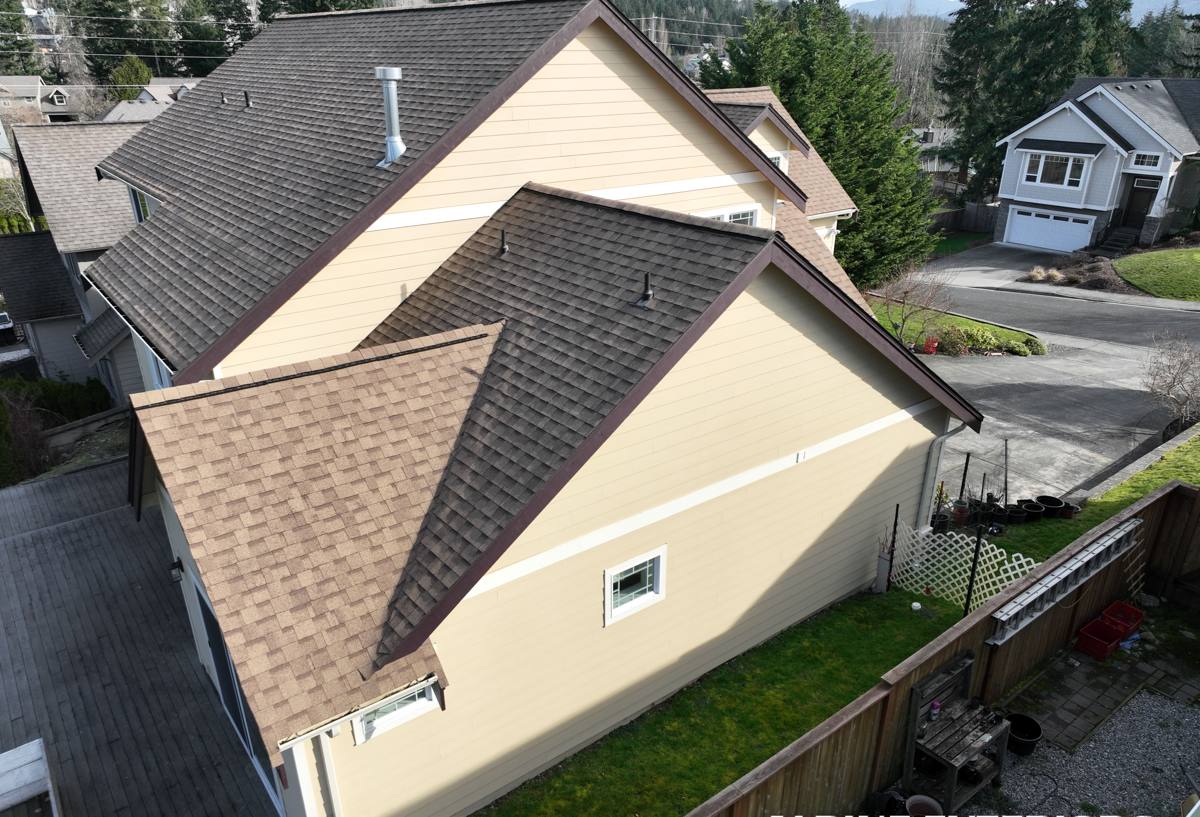
What Salt Air and Moss Actually Do to a Deck
Salt Air and Fastener Corrosion
Coastal salt air accelerates galvanic corrosion on screws, nails, and structural hardware — joist hangers, post bases, ledger bolts. Once a fastener starts rusting, it loses grip strength long before it looks obviously bad from the top. We see decks in this area where the decking boards look fine but the hardware holding the frame together is compromised underneath. That's a safety issue, not a cosmetic one.
Driving Rain and Water Intrusion
Wind-driven rain off Semiahmoo Bay and the Strait doesn't fall straight down — it gets pushed under railing caps, into end-grain cuts, and behind ledger flashing that wasn't detailed correctly the first time. Water that gets behind a ledger board and can't dry out is one of the most common causes of rot we find at the house connection point, which is also the single most structurally important part of any attached deck.
Moss, Algae, and Trapped Moisture
A long moss season means organic growth holds moisture against wood and composite surfaces for extended periods. Beyond the slip hazard, moss and algae growing in the gaps between boards trap debris and water, which keeps that contact point wet long after the rest of the deck has dried. Over a few seasons, this is where you'll find soft spots and early decay, even on decks that otherwise look well cared for.
Whatcom County's Building Considerations
Whatcom County follows Washington State building code requirements for deck construction, including guardrail height, baluster spacing, and structural connection standards. When we repair a deck, we bring it up to current fastening and flashing standards where the repair scope allows — not just patch it to match whatever was there before, especially if what was there before is part of why it failed.
Signs Your Birch Bay Deck Needs Repair, Not Just Cleaning
- Boards that feel spongy or flex noticeably underfoot, especially near the house
- Visible gaps or rust streaks around joist hangers and structural hardware
- A ledger board area that stays damp longer than the rest of the deck after rain
- Railings or posts that wiggle when you push on them
- Persistent moss or dark staining in the same spots every year, even after cleaning
- Nail heads popping up or screws that spin freely without biting
- Visible daylight or gapping where the deck meets the house wall
- A grayed, splintering surface on older wood decking that catches clothing or bare feet
Any one of these on its own might be minor. Several together, particularly near the ledger or support posts, usually means the structure needs a closer look before we talk about surface repairs.
What a Correct Deck Repair Actually Involves
A repair done right in this climate starts below the decking, not on top of it. Here's the order we work in:
1. Structural Inspection First
Before replacing a single board, we check the ledger connection, joist condition, post bases, and hardware. This is the step that gets skipped when a repair is priced too low to be thorough — and it's the step that actually determines whether the deck is safe.
2. Address the Water Path
If water is getting behind flashing or pooling at a connection point, we fix the path before we fix the symptom. Replacing a rotted ledger board without correcting the flashing detail that let water in just buys you a few more years before the same repair.
3. Replace What's Actually Failed
We replace decking, joists, or framing members based on what the wood tells us — sound wood stays, compromised wood goes. We use fasteners and hardware rated for coastal/marine exposure so the repair doesn't corrode out ahead of the material around it.
4. Rebuild Railings and Connections to Code
Loose railings and posts get reset with proper structural connections, not just re-screwed in the same failing holes.
5. Finish for the Environment
Depending on the material, that means proper sealing of cut ends, a moisture-appropriate finish schedule, or discussing composite/capped materials for areas that stay shaded and damp.
Repair vs. Replacement: How We Help You Decide
| Situation | Repair usually makes sense | Replacement usually makes sense |
|---|---|---|
| Ledger/framing condition | Isolated rot, structure otherwise sound | Widespread rot at multiple joists or ledger |
| Age of deck | Under 15-20 years, good bones | Original construction predates current code details |
| Surface condition | Isolated bad boards, rest is stable | Most boards are cupping, splitting, or gray throughout |
| Railings/posts | Loose but structurally intact | Rotted posts, undersized or non-compliant spacing |
| Budget goal | Extend usable life a number of years | Want a long-term, lower-maintenance material |
We'll give you an honest read on which category your deck falls into. We don't upsell full replacements on decks that just need targeted work, and we won't recommend patch repairs on a frame that's failing in multiple places — that's not a repair, it's a delay.
Materials: What Holds Up Best in This Climate
Pressure-treated framing lumber remains standard for structural components and performs well when properly flashed and fastened with corrosion-resistant hardware. For decking surfaces exposed to Birch Bay's salt air and moss season, we talk through the trade-offs honestly:
- Wood decking — lower upfront cost, natural look, but requires more frequent cleaning and refinishing to keep moss and moisture from taking hold in a marine climate
- Composite/capped composite — higher upfront cost, but resists moisture absorption and doesn't need staining, which matters when moss season runs half the year
- Hardware and fasteners — regardless of decking material, we use stainless or coated hardware rated for coastal exposure on every repair; this is not a place to save money
We don't push one material as universally "best" — we tell you what each one actually costs you in maintenance time versus upfront price, and let you weigh that against how you use the deck.
Our Process for Birch Bay Deck Repairs
- On-site inspection — we get under the deck where possible, check the ledger, and test boards and railings by hand
- Written scope and estimate — you see exactly what's being replaced and why, no vague line items
- Scheduling around the weather — we plan structural work for drier windows so replaced framing isn't exposed to rain before it's protected
- The repair itself — done in the order above: structure, water path, replacement material, finish
- Walkthrough — we show you what was done and what to watch going forward
Why Local Experience in Birch Bay Matters
A crew that only sees a deck once already knows less than one that's worked on multiple decks in the same few miles of coastline. We've seen how ledger connections fail on homes exposed to wind off the water, which shaded lots hold moss longest, and which fastener choices from years past are now the reason a deck needs work today. That local pattern recognition is the difference between a repair that guesses and one that knows what to check first.
We're a Whatcom County-based crew, and Birch Bay is part of the area we work regularly — not a stop on a route from somewhere else. That means we're accountable to the same community we're working in, and we're not disappearing after the invoice clears.
Maintaining Your Deck Between Repairs
- Sweep debris out of board gaps regularly so moisture and organic material don't sit trapped
- Address moss with a gentle cleaning approach rather than aggressive pressure washing, which can damage wood fibers and open the surface to more water absorption
- Check railings and stair connections for movement once or twice a year
- Keep gutters and downspouts near the deck clear so runoff isn't dumping extra water onto or under it
- Reseal or refinish wood decking on the schedule appropriate to the product — don't wait until it's visibly gray and dry
If your Birch Bay deck has soft spots, loose railings, or that stubborn moss that comes back every year, we're happy to take a look and give you a straight answer on what it needs. Fill out the form below for a free, no-pressure estimate.