 Semiahmoo Siding
 Birch Bay Roofs Work Harder Than Most
Birch Bay sits right on the water, which means the homes here take on a different kind of weather than a roof ten miles inland. Salt-laden air off the bay accelerates corrosion on exposed metal fasteners and flashing. Wind-driven rain off the Strait doesn't just fall straight down — it pushes sideways under shingle tabs and around poorly sealed penetrations. And the shaded, damp stretches of the roofing season here give moss and moisture months to work into anything that isn't properly ventilated or flashed. A roof that's correctly installed for a drier, calmer climate can start showing problems in Birch Bay years before it should.
That's the case for treating a new roof installation here as a climate-specific job, not a generic one. The materials, fastening patterns, flashing details, and ventilation all need to account for what this stretch of Whatcom County actually throws at a house.
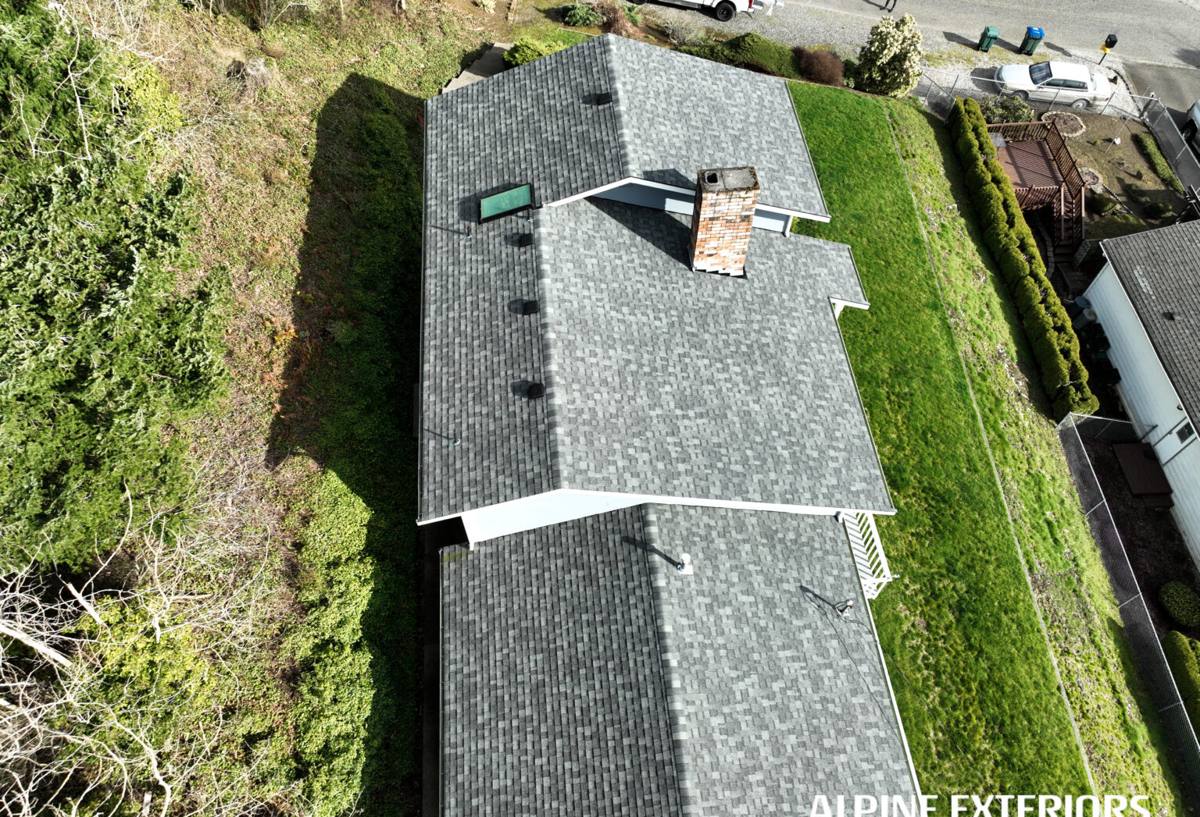
What Birch Bay's Climate Actually Does to a Roof
Salt Air and Corrosion
Homes within a mile or two of Semiahmoo Bay or the Strait of Georgia see salt carried in on the wind, settling on metal roofing components, fasteners, and flashing. Over time, ungalvanized or under-rated hardware corrodes faster near the water than it would even a few miles inland. This is why fastener and flashing selection matters as much as the shingle or panel choice itself.
Driving Rain
Birch Bay gets weather systems moving off the water with real wind behind them. Rain doesn't fall straight — it drives sideways under improperly lapped shingles, around chimney flashing, and into valleys that weren't sealed with enough overlap. A roof built for calmer conditions often skips details that only matter when wind-driven rain is a regular event, not an occasional storm.
Moss and Prolonged Moisture
The Pacific Northwest's long damp season gives moss plenty of time to establish, especially on north-facing slopes and shaded sections of roof near trees. Moss holds moisture against the roofing surface, works its way under shingle edges, and — left unchecked — shortens the life of the roof underneath it. A correctly installed roof accounts for drainage and material choice with this in mind from day one.
What a Correct New Roof Installation Involves
A new roof is more than laying down shingles or panels over what's already there. Done right, it includes several layers that each do a specific job:
- Full tear-off: removing old roofing down to the deck so hidden rot, soft spots, or prior water damage can actually be found and fixed — not covered up.
- Deck inspection and repair: replacing any plywood or sheathing that's soft, delaminated, or water-stained before new roofing goes over it.
- Ice-and-water barrier at vulnerable points: eaves, valleys, and roof-to-wall transitions get a self-adhering waterproof membrane, not just felt paper, because these are the spots wind-driven rain finds first.
- Synthetic underlayment across the field: a water-resistant layer under the whole roof that adds a second line of defense if wind ever drives moisture past the primary roofing material.
- Proper flashing: new metal flashing at chimneys, skylights, sidewalls, and any roof penetration — reused or patched old flashing is one of the most common causes of leaks after a "new" roof.
- Balanced ventilation: intake at the eaves and exhaust at the ridge, sized to the attic, so moisture doesn't get trapped under the deck where it feeds rot and mold from the inside.
- Correct fastening and material installation: nail placement, exposure, and pattern that match manufacturer specs for the wind exposure this area actually sees.
Skip any one of these and the roof might look fine for a season or two before the shortcut shows up as a leak, premature wear, or a voided warranty.
Choosing a Roofing Material for Birch Bay
There's no single "best" roofing material for every house — the right choice depends on the home's exposure to wind and salt air, the roof's pitch and shading, and the homeowner's budget and maintenance preferences. Here's how the common options compare for a Birch Bay property:
| Material | Typical Lifespan | How It Handles This Climate | What to Consider |
|---|---|---|---|
| Architectural asphalt shingle | 25-30 years | Good wind and rain performance when installed with proper nailing and sealant strips; algae-resistant granules help slow moss and dark streaking | Most cost-effective option; quality of installation matters more than the shingle brand itself |
| Metal roofing (standing seam or panel) | 40-60+ years | Sheds driving rain well and resists moss buildup on steeper pitches; needs corrosion-rated fasteners and flashing near the water | Higher upfront cost; noise and expansion/contraction detailing should be handled by an experienced installer |
| Cedar shake/shingle | 20-30 years with upkeep | Traditional look but holds moisture longer than composite or metal, which shortens life in a damp, moss-prone climate | Requires more regular maintenance and treatment in this specific climate than other options |
| Synthetic/composite shingle | 30-50 years | Resists moisture absorption better than wood; performs well against wind-driven rain | Higher material cost than standard asphalt; product quality varies by manufacturer |
We'll walk through these trade-offs honestly during an estimate — including where a given product's maintenance burden or moisture behavior makes it a poor fit for a shaded, water-exposed roof, even if it performs fine elsewhere.
Ventilation: The Detail Most Roofs Get Wrong
Attic ventilation doesn't get much attention because it's invisible once the roof is finished, but it's one of the biggest factors in how long a roof actually lasts in a climate like this. Warm, moist air from inside the house rises into the attic. Without balanced intake and exhaust, that moisture condenses against the underside of the roof deck, which leads to sheathing rot, mold, and — in winter — ice damming at the eaves. A properly vented roof pulls that moisture out before it becomes a problem, and it also helps shingles run cooler, which extends their service life. This is a step that's easy to shortcut and hard to notice until the deck underneath is already damaged.
Our Installation Process
- On-site inspection and estimate: we look at the current roof, attic ventilation, decking condition where visible, and the home's exposure to wind and water before recommending anything.
- Material selection: we go over the honest trade-offs between shingle, metal, and other options based on your roof's pitch, shading, and budget.
- Scheduling around weather: Whatcom County's rain patterns mean timing the tear-off and dry-in phase carefully so the deck isn't left exposed longer than necessary.
- Tear-off and deck inspection: old roofing comes off, the deck gets inspected, and any damaged sheathing is replaced before anything new goes down.
- Waterproofing and flashing: ice-and-water membrane at eaves and valleys, synthetic underlayment across the field, and new flashing at every penetration.
- Ventilation check and correction: intake and exhaust venting sized and balanced for the attic, not just left as-is from the old roof.
- Material installation: shingles or panels installed to manufacturer spec for fastening pattern and exposure, accounting for this area's wind conditions.
- Final walkthrough: cleanup, magnetic nail sweep, and a review of the finished roof with the homeowner.
Signs a Birch Bay Roof Needs Replacement, Not a Repair
Not every roofing problem means a full replacement, but there's a point where patching stops making financial sense. Watch for:
- Granule loss showing up in gutters or downspouts, especially on a roof over 15-20 years old
- Curling, cracking, or missing shingles across multiple areas rather than one isolated spot
- Visible sagging anywhere on the roofline, which can point to deck or structural issues underneath
- Persistent moss growth that keeps returning after cleaning, particularly on shaded or north-facing slopes
- Water stains or damp spots on interior ceilings, which usually mean moisture has already gotten past the roofing surface
- Daylight visible through the attic decking or soft spots felt when walking the roof
- Multiple past repairs in different spots rather than one contained issue
If a roof is showing two or more of these, a new installation is usually more cost-effective over time than continuing to chase individual repairs.
Permits and Timeline in Whatcom County
Roof replacements in Whatcom County typically require a building permit, and we handle that process as part of the job so it's not left on the homeowner's plate. Timeline depends on the size and pitch of the roof and the material chosen, but most single-family roof replacements move from tear-off to finished roof within a few days of dry weather. Because Birch Bay's rain patterns can shift quickly, we plan the tear-off and dry-in stages around the forecast so the deck isn't sitting exposed longer than it needs to be.
Why a Local Crew Matters for This Job
A roofing crew that regularly works Birch Bay and the surrounding Semiahmoo area already knows which details matter here — where salt air corrodes fasteners fastest, which roof orientations hold moss the longest, and how wind off the bay tends to drive rain into valleys and flashing. That's knowledge that only comes from doing this specific work in this specific place, and it shows up in the small decisions made on the job: fastener grade, flashing overlap, ventilation balance. It's also easier to get warranty service, follow-up questions answered, or a maintenance check handled by a crew that's a short drive away rather than one that treats the trip out to the water as a one-time job.
If your roof is showing its age or you're planning ahead for a replacement, we're happy to take a look and give you a straightforward, no-pressure estimate — just fill out the form below.