 Semiahmoo Siding
 Windows in Blaine Work Harder Than Windows Almost Anywhere Else
Blaine sits right on Semiahmoo Bay, close enough to the water that salt air is a daily fact of life for every window, door, and piece of trim on a house. Add in wind-driven rain coming off the Strait of Georgia and a moss season that can stretch from October into May, and you've got a climate that finds every weak point in a window system — not just the glass, but the frame, the flashing, and the seal around it. A window that performs fine in a drier inland climate can fail early here if it wasn't built and installed with this specific environment in mind.
This page is about one job, done right, in one place: energy-efficient window installation and replacement for homes in the Blaine area. Not a general overview of window types — a straight answer on what actually holds up here, what a correct installation looks like, and why local experience matters more with windows than with almost any other exterior product.
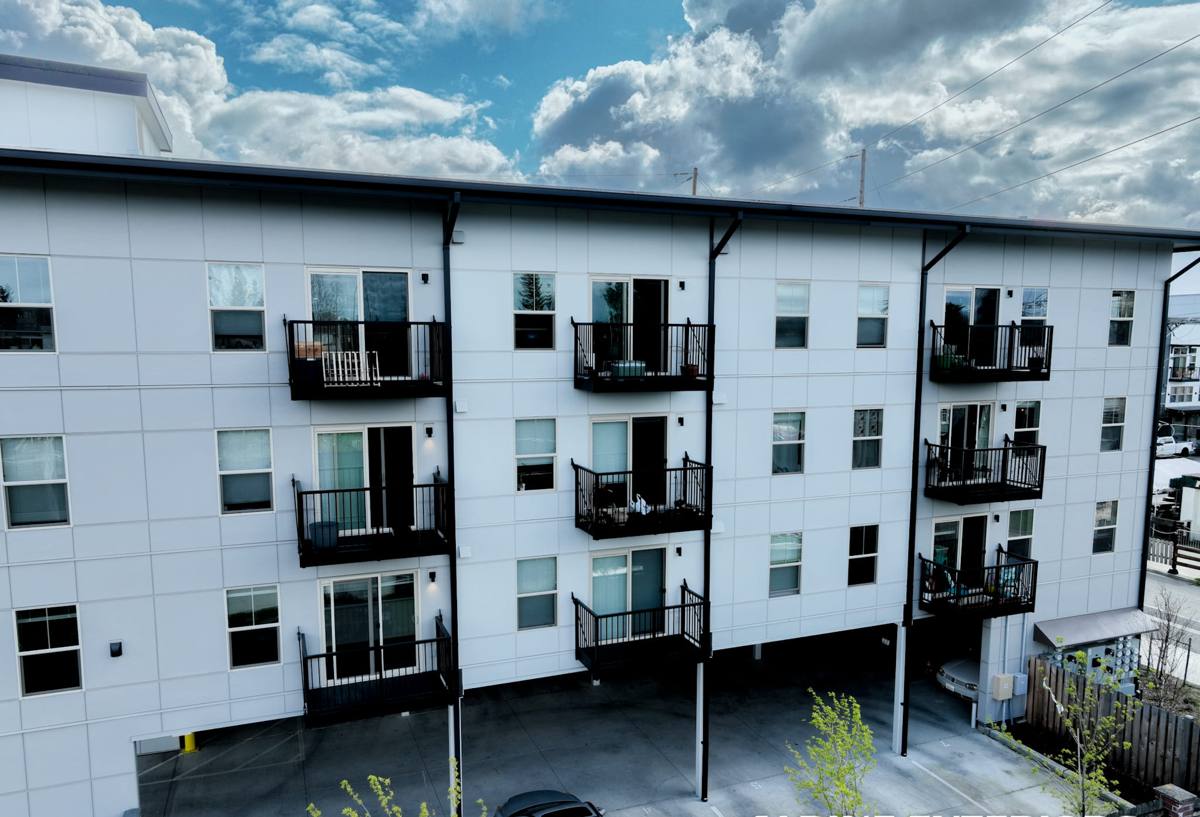
What This Climate Actually Does to Windows Over Time
Salt Air and Metal Fatigue
Homes within a mile or two of Semiahmoo Bay deal with airborne salt settling on every exterior surface. On windows, that means faster corrosion of exposed hardware — hinges, locks, balance mechanisms, and any unprotected metal fasteners. It also accelerates the breakdown of poor-quality weatherstripping and gasket materials, which is exactly what lets air and moisture start sneaking in a few years before they should.
Wind-Driven Rain, Not Just Rain
Whatcom County gets a lot of rain, but the bigger issue for windows specifically is wind-driven rain — storms that push water sideways into a wall instead of straight down. A window that's watertight in a light drizzle can still leak under sideways wind pressure if the flashing details behind the trim aren't correct. This is a installation problem far more often than it's a product problem.
Moss Season and Trapped Moisture
Long stretches of damp, low-light weather keep north-facing and shaded walls wet for days at a time. Moss and algae growth around window trim isn't just cosmetic — it holds moisture against the frame and siding longer, which matters a lot if the water-resistive barrier behind the window wasn't properly lapped and sealed during the original install.
What "Energy-Efficient" Actually Means Here
Energy-efficient windows are rated on a few specific numbers, and in a marine climate like Blaine's, not all of them matter equally. U-factor (how well the window resists heat loss) matters more here than Solar Heat Gain Coefficient, since the Pacific Northwest doesn't deal with the intense summer sun load that Southern or high-desert climates do. A lower U-factor keeps heat inside during our long, damp, mild-but-chilly winters — that's where the actual energy savings show up on a heating bill.
Frame material matters just as much as glass. In a salt-air, high-moisture environment, how a frame handles years of dampness without warping, rotting, or corroding is often the bigger factor in long-term performance.
| Frame Material | How It Handles This Climate | Trade-Offs |
|---|---|---|
| Vinyl | Resists moisture and salt corrosion well; no painting needed | Can expand/contract with temperature swings; quality varies a lot by manufacturer grade |
| Fiberglass | Very stable dimensionally, holds paint well, strong resistance to moisture damage | Higher upfront cost than vinyl |
| Wood / Wood-Clad | Good insulating properties, classic appearance | Exposed wood needs consistent maintenance in this rain and moss exposure; cladding must be fully sealed at joints |
| Aluminum | Strong and low-maintenance | Poor insulator unless thermally broken; more prone to condensation in cold, damp conditions |
There's no single "best" material for every home — it depends on your budget, your home's exposure to wind and salt, and how much upkeep you want to do. We'll walk through the honest trade-offs for your specific house rather than pushing one option.
The Installation Details That Matter More Than the Glass
Here's something worth knowing before you hire anyone: two identical windows, installed by two different crews, can perform completely differently five years later. In a climate like Blaine's, the installation is often the deciding factor in whether a window stays energy-efficient and leak-free, or starts failing early.
- Sill pan flashing — a properly sloped, sealed pan under the window directs any water that gets past the frame back outside instead of into the wall cavity.
- Integration with the water-resistive barrier — the window's flashing needs to be lapped correctly with the house wrap or building paper above and below it, so water always sheds downward and outward, never behind the layers.
- Correct shimming and squaring — a window that isn't shimmed level and square won't seal or operate correctly, no matter how good the unit itself is.
- Sealant placement, not just sealant quantity — sealant belongs in specific joints, not smeared everywhere; over-sealing can actually trap moisture instead of letting it drain.
- Insulation around the frame — gaps packed correctly (not overpacked, which can bow the frame) stop the drafts that show up as cold spots along the wall.
This is also why window replacement and siding work are so connected. When we're already working on a home's siding, we can tie the window flashing directly into the new water-management system instead of patching around old trim — which is a stronger, more reliable result than replacing windows as a standalone project.
How Our Process Works
- On-site assessment. We look at your current windows, the condition of the flashing and trim, and how exposed your home is to wind, rain, and salt air based on its orientation and location near the bay.
- Honest options, not a sales pitch. We'll explain which frame materials and glass packages make sense for your budget and your home's exposure — including telling you if a lower-cost option is genuinely fine for your situation.
- Removal and inspection. Once old windows come out, we check the framing and sheathing underneath for hidden moisture damage before anything new goes in. This step catches problems that were invisible from outside.
- Correct flashing and installation. Sill pans, WRB integration, shimming, and sealant are done to hold up against wind-driven rain specifically, not just standard installation practice.
- Final check and walkthrough. We test operation, check seals, and walk you through what to watch for over the first year or two as the home settles.
Signs Your Current Windows Are Already Costing You
- Visible condensation or fog between the panes — this means a seal has failed and the insulating gas has escaped
- Cold drafts near the window frame even when it's closed
- Difficulty opening, closing, or locking — often a sign the frame has shifted or warped
- Visible staining, soft spots, or discoloration on interior trim or drywall below the window
- Moss or persistent green growth building up on exterior trim around the frame
- A noticeably higher heating bill compared to similar homes, with no other explanation
Any one of these on its own isn't necessarily an emergency, but a few together usually means it's worth having someone take a real look rather than waiting.
Why a Crew That Already Works in Blaine Matters
Window installation isn't the kind of job where general experience automatically transfers. A crew that's used to a drier or more moderate climate can do technically fine work that still isn't matched to what a Semiahmoo Bay-facing wall actually deals with over a winter. Knowing how far wind-driven rain typically pushes on an exposed wall here, how long moss season keeps a north wall damp, and how fast salt air degrades unprotected hardware isn't something you learn from a manual — it's something you learn from doing the work here, repeatedly, and seeing what holds up and what doesn't.
That local knowledge also means fewer surprises during the job. We're not guessing at how your home's specific location and exposure should change the flashing detail or the frame recommendation — we've already seen how homes in this exact area age.
What Affects Cost
We're not going to quote prices without seeing the actual job, but here's what typically moves the number up or down:
| Factor | Why It Matters |
|---|---|
| Frame material chosen | Vinyl, fiberglass, and wood-clad all have different material costs and labor requirements |
| Number and size of windows | Larger openings and specialty shapes take more time and materials |
| Condition of existing framing | Hidden rot or moisture damage found during removal adds repair work |
| Access and home layout | Second-story or hard-to-access windows take longer to install safely |
| Whether siding work is happening at the same time | Combining window and siding work often reduces total labor versus doing them separately |
Get a Straight Answer for Your Home
If your windows are drafty, fogged, or just old enough that you're wondering whether they're still doing their job, it's worth having someone look at the actual conditions on your house rather than guessing from a brochure. We offer a free, no-pressure estimate — use the form below and we'll take a look and give you an honest read on what your home needs.