 Semiahmoo Siding
 Blaine Harbor: A Waterfront Setting That's Hard on a House
Homes around Blaine Harbor sit close enough to the water that the exterior takes a different kind of beating than a house even a mile or two inland. Boats, docks, and open water mean salt-laden air is a constant rather than an occasional coastal breeze, and the same openness that makes the harbor a nice place to live also means wind gets a straight run at the walls facing the water. Add in Whatcom County's long, wet shoulder seasons, and siding here is doing more work, more often, than siding on a sheltered inland lot.
We install James Hardie fiber cement siding, and only James Hardie fiber cement siding. That's not a supplier preference — it's a standard we hold to because we've seen, on tear-offs and service calls around Semiahmoo and the harbor, which materials actually hold their shape and finish out here and which ones start showing problems within a few wet seasons. This page is about what a James Hardie siding job specifically needs to get right for a Blaine Harbor home, and what our process looks like when we do that work.
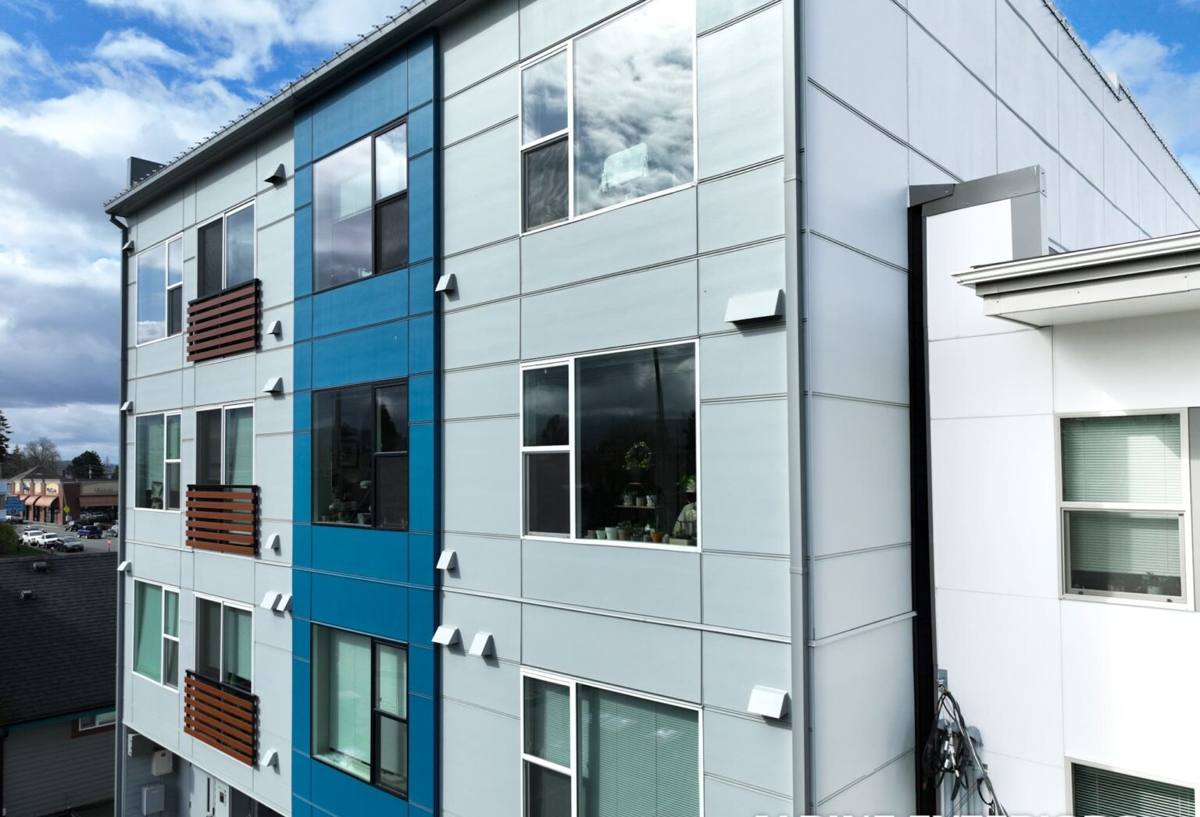
What Blaine Harbor's Climate Does to Siding
Salt Air, Close and Constant
Salt in the air isn't just a smell near the harbor — it's an accelerant. It speeds up corrosion in fasteners, hinges, and metal trim, and it breaks down cheaper paints and finishes faster than they'd fail on a drier site. Any material or hardware choice for a harbor-adjacent home needs to assume that salt exposure from day one, not treat it as an edge case.
Driving Rain With Nothing to Break It
Open water in front of a house means wind-driven rain arrives sideways more often than it falls straight down. That sideways force pushes water into laps, joints, and trim connections that a calmer inland site would never test. Siding systems and installation details that perform fine a few miles away can fail specifically because they were never built to handle rain coming in at an angle, under wind pressure, off open water.
A Moss Season That Runs Most of the Year
Mild temperatures, steady humidity, and shaded north- and water-facing walls combine to give this part of Whatcom County a moss and mildew season that doesn't fully let up. Porous or moisture-retentive siding materials are usually the first place it shows, and homes near the harbor — often with mature trees or tight lot spacing — tend to see it settle in on the sides that get the least sun.
Why James Hardie Fits This Exposure
The HZ5 Formulation
James Hardie makes region-specific versions of its siding, engineered for the moisture and freeze-thaw conditions of a given climate zone rather than one generic formula for the whole country. The HZ5 line is built for areas with heavy moisture exposure, which is exactly the situation on a harbor-facing lot in Whatcom County. Using the correct HZ formulation isn't a minor spec detail — it's part of why the product performs the way it's supposed to over decades instead of years.
A Finish That's Baked On, Not Brushed On
Hardie's ColorPlus finish is applied and cured at the factory under controlled conditions, which gives it far better resistance to fading, chalking, and moisture intrusion than a coat of paint applied on-site after installation. In a spot where salt air and UV off the water both work against a painted surface, a factory-cured finish holds its color and its protective seal much longer.
A Core That Doesn't Move With the Weather
Fiber cement doesn't swell, cup, or warp the way wood-based siding products can after repeated wetting and drying. On a harbor lot, where humidity rarely drops for long, that dimensional stability matters more than it would somewhere drier — it's the difference between joints and reveals that stay tight for decades and ones that start gapping or cupping within a few years.
What a Correct Installation Involves Here
A good product installed loosely still fails in this climate. On a Blaine Harbor home, correct installation isn't optional detail work — it's the whole point.
Drainage Behind the Panel
Wherever the wall assembly calls for it, we build in a drainage plane behind the siding so any moisture that does get past the outer layer has somewhere to go instead of sitting against the sheathing. On a lot exposed to sustained wind-driven rain, that drainage detail is what keeps a minor water intrusion from turning into rot or mold behind the wall.
Fasteners, Flashing, and Joints
We use the fastener type and spacing Hardie specifies for the product and exposure, keep proper clearance from grade and roof lines, and either factory-miter or correctly caulk every joint. Near salt air, fastener corrosion resistance especially matters — a fastener that starts rusting will eventually stain and loosen the panel around it, long before the fiber cement itself would ever fail on its own.
Flashing at Every Transition
Windows, doors, and roof-to-wall transitions are where wind-driven rain finds its way in on an exposed property. We pay close attention to how flashing at those transitions integrates with the siding, since a well-installed panel next to poorly lapped flashing is still a leak waiting to happen.
Comparing Siding Options for a Harbor-Facing Home
| Material | Behavior in Salt Air & Driving Rain | Moss & Mildew Resistance | Long-Term Outlook Here |
|---|---|---|---|
| James Hardie fiber cement | Dimensionally stable; resists swelling and warping | Non-porous surface resists moss buildup better than wood-based products | 30+ years with correct installation and normal upkeep |
| Vinyl siding | Can distort or become brittle with sustained heat and UV; seams and fastener points are exposure risks | Doesn't feed moss growth itself but traps moisture behind panels if installed poorly | Variable; often shorter on open, wind-exposed waterfront lots |
| LP SmartSide / engineered wood | Wood-based core is sensitive to moisture at cut edges and joints | Requires consistent edge sealing to resist moisture-driven decay | Heavily dependent on installation quality and ongoing maintenance |
| Cedar / primed wood siding | Absorbs and releases moisture readily; swells and shrinks seasonally | Prone to moss and mildew without frequent refinishing | Shorter lifespan near the water without regular maintenance |
What Affects the Cost of a Blaine Harbor Siding Job
Every home is different, so we won't quote a number without seeing the house, but a few factors consistently move the scope and cost of a Hardie siding project near the harbor:
| Factor | Why It Matters |
|---|---|
| Existing siding condition | Tear-off and any sheathing repair behind failed siding add labor beyond a straightforward re-side |
| Home size and number of stories | More wall area and taller elevations mean more material, more staging, and more labor time |
| Trim and architectural detail | Corner boards, window trim, and multiple roof lines all add cutting, fitting, and flashing work |
| Exposure and access | Water-facing elevations with limited access or tight lot lines can slow staging and material handling |
| Color and profile selection | Custom ColorPlus colors and certain plank profiles carry different material costs than standard options |
Our Process for Blaine Harbor Siding Projects
We start with an on-site walk of the home, looking specifically at how the current siding has handled salt exposure and moisture over time — where it's failing, where it's holding up, and what that tells us about the wall assembly underneath. From there we put together a clear, written scope covering material, color, drainage detailing, and timeline before any work begins.
During the install, drainage planes, correct fastening, and flashing integration are treated as standard practice on a harbor-facing home, not optional add-ons. We walk the finished job with the homeowner before calling it done, and we're straightforward about what routine upkeep will look like afterward — there isn't much, but there's some, and we'd rather set that expectation up front than have it come as a surprise later.
Living With Moss Season After the Job Is Done
James Hardie siding doesn't need the kind of upkeep that painted wood or cedar demands, but a harbor-adjacent home still benefits from a bit of regular attention through the long wet stretch of the year:
- Rinse siding periodically with a garden hose to keep salt residue and organic buildup from settling in, especially on water-facing walls
- Keep gutters and downspouts clear so water sheds away from the wall rather than running down the siding face
- Trim back landscaping that shades a wall for most of the day, since shaded, damp walls are where moss takes hold first
- Check caulking at trim, windows, and joints every year or two and touch it up before gaps let water behind the panel
- Have any impact damage — from debris, ladders, or storms off the water — repaired promptly rather than left through another wet season
Why a Crew That Already Works Blaine Harbor Matters
A contractor who regularly works this specific stretch of the Semiahmoo waterfront already knows how salt air, open wind, and near-constant moisture behave differently here than they do a short drive inland. That familiarity shows up in the choices that don't make it onto a sales sheet — which fastener grade to use, where extra drainage detailing earns its keep, how much clearance to leave at grade — and those are exactly the details that decide whether a siding job holds up for one wet season or several decades on a harbor-facing home.
A Few Questions Worth Asking Before You Hire
- What siding do they install, and are they willing to explain why — in plain terms, not a sales pitch?
- Do they carry current Washington contractor licensing and active liability insurance?
- How do they detail drainage and flashing for a wind-driven rain, water-facing exposure specifically?
- What fastener and hardware grade do they use in salt air conditions?
- Will you get a clear, written scope of work before anything is signed?
If you're weighing a siding project for a home near Blaine Harbor, we're glad to walk the exterior with you and give you an honest read on what it actually needs. Reach out below for a free, no-pressure estimate.