 Semiahmoo Siding
 Blaine Harbor Roofs Work Harder Than Most
Homes along Blaine Harbor sit close enough to the water that the roof over your head is doing a different job than a roof twenty miles inland. Salt-laden air off Semiahmoo Bay and the Strait of Georgia accelerates corrosion on exposed metal fasteners, flashing, and vents. Driving rain off the water doesn't just fall straight down — wind-driven rain gets pushed sideways under shingle tabs and around poorly sealed penetrations. And Whatcom County's long, damp shoulder seasons give moss and algae months at a time to gain a foothold on north-facing slopes that rarely see direct sun. None of this is exotic knowledge to anyone who's lived here a while, but it matters enormously when it comes time to put a new roof on, because a roofing system that would hold up fine in a drier, inland climate can fail early here if it wasn't chosen and installed with these conditions in mind.
A new roof installation in Blaine Harbor isn't just "put shingles down and nail them off." It's a set of decisions — underlayment type, fastener material, ventilation balance, flashing detail, material selection — that either account for the coastal environment or don't. This page walks through what a correct installation looks like for this specific area, not a generic roofing overview.
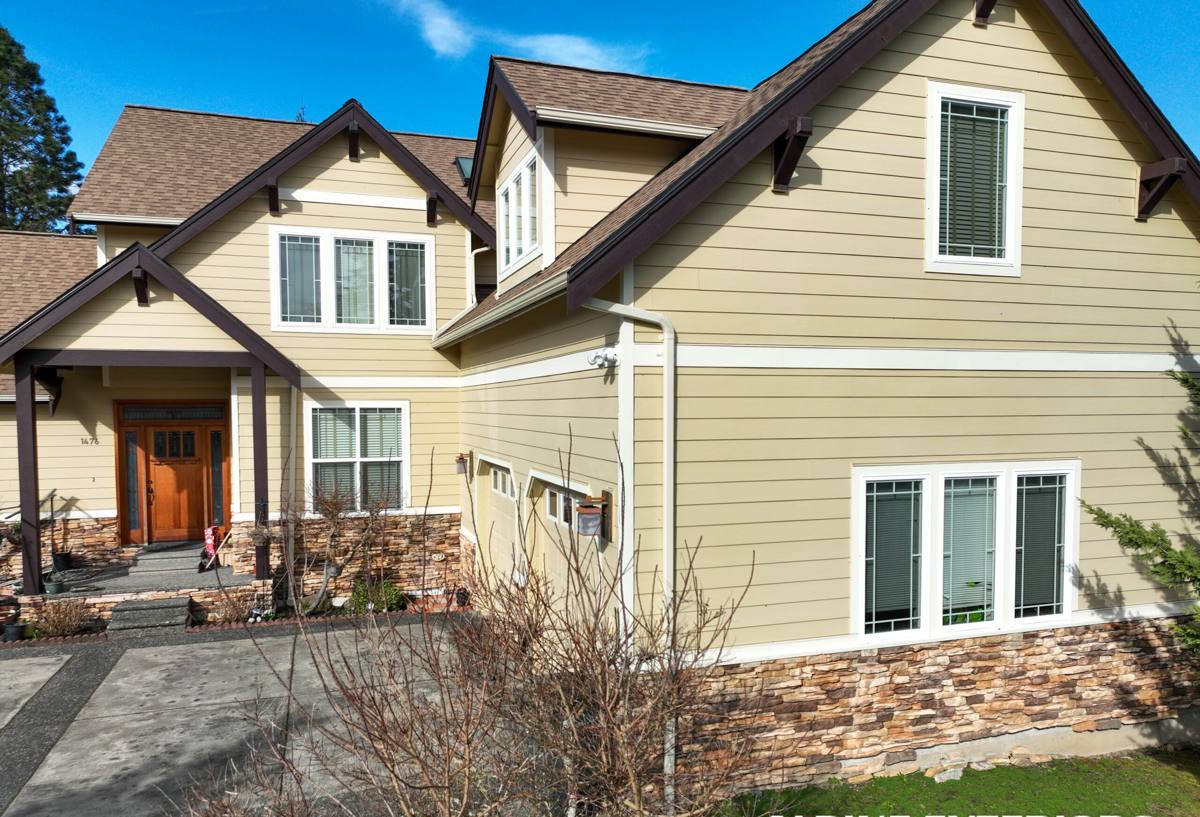
Signs It's Time for a New Roof, Not Another Repair
Most homeowners don't wake up one day and decide to replace a roof — they get there gradually, often after a series of smaller repairs stop keeping up. In Blaine Harbor, the tell-tale signs tend to show up faster on the roof's shaded or windward sides:
- Granule loss showing up in gutters or downspouts, especially after a windy rain event
- Curling, cupping, or lifted shingle tabs on the side of the roof that takes the brunt of the weather off the water
- Persistent moss growth that comes back within a season or two of cleaning, even after treatment
- Rusted or corroded flashing, drip edge, or exposed fasteners around chimneys, vents, and valleys
- Soft spots in the decking, visible sagging, or daylight through the attic at roof penetrations
- A roof that's simply reached the back half of its expected service life and is now needing repairs more than once a year
Any one of these on its own might justify a targeted repair. Several at once, or a roof already past 18-20 years old with algae-blackened or moss-covered shingles, usually means the underlying materials and underlayment are wearing out across the whole roof, not just in one spot — which is when replacement starts making more financial sense than another round of patching.
What a Correct Installation Involves in This Climate
Underlayment and Water Barrier
In a marine climate with driving rain, the underlayment layer matters as much as the visible roofing material on top of it. We use synthetic underlayment as a baseline rather than older felt products, because it holds up better to the freeze-thaw and wet-dry cycling common here, and we run self-adhered ice-and-water barrier membrane at eaves, valleys, and around every penetration — the places wind-driven rain is most likely to find a way in. This isn't an upsell; it's the difference between a roof that sheds water and one that merely covers the house.
Fasteners and Flashing
Salt air is hard on standard fasteners over time. We spec corrosion-resistant fasteners and flashing appropriate for a coastal environment rather than the cheapest option that would pass in a drier inland town. Flashing details around chimneys, skylights, and wall-to-roof transitions get formed and layered correctly rather than relying on caulk or sealant to do the job a proper flashing profile should be doing.
Ventilation Balance
A roof that's sealed tight against wind-driven rain still needs to breathe. Balanced intake (soffit) and exhaust (ridge or roof vents) ventilation keeps attic moisture from condensing against the underside of the decking — a real risk in a climate this humid — and it also reduces the temperature swings that shorten shingle life. Ventilation gets checked and corrected as part of the installation, not treated as a separate project.
Material Selection for Moss and Algae Resistance
Given how long moss season runs here, we generally steer homeowners toward algae-resistant shingle products (the ones with copper or zinc granule blends) on roofs with significant shade or north-facing exposure. It won't make moss impossible, but it meaningfully slows regrowth compared to standard shingles, which matters when the alternative is climbing up to treat and clean the roof every year or two.
Comparing Roofing Materials for a Coastal Whatcom County Home
| Material | Salt Air / Wind-Rain Performance | Moss & Algae Resistance | Typical Lifespan Here |
|---|---|---|---|
| Standard asphalt shingle | Adequate with correct flashing and underlayment | Low unless algae-resistant granules specified | 15-20 years |
| Algae-resistant architectural shingle | Good; heavier profile handles wind-driven rain well | Improved; slows regrowth on shaded slopes | 20-30 years |
| Standing seam metal | Excellent when fasteners and coatings are marine-rated | High; smooth surface sheds moss more easily | 40-50+ years |
| Cedar shake | Requires diligent maintenance in wet, salty air | Low without regular treatment | Variable; maintenance-dependent |
We don't push one material on every roof. The right call depends on the home's exposure, roof pitch, budget, and how much ongoing maintenance a homeowner actually wants to take on. What we won't do is install a material system without the flashing and underlayment upgrades this climate calls for, regardless of which shingle or panel goes on top.
Our Installation Process, Step by Step
- On-site inspection and estimate — We look at the existing roof, decking condition, ventilation setup, and exposure before quoting anything, so the estimate reflects your actual roof rather than a generic number.
- Material selection walkthrough — We go over the trade-offs in plain terms: upfront cost, expected lifespan in this climate, moss resistance, and appearance.
- Permitting — Roof replacements typically require a permit through the applicable local jurisdiction; we handle that paperwork so it's not on you to figure out.
- Tear-off and decking inspection — Old roofing comes off down to the deck, and we inspect the sheathing for soft spots, rot, or prior water damage before anything new goes down. Any bad decking gets replaced, not covered over.
- Underlayment and flashing installation — Ice-and-water membrane at vulnerable areas, synthetic underlayment across the field, and properly formed flashing at every penetration and transition.
- Roofing material installation — Installed to manufacturer spec with fastener patterns and exposure appropriate for coastal wind conditions.
- Ventilation check and correction — Intake and exhaust balance verified and corrected as needed.
- Cleanup and final walkthrough — Magnetic sweep for stray fasteners, debris hauled off, and a walkthrough so you know what was done and what the warranty covers.
Timeline and What to Expect
A typical single-family roof replacement in Blaine Harbor takes one to three days of active work once the crew is on site, weather permitting — the driving rain that's routine here in fall and winter can push a job back a day or two, and we'd rather wait for a dry window than install underlayment or shingles in a downpour. Permitting and scheduling ahead of the actual installation usually add more time to the overall project than the installation itself does. We'll give you a realistic window up front rather than a best-case number that assumes perfect weather.
Why Local Experience in This Area Matters
A crew that has worked roofs throughout Semiahmoo and Blaine Harbor already knows which slopes tend to hold moss the longest, which exposures take the worst of the wind off the water, and which flashing details tend to fail first in this specific environment. That's not something a crew based well inland picks up on their first job out here — it comes from repeated exposure to how Whatcom County's coastal weather actually behaves against a roof over multiple seasons. It also means we're not guessing at permitting requirements or driving in cold for every service call if something needs attention after the install.
Before You Hire: A Practical Checklist
- Confirm the contractor is licensed and insured in Washington, and ask to see current proof
- Ask specifically what underlayment and ice-and-water barrier they use, not just the shingle brand
- Ask how they handle flashing at chimneys, skylights, and valleys — this is where most leaks originate
- Ask whether ventilation gets inspected and corrected as part of the job, or treated as extra
- Get the warranty terms in writing, both the manufacturer's material warranty and the contractor's workmanship warranty
- Ask how they handle decking repair if rot is found once tear-off starts, and how that affects cost
Warranty and Long-Term Care
A new roof is only as good as the materials it's built from and the labor that put it there, which is why both matter in the warranty. Manufacturer warranties cover material defects; workmanship warranties cover installation. In a climate that puts real stress on a roof through salt exposure, wind-driven rain, and extended moss season, we'd rather be upfront that even a correctly installed roof benefits from periodic gutter cleaning and moss checks, particularly on shaded slopes. That small amount of upkeep goes a long way toward getting the full expected lifespan out of the materials.
If your roof in Blaine Harbor is showing its age or you're planning ahead rather than waiting for a leak, we're happy to take a look and walk you through your options. Reach out for a free, no-pressure estimate using the form below.