 Semiahmoo Siding
 Storm Damage Roof Repair for Blaine Harbor Homes
Blaine Harbor sits right where the Strait of Georgia meets Semiahmoo Bay, and that location shapes everything about how roofs age here. Homes in this stretch of Whatcom County take a steady mix of onshore wind, salt-laden air, and long stretches of driving rain that most inland Washington roofs never see. Add a moss season that can run from fall through spring, and you have a roof environment that punishes shortcuts. When a windstorm or heavy blow comes through, the damage it leaves behind often isn't obvious from the ground — and waiting to find out is how a small repair turns into a much bigger one.
This page covers what storm damage repair actually involves for a Blaine Harbor roof, what makes this area different from a typical inland job, and how we approach the work when your roof has taken a hit.
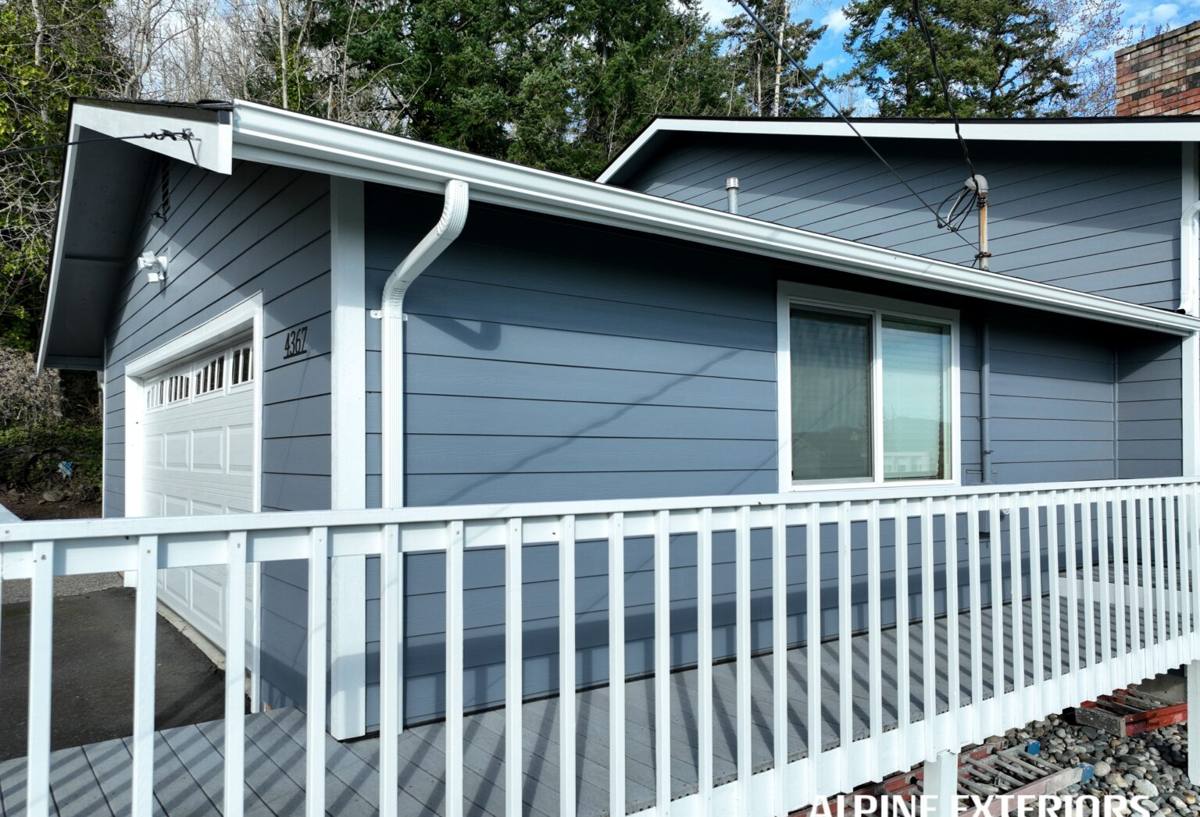
What Storm Damage Actually Looks Like Here
"Storm damage" covers a wider range of problems than most homeowners expect. Wind is rarely the only factor — it's usually wind combined with saturated shingles, existing moss growth, or age-weakened flashing that turns a routine storm into a roof problem.
Wind-related damage
- Lifted or creased shingle tabs, especially along ridges and roof edges where wind uplift is strongest
- Shingles torn loose entirely, exposing underlayment or decking
- Bent or displaced ridge caps
- Loosened or blown-off gutter sections, which then dump water where it shouldn't go
Water-related damage
- Flashing pulled away from chimneys, skylights, or wall intersections, letting wind-driven rain track sideways under the roof covering
- Backed-up valleys where debris or moss has slowed drainage during a heavy downpour
- Saturated decking under sections where shingles were already failing before the storm hit
Debris impact
Branch strikes and wind-blown debris are common in storms that come through the harbor area, and impact damage can puncture or crack shingles in ways that aren't visible unless you're actually up on the roof looking closely.
Why Salt Air and Moss Season Change the Repair
A storm-damaged roof in Blaine Harbor doesn't repair the same way one would fifty miles inland. Two regional factors drive most of our decisions on a job here.
Salt air accelerates metal corrosion
Flashing, fasteners, gutter hardware, and any exposed metal on a roof near Semiahmoo Bay corrode faster than the same materials would inland. A repair that reuses corroded fasteners or unprotected steel flashing looks fine on day one and starts failing within a couple of seasons. We use corrosion-resistant fasteners and flashing material as a standard practice on harbor-area roofs, not as an upsell.
Moss season compounds storm damage
Whatcom County's long wet season means moss and moisture-loving growth get a head start on any roof that isn't staying dry and sunlit. Moss holds moisture against the shingle surface, works its way under tabs, and lifts edges — which is exactly where wind uplift does its worst work during a storm. A roof with existing moss buildup is more vulnerable to storm damage in the first place, and a proper storm repair usually means addressing moss and drainage issues at the same time, not just patching the torn spot and leaving the underlying moisture problem in place.
How We Approach a Blaine Harbor Storm Repair
- Inspection first, repair second. We walk the roof (not just look from the driveway) to check for lifted tabs, cracked shingles, flashing separation, and soft decking before quoting anything.
- Document what the storm actually did. Clear notes and photos of the damage matter if you're filing an insurance claim, and they help you understand exactly what you're paying to fix.
- Check the roof around the damage, not just the damage itself. A torn shingle two feet from a moss-clogged valley is a different repair than the same tear on a clean, well-draining roof. We look at drainage, flashing condition, and moss coverage as part of the same visit.
- Repair with materials suited to this coastline. Corrosion-resistant fasteners, properly lapped flashing, and shingles rated for wind exposure — matched to what's already on your roof wherever possible.
- Confirm the fix holds under the next blow. Ridge caps, valleys, and flashing edges are checked for solid attachment before we call the job done.
Common Repair Scenarios and What They Involve
| Damage Type | Typical Cause Here | What the Repair Involves |
|---|---|---|
| Lifted or torn shingle tabs | Wind uplift, often worsened by moss holding tabs open | Remove and replace affected shingles, reseal adjacent tabs, clear moss from the area |
| Flashing separation | Age, corrosion, and wind flexing the roof deck | Remove old flashing, install corrosion-resistant replacement with proper lap and seal |
| Valley backup / leak | Debris and moss slowing drainage during heavy rain | Clear valley, inspect underlayment, replace damaged sections, improve drainage path |
| Soft or damp decking | Prolonged leak before or during the storm | Cut out and replace affected decking, not just the shingles above it |
| Gutter/edge damage | Wind load and debris strikes | Re-secure or replace gutter sections, check fascia and drip edge for water intrusion |
Decking replacement is the one item on this list that changes the cost picture the most. Shingles alone are a straightforward fix; once water has been sitting against wood sheathing for any length of time, that section has to come out or it becomes the next leak.
What a Correct Repair Should Include
A rushed storm repair often just patches the visible tear and moves on. A correct one addresses why that spot failed in the first place. On the coast, that usually means:
- Matching shingle type and, where possible, color to avoid an obvious patch
- Replacing flashing rather than caulking over gaps — caulk is a short-term fix, not a repair
- Using fasteners and hardware rated for coastal/salt exposure
- Clearing moss and debris from valleys and drainage paths near the repair, not just at the damage site
- Checking attic ventilation near the repaired area — trapped moisture undermines even a well-done patch
Signs Your Roof Needs a Storm Damage Inspection
- Granules collecting in gutters or at downspout outlets after a windstorm
- A new stain or damp spot on a ceiling or in the attic following heavy rain
- Visible gaps, curling, or missing shingles from the ground
- Gutters pulling away from the fascia or sagging in sections
- Moss buildup that's noticeably thicker than the previous season
- Any storm strong enough to bring down branches nearby
Not every item on this list means an emergency, but any of them is a reasonable trigger to have a roof looked at before the next system rolls through.
Timing and Insurance Considerations
Storm damage claims move faster and go smoother when the damage is documented soon after the event, before more rain gets into an already-compromised spot. If you're filing a claim, we can provide a written description and photos of the damage from our inspection, which most adjusters find useful. We're not in the business of inflating a claim or telling you damage exists that doesn't — our job is an honest read of what the storm actually did to your roof, so you're covering real repairs, not guesswork.
Temporary weatherproofing (tarping an exposed section, for instance) is sometimes worth doing immediately even if the full repair has to wait a few days for materials or scheduling. Leaving an open section exposed through another rain event in this climate rarely ends well.
Why a Crew That Already Works Blaine Harbor Matters
Roofing here isn't identical to roofing forty miles inland, and it shows in small decisions — which flashing to use near salt air, how aggressively to address moss before it becomes a structural issue, how a roof's exposure to wind off the water changes where damage tends to concentrate. A crew that regularly works Blaine Harbor and the surrounding Semiahmoo area has already seen how local roofs fail and what actually holds up against another season of coastal wind and rain. That translates into repairs that are sized correctly the first time, rather than a patch that needs revisiting after the next storm.
It also means faster response. Storm damage is time-sensitive — a crew that's already familiar with the area and its typical problem spots can get an inspection scheduled and a repair plan in place quickly, rather than starting from zero on every visit.
Get a Free Estimate
If a recent storm left your roof with lifted shingles, damaged flashing, or a leak you can't quite pin down, we're happy to take a look. Estimates are free and there's no pressure to move forward — just an honest assessment of what happened and what it will take to fix it right. Use the form below to get started.