 Semiahmoo Siding
 Deck Replacement Built for California Creek's Conditions
California Creek sits in the low-lying, water-adjacent part of Whatcom County near Semiahmoo, where homes deal with a heavier combination of salt-tinged air, wind-driven rain, and a moss season that barely takes a break. Decks take the brunt of that weather more than almost any other part of a house — no roof overhead, no siding to shed water sideways, just a horizontal surface and a structure underneath that sits outside through every storm the year brings. When a deck in this area starts failing, it's rarely one thing going wrong. It's usually years of moisture, salt exposure, and moss working on the framing and fasteners at the same time. This page covers deck replacement specifically for California Creek homes — what tells you it's time to replace rather than patch, what a correct replacement actually involves in this climate, and how our process works when we take on a job here.
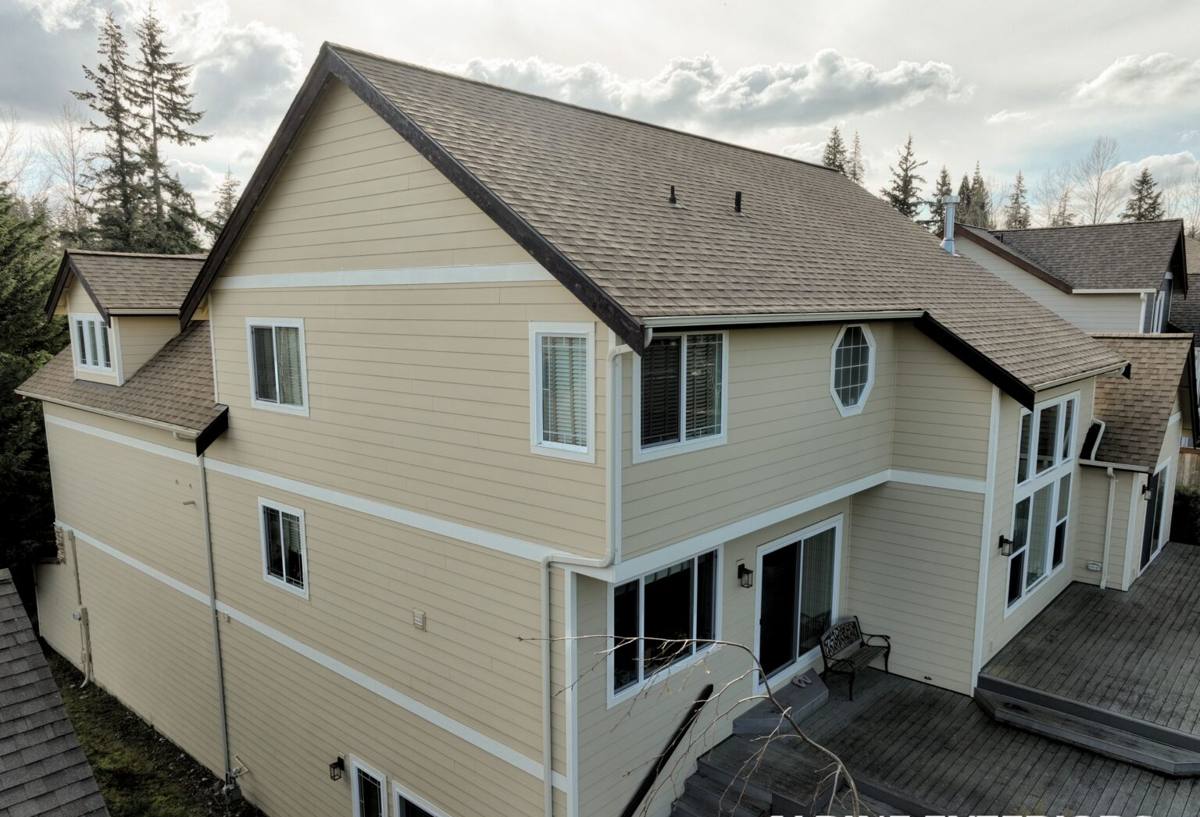
Why "Repair" Stops Being the Right Answer
Every deck reaches a point where repair no longer makes sense, and in a climate like this one that point tends to arrive earlier than homeowners expect. A board replacement or a re-stain can refresh the surface, but it doesn't do anything for a substructure that's been absorbing moisture for a decade or more. The honest question isn't "does this deck look bad" — it's "is the framing underneath still sound."
Signs the Structure, Not Just the Surface, Has Failed
A few signs point toward replacement rather than repair:
- Joists or beams that feel soft, spongy, or give slightly underfoot when you walk across the deck
- Visible rot or dark staining at the ledger board where the deck attaches to the house
- Railing posts that wobble or have loosened from their connection points
- Fasteners showing heavy rust or corrosion, especially on older decks built before corrosion-resistant hardware was standard
- Multiple boards cupping, splitting, or pulling away from fasteners across the whole deck, not just a section or two
- A deck built more than 15-20 years ago that has never had the substructure inspected
Any one of those on its own might still be repairable. Several at once, especially anything involving the framing or ledger connection, usually means the deck has reached the end of its useful life and a full replacement is the more honest recommendation — even if it costs more up front than another round of patchwork.
What This Climate Does to a Deck Over Time
Salt Air and Fastener Corrosion
Proximity to the water around California Creek means the air carries more salt than it would further inland, and that salt goes to work on anything metal — nails, screws, brackets, post bases, railing hardware. Corrosion in a fastener doesn't announce itself the way a rusty stain does; the fastener can lose real holding strength while still looking mostly intact. On a structure that carries foot traffic and furniture weight, a weakened fastener is a safety issue, not just a maintenance one.
Driving Rain That Gets Into Places It Shouldn't
Storms in this part of Whatcom County don't just fall straight down — wind pushes rain sideways, up under railings, and into the ledger connection where the deck meets the house. That ledger joint is one of the most common failure points on an older deck, because it's also one of the hardest spots to inspect without pulling boards. Once water gets behind the flashing there, or into a ledger that was never flashed correctly to begin with, the rot spreads slowly and invisibly until a board finally gives.
A Moss Season That Runs Most of the Year
Mild temperatures and near-constant dampness give moss a long growing season here, and a horizontal deck surface is exactly the kind of place it takes hold — flat, slow to dry, and often shaded by the house or nearby trees. Moss holds moisture directly against the decking material, which accelerates rot in wood and can stain even moisture-resistant materials over time. A deck that isn't cleaned regularly will usually show moss before it shows any other sign of wear.
What a Correct Deck Replacement Involves
Replacing a deck means starting from the ground up, and in this climate that means paying as much attention to what nobody sees as to the decking surface itself. A replacement done right for a California Creek home includes:
- Full removal of the old structure, including a check of the ledger area and house framing behind it for any hidden rot before anything new goes up
- Framing material sized and rated for the span and load, using lumber suited to sustained moisture exposure
- Stainless steel or coastal-grade corrosion-resistant fasteners throughout — not standard hardware that starts corroding within a few seasons out here
- Correctly flashed ledger board connection where the deck ties into the house, since that joint is where most hidden rot starts on an older deck
- Proper board gapping for drainage and material movement, so wind-driven rain can actually drain through rather than pool
- Post footings set to current code depth and bearing requirements, which older decks built decades ago often don't meet
- Railing and guard systems built to current safety code, including height and baluster spacing — a common gap on decks built under older rules
- Grading and airflow underneath the deck so moisture doesn't sit against the new framing between storms
A deck that skips any of those steps can still look right on the day it's finished. The difference shows up years later, in exactly the same failure points that likely brought down the deck it replaced.
Choosing a Decking Material for This Climate
Material choice matters more here than it would in a drier, more sheltered part of the state, since the performance gap between a well-suited product and a poorly-suited one shows up faster under sustained salt air and moisture.
| Material | Salt Air & Moisture Handling | Moss Resistance | Upkeep |
|---|---|---|---|
| Cellular PVC | Excellent — no wood fiber to absorb moisture | Strong, smooth non-porous surface | Occasional washing |
| Capped composite | Strong — cap layer resists moisture and staining | Good on most lines | Occasional washing |
| Uncapped composite | Moderate — some absorption at exposed fiber and cut edges | Fair; more prone to buildup over time | Periodic cleaning |
| Cedar | Moderate — natural resistance, but needs sealing | Fair when sealed and maintained | Regular oiling or sealing |
| Pressure-treated wood | Weakest against sustained salt exposure over time | Poor without regular treatment | Regular sealing or staining |
None of these are wrong choices outright — a well-maintained cedar deck can last a long time, and plenty of homeowners are happy with that upkeep routine. What matters is picking the material with a clear understanding of what it will actually ask of you in this specific climate, rather than assuming every decking product performs the same way once it's installed near the water.
Permits and Code Considerations for a Replacement
A full deck replacement in Whatcom County typically requires a building permit, and that's often one of the more valuable parts of doing a proper replacement rather than a repair. Decks built years or decades ago were permitted, if at all, under older code requirements — footing depth, railing height, guard spacing, and ledger attachment standards have all been updated over time. Replacing the deck brings the whole structure up to current code, which isn't just a box to check; those updated standards exist because older approaches were shown to fail in exactly the ways described above. We handle the permitting process as part of the job rather than leaving it for the homeowner to sort out.
How Our Replacement Process Works
We start with an on-site inspection of the existing deck — checking the ledger connection, probing framing for soft spots, and looking at drainage and grade underneath — so the recommendation to replace rather than repair is based on what we actually find, not a guess. From there we walk through decking material options against the budget and how the space gets used, and confirm the permit scope before any demolition starts.
Once the old deck is removed, the sequence is framing first — sized and fastened for what this site's exposure actually calls for — then decking surface, railing, and any stairs or trim. We finish with a walkthrough covering what your specific material needs going forward, which for most modern decking is minimal but not zero.
Why It Matters That We Already Work California Creek
A crew that mostly builds decks further inland can still do competent work, but a job this close to the water carries requirements that don't come up as often elsewhere in Whatcom County — corrosion-grade fasteners for sustained salt exposure, ledger flashing details that actually hold up to wind-driven rain, and a moss season long enough that drainage and airflow underneath the deck aren't optional extras. Working this area regularly means we're not guessing at those details on your project. We've seen which materials and fastening approaches hold up against California Creek's specific mix of salt air, driving rain, and moss, and which shortcuts turn into a call back in a few years.
Get a Straight Answer About Your Deck
If your deck is showing soft spots, corroded hardware, or a ledger connection you're not sure about, it's worth getting an honest read on whether it's a repair or a full replacement before more damage happens underneath. Reach out below for a free, no-pressure estimate — we'll walk the site with you and lay out the options plainly.