 Semiahmoo Siding
 Siding Repair Built for the California Creek Environment
California Creek sits low and close to the water, in the shadow of tall conifers, just outside Semiahmoo in Whatcom County. That combination — tidal salt air drifting in off the bay, heavy driving rain off the Strait, and dense tree cover that shades siding for much of the day — creates one of the more demanding siding environments in this part of Washington. Homes here don't fail because owners neglected them. They fail because standard siding materials and standard installation practices weren't built for this specific mix of moisture, salt, and shade.
A siding repair in California Creek isn't the same job as a siding repair in a dry, sun-exposed neighborhood twenty minutes inland. The repair has to account for why the damage happened in the first place, or it's just going to happen again in a year or two. That's the lens we bring to every repair call in this neighborhood.
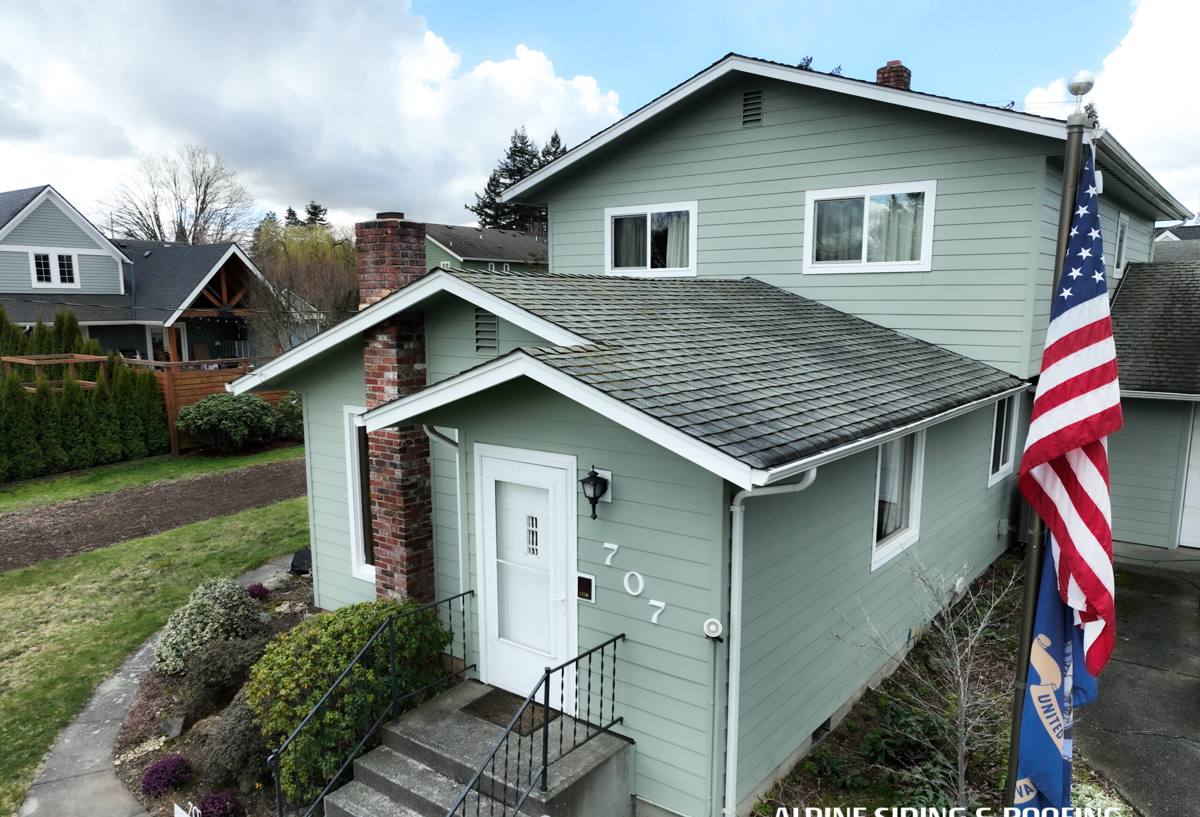
Why This Climate Is Hard on Siding
Three environmental factors do most of the damage to siding in California Creek, and they compound each other:
Salt Air
Being close to Semiahmoo Bay means airborne salt is a constant, low-level presence. Salt is hygroscopic — it pulls moisture out of the air and holds it against a surface longer than plain rainwater would. On painted wood and composite trim, that means paint failure, fastener corrosion, and slow degradation of caulk joints. On metal flashing and trim accessories, it means accelerated rust if the wrong-grade fasteners or flashing were used.
Driving Rain
Wind off the water doesn't just drop rain straight down — it drives it sideways into wall assemblies, forcing water into laps, seams, and butt joints that would stay dry in a calmer climate. Siding systems here depend heavily on correct overlap, properly sealed joints, and a working drainage plane behind the cladding. When any one of those is off, water gets behind the siding instead of running off it.
Moss and Shade
Mature tree cover keeps large sections of siding damp and shaded for long stretches, especially on north- and west-facing walls. That's exactly the environment moss and algae need to establish. Once moss takes hold on siding, it holds moisture against the surface around the clock, which is a slower but just as damaging cousin of standing water.
None of these three factors is unusual on its own. What makes California Creek repair work distinct is dealing with all three at once, on the same wall, often for decades of exposure before a homeowner calls anyone.
Signs Your Siding Needs Repair, Not a Full Replacement
Not every siding problem means tearing off the whole wall. Repair makes sense when the damage is localized and the underlying wall assembly is still sound. Watch for:
- Soft or spongy spots when you press on a section of siding, usually near the bottom of walls or under windows
- Visible cracking, splitting, or buckling in isolated boards or panels
- Paint that's peeling, bubbling, or flaking in specific spots rather than across the whole house
- Persistent moss or dark staining concentrated on shaded or low-airflow walls
- Gaps opening up at butt joints, corners, or around window and door trim
- Rust streaks below nail heads or metal flashing
- Localized damage from a fallen branch, ladder contact, or other one-time event
If the damage is spread across most of the house, or if probing soft areas reveals rot that's traveled into the sheathing behind the siding, that's usually a signal the conversation needs to shift from repair to replacement. Part of an honest repair estimate is telling you which situation you're actually in.
What a Correct Siding Repair Actually Involves
A repair that's done right goes beyond swapping a damaged board for a new one. It means understanding why that section failed and fixing the underlying cause, not just the symptom. On a typical California Creek repair, that includes:
Diagnosis Before Demolition
Before removing anything, we check how far the damage extends — probing surrounding boards, checking for soft sheathing, and looking at the flashing and water-management details around the damaged area. Cutting out a bad board without checking what's behind it is how homeowners end up paying for the same repair twice.
Matching Materials and Fastening
Replacement pieces need to match the existing siding's profile, exposure, and finish as closely as possible, and they need to be fastened correctly for a salt-air environment — corrosion-resistant fasteners, correctly countersunk, with joints sealed to spec rather than just caulked over.
Fixing the Water Path, Not Just the Hole
If the damage was caused by a flashing gap, a missing kick-out, or a butt joint that was never properly sealed, the repair has to correct that detail. Otherwise the new material fails on the same timeline as the old.
Addressing Moss and Growth
Where moss or algae contributed to the damage, we clean the affected area properly before closing it back up, and we'll flag whether trimming back nearby vegetation or improving airflow to that wall would help prevent a repeat.
Repair vs. Replacement: How We Help You Decide
| Factor | Points Toward Repair | Points Toward Replacement |
|---|---|---|
| Extent of damage | Isolated to one or two walls or sections | Spread across most of the exterior |
| Sheathing condition | Dry and solid behind damaged siding | Soft, rotted, or water-stained sheathing |
| Age of existing siding | Still within its useful life, good overall condition | Near or past expected service life |
| Cause of damage | One-time event (impact, isolated flashing failure) | Systemic moisture intrusion or material failure |
| Material availability | Existing siding can be closely matched | Discontinued product, poor color/profile match |
We'll walk you through where your home falls on this table before we recommend anything. If repair is the honest answer, that's what we'll quote — we don't upsell full replacements to homes that don't need them.
Why James Hardie Fiber Cement Holds Up Better to This Repair Cycle
We install and repair James Hardie fiber cement exclusively, and in an environment like California Creek, the reasons go beyond preference. Fiber cement doesn't absorb and swell with moisture the way wood-based products do, which means it doesn't rot from the inside out the way primed spruce or cedar can after years of driving rain and shade. It doesn't provide organic material for moss and algae to feed on the way wood fiber siding can. And because it's non-combustible, it holds up to the kind of long-term weathering this coastline delivers without the slow material breakdown that shortens the life of softer products.
Hardie's ColorPlus factory finish is baked on under controlled conditions, which gives it better adhesion and fade resistance than field-applied paint — meaning repaired sections we color-match hold their finish more consistently over time than a repainted wood or composite board would. That matters in a repair context specifically: a repair should blend in and stay blended in, not become the spot on the house that needs repainting again in three years.
None of this makes Hardie repair work maintenance-free. It still needs correct caulking, correct flashing, and periodic cleaning in a shaded, salt-air location like California Creek. But it gives a repair a much better chance of being a permanent fix rather than a temporary patch.
Our Process for a California Creek Siding Repair
- Inspection and diagnosis. We look at the damaged area and the surrounding siding, probe for hidden rot, and check flashing and drainage details before quoting anything.
- Honest scope conversation. We tell you plainly whether you're looking at a repair, a partial re-side, or a full replacement — and why.
- Written estimate. Clear pricing, clear materials, no vague allowances.
- Correct removal. Damaged material comes out carefully so we don't create new problems in sound surrounding areas.
- Water-management correction. Any flashing, sealant, or drainage issue that caused the original failure gets fixed as part of the repair, not left for next time.
- Matched replacement material. New Hardie boards or panels installed to spec, with corrosion-resistant fasteners appropriate for a salt-air coastal setting.
- Finish and cleanup. Color-matched finish work and a clean site when we're done.
Common Repair Scenarios We See Near the Water
A few patterns show up repeatedly on homes close to California Creek and the bay:
- North-wall moss buildup on shaded sides of the house that never fully dry out between rain events
- Corner and butt-joint failure where driving rain has worked past under-sealed seams over many years
- Corroded fasteners showing as rust streaks, usually where standard-grade nails or screws were used instead of coastal-rated hardware
- Localized rot below windows and at the base of walls, where water tends to collect and linger longest
- Impact damage from storm debris or falling branches, common given the tree cover in this area
Recognizing these patterns quickly — because we see them often in this specific neighborhood — is part of what makes a repair estimate accurate the first time instead of turning into a longer, more expensive job once work begins.
What to Ask Before Hiring Anyone for This Kind of Repair
Siding repair is easy to do poorly and hard to verify after the fact once it's painted and sealed. Before you hire a crew, it's worth asking:
- Will you check for hidden rot or moisture before quoting the repair, or just replace what's visibly damaged?
- What fasteners and flashing will you use, and are they rated for a coastal, salt-air environment?
- Can you closely match my existing siding's profile and finish?
- Will you explain what caused the damage, not just fix the symptom?
- Do you have experience specifically with waterfront or near-shore properties in Whatcom County?
- What's included in writing — is the estimate itemized, or a vague lump sum?
A contractor who can answer these clearly, without hedging, is a good sign. One who wants to skip straight to a number without inspecting the cause of the damage usually isn't planning to fix the underlying problem.
Why Local Experience in California Creek Matters
Every coastal Washington neighborhood has its own combination of exposure, tree cover, and wind direction, and California Creek's is distinct even from other parts of the Semiahmoo area. A crew that has worked walls in this specific pocket — close to the creek, close to the bay, shaded by mature trees — already knows where water tends to collect, which walls take the worst of the driving rain, and which fastening and flashing details actually hold up here long-term. That local pattern recognition shortens the diagnosis phase and reduces the odds of a repair missing a contributing cause.
It also means less guesswork on material matching. We've worked with the Hardie lines and colors that show up most often on homes in this area, which makes blending a repair into existing siding more consistent.
Get an Honest Look at Your Siding
If you're seeing soft spots, moss buildup, cracked boards, or rust streaks on your California Creek home, it's worth getting a straightforward assessment before the damage spreads further into the wall assembly. We'll tell you plainly whether you're looking at a targeted repair or something larger — no pressure, no inflated scope. Reach out for a free estimate using the form below.