 Semiahmoo Siding
 Why Board & Batten Fits Cherry Point's Coastal Climate
Cherry Point sits in one of the more exposed pockets of Whatcom County — close enough to the water that salt-laden air is a daily fact of life, and squarely in the path of the wind-driven rain that rolls in off the Strait for much of the year. Add a long, damp moss season that stretches from fall through spring, and you have a climate that is genuinely hard on the outside of a house. Board and batten siding has real appeal here: the vertical lines and deep shadow lines give a home a strong, clean look, and the style has a long history on coastal and rural buildings in this part of the Pacific Northwest for a reason — it was originally designed to shed water down long, unbroken vertical runs.
That history doesn't mean any board and batten system will hold up here. The material behind the look, and the way it's installed, matters more in a salt air environment than it does twenty miles inland. We install board and batten in James Hardie fiber cement specifically because it's engineered to take on moisture, wind, and salt exposure without the maintenance spiral that other materials fall into on this stretch of coastline.
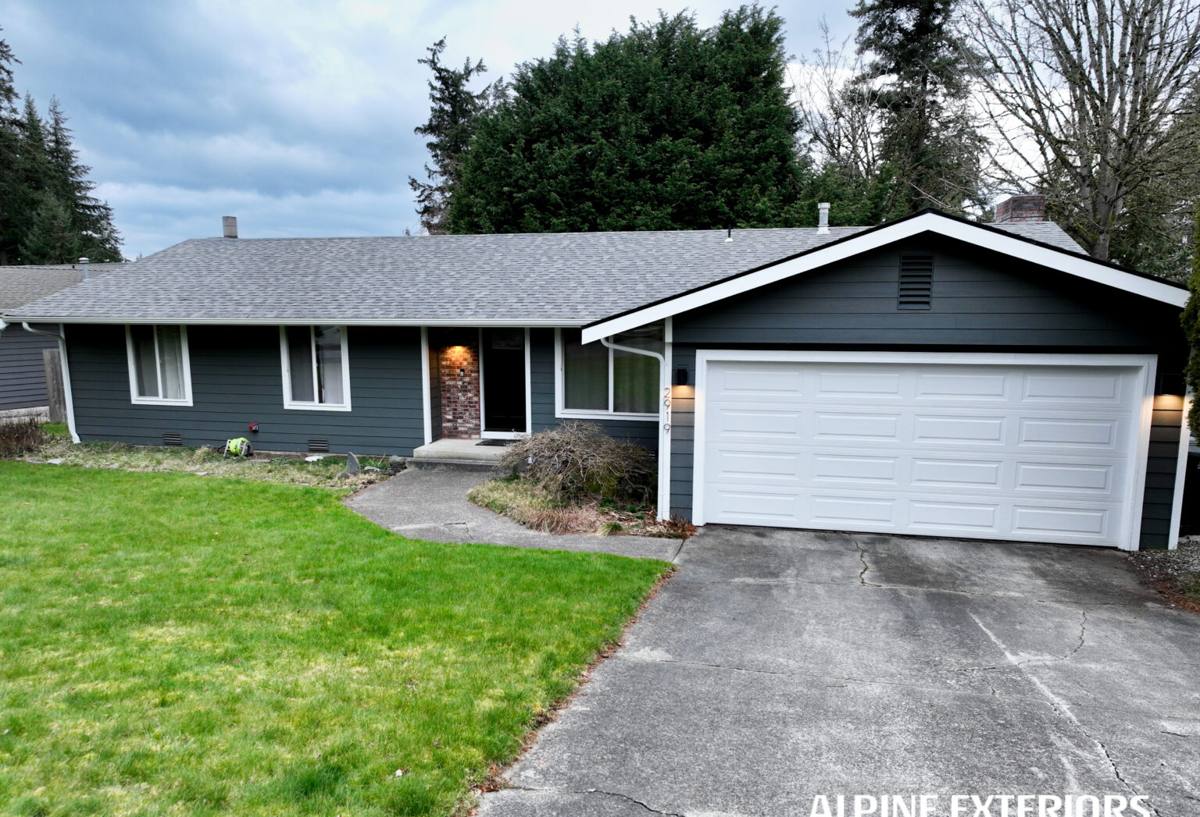
What a Correct Board & Batten Installation Actually Involves
The Panel-and-Batten System
James Hardie board and batten isn't a single board nailed over another. It's a system: wide HardiePanel vertical siding forms the field, and Hardie Trim boards are installed over the panel seams as the "battens," creating the classic look while doing real structural work — covering and protecting every vertical joint from wind-driven rain.
Flashing and Drainage Behind Every Batten
Every seam a batten covers is a place water can find its way behind the siding if it isn't flashed correctly. Correct installation means proper head flashing above windows and doors, sealed transitions at the roofline and foundation, and consistent gapping so the assembly can drain and dry instead of trapping moisture. In a climate that sees as much sustained rain as Cherry Point does, this detail work is the difference between siding that lasts decades and siding that starts failing behind the surface within a few years.
Rainscreen Furring — Not Optional Here
On a high-moisture coastal site like this, we install James Hardie board and batten over a rainscreen: vertical furring strips that create a continuous air gap between the siding and the weather-resistive barrier. That gap lets any moisture that does get past the cladding drain and evaporate instead of sitting against the wall sheathing. It's a step some installers skip to save time and material. We don't, because it's often the single biggest factor in how a wall assembly performs over a 20- or 30-year span in this kind of climate.
Fastening Pattern
Board and batten puts real wind load on a smaller number of vertical fasteners than lap siding spreads across a wall, so fastener spacing, embedment, and corrosion resistance all matter more. We follow James Hardie's published fastening specifications exactly, using fasteners rated for coastal exposure, because an under-fastened batten in a wind event on this exposed a stretch of coastline is the kind of failure that shows up fast.
James Hardie vs. Other Board & Batten Materials
Board and batten is available in several materials. Here's how they actually compare for a home exposed to salt air and heavy seasonal rain:
| Material | Salt Air / Coastal Durability | Moisture Behavior | Maintenance | Typical Warranty |
|---|---|---|---|---|
| James Hardie fiber cement | Engineered for it; non-combustible and dimensionally stable | Does not swell, rot, or absorb water like wood-based products | Occasional rinse and caulk check; factory finish holds up | Long transferable product warranty, factory finish warranty |
| Vinyl board & batten | Can warp, fade, or become brittle with UV and temperature swings | Sheds water on the surface but seams and battens rely on caulk, not a drainage system | Low upfront, but replacement panels are common after storm or impact damage | Often prorated; value declines with age |
| Engineered wood (e.g. LP-style) | Vulnerable to moisture intrusion at cut edges and joints | Wood-based core can swell or delaminate if water gets behind it | Regular repainting and edge sealing needed | Warranty often has strict installation and maintenance conditions |
| Cedar | Handsome but high-maintenance in wet, salty air | Absorbs moisture; prone to cupping, splitting, and rot without diligent upkeep | Frequent refinishing, sealing, and moss/mildew treatment | Product itself carries no manufacturer warranty |
We don't install vinyl, engineered wood, or bare cedar board and batten. Each has legitimate strengths, but none holds up as consistently as fiber cement under sustained salt exposure and heavy regional rainfall without a much heavier maintenance commitment from the homeowner.
Our Board & Batten Process for Cherry Point Homes
- On-site inspection — we look at wall orientation, wind exposure, existing sheathing condition, and any trouble spots before quoting anything.
- Tear-off and prep — old siding comes off, and we check for hidden moisture damage or rot in the sheathing while the wall is open.
- Weather-resistive barrier — a continuous, correctly lapped barrier goes down first, with all penetrations sealed.
- Rainscreen furring — vertical strapping creates the drainage gap behind the panels.
- Panel installation — HardiePanel vertical siding goes up plumb and level, with correct fastener spacing and clearances at grade, roofline, and openings.
- Batten and trim installation — Hardie Trim battens cover every panel seam, with flashing integrated at windows, doors, and transitions.
- Caulking and finish check — joints are sealed with a compatible sealant, and the factory ColorPlus finish is inspected for any touch-up needs.
- Final walkthrough — we go over the finished job with the homeowner before calling it complete.
What Drives the Cost of a Board & Batten Project
We'd rather explain the real cost factors than throw out a number that doesn't apply to your house. On a home this exposed, the biggest swings come from what's happening behind the old siding, not just the square footage out front.
| Factor | Why It Matters |
|---|---|
| Tear-off vs. new construction | Removing failing siding and repairing any hidden rot adds labor before the new system ever goes up |
| Wall condition underneath | Sheathing repair or added rainscreen furring changes the scope once walls are opened up |
| Home height and access | Multi-story walls and tight lot lines take more time and equipment than a single-story ranch |
| Batten spacing and trim detail | Tighter batten spacing and extra trim around windows, corners, and gables add material and labor |
| Full house vs. accent application | Board and batten used as a full exterior costs more than using it as an accent over gables or entry features |
Because so much depends on what we find once the old siding is off, we walk every home in person before giving a real number, and we'll tell you plainly if we think full replacement or a targeted repair is the more honest call for your budget.
Living With Board & Batten in a Salt Air, High-Moss Climate
Even a well-installed system benefits from a little attention in this climate. Salt spray settles on siding closest to the water and on north- and west-facing walls especially; an occasional garden-hose rinse keeps it from building up on the surface. Shaded, damp sides of the house are where moss and algae tend to take hold first — James Hardie's factory-applied ColorPlus finish resists staining and holds color far longer than field-applied paint, but it's still worth a visual check each fall before the wet season sets in. The caulked joints at battens, windows, and trim are the other thing worth an annual look; a failed bead of caulk is a small, cheap fix if caught early and a bigger problem if water gets behind the siding for a season or two unnoticed.
Signs Your Current Siding Is Ready for Replacement
- Boards or panels that are visibly cracked, splitting, or soft to the touch
- Paint that needs redoing every two to three years instead of holding its finish
- Gaps opening up at battens, corners, or trim that weren't there before
- Moss, mildew, or dark staining that keeps coming back no matter how often it's cleaned
- Visible warping, bowing, or separation from the wall
- Rising heating or cooling bills that point to a wall assembly no longer doing its job
- Interior signs like peeling paint, musty smells, or soft drywall near exterior walls
Why Hire a Crew That Already Works Cherry Point
Board and batten looks straightforward from the curb, but the detail work — flashing, rainscreen furring, fastener choice, caulk selection — is where coastal Whatcom County jobs succeed or fail. A crew that already works this area knows which walls take the worst of the wind and salt spray, how the moss season behaves against a north-facing elevation, and how to sequence a job around the wetter stretches of the year so materials go up dry and stay that way. That local familiarity, paired with a single-manufacturer product knowledge base built around James Hardie, means fewer surprises and a system that's installed the way it's engineered to perform — not just the way it looks good on install day.
If you're weighing board and batten for a home near Cherry Point, we're happy to walk the property, look at what your walls are dealing with, and give you a straight, no-pressure estimate — just fill out the form below to get started.