 Semiahmoo Siding
 Composite Decking Built for Blaine Harbor's Waterfront Climate
Blaine Harbor sits right where the moisture off the water meets everything a Whatcom County winter can throw at a home. Salt-laced air, driving rain that comes in sideways off Semiahmoo Bay, and a moss season that can stretch from October through May all put real demands on an outdoor deck. A composite deck built for this stretch of the Washington coast has to do more than look good on installation day — it has to shed water, resist the slow creep of moss and algae, and hold its fasteners tight through years of salt exposure and freeze-thaw swings.
This page is about one job, done right, in one place: composite decking for homes in and around Blaine Harbor. Not a generic decking overview — the specific choices, sequencing, and maintenance habits that matter when your deck sits a short walk from saltwater.
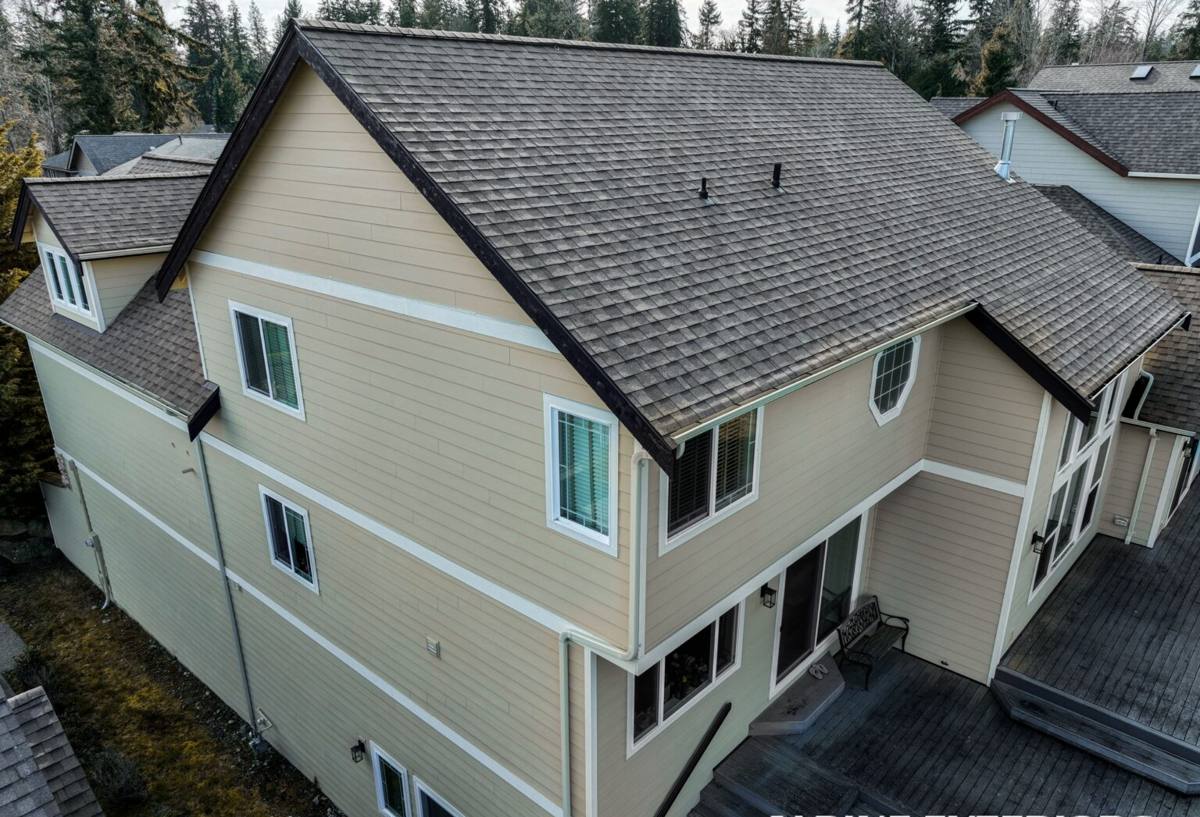
What the Local Climate Actually Does to a Deck
Salt air and hardware corrosion
Airborne salt doesn't just sit on the surface of a deck — it works into fastener heads, hinges, and any exposed metal bracket. Standard zinc-coated screws and brackets can start showing rust streaks within a season or two this close to the harbor. That staining isn't just cosmetic; once corrosion starts on a fastener, it weakens the connection and the rust can bleed into the surrounding board.
Driving rain and drainage
Storms off the Strait push rain at an angle, which means water gets driven under railings, against house walls, and into any gap in the decking that isn't properly sloped or flashed. A deck that looks fine in dry weather can still be feeding water into the ledger board or the framing below every time a real system rolls through.
Moss, algae, and prolonged dampness
Long stretches of overcast, damp weather are exactly what moss and green algae need to take hold. On wood decking that means soft, slick spots and eventual rot. On composite decking, surface growth is mostly a texture and traction issue rather than a structural one — but only if the boards were installed with enough airflow underneath and the surface finish is one that doesn't trap moisture against the cap layer.
Why Composite Makes Sense Here
Composite decking (a blend of wood fibers and recycled or virgin plastics, usually with a protective cap layer) was built to solve exactly the problems wood struggles with in a marine climate: it doesn't absorb water the way a natural board does, it won't splinter or cup from repeated wetting and drying, and a quality capped board resists staining from tannins, mildew, and salt residue. That doesn't mean every composite board performs the same way, and it doesn't mean composite is maintenance-free — it just shifts the maintenance burden from sanding and re-staining to simpler surface cleaning.
Capped vs. uncapped boards
Capped composite has a plastic shell wrapped around a wood-plastic composite core, protecting it from moisture intrusion and fading. Uncapped composite (or capped-on-top-only boards) is cheaper but leaves more of the board exposed to water wicking, especially at cut ends. In a harbor environment, we lean toward fully capped boards and always seal or cap-treat any field-cut ends before they go down.
Hidden fastener vs. face-screwed systems
Hidden fastener clip systems leave no exposed screw heads on the walking surface, which matters twice over here: fewer penetration points for water to find, and no screw heads to corrode and streak the board. Face-screwed installs are still sometimes the right call on stair treads or picture-frame borders where a mechanical fastener is more secure, but stainless steel fasteners are worth the upcharge anywhere near the water.
What a Correct Installation Involves
A deck that's going to hold up in Blaine Harbor's conditions is decided before the first board goes down. The framing and flashing details underneath the decking matter more than the decking material itself.
- Ledger board flashed and sealed where it meets the house, with a drainage gap so water can't collect against the siding
- Joist tape or a comparable protective barrier on top of every joist to stop moisture from soaking into the framing lumber
- Joist spacing tightened to the composite manufacturer's spec (often 12" on center rather than the 16" common with wood) since composite has different flex characteristics than lumber
- Proper gapping between boards for expansion, contraction, and drainage — too tight and the deck can buckle; too loose and it feels unfinished underfoot
- Stainless steel or marine-grade coated fasteners and brackets throughout, not just at visible connections
- Adequate under-deck ventilation so moisture doesn't sit trapped against the underside of the boards
- Correct slope away from the house for surface drainage, even on a deck that looks level to the eye
Our Process for a Blaine Harbor Composite Deck
1. On-site assessment
We look at the existing structure (if there is one), the exposure to prevailing wind and rain direction, and how close the deck sits to salt spray or standing moisture. A deck tucked against a hillside collects moss differently than one open to the water, and that changes some of our material and drainage decisions.
2. Substructure check and repair
If we're replacing an existing deck, we check the ledger connection, joists, and posts before anything new goes on top. A beautiful composite surface over a compromised frame is a problem waiting to surface — literally, once the framing starts to fail underneath.
3. Framing and flashing
This is where the long-term performance of the deck actually gets decided — the flashing, joist protection, and fastener choices described above.
4. Decking installation
Boards go down with attention to expansion gaps, board direction relative to water flow, and consistent fastening. Field cuts get sealed or capped rather than left raw.
5. Railing, trim, and fascia
Composite or aluminum railing systems and fascia boards get the same fastener standard as the decking — no mixing a corrosion-resistant deck with hardware that will rust out in three years.
6. Final walkthrough
We check drainage by eye, confirm every board is secure, and go over the maintenance basics with the homeowner before we consider the job done.
Comparing Decking Options for a Harbor-Adjacent Home
| Material | Salt air performance | Moss/algae resistance | Maintenance | Typical lifespan |
|---|---|---|---|---|
| Capped composite | Strong — shell resists salt residue and moisture wicking | Good with proper airflow underneath | Periodic washing, no staining or sealing | 25-30+ years |
| Uncapped composite | Moderate — more vulnerable at cut ends and edges | Fair — can absorb moisture at exposed spots | Occasional cleaning, watch cut ends | 15-25 years |
| Pressure-treated wood | Weak without diligent upkeep — fasteners and grain both suffer | Poor — moss takes hold in damp grain | Annual sanding/staining/sealing | 10-15 years with upkeep |
| PVC decking | Strong — fully synthetic, no wood fiber to wick moisture | Good | Low, similar to capped composite | 25-30+ years |
Cost follows roughly the same order, with pressure-treated wood cheapest up front and PVC or premium capped composite at the top end. In a harbor-exposed setting, the math usually favors composite or PVC once you account for the sanding, staining, and fastener replacement that wood decking demands here.
Keeping a Composite Deck Healthy Near the Water
- Rinse salt residue and debris off the surface every few weeks during wet, windy stretches
- Sweep organic debris (leaves, needles) out of board gaps before it holds moisture against the surface
- Use a soft-bristle brush and a mild composite-safe cleaner for moss or algae film rather than a pressure washer on high setting, which can damage the cap layer
- Check railing posts and stair stringers annually for any loosening at the fasteners
- Keep gutters and downspouts clear so roof runoff isn't dumping extra water onto the deck surface
- Confirm under-deck vents or skirting aren't blocked by landscaping, which restricts airflow and traps humidity
Why Hire a Crew That Already Works Blaine Harbor
Decking looks like a straightforward trade until you're the one dealing with a deck that was framed to a generic spec instead of a coastal one. A crew that regularly works Blaine Harbor and the surrounding Semiahmoo area already knows which fastener grade holds up here, how much ventilation a given lot needs based on its exposure to the water, and which corners get skipped by installers who aren't accounting for salt air and a long moss season. That local pattern recognition is the difference between a deck that needs attention every year and one you mostly forget about.
We're a Whatcom County crew, and Blaine and the harbor area are part of our regular service area — not a one-off trip. That means we've seen how decks in this specific stretch of coastline age, and we build accordingly rather than guessing.
Get a Straight Answer on Your Deck
If you're planning a new composite deck in Blaine Harbor or replacing a wood deck that's finally given up to the moss and rain, we're happy to take a look and give you an honest read on what your home needs. There's no pressure and no cost for the estimate — just a straightforward conversation about the right material and the right build for your spot on the water. Use the form below to get started.