 Semiahmoo Siding
 Asphalt Shingle Roofing Built for Custer's Weather
Custer sits inland from Semiahmoo Bay and Drayton Harbor, but it still gets the full package of Whatcom County weather: salt-tinged marine air rolling in off the water, long stretches of driving rain, and the shaded, damp conditions that keep moss growing on roofs nearly year-round. A roof out here doesn't fail because the shingles were bad off the shelf — it fails because of how it was installed, ventilated, and flashed against that specific combination of moisture and salt exposure. That's the lens we use on every asphalt shingle project in this area, whether it's a full tear-off or a targeted repair.
This page covers what asphalt shingle roofing actually needs to hold up on a Custer property, what a correct installation looks like, and how our process works from first inspection to final cleanup.
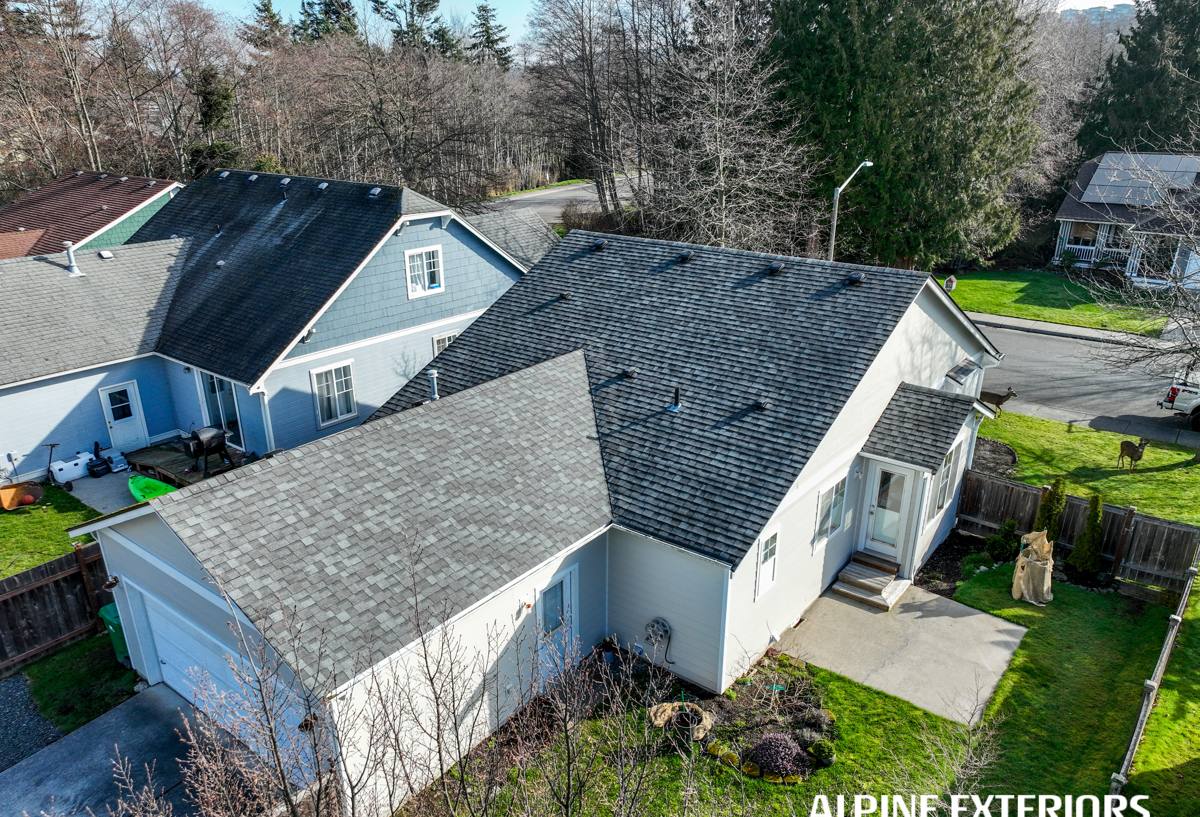
What Salt Air, Rain, and Moss Actually Do to a Shingle Roof
Each of these three factors attacks a roof in a different way, and a roofing crew that hasn't worked this area consistently will often miss one of them.
Salt Air
Being close to Semiahmoo Bay means airborne salt settles on exposed metal — flashing, nail heads, vent stacks, and drip edge. Over years, that accelerates corrosion on lower-grade fasteners and thin metal flashing. It's not usually dramatic; it's a slow degradation that shows up as rust streaking and eventually as leaks at the exact points where flashing was supposed to keep water out.
Driving Rain
Whatcom County storms frequently come in sideways rather than straight down, especially in exposed or open areas. Wind-driven rain doesn't just test how water sheds off a roof — it tests every lap, seam, and fastening point for wind uplift and water intrusion from the side. Underlayment quality and nailing pattern matter more here than in a climate with calmer rainfall.
Moss
Shaded roof sections, north-facing slopes, and tree-covered lots around Custer stay damp long after a storm passes, which is exactly what moss needs to establish. Moss holds moisture directly against the shingle surface, lifts shingle edges as it grows, and works its way under tabs and around fasteners. Left unaddressed, it shortens the life of an otherwise sound roof by years.
What a Correct Asphalt Shingle Installation Involves
A shingle roof is a system, not just a layer of shingles. Skipping any one part of that system is where most premature failures in this region start.
- Deck inspection and repair — soft, delaminated, or water-damaged sheathing gets replaced before anything new goes down, not covered up.
- Ice-and-water shield at eaves and valleys — self-adhering membrane at the vulnerable, moisture-prone areas where standard underlayment isn't enough on its own.
- Synthetic underlayment across the field — a water-resistant layer that also holds up to the wind exposure common on open lots.
- Corrosion-resistant flashing and fasteners — appropriate metal at valleys, chimneys, walls, and penetrations, sized and installed to actually shed water rather than just sit under the shingle line.
- Balanced attic ventilation — intake at the eaves and exhaust at the ridge, so moisture from inside the home isn't condensing against the underside of the roof deck.
- Manufacturer-spec nailing pattern — correct nail count and placement per shingle, which is what actually determines wind rating in practice, regardless of what the shingle package claims.
- Starter strip and ridge cap detailing — the edges and ridge are where wind gets underneath a roof first if they're done wrong.
None of this is unusual or specialty work — it's simply doing every layer correctly instead of rushing to the visible shingle layer, which is the part homeowners judge a job by even though it's the least likely part to fail on its own.
How We Approach a Custer Roofing Job
1. On-Site Inspection
We walk the roof (or use a lift/drone where pitch or access requires it), check the attic for ventilation and moisture signs, and look at flashing points, valleys, and any moss or algae staining. We'll tell you honestly whether you need a full re-roof, a partial replacement, or repairs.
2. Written Scope and Estimate
You get a clear breakdown of what's being replaced, what materials are specified, and what it costs — no vague "roofing package" pricing.
3. Tear-Off and Deck Assessment
Old material comes off down to the deck so we can actually see the sheathing condition. Any rot or soft spots get flagged and repaired before underlayment goes down.
4. Installation
Underlayment, flashing, shingles, and ventilation components go in as a coordinated system, following manufacturer specs for nailing and exposure — which is also what keeps the manufacturer's warranty valid.
5. Cleanup and Final Walkthrough
Magnetic sweep for stray nails, full debris removal, and a walkthrough so you can see the finished work and ask questions before we consider the job done.
Choosing the Right Shingle for a Custer Roof
Not every asphalt shingle product performs the same in this climate. The biggest practical differences homeowners should weigh are wind performance and resistance to algae and moss staining.
| Shingle Type | Typical Wind Rating | Moss/Algae Resistance | Best Fit For |
|---|---|---|---|
| Standard 3-tab | Lower | Standard granules only | Budget-conscious re-roofs on sheltered lots |
| Architectural (laminate) | Higher | Standard or upgraded granules available | Most Custer homes, especially exposed or tree-shaded lots |
| Algae-resistant (AR) granule upgrade | Same as base shingle | Copper- or zinc-infused granules resist moss/algae staining | North-facing slopes, heavy tree cover, chronic moss areas |
We don't push a single brand — we spec shingles based on your roof's exposure, slope, and budget, and we're upfront when a cheaper option will cost more in maintenance or shortened lifespan than it saves upfront.
Cost Factors for a Custer Re-Roof
Every roof is priced individually, but the same handful of factors move the number up or down on almost every job we quote in this area.
| Factor | Why It Matters Here |
|---|---|
| Roof pitch and access | Steeper roofs and limited access add labor and safety equipment time |
| Number of layers to remove | Tear-off of multiple old layers takes longer and costs more in disposal |
| Deck condition | Rot or soft sheathing found during tear-off requires repair before install |
| Shingle grade | Standard vs. architectural vs. algae-resistant upgrades |
| Flashing and ventilation scope | Older homes often need flashing and vent upgrades to meet current standards |
| Valleys, chimneys, and penetrations | More detail work at these points means more labor time |
As a broad range, most straightforward asphalt shingle re-roofs on a typical single-family home run from the high single-digit thousands to the low-to-mid five figures — but the only way to know your actual number is a site-specific estimate, since pitch, size, and existing damage all move that range.
Maintaining Your Roof Between Jobs
A correctly installed roof still needs basic upkeep in this climate, especially where moss and moisture are concerned.
- Keep gutters clear so water isn't backing up under the shingle edge, especially during fall storms.
- Have moss physically removed (not just chemically treated) if it's already established, since chemical treatment alone won't lift moss that's already gripping shingle edges.
- Trim back overhanging branches to reduce the shade and debris that keep roof sections damp.
- Check attic ventilation isn't blocked by insulation, since blocked intake or exhaust vents let moisture build up against the deck from the inside.
- Have a professional look at flashing around chimneys, vents, and valleys every few years — these are the first places salt-air corrosion and wind-driven rain show up.
- Schedule a roof check after any unusually severe windstorm, even if you don't see obvious damage from the ground.
Why Local Roofing Experience Matters in Custer
A crew that works this stretch of Whatcom County regularly knows which slopes hold moss longest, which flashing details actually need upgrading on older homes, and how much wind and rain exposure to plan for on an open lot versus a tree-sheltered one. That's not something you can fully substitute with a generic install checklist — it's pattern recognition built from doing this work in this specific climate. It also means faster response if a storm causes damage, since we're not routing a crew in from somewhere unfamiliar with local conditions.
If you're weighing a repair against a full replacement, or just want an honest read on what your current roof has left in it, we're happy to take a look. Fill out the form below for a free, no-pressure estimate — we'll walk the roof, give you a straight answer, and let you decide from there.