 Semiahmoo Siding
 Why Custer Homes Wear Out Siding Faster Than People Expect
Custer sits close enough to the water and open farmland that homes here take a steady beating most inland Washington properties never see. Salt-laden air off the Strait works its way into seams and fastener heads. Driving rain off Semiahmoo Bay doesn't fall straight down — it hits siding sideways, which means every lap joint, corner, and trim edge is a potential entry point for moisture. And then there's the long moss season: months at a stretch of damp, shaded, low-sun conditions that let algae and moss colonize anything organic or porous on a wall surface.
None of that is dramatic on its own. It's cumulative. A siding product that's marginal in a dry inland climate can fail outright after a decade or two of this combination in Whatcom County. That's the lens we use on every Custer siding replacement: not "what looks good going up," but "what survives twenty years of this specific weather."
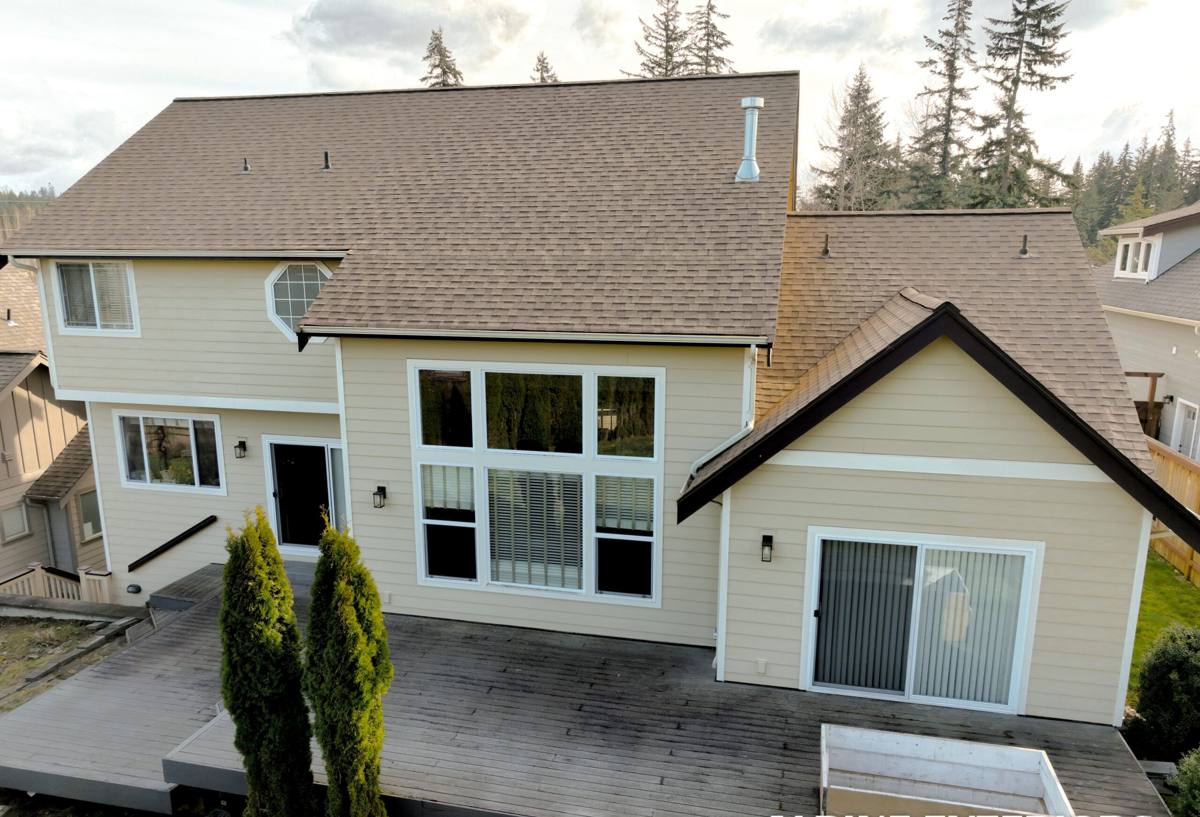
What "Correct" Siding Replacement Actually Involves
Replacing siding is not swapping one skin for another. Done right, it's a full envelope inspection and rebuild of the parts of your wall assembly that actually keep water out. Skipping any of these steps is how a siding job looks fine for two years and then fails behind the surface where nobody can see it until there's a soft spot or a stain.
Tear-Off and Sheathing Inspection
Old siding comes off in sections so we can inspect the sheathing underneath before anything new goes up. In a climate like Custer's, this step matters more than most homeowners realize — hidden rot, soft spots around old fastener penetrations, and water staining behind siding are common findings, especially on walls that take the brunt of prevailing wind-driven rain. Any compromised sheathing gets replaced before we move forward. Covering over damaged sheathing with new siding just hides the problem for a few more years.
Weather-Resistive Barrier and Flashing
A correctly installed weather-resistive barrier (housewrap) with properly lapped and taped seams is what actually manages bulk water behind the siding — the siding itself is the first line of defense, not the only one. Flashing at windows, doors, roof-to-wall intersections, and any other penetration has to be integrated with the barrier in the right shingle-lap order, not just caulked over. This is where a lot of amateur and rushed jobs quietly fail, and it's invisible once the siding is back on.
Rainscreen or Drainage Gap
Depending on the wall assembly and exposure, a drainage gap between the barrier and the new siding gives incidental moisture a path to escape and dry rather than sitting trapped against the wall. In a high-rainfall, high-humidity area like Whatcom County, this detail has an outsized effect on how long a siding job actually lasts.
Fastening and Joint Detailing
Every manufacturer has fastener spacing, penetration depth, and clearance requirements. James Hardie in particular publishes specific installation instructions by product line and climate zone — proper fastener placement, minimum clearances from grade and roofing, and correct joint treatment at butt seams and corners. Installed off-spec, fiber cement can still trap water or crack at stress points. Installed to spec, it's engineered to handle this exact climate.
Why We Only Install James Hardie Fiber Cement
We get asked why we don't offer vinyl, LP SmartSide, or other fiber cement brands. It's a fair question, and the honest answer is that we made a standardization decision based on what holds up in this specific climate over decades, not what's cheapest to quote.
- Non-combustible material. Fiber cement doesn't feed a fire the way vinyl or wood-based products can, which matters for insurance conversations and peace of mind alike.
- Engineered for regional climates. Hardie's HZ5 product line is specifically engineered for the moisture and freeze-thaw conditions of the Pacific Northwest, not a generic national spec.
- Factory-applied ColorPlus finish. The finish is baked on at the factory under controlled conditions, which gives more consistent, longer-lasting color than field-applied paint — a real advantage in a climate where UV and moisture both work against a painted surface.
- Moisture and pest resistance. Fiber cement doesn't rot, and it doesn't attract the insects that go after wood-based siding products.
- Transferable warranty backed by a large manufacturer. That matters to future buyers as much as current owners — a warranty is only as good as the company standing behind it.
We won't tell you other products are junk — vinyl is inexpensive and low-maintenance in the right application, and engineered wood siding has genuine fans. But we've chosen not to install products where the long-term trade-offs — moisture sensitivity, appearance over time, or warranty structure — don't hold up to what we see in Whatcom County weather. Hardie is what we put our name behind.
Signs a Custer Home Needs Siding Replacement, Not Just Repair
- Soft or spongy spots when you press on siding, especially near the bottom courses or under windows
- Persistent moss or algae growth that comes back within weeks of cleaning
- Visible warping, bowing, or separation at seams and corners
- Paint that's peeling or bubbling in patterns that follow seams rather than just sun exposure
- Musty smell or visible staining on interior walls that share an exterior wall with problem siding
- Siding older than 20-25 years, especially wood-based or older vinyl products never designed for this exposure
One or two of these on their own might mean a targeted repair. Several together, especially on the walls that take the worst of the weather off the water, usually mean the underlying wall assembly has been compromised and a full section — or the whole exterior — needs replacement.
Cost Factors for a Custer Siding Replacement
Every home is different, so we won't quote a number here that doesn't mean anything without seeing your walls. But these are the factors that actually move the price, and worth understanding before you start getting quotes.
| Factor | Why It Matters |
|---|---|
| Extent of sheathing repair needed | Hidden rot behind old siding is common on wind-exposed Custer walls; repair scope isn't known until tear-off |
| Home size and wall complexity | More corners, windows, and rooflines mean more flashing and trim detail work |
| Hardie product line selected | HardiePlank lap siding, HardieShingle, and panel systems differ in material and labor cost |
| ColorPlus vs. field-painted finish | Factory-finish products avoid future repainting costs but carry a different upfront price |
| Trim and accessory scope | Fascia, soffit, and trim replacement alongside siding affects total job size |
| Access and site conditions | Multi-story sections, tight lot lines, or landscaping obstacles affect labor time |
A written estimate after an in-person walkthrough is the only way to get numbers that mean anything — anything quoted sight-unseen is a guess.
Our Process for a Custer Siding Replacement
- On-site assessment. We walk the exterior, check existing siding condition, and look for the moisture and exposure patterns specific to your lot and orientation.
- Written estimate. Scope, product selection, and pricing laid out clearly before any work starts — no surprise change orders for things we could have caught upfront.
- Tear-off and sheathing inspection. Old siding removed in sections, sheathing checked and repaired as needed before we move forward.
- Weather barrier and flashing installation. Housewrap, flashing, and drainage detailing installed to manufacturer and code specification.
- Hardie installation to spec. Fastening, joint treatment, and clearances installed per James Hardie's published requirements for this climate zone.
- Final walkthrough. We review the finished work with you before calling the job done.
Why Local Experience in Whatcom County Matters
Siding installation isn't the same job in every part of the country, and it isn't even the same job everywhere in Washington. A crew that mostly works drier, more sheltered inland areas doesn't necessarily think about drainage gaps, flashing laps, and moss-resistant detailing the way a crew that works Semiahmoo Bay's exposure day in and day out does. We size up a home in Custer differently than we'd size up one thirty miles inland, because the weather load is genuinely different — more wind-driven rain, more sustained dampness, more salt exposure near the water.
That local pattern recognition is why hiring a crew that already works this specific area is worth something. We know which wall orientations in this part of Whatcom County take the worst weather, which details tend to fail first on older homes here, and what actually holds up over a Pacific Northwest winter and the long gray stretch that follows it.
Maintenance After Your New Siding Goes Up
James Hardie fiber cement is low-maintenance, not no-maintenance. A little ongoing attention goes a long way toward getting the full lifespan out of the material, especially in a moss-prone climate like this one.
- Rinse siding periodically to keep salt residue and grime from building up, particularly on walls facing the water
- Keep gutters clear so overflow doesn't run down and saturate siding sections repeatedly
- Trim back vegetation and tree cover that keeps siding shaded and damp longer than necessary — this is the single biggest factor in moss and algae growth
- Inspect caulking at trim and penetrations every couple of years and re-caulk where it's cracked or pulled away
- Address any impact damage or chips promptly so the underlying material isn't exposed to moisture
Get a Free Estimate for Your Custer Home
If your siding is showing its age, or you just want an honest read on whether repair or full replacement makes more sense for your home, we're glad to take a look. There's no pressure and no hard sell — just a straight assessment from a crew that installs one product because we trust it to hold up here. Use the form below to request your free estimate.