 Semiahmoo Siding
 Building a Deck That Actually Holds Up in Birch Bay
Birch Bay sits close enough to the water that every deck out here deals with a different set of stresses than a deck built twenty miles inland. Salt-laden air corrodes hardware faster, driving rain off the Strait finds its way into any gap in the flashing, and a shaded, damp shoulder season keeps moss and algae active for months at a time. A deck that's framed and fastened like it's going in a dry inland yard will show its age in Birch Bay within a few winters — loose railings, rust streaks bleeding through the decking, soft spots where water sat too long.
We build decks specifically for this environment. That means choosing fasteners, footings, and finish materials that are rated for coastal exposure, not just "exterior use," and detailing the parts of the deck — ledger connections, post bases, joist tops — that fail first when moisture and salt work on them year after year.
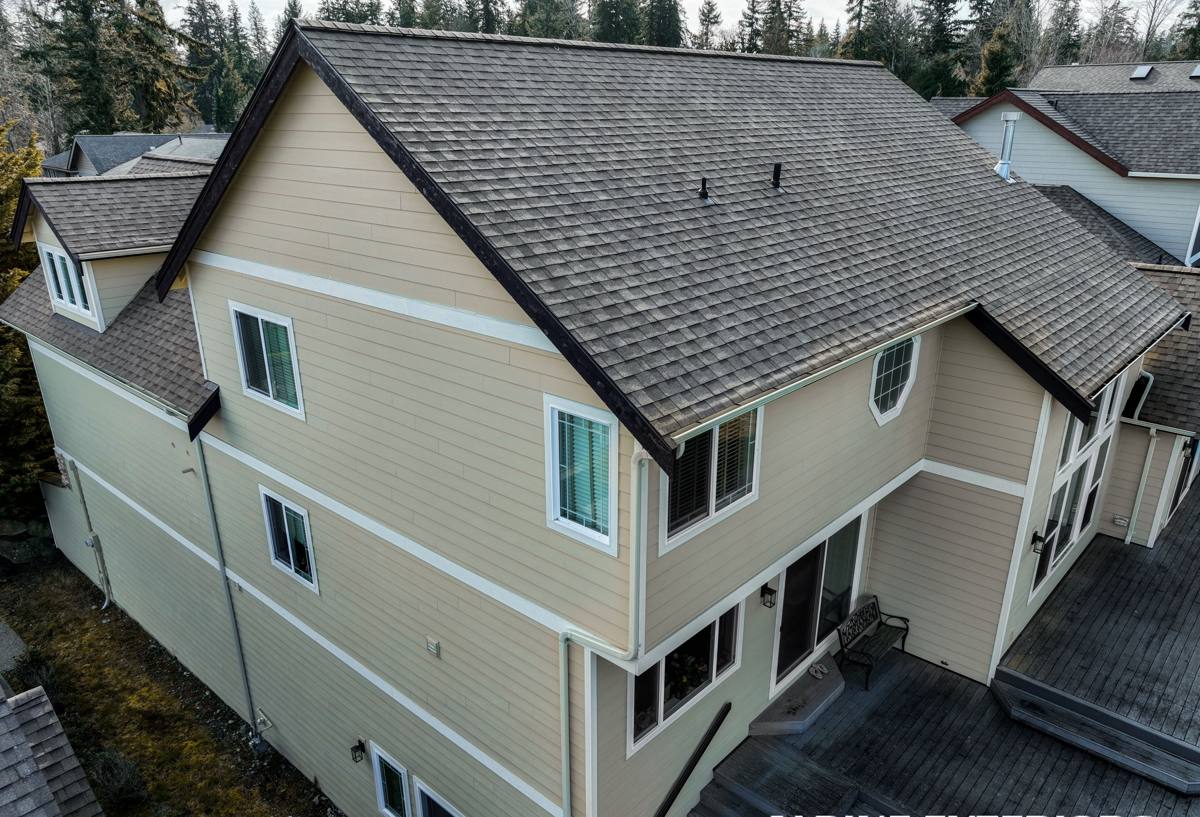
What Whatcom County's Coastal Climate Does to an Ordinary Deck
Semiahmoo and Birch Bay get a combination of conditions that's harder on a deck than most homeowners expect:
- Salt air corrosion — standard galvanized fasteners and hardware pit and rust years earlier near the water than they would inland, and rust stains bleed into the wood or composite around every screw head.
- Driving, wind-blown rain — rain doesn't just fall straight down here; it gets pushed sideways into ledger boards, stair stringers, and any horizontal surface that isn't properly flashed or sloped.
- A long moss and algae season — shaded decks, north-facing decks, and anything under tree cover stay damp for long stretches, which is exactly what moss and algae need to take hold on boards, stairs, and railings.
- Freeze-thaw cycling — Whatcom County doesn't get deep freezes often, but the repeated light freeze-thaw swings still work on trapped moisture in end grain and fastener holes over time.
None of these are dramatic, one-time failures. They're slow, cumulative problems, which is why a deck built without them in mind can look fine for the first two or three years and then deteriorate quickly after that.
Where Problems Actually Start
In our experience, deck failures near the water almost never start in the middle of the decking field. They start at the connections: the ledger board bolted to the house, the post bases sitting in standing water, the stair stringers where rain collects and doesn't drain, and the fastener heads that were never rated for a salt-air environment in the first place.
Choosing Decking Material for a Birch Bay Property
There's no single "best" decking material for every Birch Bay home — it depends on sun exposure, how much shade and moss risk the site has, and how much maintenance the homeowner wants to take on. Here's how the common options actually compare in this climate:
| Material | Moss/Algae Resistance | Maintenance | Coastal Durability |
|---|---|---|---|
| Pressure-treated fir/pine | Low — needs regular cleaning and re-sealing | High — annual washing and periodic sealing | Good if fasteners and flashing are upgraded |
| Cedar | Moderate — natural oils help but fade over time | Moderate to high — needs re-oiling to keep resistance | Good, especially in ventilated, sunnier spots |
| Composite decking | Good on cap-stock boards; some low-end composites still trap surface moss | Low — occasional washing, no sealing | Very good with correct fasteners and hidden clips |
| PVC decking | Best resistance to moisture-driven growth | Lowest — wash only | Excellent, but framing underneath still needs the same care |
Composite and PVC boards have become popular near the water for good reason — they don't absorb the moisture that feeds moss and algae the way wood does, and they don't need re-sealing. But the framing underneath still has to be built correctly regardless of what decking sits on top, and a cheap composite installed with the wrong fasteners or clips will still fail early. We'll walk you through the honest trade-offs — cost, look, feel underfoot, and long-term upkeep — for your specific site rather than pushing one product line.
Framing and Fasteners: The Part That Actually Determines Lifespan
The decking surface is what you see, but the framing and hardware are what determine whether the deck is still solid in fifteen years. For Birch Bay properties, we treat these as non-negotiable:
- Stainless steel or heavy-duty coated fasteners rated for coastal and treated-lumber exposure, not standard galvanized screws that will streak and weaken near salt air.
- Proper ledger flashing where the deck attaches to the house, with counter-flashing tucked correctly behind the siding or house wrap so wind-driven rain can't work its way behind the ledger board.
- Elevated, drained post bases that keep post end grain out of standing water instead of sitting directly on grade.
- Joist tape or flashing on top of every joist to stop water from soaking into the framing lumber from above, which is one of the most common hidden causes of early rot.
- Proper slope and gapping in the decking so water sheds off the surface instead of pooling, which also starves moss and algae of the standing moisture they need to spread.
These details cost more upfront than a bare-minimum build, but they're the difference between a deck that needs board replacement in year six and one that's still tight and solid at year twenty.
Design Considerations Specific to Birch Bay Homes
Sun Exposure and Layout
Homes closer to the water often have views worth designing around, but a deck oriented to catch full wind off the Strait needs sturdier railings and wind-rated fastening at the posts. Shaded decks — especially those tucked under tree cover or on the north side of the house — need extra attention to drainage and material choice, since they're the ones that fight moss the hardest.
Railings and Hardware
Railing systems see more salt exposure than almost any other part of the deck because they're fully exposed on both faces. We spec hardware and cable or baluster systems rated for coastal use, and avoid raw mild-steel components that will rust and stain the deck surface within a season or two.
Stairs and Landings
Stair stringers and landings collect runoff from the whole deck, so they need the same drainage thinking as the main structure — proper slope, gapping, and fasteners that won't corrode where water concentrates.
Our Process for a Custom Deck Build
- On-site assessment — we look at sun exposure, drainage patterns, existing structure (for replacements), and how the site handles rain and shade before recommending anything.
- Material and layout discussion — honest trade-offs between wood, composite, and PVC decking based on your budget, maintenance appetite, and how the deck will be used.
- Design and permitting — Whatcom County requires permits for most new deck construction and significant rebuilds; we handle that process so it's not on you.
- Framing built for the coast — coastal-rated fasteners, proper flashing, elevated post bases, and correct drainage slope from the start.
- Decking, railing, and stair installation — installed to the manufacturer's coastal-exposure specs, not just the standard inland install.
- Final walkthrough — we go over basic care specific to your material choice so moss and algae stay manageable with minimal effort.
Maintenance That Actually Matters Near the Water
Every deck material needs some upkeep in Birch Bay's climate — the difference is how much and how often:
- Rinse or sweep debris off the deck surface periodically, especially in shaded areas, so organic material doesn't sit and feed moss growth.
- Wash composite and PVC decking with a mild cleaner once or twice a year to keep surface algae from establishing.
- Re-oil or re-seal wood decking on the schedule the product calls for — skipping a cycle is when moisture starts getting into the wood fibers.
- Check railing hardware annually for early rust streaking, which is easier to address early than after it's stained the boards.
- Keep gutters and downspouts near the deck clear so runoff isn't dumping extra water onto the structure.
Why Hire a Crew That Already Works in Birch Bay
A deck contractor who mostly builds inland will often use standard fasteners and standard details because that's what works where they usually build. Near the water, those same standard choices are what lead to early corrosion, moss buildup, and framing problems that show up a few years after the fact. Working with a crew already familiar with Whatcom County's coastal conditions — and the specific way salt air, driving rain, and moss season wear on a deck here — means those details get handled correctly the first time, instead of being discovered as a repair down the road.
We build decks throughout the Semiahmoo and Birch Bay area and see firsthand how the local climate affects different materials and builds over time, which shapes every recommendation we make on a new project.
If you're planning a new deck or replacing one that's showing its age, we're happy to come take a look and give you a straightforward, no-pressure estimate — just fill out the form below.