 Semiahmoo Siding
 Building Decks for Laurel's Coastal Conditions
Laurel sits close enough to the water that salt-laden air, wind-driven rain, and long stretches of overcast, damp weather are just part of life. That's great for the view off a back deck and hard on the deck itself. A deck built the same way you'd build one in a dry inland town won't hold up here — the fasteners corrode faster, the wood stays wet longer between rain events, and moss and algae get a foothold on any surface that doesn't shed water and dry out quickly. A deck that's actually built for this stretch of Whatcom County looks the same as any other deck at first glance, but the choices underneath — material, hardware, spacing, drainage — are different.
We build and repair custom decks for homeowners in Laurel and the surrounding Semiahmoo area, and most of what separates a deck that lasts fifteen years without much trouble from one that's rotting at the ledger board in six comes down to decisions made before the first board goes down.
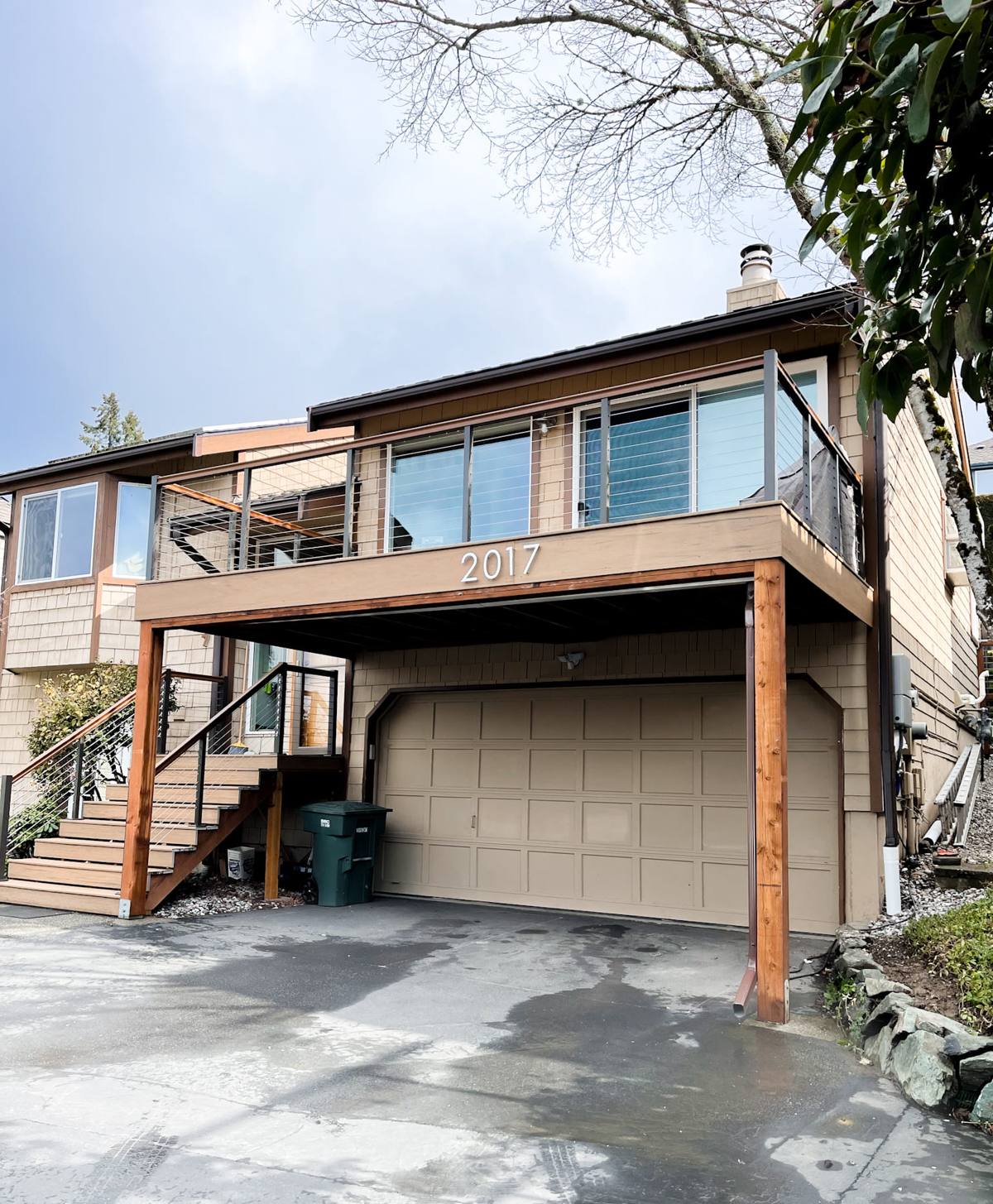
What Laurel Homes Need From a Deck
Every property is different, but a few things come up again and again on decks in this area:
- Good separation between the decking and anything below it, so air can move and surfaces can dry between rain events instead of staying damp for days
- Fasteners and connectors rated for coastal/marine exposure, not standard interior-grade hardware that starts rusting within a season or two
- A ledger connection to the house that's properly flashed — this is the single most common failure point on older decks here
- Decking material and gap spacing chosen to resist moss and algae growth, since a deck in constant shade or under tree cover will grow a green film faster than one in open sun
- Railings and fascia details that don't trap moisture behind them
None of this is exotic. It's standard good building practice — it just gets skipped more often than it should be, especially on decks built or re-decked as a quick weekend project rather than a planned installation.
Sun Exposure and Moss Pressure Vary Block to Block
Two decks a few hundred feet apart can age very differently depending on tree cover and which direction they face. A deck tucked under fir trees on the shaded side of a house will need a different maintenance rhythm — and sometimes a different decking choice — than one that gets afternoon sun. We look at the actual site, not just a generic spec, before recommending material.
Choosing Decking Material for Salt Air and Moss
There's no single "best" decking material — there's a best material for a given budget, look, and site. Here's how the common options actually perform in this climate.
Pressure-Treated Wood
Still the most affordable option and, when properly maintained, perfectly durable. The trade-off in a wet coastal climate is honest: it needs re-sealing or staining on a regular schedule, and if that maintenance lapses, moisture gets in and moss finds a home fast, especially on shaded boards. It's a good choice for homeowners who don't mind the upkeep and want the lowest upfront cost.
Cedar
Naturally resistant to rot and insects and it looks good against this region's setting, but it's softer than composite and still needs periodic sealing to keep its color and resist moisture staining. Cedar decks that are neglected will gray and can develop soft spots faster than treated lumber in constant damp shade.
Composite and PVC Decking
Composite and capped-composite boards cost more upfront but don't absorb water the way wood does, which matters a lot when a deck sits under trees or gets minimal direct sun. They still need occasional cleaning — composite can grow a surface film of algae or moss just like any other material if it's never washed — but there's no re-staining cycle and no risk of soft, rotting boards. For decks in heavy shade or with limited airflow underneath, this is usually our recommendation.
| Material | Upfront Cost | Maintenance | Moss/Moisture Resistance |
|---|---|---|---|
| Pressure-treated wood | Lowest | Reseal/stain every 1-2 years | Fair — needs upkeep to stay ahead of it |
| Cedar | Mid | Seal periodically, occasional cleaning | Good, better in sun than shade |
| Composite/PVC | Highest | Periodic washing only | Very good, best in shaded/damp spots |
Substructure and Fasteners: Where Decks Actually Fail
Homeowners usually focus on the decking boards because that's what they see, but the failures we get called out for are almost always underneath: a rusted-out joist hanger, a ledger board that was never flashed correctly and has been feeding water into the house rim joist for years, or joists that were spaced too wide and have started to sag or crack.
Ledger Board Flashing
This is where a deck attaches to the house, and it's the most important detail on the entire structure. Water that gets behind an unflashed or poorly flashed ledger doesn't just rot the deck — it can work its way into the house framing. In driving rain conditions like this area sees regularly, a ledger without proper flashing is a matter of when, not if, it causes a problem.
Fasteners and Hardware
Standard galvanized hardware corrodes faster in salt-influenced air than it would further inland. We use fasteners and connectors rated for coastal/marine exposure on every deck we build, which costs a little more up front and avoids the rust streaks and weakened connections we regularly see on older decks built with standard hardware.
Our Deck-Building Process
- On-site assessment — we look at sun exposure, drainage, tree cover, and how the deck ties into the house before recommending anything
- Design and material selection — sized and laid out for how you'll actually use the space, with material chosen for the site's specific moisture and shade conditions
- Permit handling — most new decks and many rebuilds in Whatcom County require a permit; we handle that paperwork so it's not on you
- Ledger flashing and structural framing — done first and correctly, since this is the part nobody sees again once decking goes down
- Decking, railing, and fascia installation — with attention to drainage gaps and airflow underneath
- Final walkthrough — we go over basic care for whatever material you chose, so you know what upkeep to expect and when
Railings, Fascia, and Finish Details for Wet Climates
The small details on a deck are often what fails first. Fascia boards nailed tight against a rim joist with no gap trap moisture and rot from the inside before the face of the board shows any damage. Railing posts that aren't properly through-bolted and flashed at the base are a common source of soft, spongy wood a few years in. We build these details to shed water rather than hold it, which is a small difference in labor but a large difference in how the deck ages.
Maintenance That Actually Matters Here
Every deck needs some upkeep, but what matters most in this climate is staying ahead of standing moisture and organic growth rather than chasing cosmetic issues. A few habits go a long way:
- Sweep debris (needles, leaves) out of gaps regularly so boards can dry between rains
- Wash the surface at least once a year to knock back algae and moss before it gets established
- Check the ledger flashing and any caulked joints annually for gaps or cracking
- Reseal or stain wood decking on the schedule appropriate to the product, not "whenever it looks faded"
- Keep gutters and downspouts near the deck clear so runoff isn't dumping extra water onto or under it
Permits and Local Considerations
Most deck construction and significant rebuilds in Whatcom County need a building permit, and requirements can shift based on deck height, attachment to the house, and proximity to property lines. We pull the necessary permits as part of the job so the work is inspected and documented correctly — that matters both for safety and for resale down the road, since an unpermitted deck can complicate a home sale.
Why Hire a Crew That Already Works Laurel
A deck built for a dry climate isn't wrong, exactly — it's just built for different conditions than the ones actually hitting it here. Working regularly in Laurel and the wider Semiahmoo area means we're not guessing at how salt air, sustained rain, and shaded, moss-prone sites affect a deck over time — we're building around it as a matter of course, from hardware selection to how we detail the ledger and fascia. That local pattern-matching is the difference between a deck that needs real attention in year five and one that's still solid well beyond that.
If you're planning a new deck, replacing an aging one, or just want an honest look at a deck that's showing its age, we're happy to come take a look. Fill out the form below for a free, no-pressure estimate.