 Semiahmoo Siding
 Windows Built for Cherry Point's Coastal Climate
Cherry Point sits close enough to the water that its weather behaves differently than homes even a few miles inland. Wind off the Strait of Georgia carries salt into the air, rain comes in sideways more often than straight down, and the long gray stretch of fall and winter keeps everything damp for weeks at a time. Windows here don't just have to look good and keep the heat in — they have to survive a climate that actively works against wood, metal, and seals every single day.
Custom windows for a Cherry Point home means matching the unit to that reality: the right frame material, the right glass package, and — just as important — an installation that accounts for wind-driven rain instead of assuming it'll fall straight down like it might somewhere drier. We've been doing this work throughout the Semiahmoo area and greater Whatcom County long enough to know which shortcuts show up as problems two winters later.
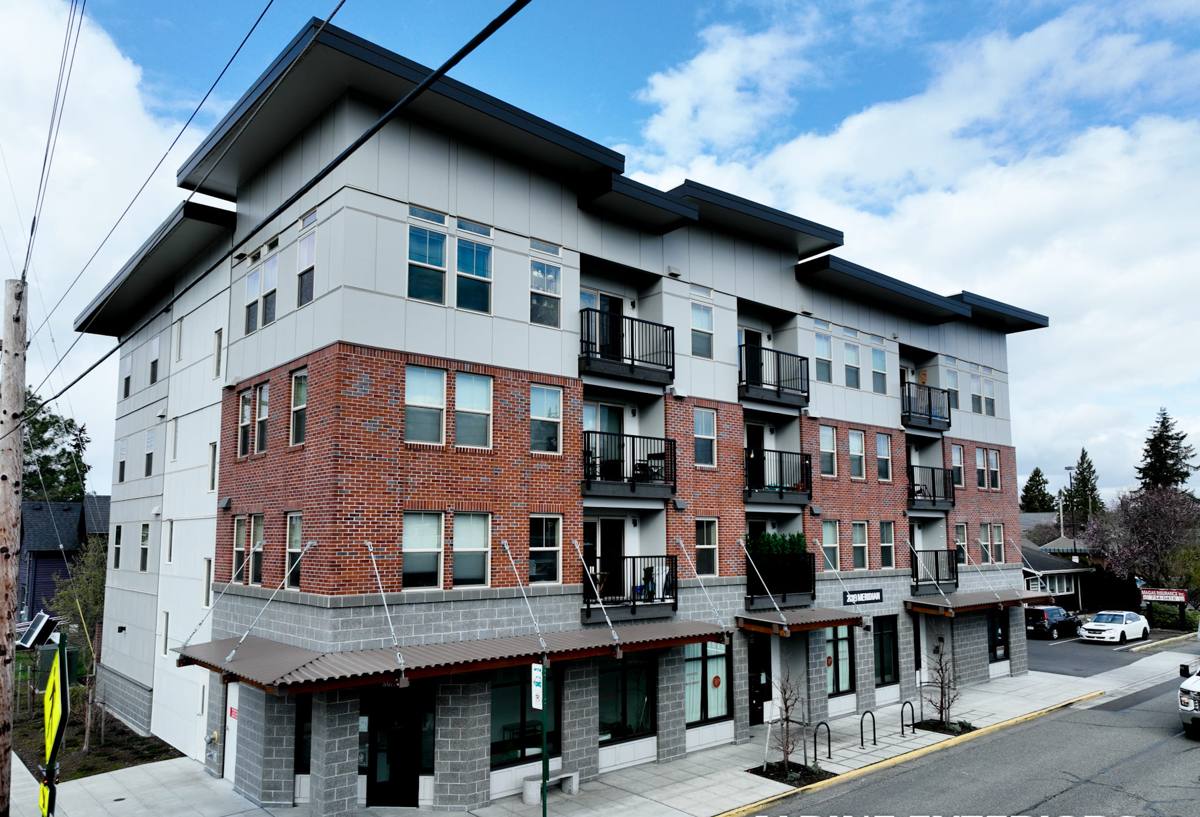
What Salt Air, Driving Rain, and Moss Season Actually Do to Windows
Homeowners who haven't dealt with a marine climate before are often surprised by how fast it ages a window system. It's worth understanding the specific mechanisms so you know what you're protecting against.
Salt Air and Corrosion
Airborne salt is conductive and mildly corrosive. It settles on metal hardware — hinges, locks, balance systems, screws — and speeds up corrosion far faster than the same hardware would wear in a dry inland climate. On aluminum-framed windows without a marine-grade finish, salt exposure can also lead to pitting and a chalky, degraded surface over time. This is one of the biggest reasons material choice matters more here than it would in most parts of the country.
Driving Rain and Water Intrusion
Rain that comes in at an angle, pushed by wind off the water, tests a window's weatherproofing in ways vertical rain never does. It gets forced up under sills and into gaps that a standard installation might leave. If flashing, sill pans, and sealant aren't done correctly, water finds its way behind the window trim and into the wall framing — and by the time you see a stain or soft spot on the interior, the damage has usually been building for a while.
Moss, Mildew, and Prolonged Dampness
Whatcom County's long moss season isn't just a roof and siding issue. Persistent humidity and shaded, damp conditions around window frames and sills promote mildew growth, especially on wood surfaces that aren't well sealed or that have any exposed end grain. Vinyl and fiberglass don't feed mildew growth the way untreated wood can, but any material can trap moisture if the installation traps water against it instead of letting it drain.
Choosing the Right Frame Material for a Marine Climate
There's no single "best" window material for every home — it depends on your budget, your home's style, and how much upkeep you want to take on. Here's how the common options hold up specifically against Cherry Point's conditions.
| Material | Salt Air Performance | Moisture Handling | Maintenance |
|---|---|---|---|
| Vinyl | Excellent — won't corrode or pit | Very good; doesn't absorb moisture | Low — occasional cleaning |
| Fiberglass | Excellent — highly stable, resists salt and UV | Very good; dimensionally stable when wet or dry | Low — durable finish |
| Wood-clad (exterior clad in vinyl/fiberglass/aluminum) | Good on the exterior clad surface; interior wood needs protection | Good if cladding and seals are intact | Moderate — watch for seal failure at joints |
| Aluminum (standard, non-marine finish) | Fair to poor — prone to pitting and corrosion near salt water without a marine-grade coating | Conducts cold and can condense | Higher — finish needs monitoring |
For most Cherry Point homes, we steer people toward vinyl or fiberglass because they simply hold up better against salt exposure without demanding ongoing maintenance. That's not a knock on wood-clad or aluminum windows as products — they have real advantages in appearance and, in aluminum's case, slim sightlines — but in a marine environment they ask more of the homeowner in upkeep, and we'd rather be upfront about that trade-off than sell you something that becomes a maintenance chore.
Glass Packages: What Actually Matters in This Climate
Whatcom County doesn't get brutal cold, but it gets a lot of gray, wet, and windy days, and heating costs add up over a long damp season. A few glass features make a real difference here:
- Dual-pane, argon-filled glass — the baseline for energy performance in this region; argon fill slows heat transfer better than air alone.
- Low-E coatings — reflect heat back into the home in winter and block excess solar heat in summer, and help reduce interior condensation on cold, damp days.
- Warm-edge spacers — the material separating the glass panes affects how much cold transfers to the edge of the glass, which matters for condensation control on our humid days.
- Laminated or impact glass — worth considering for exposed elevations that take the brunt of storm winds off the water, for added durability against wind-driven debris.
Triple-pane glass exists and performs even better thermally, but for most homes in this climate the added cost doesn't pencil out the way it might in a colder inland climate — dual-pane with a good Low-E coating and argon fill is usually the right balance of performance and value.
Custom Sizing and Matching Your Home
"Custom" windows means the unit is built to your home's actual openings and architectural style, not pulled from a limited stock-size catalog. This matters more in older Cherry Point-area homes, where openings were often framed to dimensions that don't match modern standard sizes, and in homes with distinctive window shapes — bays, arches, or larger picture windows meant to take advantage of water or forest views.
A custom approach also lets you match grille patterns, frame color, and interior finish across the whole house, rather than ending up with a mismatched patchwork after a partial replacement. We measure every opening on site rather than working from rough estimates, because even small measurement errors turn into gaps that are hard to seal properly later.
How We Install Windows to Handle Wind-Driven Rain
The window unit itself is only part of the equation — a high-quality window installed poorly will leak, and a mid-grade window installed correctly will often outperform it. In a climate with regular driving rain, installation detail is where most long-term failures actually originate. Our process includes:
- Removing the old window and inspecting the framing and sheathing underneath for hidden moisture damage before anything new goes in.
- Installing a sloped sill pan so any water that does get past the window sheds outward instead of pooling against the framing.
- Properly integrating flashing tape with the home's existing weather-resistive barrier, in the correct shingled order, so water is always directed down and out.
- Using sealants and backer rod appropriate for the gap size and the region's temperature swings, rather than relying on caulk alone to do the whole job.
- Insulating the gap between the window frame and rough opening to prevent both air leakage and condensation points.
- Finishing exterior trim and sealant lines so water is shed away from every joint, not just the main window unit.
This sequence isn't unique to us — it's just correct installation practice for a wet, wind-exposed climate. The difference is consistency: skipping the sill pan or rushing the flashing order is exactly how a window that looks fine on day one starts leaking by the second or third rainy season.
Signs Your Current Windows Are Already Failing
Because water damage from a failing window is often hidden behind trim and drywall, it helps to know the early warning signs before the problem gets expensive:
- Condensation building up between the panes (a sign the seal has failed and the gas fill is gone)
- Soft, discolored, or bubbling drywall or trim around the window
- A musty smell near windows, especially after heavy rain or during moss season
- Visible corrosion, pitting, or chalky residue on aluminum hardware or frames
- Drafts you can feel with a hand near the frame on a windy day
- Difficulty opening, closing, or locking the window smoothly
- Wood trim that's soft, spongy, or shows signs of rot at the corners or sill
Any one of these on its own might be minor. A few of them together, especially on a window facing the water or prevailing wind, usually means it's worth having it looked at before winter storms make it worse.
Why Local Installation Experience Matters Here
Window installation instructions are written for average conditions. Cherry Point and the broader Semiahmoo area aren't average — the combination of salt exposure, wind-driven rain, and a long moss season means the margin for error on flashing and sealant work is smaller than it would be in a drier, calmer climate. A crew that's worked windows on homes in this specific area has already seen where standard details fall short here, and adjusts for it as a matter of course rather than learning it the hard way on your house.
We also know which materials genuinely hold up to years of salt air versus which ones look fine in a showroom but ask for more maintenance than most homeowners want to sign up for. That's the kind of judgment that only comes from doing this work, on this coastline, repeatedly.
Get a Free, No-Pressure Estimate
If you're dealing with drafty, fogged, or aging windows in Cherry Point, or you're planning a custom window project as part of a larger renovation, we're happy to take a look and walk you through your options honestly — no pressure, no pushy sales pitch. Fill out the form below to schedule a free estimate.