 Semiahmoo Siding
 Building a Deck That Actually Holds Up in Drayton Harbor
Drayton Harbor sits right where the marine air off the water meets the wetter, greener side of Whatcom County, and that combination is tough on outdoor structures. A deck built here doesn't just need to look good on the day it's finished — it needs to survive salt-laden air, months of driving rain, and a moss season that can stretch from fall well into spring. A lot of deck problems we get called out to fix in this area weren't caused by bad luck. They were built the way a deck gets built inland, without accounting for what the harbor does to wood, metal, and fasteners over time.
This page is specifically about building new decks for homes in and around Drayton Harbor. If you're comparing materials, thinking through what a correctly built deck should include, or trying to figure out why the last deck on your property failed early, this is written for that conversation.
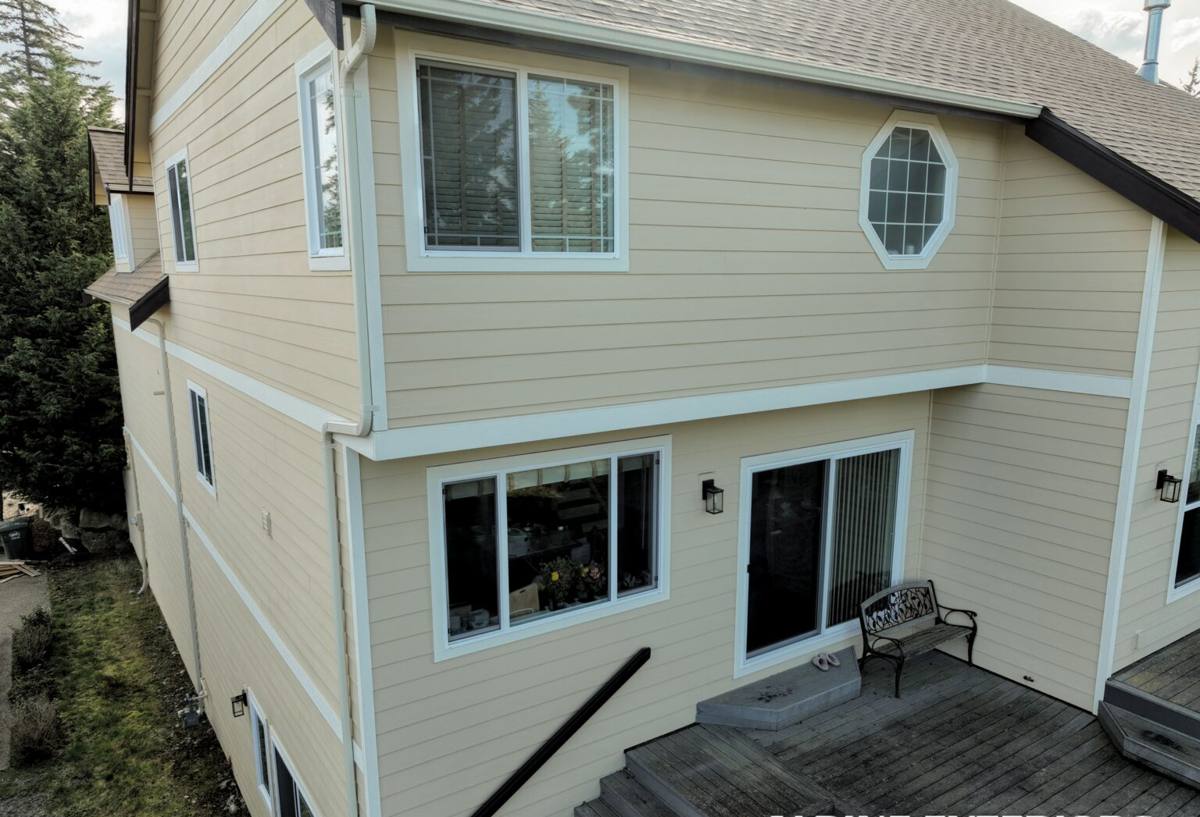
What Drayton Harbor's Climate Does to a Deck
Three things drive almost every deck failure we see in this part of Semiahmoo: salt air, sustained rain, and shade-fed moss growth. None of them are dramatic on their own, but stacked together over a few years they'll take down a deck that was built for a drier climate.
Salt Air and Corrosion
Proximity to Drayton Harbor means airborne salt is a constant, low-level presence, even on a home that isn't right on the water. Salt air accelerates corrosion in fasteners, brackets, and any exposed metal hardware. A deck screw or joist hanger rated for general outdoor use inland can start showing rust streaks and pitting within a few seasons here. Once a fastener corrodes, it loses holding strength long before it looks obviously bad, which is part of why hardware selection matters more in this area than most homeowners expect.
Driving Rain and Water Intrusion
This is a wet part of the state generally, but wind-driven rain off the harbor hits vertical surfaces — ledger boards, stair stringers, the house wall behind the deck — harder and more directly than a straight-down rain would. Water doesn't need much of a gap to find its way behind flashing or into end grain. Once it's in, it stays, because drying conditions here are slow for much of the year.
Moss, Algae, and Shade
Between the tree cover common on Whatcom County properties and the extended damp season, moss and algae get a long runway to establish themselves on any horizontal wood or composite surface. Beyond being slippery and unattractive, moss holds moisture directly against the decking surface, which speeds up rot in wood and can dull or stain composite boards if it's left to sit.
Choosing the Right Decking Material
There's no single "best" decking material for every situation — the right choice depends on budget, how much shade the deck gets, and how much upkeep you actually want to do. Here's how the common options compare for a Drayton Harbor property specifically.
| Material | Upfront Cost | Maintenance in This Climate | Notes |
|---|---|---|---|
| Pressure-treated lumber | Lowest | Needs regular cleaning and re-sealing to resist moss and moisture; more sensitive to fastener corrosion issues | Good value if you're willing to stay on top of upkeep |
| Cedar | Mid-range | Naturally moderate rot resistance, but still needs periodic cleaning and finish to fight moss staining and graying | Preferred for appearance; softer, so more prone to surface wear near the water |
| Composite / capped polymer | Highest | Occasional washing to keep moss and algae from taking hold; no staining or sealing required | Best long-term option for shaded, damp yards common near the harbor |
Whichever surface material you choose, it's only as good as what's underneath it. We've seen composite decking installed over framing that wasn't protected properly, and the framing failed years before the decking itself would have.
What a Correctly Built Deck Involves
A deck that's going to hold up in this climate isn't just about picking a good board. It comes down to a handful of details in the structure that don't show once the project is finished, but determine how long it actually lasts.
Footings Set for Local Soil and Frost Conditions
Footings need to be sized and set to the depth Whatcom County's building code requires for this area, on soil that's often damper and less stable than it looks. Undersized or shallow footings are one of the more common shortcuts we find on decks that have started to sag or shift.
Ledger Board Flashing
Where a deck attaches to the house is the single most important water-management detail on the whole structure. With the amount of driving rain this area gets, a ledger board without proper flashing and a water-resistant barrier behind it is a matter of when, not if, water gets into the house's wall framing. This is one detail that should never be skipped or done halfway, even though it's completely invisible once the deck is finished.
Fasteners and Hardware Rated for Salt Air
Given what salt air does to standard hardware here, we build with stainless steel or hot-dip galvanized fasteners and connectors rather than the coated fasteners that are fine in drier, inland climates. It costs a little more upfront. It's a lot cheaper than replacing joist hangers or re-decking a structure because the hardware failed first.
Spacing and Ventilation
Board spacing and gaps at the framing need to allow water to shed and air to move underneath the deck. Tight spacing might look cleaner on install day, but it traps moisture against the joists and speeds up rot and moss growth on the underside where you can't see it.
Railings, Stairs, and Code Requirements
Any deck built to a meaningful height needs railings and stair details that meet Whatcom County's adopted building code — rail height, baluster spacing, and stair rise/run all have specific requirements, and they exist because they matter for safety, not just paperwork. Permitting for decks in this area depends on size and height above grade, and we handle that as part of the process rather than leaving it for the homeowner to sort out separately. Skipping a required permit can create real problems later, particularly if you ever sell the home and it comes up in an inspection.
Our Process From Estimate to Finished Deck
Building a deck for a Drayton Harbor property follows a fairly consistent sequence:
- On-site visit to look at the ground, existing structure, drainage, and sun/shade exposure specific to your lot
- Material and design conversation based on your budget, maintenance preference, and how the deck will actually be used
- Permit application and engineering where required for the size or height of the structure
- Footings and framing, built to code depth with corrosion-resistant hardware throughout
- Ledger flashing and waterproofing at the house connection, done before decking ever goes down
- Decking, railing, and stair installation
- Final walkthrough so you understand what maintenance the specific material you chose actually needs
We don't skip steps to hit a faster timeline, and we won't quote a deck without seeing the site first — too much of what a deck needs here depends on drainage and exposure that you can't fully judge from a photo.
Maintenance in a Moss-Prone, Salt-Air Environment
Every deck needs some maintenance. What changes near the harbor is how often, and what you're maintaining against. A simple seasonal routine keeps most problems from ever starting:
- Sweep debris and standing leaves off the deck surface regularly, especially in fall when moss growth accelerates
- Wash the deck surface at least once or twice a year to remove moss and algae before it establishes and stains the surface
- Check that gaps between boards stay clear so water keeps draining instead of pooling
- Inspect visible hardware for early rust or staining, which is easier and cheaper to address than a failed connector later
- Re-seal or re-stain wood decking on the schedule the product calls for — don't wait until it's visibly gray and worn
- Confirm the area under the deck has airflow and isn't collecting standing water or debris against the framing
None of this is complicated, but it's the difference between a deck that lasts and one that needs major repair well before it should.
Why Hire a Crew That Already Works Drayton Harbor
A deck builder who mostly works drier, inland jobs will often use materials and details that are perfectly fine there and undersized here. Working regularly in Semiahmoo and around Drayton Harbor means we're not guessing at how salt air treats hardware, how long moss season actually runs, or where driving rain tends to find gaps in flashing — we've seen it firsthand on homes with the same exposure yours has. That local experience shows up in decisions you'd never think to ask about: which fastener grade to spec, how much ventilation to leave under the framing, where flashing needs extra attention. It's the kind of thing that doesn't show on a quote, but shows up in how long the deck lasts.
If you're planning a new deck in Drayton Harbor or anywhere around Semiahmoo, we're happy to take a look at your property and put together a straightforward, no-pressure estimate. Use the form below to get started.