 Semiahmoo Siding
 Wiser Lake Decks Take a Different Kind of Beating
Decks around Wiser Lake live a harder life than a lot of homeowners realize. You've got the moisture load that comes standard with Whatcom County — long wet seasons, driving rain that gets pushed sideways by wind off the water, and a shoulder season that never seems to fully dry out. Add in the salt-laden air that moves inland off the Semiahmoo coast on a west wind, and you've got a structure that's fighting corrosion and rot at the same time, from two different directions.
Most Wiser Lake properties also sit close to trees, brush, or the lake itself, which means shade. Shade plus moisture is exactly the recipe moss and algae need. A deck that gets morning sun and afternoon shade off the water can stay damp for days after a storm, even when the rest of the yard has dried out. That combination — salt air on the hardware, standing moisture under the boards, and moss doing its slow damage on top — is why deck repair out here isn't the same job as deck repair on a dry inland lot.
None of that means your deck is doomed. It means the repair has to account for what's actually attacking the structure, not just patch the symptom you can see from the yard.
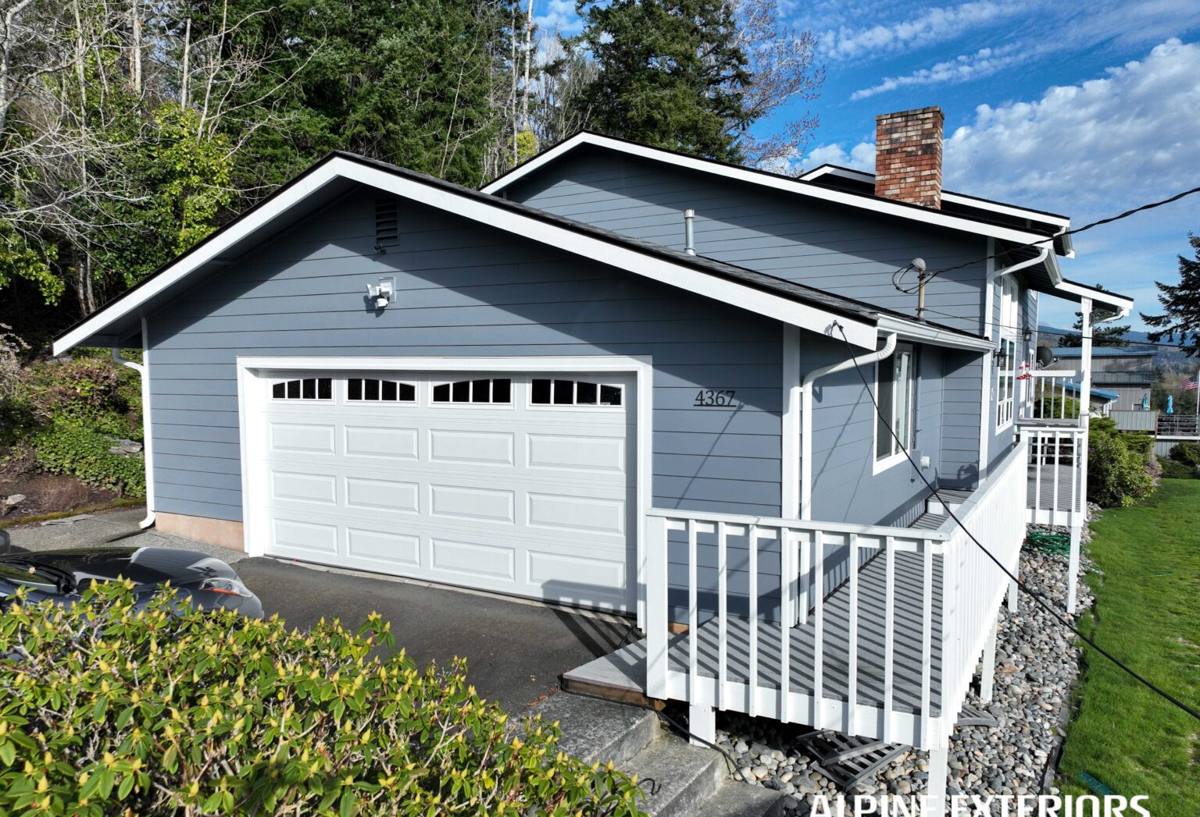
Signs Your Deck Needs Repair, Not Replacement
Most decks don't fail all at once — they show warning signs for months or years before anything gives way. Catching these early is the difference between a repair bill and a rebuild bill.
- Boards that feel spongy, springy, or noticeably softer underfoot in one area
- Rust streaks bleeding out from screw heads or bracket edges
- Gaps opening up where the deck meets the house (the ledger board)
- Green or black film that keeps coming back within weeks of cleaning it off
- A railing that has any wobble or give when you lean on it
- Stair stringers that flex or creak more than they used to
- Visible daylight or rust at joist hangers when you look underneath the deck
- Fasteners backing out or spinning loose in their holes
If you're only seeing one or two of these, and they're isolated to a small area, you're usually looking at a repair. If several of these are showing up together, especially near the ledger or main support posts, that's when we start talking about how much of the structure underneath needs attention, not just the decking on top.
Where Deck Damage Actually Starts: Under the Boards
The part of a deck people worry about — the visible decking — is rarely the part that fails first. The structure underneath is what actually holds the deck up, and it's the part that's hardest to inspect without knowing what to look for.
The Ledger Board
This is the board bolted to your house that the whole deck hangs from. It's also the single most common failure point on decks in this climate, because it's the spot where wind-driven rain gets pushed up and behind the flashing. Once water gets between the ledger and the house, rot can run for years before anyone sees it — because the visible face of the board can look fine while the wood behind it has gone soft.
Joist Hangers and Fasteners
Metal hardware near salt air corrodes faster than the same hardware fifty miles inland. Galvanized coatings that would last decades in a dry climate can start showing rust in half that time out here, especially on hardware that sits low to the ground or near standing moisture. Corroded hangers lose their holding strength quietly — there's no visible sag until the failure is already underway.
Posts and Footings
Where a post meets its footing is a moisture trap by design if it wasn't detailed correctly to begin with. We check for rot at the base of every post, and we check that the post-to-footing connection is actually rated for the loads on it, not just original to whenever the deck was built.
A proper repair estimate always includes pulling a few boards to look at this structure directly. We don't quote ledger, joist, or post work from a guess — we look at the wood and the hardware before we tell you what it needs.
Moss, Algae, and the Shade Problem
Moss on a deck is more than a slip hazard and an eyesore. It holds moisture against the wood surface constantly, which means the boards underneath a heavy moss mat are wet far more often than boards that dry out between rains. Over a few seasons, that constant dampness accelerates checking, cupping, and eventually rot — even on decking that was treated or rated for outdoor use.
Lake-adjacent lots with tree cover get hit harder because airflow across the deck is reduced and shade keeps surface temperatures low, so nothing dries quickly. Power-washing moss off the surface without addressing what's feeding it — poor drainage, gaps between boards clogged with debris, low airflow underneath — just means it comes back within a season. Part of a correct repair is making sure water actually has somewhere to go once it hits the deck, not just replacing the boards moss has already damaged.
Repair, Partial Rebuild, or Full Replacement: How We Decide
Not every damaged deck needs to come down. The right scope depends on how much of the structural framing is affected versus how much is just surface wear on the decking itself.
| Scope | What it covers | Best fit when |
|---|---|---|
| Spot repair | Replacing individual boards, tightening or replacing a section of railing, swapping a few corroded fasteners | Damage is isolated, framing underneath is sound |
| Partial rebuild | Ledger reattachment and flashing, joist hanger replacement, post/footing correction, decking in the affected zone | Structural issues found in one area, rest of the deck tests solid |
| Full rebuild | New framing, ledger, footings, decking, and railings throughout | Rot or corrosion has spread across most of the structure, or the deck predates current safety code |
We'll always recommend the smallest scope that actually solves the problem. But we won't recommend a spot repair on top of framing we haven't been able to confirm is sound — that just moves the same failure a year or two down the road and costs more in the end.
Material Choices for Wiser Lake Conditions
When it's time to replace boards, railings, or framing, the material decision matters more here than in a milder climate. There's no single right answer for every deck — it depends on budget, how much upkeep you want to take on, and how the deck sits relative to shade and moisture.
| Factor | Pressure-treated wood | Composite decking |
|---|---|---|
| Upfront cost | Lower | Higher |
| Moisture resistance | Good if sealed and maintained regularly | Strong — doesn't absorb water like wood |
| Moss/algae resistance | Needs cleaning and re-sealing to keep ahead of it | Better surface resistance, but still needs periodic cleaning in shaded spots |
| Maintenance | Annual cleaning and re-sealing recommended | Occasional washing, no sealing required |
| Fastener/hardware needs | Standard, but corrosion-resistant hardware still matters near salt air | Manufacturer-specific hidden fastener systems, also need corrosion-resistant hardware |
We install and repair both, and we'll walk you through the honest trade-offs for your specific deck rather than pushing one material across the board. A shaded, lake-adjacent deck that gets heavy moss pressure is often a stronger case for composite; a sunnier deck with good airflow can do fine with well-maintained wood at a lower cost.
How Our Deck Repair Process Works
- On-site inspection. We look at the decking, the ledger connection, the framing underneath where accessible, the hardware, and the railings — not just the part you called us about.
- Honest scope and estimate. You get a clear breakdown of what's cosmetic, what's structural, and what we'd recommend versus what's optional.
- Repair work. Depending on scope, this covers board replacement, ledger and flashing correction, joist hanger and fastener upgrades, post/footing repair, and railing work — done to current safety standards, not just matched to what was there before.
- Final check. We test the railing, stairs, and any repaired sections for solid, no-give performance before we call the job done.
Code, Permits, and Safety on Repairs
Deck repairs in Whatcom County can trigger permit requirements depending on the scope of the work, particularly if structural framing, footings, or railings are being altered. Guardrail height and baluster spacing rules apply whenever we're touching a railing, even on an older deck that was built under a different code — we won't reinstall a railing that doesn't meet current safety spacing, regardless of what was there originally. We handle the permit question as part of the estimate so there are no surprises mid-project.
Why Local Experience with Wiser Lake Homes Matters
A contractor who only sees a handful of decks a year in this specific mix of conditions is guessing at things a crew that works Wiser Lake and the surrounding Semiahmoo area sees constantly — which ledger connections tend to fail first in driving rain, which hardware actually holds up against salt air, and which shaded spots need a different drainage approach than a textbook deck plan assumes. That familiarity shows up in fewer callbacks and repairs that hold up through more than one wet season.
If your deck is showing soft spots, rust, stubborn moss, or a railing with any wobble to it, we're happy to take a look and give you a straight answer on what it actually needs. Reach out for a free, no-pressure estimate — we'll tell you honestly whether you're looking at a repair or something bigger, and why.