 Semiahmoo Siding
 Why Peace Arch Decks Wear Out Faster Than the Manual Says
If you own a home in the Peace Arch area near Semiahmoo, you already know your deck doesn't age the same way a deck fifty miles inland does. The combination of salt-laden air off the water, long stretches of driving rain, and a moss season that can run from October well into spring puts a different kind of stress on wood, fasteners, and hardware than most manufacturers design for. A deck that would last twenty years in a dry inland climate can start showing real structural problems in half that time here if it wasn't built with this specific environment in mind.
We work on decks in this part of Whatcom County regularly, and the failure patterns are consistent enough that we can usually tell you what we'll find before we pull the first board. This page covers what actually goes wrong, what a correct replacement involves, and how we approach the job so it holds up.
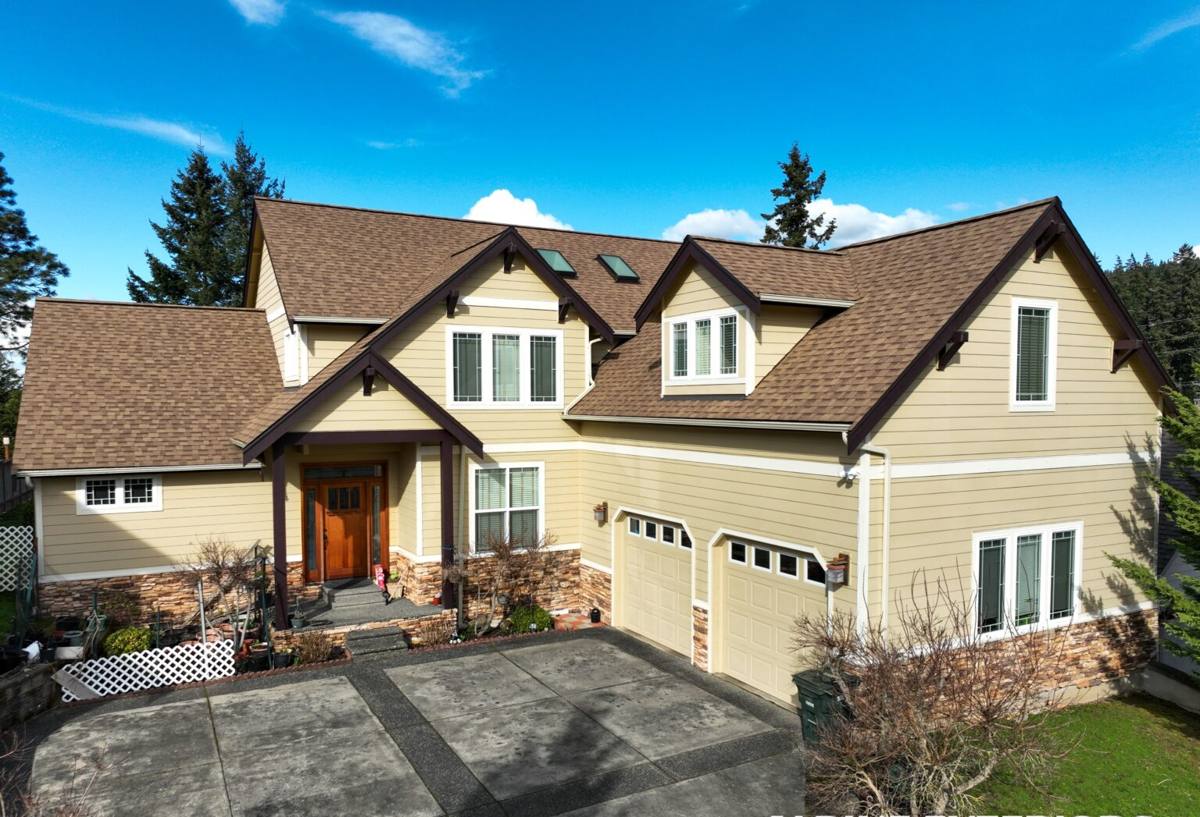
What the Semiahmoo Climate Actually Does to a Deck
Salt Air and Metal Hardware
Airborne salt accelerates corrosion on anything metal — joist hangers, structural screws, post bases, and railing brackets. Standard galvanized hardware that would be fine elsewhere can start rusting from the inside of the coating within a few years this close to the water. Once a joist hanger corrodes, its holding capacity drops long before it looks obviously bad from the top side, which is part of why deck failures here are often more about hidden hardware than visible wood rot.
Driving Rain and Water Intrusion
Rain that comes in sideways off Semiahmoo Bay doesn't behave like rain falling straight down. It gets pushed under railing caps, behind ledger board flashing, and into fastener holes that a vertical-rain climate would never test. Over time this shows up as soft spots around post bases, staining or rot at the ledger connection to the house, and water tracking down into structural framing that looks fine from underneath until it isn't.
Moss, Shade, and Slow Drying
A long moss season means more months where deck surfaces stay damp instead of drying out between rain events. Moss and algae hold moisture against the wood surface, and on shaded decks — common under mature trees in this area — that moisture barely gets a chance to evaporate before the next system rolls through. This is what turns a cosmetic maintenance issue (slippery, green boards) into a structural one (soft, spongy decking) if it goes unaddressed.
The Three Failure Points We See Most in This Area
- Ledger board connection to the house — the single most common source of hidden rot, especially on older decks built before current flashing standards
- Post bases and footings — corrosion and rot where the post meets concrete, often invisible until the post is loose
- Railing posts and top rails — exposed to the most direct wind-driven rain and the first place moss and gray weathering show up
Signs Your Peace Arch Deck Needs Replacement, Not Just Repair
Not every aging deck needs a full tear-off. Some just need targeted board replacement, hardware upgrades, or a re-flash at the ledger. But there's a point where patching stops being cost-effective and starts being a way to spend money without actually fixing the problem. Here's how we tell the difference on a site visit:
| What We Find | Usually Means |
|---|---|
| A few soft or discolored boards, structure otherwise solid | Board-level repair or partial resurfacing |
| Screwdriver sinks easily into ledger board or rim joist | Structural rot — replacement of framing required, often full rebuild |
| Multiple corroded joist hangers or fasteners | Hardware failure risk — full deck replacement recommended even if wood looks okay |
| Post base movement or a spongy feel near posts | Footing/post failure — safety issue, replace before further use |
| Consistent moss regrowth within weeks of cleaning | Drainage or airflow problem underlying the deck design, worth addressing in the rebuild |
The honest answer is that if we find rot at the ledger board or corrosion through multiple structural connections, patching individual boards just delays the real cost and adds risk in the meantime. We'll tell you straight which category your deck falls into rather than upselling a full rebuild you don't need — or downplaying one you do.
What a Correct Deck Replacement Involves Here
Ledger Flashing Done for Driving Rain
The ledger board connection is where most deck failures start in this climate, so it gets the most attention. That means proper flashing that sheds water away from the house rather than trapping it behind the board, and fastening that accounts for wind-driven rain getting up and under standard flashing details. This is not an area where shortcuts show up quickly — they show up in three to five years as hidden rot.
Hardware Rated for the Environment
Given the corrosion rate we see on standard galvanized hardware this close to the water, we default to stainless steel or heavy-duty coated fasteners and connectors for structural elements — joist hangers, structural screws, post bases. It costs more up front than standard hardware. It also means we're not back out here in six years replacing hangers that have rusted through while the deck boards themselves are still fine.
Framing and Spacing for Drainage
Board spacing and joist layout affect how fast a deck surface dries out after rain. In a climate with this much moisture and a long moss season, we build in enough airflow underneath and between boards that the structure actually gets a chance to dry rather than staying damp for weeks at a stretch. This is a design decision made at the framing stage, not something that can be fixed later.
Decking Material Suited to Salt Air and Moss
We'll walk you through the honest trade-offs between wood and composite decking for this specific site — sun exposure, shade, proximity to the water, and how much maintenance you actually want to do. Composite decking generally resists moss growth and moisture damage better with less upkeep, but it comes at a higher material cost and some homeowners prefer the look and feel of real wood enough to accept the maintenance that goes with it. Neither choice is wrong; it depends on what you're willing to do every fall.
Our Process for a Peace Arch Deck Replacement
- On-site assessment. We inspect the ledger connection, posts, footings, and framing — not just the visible decking — to determine whether you need a full rebuild or targeted repair.
- Honest scope and estimate. You get a written estimate that reflects what we actually found, including which hardware and materials we recommend for this environment and why.
- Tear-off and structural inspection. Once old decking is removed, we check framing, ledger, and footings again — sometimes problems are only visible once the surface boards are gone.
- Rebuild with climate-appropriate materials. Corrosion-resistant hardware, proper ledger flashing, and drainage-conscious framing and spacing.
- Final walkthrough. We go over the finished deck with you, including basic maintenance guidance specific to a salt-air, high-moisture site.
What to Ask Before You Hire Anyone for This Kind of Job
- Do they inspect the ledger board and framing, or just the surface decking?
- What hardware do they use as standard — basic galvanized, or corrosion-resistant fasteners suited to a marine-influenced climate?
- Can they explain their ledger flashing approach in plain terms, not just "we flash it"?
- Do they have experience with decks specifically in this area, or mostly inland projects?
- Is the estimate written and itemized, or a vague verbal number?
Why Local Experience on This Specific Job Matters
A deck replacement crew that mostly works drier, inland parts of the county will build a technically fine deck — for a different climate. The details that matter in Peace Arch — how aggressively to spec hardware, how much drainage airflow to build in, where wind-driven rain actually gets in around a ledger — come from having seen the failure patterns here repeatedly, not from a general framing manual. We work on homes throughout this stretch of Whatcom County and see the same salt-air and moss-season issues often enough to know where to spend the extra attention and where standard practice is genuinely fine.
That local pattern recognition is also why our estimates don't come with surprises mid-project. If we say we expect to find rot at the ledger, it's because we've seen that exact situation on enough similar homes near the water to know what to look for before we start.
Cost Factors for a Peace Arch Deck Replacement
Every deck is different, but the main variables that move the price on a job like this are consistent:
| Factor | Why It Affects Cost |
|---|---|
| Deck size and layout | More square footage and complex shapes (multiple levels, angles) mean more material and labor |
| Extent of structural rot found | Ledger and framing replacement adds cost beyond surface decking |
| Decking material chosen | Composite generally costs more upfront than wood but less in long-term maintenance |
| Hardware specification | Corrosion-resistant fasteners and connectors cost more than standard galvanized |
| Height and access | Elevated decks or difficult site access add labor time |
| Railing and stair complexity | Custom railing designs and multiple stair runs add material and labor |
We give a written, itemized estimate after the on-site assessment rather than a rough number over the phone, because the ledger and framing condition genuinely changes the scope more often than not on decks in this area.
Maintenance That Actually Extends the Life of Your New Deck
A properly built deck still needs some seasonal attention in this climate to get its full lifespan out of it. This isn't about babying it — it's a short list that matters:
- Clear moss and debris from the surface and between boards before it has a chance to hold moisture through winter
- Keep gutters and downspouts near the deck clear so runoff isn't dumping extra water onto or under the structure
- Check railing posts and top rails annually for early signs of gray weathering or soft spots
- Reseal or refinish wood decking on the schedule the product actually calls for, not just when it looks bad
- Have the ledger connection and post bases visually checked every few years, since that's where hidden problems start
If your deck is showing any of the wear signs above, or you just want an honest read on whether it needs replacement or repair, we're happy to take a look. Fill out the form below for a free, no-pressure estimate — we'll tell you what we actually find.