 Semiahmoo Siding
 Why Drayton Harbor Homes Need a Different Approach to Siding
Drayton Harbor sits right where fresh water, tidal flats, and open marine air meet, and that combination is hard on exterior building materials in ways that inland Whatcom County neighborhoods don't experience nearly as often. Homes here take on salt-laden air off the harbor, near-constant winter humidity, driving rain that comes in sideways off Semiahmoo Bay, and long stretches of shade and dampness that keep north and west-facing walls wet for days at a time. That last part matters more than most homeowners realize: it's exactly the environment moss, algae, and mildew need to get established on siding and never let go.
Wood-based and lower-grade composite sidings struggle in this setting because they depend on paint film and caulk joints to keep moisture out, and both break down faster under salt exposure and UV cycling than they do twenty miles inland. Fiber cement siding, done correctly, is built to handle exactly this kind of exposure — but "done correctly" is doing a lot of work in that sentence, and it's the reason product choice and installation quality matter more in Drayton Harbor than almost anywhere else in the county.
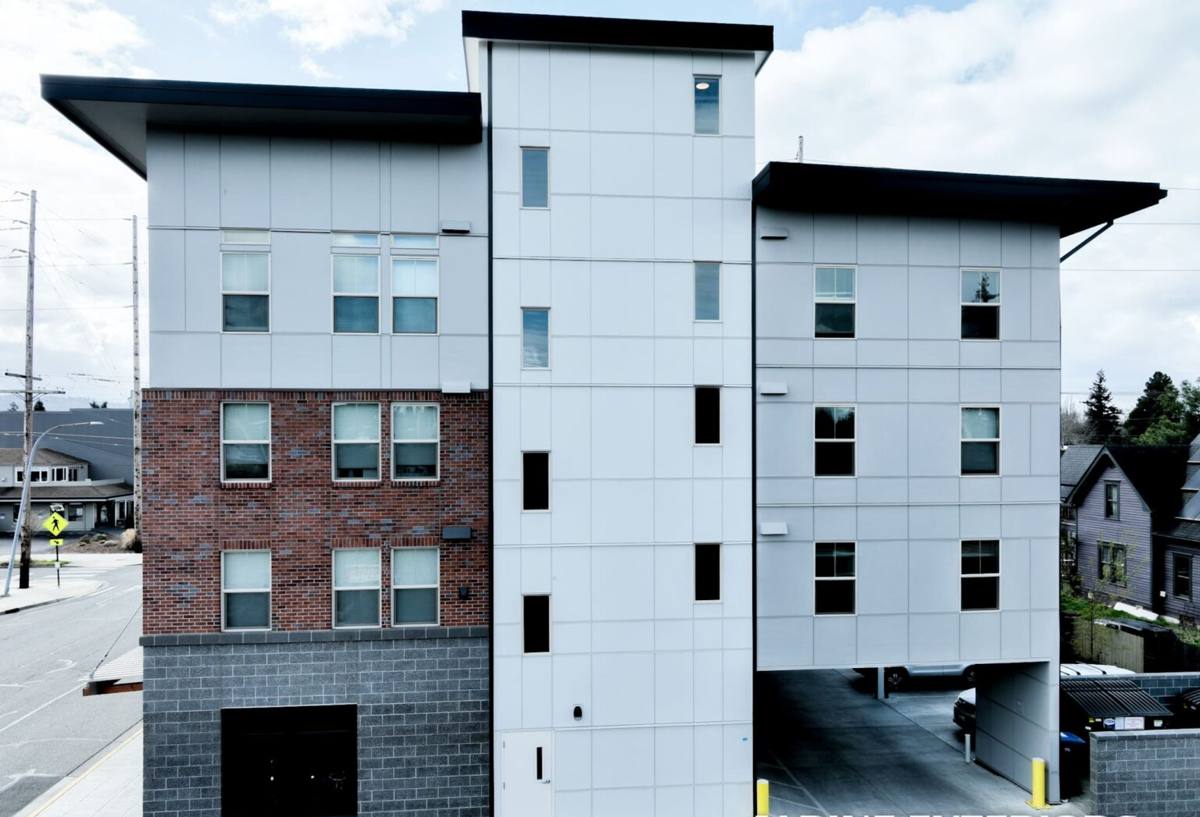
What Correct Fiber Cement Installation Involves Here
Fiber cement is not a material you can install the same way you'd install vinyl or a lighter composite panel. It's heavier, it has specific fastening and clearance requirements, and in a coastal-influenced setting like Drayton Harbor, the details around water management matter as much as the siding itself.
Water Management Comes First
Before a single piece of siding goes up, the wall needs a properly lapped weather-resistive barrier, correctly flashed windows and doors, and a drainage plane that lets any moisture that does get behind the cladding find its way back out. On homes exposed to driving rain off the bay, we pay particular attention to head flashing above openings and kick-out flashing where rooflines meet walls — these are the spots where water intrusion shows up years later as rot, and they're invisible once the siding is on.
Fastening and Clearances
Fiber cement has to be fastened per the manufacturer's engineering specs — correct nail or screw type, correct spacing, correct penetration into framing or sheathing. Just as important is maintaining proper clearance at the bottom of the siding above grade, decks, patios, and roofing, since Drayton Harbor's damp ground conditions mean any siding installed too close to soil or hardscape stays wet longer and starts absorbing moisture at the edges.
Caulking and Joint Treatment
Every butt joint, corner, and penetration needs to be treated as a potential water entry point. Factory-primed or factory-finished edges get sealed per spec, and joints are backed and caulked with products rated for the movement and moisture cycling this climate produces.
Why We Only Install James Hardie Products
We standardized on James Hardie fiber cement siding exclusively — we do not install LP SmartSide, vinyl, Cemplank, Allura, primed spruce, or cedar. That's not a marketing position; it's a decision based on what holds up in this specific climate over decades, not just years.
James Hardie's HZ product lines are engineered for climate zones, which matters directly in a place like Drayton Harbor where humidity, rain volume, and salt exposure are all higher than the statewide average. The ColorPlus factory finish is baked on and warranted against fading and cracking, which reduces one of the biggest long-term maintenance headaches homeowners face on this coastline: repainting siding every few years because sun and salt have chalked out a field-applied finish. Fiber cement itself is non-combustible, dimensionally stable, and doesn't feed pests the way wood-based products can — all relevant factors for a coastal, wooded region like Whatcom County.
None of this means other products are junk. LP SmartSide, vinyl, and other composites all have legitimate uses and reasonable track records in the right conditions. But we've made a professional call that in Drayton Harbor's specific mix of salt air, rain exposure, and moss-friendly dampness, Hardie's engineered fiber cement system — installed correctly — gives homeowners the best long-term outcome for the money, and we'd rather install one product exceptionally well than spread ourselves across several.
The Moss and Algae Problem, and What Actually Helps
Whatcom County's moss season runs long, and Drayton Harbor's tree cover and harbor-side humidity extend it further than drier parts of the region. Moss and algae don't just look bad — sustained growth holds moisture against the siding surface and can accelerate wear at joints and fastener points over time.
- Choose siding profiles and colors that make routine rinsing easy rather than fighting deep-textured surfaces that trap organic growth
- Maintain a clear gap between siding and grade, plantings, and mulch beds so moisture and debris don't sit against the bottom courses
- Keep gutters and downspouts directing water away from walls — misdirected runoff is one of the most common causes of localized moss and staining
- Trim back vegetation and tree canopy near north and west walls to let those surfaces dry out between rain events
- Rinse siding periodically with a garden hose rather than a pressure washer, which can force water behind laps and joints
A factory-finished, engineered fiber cement product resists this kind of surface growth better than bare or field-painted wood-based siding, but no siding is immune — site conditions and maintenance habits still matter.
Our Process for Drayton Harbor Projects
Every project starts with an on-site inspection of the existing siding and wall assembly, not just a measurement for materials. We're looking for signs of past moisture intrusion, checking flashing at windows, doors, and roof intersections, and assessing how exposed each elevation is to prevailing wind and rain direction off the harbor.
From there we put together a scope that covers water management details first, then the siding system itself — trim, corners, fascia treatments, and color selection from Hardie's ColorPlus lineup. We walk homeowners through the plan before work starts so there aren't surprises about what's involved or why certain details (like flashing replacement) are non-negotiable even if they add a step to the job.
During installation we follow manufacturer fastening and clearance specs to the letter, since that's what keeps the transferable warranty intact and is also simply what makes the siding perform as designed in this climate. We do a final walk-through with the homeowner covering care and maintenance specific to a harbor-adjacent property.
Cost Factors for Drayton Harbor Fiber Cement Projects
Fiber cement siding costs vary based on several factors specific to each property, and coastal exposure can shift some of these compared to a similar project further inland.
| Factor | Why It Matters in Drayton Harbor |
|---|---|
| Existing wall condition | Homes with prior moisture intrusion from driving rain may need sheathing repair before new siding goes on |
| Flashing and trim scope | Higher rain exposure often justifies more thorough flashing replacement, not just siding swap |
| Siding profile and texture | Smoother profiles resist moss/algae buildup better but may cost differently than heavily textured options |
| Elevation exposure | Walls facing prevailing wind and rain off the harbor may need extra water-management detailing |
| Home size and complexity | Cutouts, corners, and multiple stories affect labor more than material cost |
| Access and site conditions | Waterfront and sloped lots common near the harbor can affect staging and scaffolding needs |
We give firm, itemized quotes after the on-site inspection rather than ballpark numbers over the phone — the variables above genuinely change the scope from house to house.
Why a Crew That Already Works Drayton Harbor Matters
Coastal-influenced neighborhoods punish generic installation. A crew that hasn't worked in this specific environment can install fiber cement correctly by the book and still miss the details that matter most here — like how much clearance to leave given how wet the ground stays, or which elevations need extra attention to flashing because of how rain actually moves off the harbor. Familiarity with Drayton Harbor's particular conditions means fewer callbacks, fewer surprises during tear-off when old moisture damage gets uncovered, and a finished job that's built for the actual climate it has to survive, not a textbook average.
If you're weighing a siding replacement or repair on a Drayton Harbor property, we're glad to walk the exterior with you, point out what we see, and put together a clear, no-pressure estimate for a James Hardie fiber cement system built for this specific stretch of coastline. There's a form below — reach out and we'll get a visit on the calendar.