 Semiahmoo Siding
 New-Construction Windows for Drayton Harbor Homes
New-construction window installation is different from a replacement job, and it matters more in Drayton Harbor than in most inland neighborhoods. On a replacement, the window goes into an existing, already-flashed opening. On new construction, we're building the water-management system from scratch — the rough opening, the flashing layers, the connection to the house wrap, and the seal that has to hold up against wind-driven rain coming off Semiahmoo Bay for the next 30-plus years. Get that sequence wrong once, behind the siding, and nobody finds out until there's rot in the wall.
This page covers what a correct new-construction window install looks like specifically for homes going up in Drayton Harbor, why the local conditions change how we approach it, and what our process looks like from rough opening to finished trim.
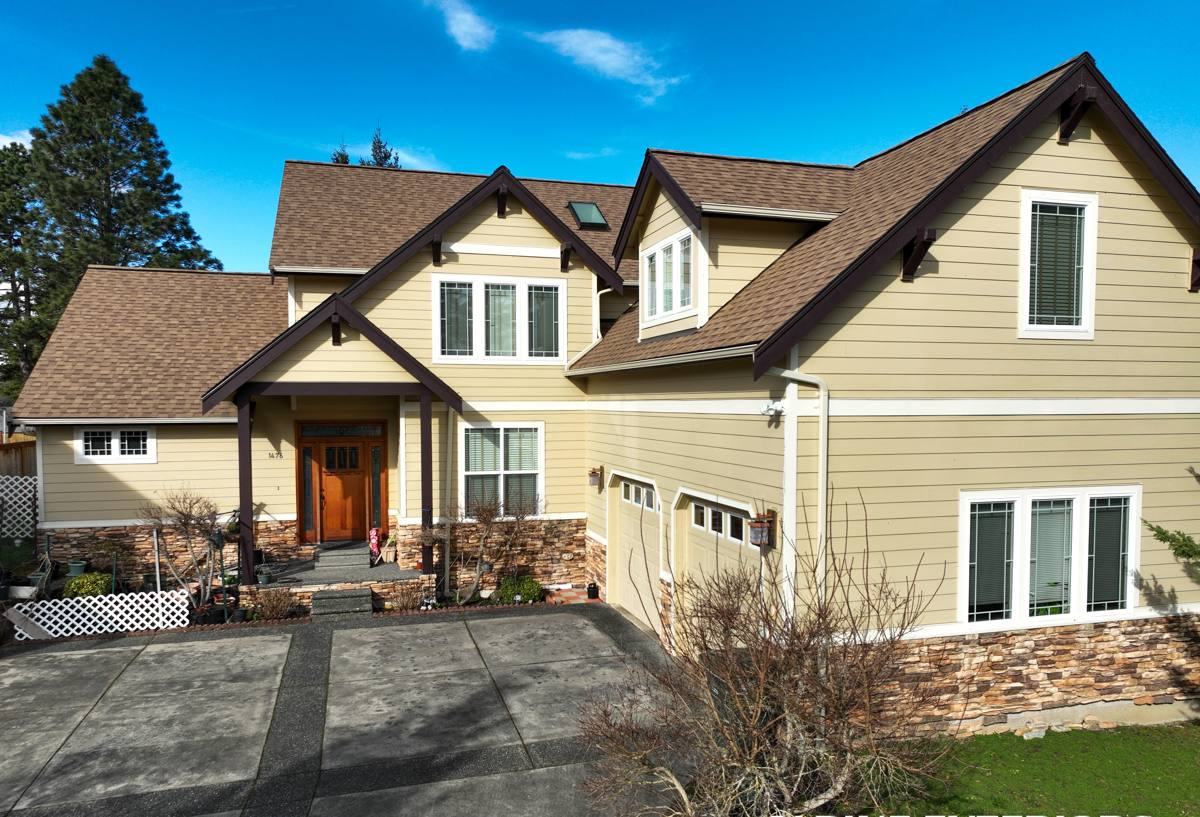
Why the Local Climate Changes the Job
Drayton Harbor sits right on the water, and homes here take a different kind of weathering than a house ten miles inland in Whatcom County. Three things drive most of our decisions on a new-construction window job:
- Salt air. Airborne salt accelerates corrosion on exposed fasteners, hinges, and some window hardware. It also breaks down certain sealants and finishes faster than they'd wear in a dry inland climate.
- Driving rain. Wind off the water pushes rain sideways, not straight down. That means water gets forced up and under trim and flashing in ways a "textbook" flat-roof-rain scenario doesn't account for. Flashing laps and sill pan design have to assume wind-driven water, not just gravity.
- A long moss season. Whatcom County's wet stretch runs long, and moss and algae growth on trim, sills, and adjacent siding is a fact of life here. Detailing that sheds water instead of trapping it against wood trim matters more when things stay damp for months at a time.
None of this means new-construction windows in Drayton Harbor need to be exotic or overbuilt. It means the flashing sequence, sealant choice, and frame material selection need to actually account for coastal exposure instead of using a generic inland approach and hoping it holds.
What a Correct Install Actually Involves
A new-construction window opening is built in layers, and each layer has one job: keep water moving out and down, never in and trapped. Skipping a layer, or doing them out of order, is where most long-term problems start.
The Flashing Sequence
Before the window ever goes in, the rough opening needs a sill pan — a sloped, waterproof pan at the bottom of the opening that catches any water that gets past the window and directs it back outside rather than into the framing. Above and around the opening, flashing tape and/or metal flashing integrates with the house wrap in a specific shingle-lap order (sides first, then head, always lapping over the layer below) so water sheds down and out at every seam, the same way roofing shingles work.
Fin Type and Fastening
New-construction windows typically come with a nailing fin that fastens through the sheathing into the framing. How that fin is sealed to the sheathing — and whether the house wrap laps correctly over the top fin and under the side fins — determines whether the assembly actually sheds water or just looks like it does from the outside.
Sealant and Backer Rod
Exterior sealant around the window perimeter isn't decorative — it's a secondary water barrier, and in a driving-rain environment it needs to be a product rated for exterior movement and UV exposure, applied over backer rod so it flexes instead of cracking as the building settles and the seasons change.
Frame Material for Coastal Exposure
Not every window frame material handles salt air and constant damp the same way. This is one of the bigger decisions on a new build, and it's worth weighing honestly rather than defaulting to whatever's cheapest per unit.
| Frame Material | Salt Air / Moisture Behavior | Maintenance | Typical Cost Position |
|---|---|---|---|
| Vinyl | Good — won't rust or rot; UV can cause long-term brittleness on cheaper profiles | Low | Lower |
| Fiberglass | Very good — dimensionally stable, holds up well to coastal swings in humidity and temperature | Low | Mid to higher |
| Wood, unclad | Requires diligent upkeep in a wet, salt-exposed climate | High | Mid to higher |
| Aluminum or vinyl-clad wood | Good exterior protection if cladding and flashing details are done correctly | Low to moderate | Higher |
We don't push one brand or material on every job. We'll walk through what fits the home's design, the budget, and how exposed the elevation is to weather off the water, and explain the real trade-offs rather than just the sales pitch.
Our Process, Start to Finish
On a new build or addition in Drayton Harbor, our sequence generally looks like this:
- Rough opening check. We verify openings are square, plumb, and sized correctly before anything else happens — a slightly out-of-square opening causes problems that show up years later, not on install day.
- Sill pan and flashing installation. Sloped sill pan first, then the shingle-lap flashing sequence tied into the house wrap.
- Window set and fastening. The unit is set, shimmed level and plumb, and fastened per the manufacturer's schedule — this matters for warranty coverage, not just fit.
- Seal and integrate. Exterior sealant, backer rod where needed, and interior air-sealing so the opening is airtight as well as watertight.
- Coordinate with siding. We time window install so it lines up correctly with when siding and trim go on — more on why that sequencing matters below.
- Final walk-through. Operation check on every unit, hardware function, and a visual check of flashing and sealant lines before we call it done.
Timing Windows With Siding Matters
On new construction, window installation and siding installation are connected, not separate jobs done by unrelated crews on unrelated schedules. The house wrap and flashing around each window need to be in place and correctly lapped before siding goes on, because the siding's own water-shedding layers tie directly into that window flashing. If a siding crew shows up and works around window flashing that wasn't done to spec, they're building a good-looking wall over a hidden problem. Handling both scopes — or at minimum coordinating tightly with the builder's schedule — is how we make sure that handoff doesn't get missed.
Mistakes We See on Coastal New Builds
These aren't knocks on any particular product or crew — they're the recurring issues that show up when flashing detail gets rushed on a tight construction schedule, and they're worth knowing about as a homeowner or builder overseeing the job:
- Sill pans skipped or improvised with sealant alone instead of a proper sloped pan.
- Flashing tape applied out of shingle-lap order, so a seam higher up drains behind the seam below it instead of over it.
- House wrap cut and taped around the opening but never actually integrated with the window's own flashing fins.
- Sealant used as the only water barrier, with no mechanical flashing behind it — fine on day one, a liability once that sealant ages in salt air and sun.
- Frame material chosen purely on upfront price without weighing how it will hold up on an exposed, water-facing elevation.
Why Local Experience on Drayton Harbor Jobs Matters
A crew that regularly works Drayton Harbor and the broader Semiahmoo area already knows how exposed a given lot is likely to be, what wind-driven rain does to trim on a water-facing elevation, and how long moss season here actually runs. That's the difference between a flashing detail that's "correct on paper" and one that's actually built for what this specific stretch of Whatcom County throws at a house. It also means fewer surprises coordinating with local builders, inspectors, and the realities of a build schedule on the water.
What to Ask Before You Hire
- Do you install a sloped sill pan on every new-construction opening, or only when asked?
- What's your flashing lap sequence, and how does it tie into the house wrap?
- Who's coordinating window timing with the siding crew — is that one point of contact or two separate schedules?
- What frame materials do you recommend for a water-facing elevation, and why?
- Will you walk me through the finished flashing before siding closes it up?
Get a Free Estimate
If you're building new or adding on in Drayton Harbor and want windows installed with the flashing detail and sequencing this climate actually calls for, we're happy to walk the plans or the site with you and give a straightforward, no-pressure estimate — use the form below to get started.