 Semiahmoo Siding
 Why Drayton Harbor Roofs Wear Differently
A roof over a home near Drayton Harbor doesn't age the same way as one twenty miles inland. The water is close enough that salt-laden air reaches exposed metal, wind off the harbor drives rain sideways instead of straight down, and the tree cover and damp climate common around Semiahmoo keep roof surfaces wet for long stretches of the year. None of this means a roof here needs to be complicated or over-engineered. It means the details that are easy to skip — fastener choice, flashing laps, ventilation balance — matter more here than they would in a drier, calmer part of Whatcom County.
Salt Air and Exposed Metal
Roofs close to the harbor see faster corrosion on anything metal: nail heads, flashing, vent caps, and gutter hardware. Standard-grade fasteners and thin flashing can start rusting and staining years before the shingles or panels around them are actually worn out. The fix isn't expensive material — it's choosing corrosion-resistant fasteners and flashing from the start instead of patching rust stains every couple of years.
Driving Rain and Wind
Open water means wind-driven rain, and wind-driven rain finds every shortcut in a roofing job. Water pushed sideways by harbor wind can work its way under shingle laps, around chimneys, and through valleys that were installed for calm-weather conditions rather than storm conditions. A roof built for Drayton Harbor needs underlayment and flashing details that assume the rain won't always fall straight down.
A Long Moss Season
Between the rainfall, the humidity, and the shade from mature trees common in this area, moss and lichen have a long growing window here — often most of the year. Moss holds moisture against the roof surface, lifts shingle edges, and works its way under laps if it's left to spread. A new roof installed with moss-resistant details and proper airflow starts that clock later and slower than one installed without them.
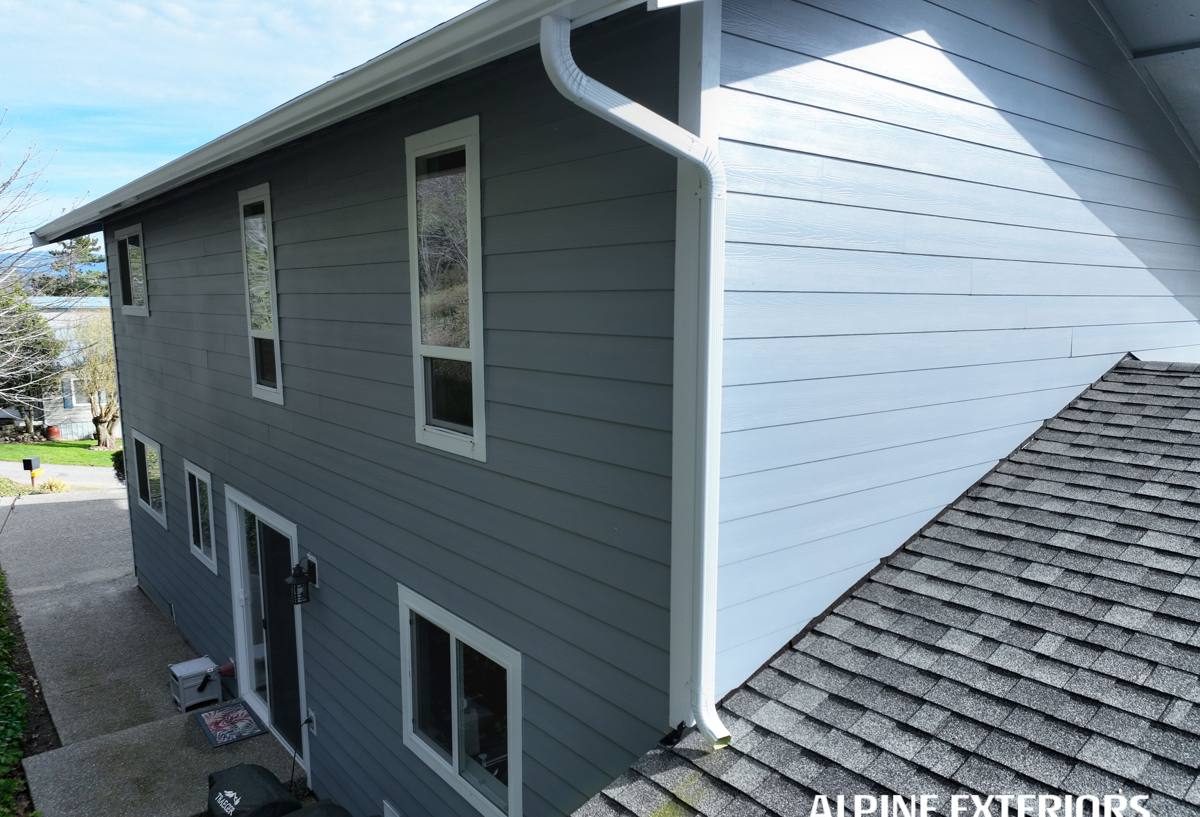
Signs a Drayton Harbor Roof Needs Replacement, Not Another Repair
Repairs make sense when a roof is otherwise sound and the problem is isolated. Replacement makes sense when the roofing material itself is failing, or when repeated repairs are treating symptoms of a roof that's simply past its working life. Common signs we see on homes in this area include:
- Granule loss heavy enough that you can see bare, shiny patches on asphalt shingles
- Shingles that are curling, cupping, or cracking, especially on south- and west-facing slopes
- Soft or spongy spots underfoot on the roof deck, usually a sign of trapped moisture
- Leaks showing up in new locations each time it rains hard, rather than one consistent spot
- Moss mats thick enough to be lifting shingle tabs rather than just discoloring the surface
- A roof at or past the manufacturer's expected service life, particularly if it was never re-flashed
- Rusted, bent, or missing flashing after a windstorm, especially around chimneys and valleys
- Rising heating or cooling costs that track with attic ventilation problems, not just insulation
What a Correct Installation Involves Here
Tear-Off and Deck Inspection
We remove the old roofing down to the deck rather than layering over it. That's the only way to actually see the condition of the sheathing underneath — soft, delaminated, or water-stained decking is common on older roofs in wet climates and needs to be replaced before anything new goes down. Covering over a compromised deck just hides the problem for a few more years.
Underlayment and Water Barrier
Given how much rain this area sees, we don't treat underlayment as an afterthought. Self-adhered ice-and-water barrier goes at eaves, valleys, and around penetrations, where wind-driven rain and ponding are most likely to find a weak point. The rest of the deck gets a synthetic underlayment layer that holds up better than old-style felt paper under repeated wet-dry cycling.
Ventilation
A roof needs balanced intake and exhaust airflow to keep the attic dry and the roofing material at a stable temperature. In a climate with this much ambient moisture, poor ventilation shows up as trapped condensation, premature decking rot, and ice buildup risk during cold snaps. We check existing ventilation on every install and correct it where it's undersized or blocked, rather than reusing whatever vents happen to already be there.
Flashing and Edge Metal
Chimneys, skylights, sidewalls, and valleys are where roofs actually fail — the field of the roof rarely leaks on its own. We use corrosion-resistant flashing material and step-flash and counter-flash these areas properly rather than relying on sealant to do a flashing detail's job. Sealant is a backup, not a substitute.
Comparing Roofing Material Options for This Area
There's no single "best" roofing material for every home near Drayton Harbor — it depends on the roof's exposure, the home's style, and how much long-term maintenance an owner wants to take on. Here's how the common options actually perform in this kind of climate:
| Material | Typical Lifespan | Moss & Moisture Behavior | Salt Air Performance | Maintenance |
|---|---|---|---|---|
| Asphalt composition shingle | 20–30 years | Moderate moss resistance; algae-resistant granules help but don't eliminate growth | Good, with corrosion-resistant fasteners and flashing | Periodic moss treatment and gutter clearing |
| Standing seam metal | 40–60+ years | Sheds water and dries fast; moss struggles to gain a foothold on smooth panels | Requires marine-grade coatings or finishes near the water to avoid premature corrosion | Low; occasional fastener and seam checks |
| Synthetic/composite shake | 30–50 years | Good moisture resistance; textured surface can still hold debris that feeds moss | Good; minimal exposed metal in the field | Low to moderate; keep debris off textured surfaces |
We'll walk through these trade-offs against your home's actual roof shape and shade exposure during the estimate — a heavily shaded, low-slope section of roof has different needs than an open, steep-pitched one, even on the same house.
Our Installation Process, Step by Step
- On-site inspection of the current roof, decking access points, and attic ventilation
- Written estimate covering material options, scope of work, and timeline
- Permitting and material ordering once you approve the scope
- Property protection — tarps and staging to protect landscaping, siding, and gutters during tear-off
- Full tear-off to the deck, with any damaged sheathing identified and replaced
- Installation of ice-and-water barrier, synthetic underlayment, new flashing, and ventilation components
- Roofing material installation per manufacturer specifications
- Full-property cleanup, including a magnetic sweep for stray nails
- Final walkthrough so you can see the completed work before we consider the job done
Why a Crew That Already Works Drayton Harbor Matters
Roofing crews that mostly work drier, more sheltered parts of Whatcom County can do a technically fine job and still miss the details that matter closer to the water. A crew that regularly works in and around Semiahmoo already knows to spec corrosion-resistant hardware without being asked, to pay extra attention to valley and eave protection, and to expect a longer moss season when planning ventilation and material choices. That familiarity shows up less in any single dramatic decision and more in a dozen small ones — the kind that determine whether a roof is still performing well in year fifteen or already showing problems.
Keeping a New Roof Performing After Installation
A well-installed roof still benefits from basic upkeep, especially in this climate. We recommend:
- Clearing gutters at least twice a year, more often if there's overhanging tree cover, since Drayton Harbor's rain volume makes clogged gutters a fast route to fascia and edge damage
- Having moss growth treated before it establishes rather than after it's visibly lifting shingles
- Keeping overhanging branches trimmed back to reduce shade, debris, and moss-friendly conditions on the roof surface
- A periodic visual check after major windstorms, since that's when flashing and edge metal are most likely to take damage
What Affects the Cost of a New Roof Here
Every roof is priced on its own specifics, but the factors that move the number are consistent: the size and pitch of the roof, how many layers of old roofing need to come off, how much (if any) deck repair is needed, the material chosen, and whether ventilation needs upgrading. For an average single-family home in this area, a straightforward asphalt shingle replacement often lands in the low-to-mid five-figure range, with standing seam metal and other premium materials running higher. Steep pitches, multiple roof planes, and extensive deck repair push costs up regardless of material. We give exact numbers only after seeing the roof in person — anything quoted sight unseen isn't a real estimate.
If your roof near Drayton Harbor is showing its age or you're planning ahead rather than waiting for a leak, we're happy to take a look and give you a straightforward, no-pressure estimate. Use the form below to get started.