 Semiahmoo Siding
 Why Drayton Harbor Roofs Wear on a Different Schedule
A roof a few miles inland in Whatcom County and a roof looking out over Drayton Harbor are not aging the same way, even if they were installed the same year with the same materials. Homes near the harbor sit in a pocket where salt-laden air off the water, wind-driven rain, and long stretches of shade and moisture combine into a harder environment for roofing than most manufacturers' warranty testing ever accounts for. Salt air accelerates corrosion on exposed metal — fasteners, flashing, vent stacks, gutter hardware — long before the shingles themselves give out. Driving rain, pushed sideways by wind coming off the water, finds every weak lap, nail pop, and undersized flashing detail that a calmer inland roof might get away with for years.
Then there's moss. Whatcom County's mild, wet winters already favor moss growth, and shaded, humid pockets near Drayton Harbor extend the season even further. Moss holds moisture against the roof surface, works into shingle laps and granule layers, and — left unchecked — lifts shingle edges enough for wind-driven rain to get underneath. None of this means a Drayton Harbor roof is doomed to fail early. It means the replacement has to be planned and installed with this specific combination of stressors in mind, not treated like any other roof in the county.
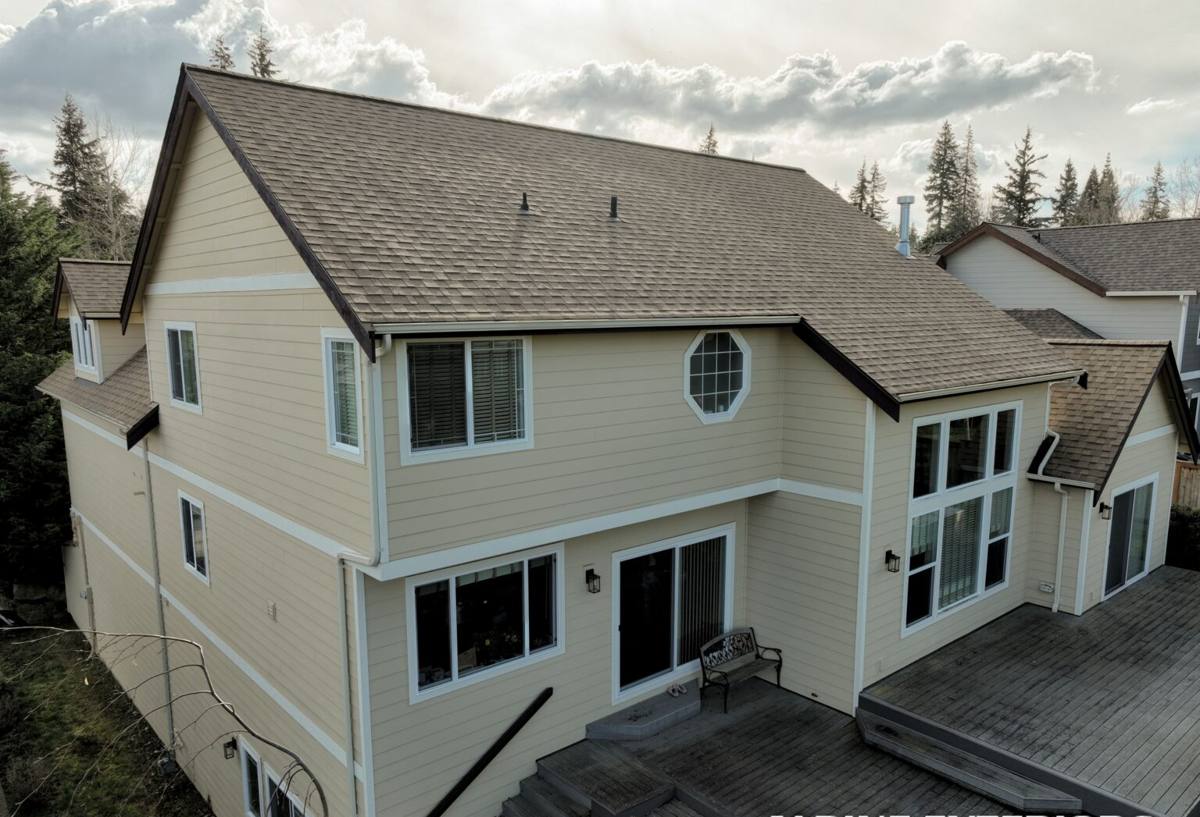
Repair or Replace? Reading the Signs on a Drayton Harbor Roof
Not every problem roof needs a full tear-off. A roof with isolated flashing failures, a handful of cracked shingles, or a clogged valley can often be repaired and get several more years of service — especially if the underlying decking and underlayment are still sound. The honest answer depends on the roof's age, how widespread the damage is, and what's happening underneath the surface layer, not just what's visible from the ground.
When repair still makes sense
If the roof is younger than its expected lifespan, the damage is localized to one slope or detail, and an inspection shows dry, solid decking underneath, a targeted repair is usually the right call. This is especially true for storm damage or a single failed flashing point around a chimney or vent.
When it's time to plan a replacement
- Shingles are curling, cracking, or losing granules across multiple slopes, not just one spot
- Moss has been growing back within a year or two of cleaning, suggesting the shingle surface is already compromised
- There's evidence of moisture in the attic — staining, soft decking, or a musty smell — that points to water getting past the roof plane
- The roof is at or past the manufacturer's expected service life for this climate, even if it "looks okay" from the driveway
- Repairs are becoming frequent and are starting to cost close to what a partial re-roof would run
- Metal flashing and fasteners show heavy rust or pitting from salt-air exposure, even where the shingles themselves are intact
Choosing a Roofing System That Holds Up Near Salt Water
There's no single "best" roofing material for every home near Drayton Harbor — the right choice depends on the home's design, budget, and how much long-term maintenance the owner wants to take on. What matters is picking a system honestly, based on how it actually performs in a marine climate, not just how it looks in a brochure.
| Factor | Composition (Asphalt) Shingle | Standing Seam Metal | Synthetic / Composite |
|---|---|---|---|
| Salt-air / corrosion resistance | Good, if fasteners and flashing are corrosion-rated | Very good with the right coating and fastener spec | Good — most components are non-metallic |
| Moss resistance | Moderate; benefits from algae-resistant granules | Strong; smooth surface sheds moss more easily | Moderate to strong, depending on texture |
| Wind-driven rain performance | Good with proper underlayment and sealing | Excellent when panels and seams are correctly installed | Good, similar to composition shingle |
| Typical maintenance | Periodic moss/debris cleaning, spot repairs | Low; occasional fastener and sealant checks | Low to moderate |
| Upfront cost tier | Lowest | Highest | Mid to upper |
Whichever system a homeowner chooses, we won't put a product on a Drayton Harbor roof that we know performs poorly in exactly the conditions that roof will face. That's a professional standard, not a sales pitch — some lower-grade products simply aren't worth installing this close to the water, and we'll say so plainly during the estimate rather than let a homeowner find out the hard way in year three.
Warranty structure is part of that same honesty. A manufacturer's material warranty only covers defects in the shingle or panel itself — it doesn't cover a leak caused by poor installation. Our workmanship warranty covers the installation separately, which matters more than the length of the printed manufacturer warranty in a climate where installation quality is what actually determines whether water stays out.
What Correct Installation Looks Like Under the Shingles
Most of what determines whether a roof survives a Drayton Harbor winter isn't visible once the job is done — it's in the layers underneath.
Underlayment and water barriers
In a climate with regular wind-driven rain, we don't treat underlayment as an afterthought. Self-adhering ice-and-water membrane at eaves, valleys, and around every roof penetration gives a second line of defense where wind can force water backward under the shingle course — a common failure point on standard felt-only installs. The rest of the field gets a synthetic underlayment rated for the exposure the roof will actually see.
Flashing and fasteners
Chimneys, skylights, sidewalls, and any place two roof planes meet are where roofs actually leak. Flashing has to be formed and stepped correctly, not just caulked and hoped for. Given the salt content in the air near the harbor, we spec corrosion-resistant fasteners and flashing metal rather than the cheapest option available — a few dollars saved per box of nails isn't worth a rust-streaked, leaking roof five years in.
Drip edge and gutter integration
Drip edge along the eaves and rakes directs water off the roof and away from the fascia instead of letting it wick back underneath — a small detail that matters more here than in drier climates, since driving rain and near-constant gutter flow during the wet season put steady pressure on that edge. We also make sure new roofing ties in cleanly with existing gutters rather than dumping water into a spot the gutter system wasn't built to handle.
Decking inspection and replacement
Once the old roofing is off, the decking underneath gets a full inspection. Any soft, delaminated, or water-damaged sheathing gets replaced before a single new shingle goes down — no roof performs correctly over a compromised deck, no matter how good the shingle is.
Ventilation and Moisture Control
A roof that can't breathe traps moisture, and trapped moisture is exactly what feeds moss and rot in this climate. Balanced ventilation — intake at the soffits, exhaust at the ridge — keeps air moving through the attic space, which reduces condensation buildup on the underside of the decking and helps the roof surface dry out between the region's frequent rain events. Poor or blocked ventilation is one of the quieter reasons a roof underperforms its expected lifespan near Drayton Harbor, even when the shingles themselves are a good product installed correctly.
Our Process, Start to Finish
A roof replacement runs smoother when the homeowner knows what to expect at each stage. Our process is the same one we've used on other roofs in this area:
- On-site inspection and honest assessment — including whether repair is actually a reasonable option before we talk about replacement
- Written estimate that spells out materials, scope, and any decking replacement contingencies
- Material selection, walking through the real trade-offs for this specific home and budget
- Permitting handled before work begins, per local requirements
- Scheduling built around realistic weather windows, not just the calendar
- Tear-off and decking inspection, with any damaged sheathing replaced on the spot
- Installation of underlayment, flashing, and roofing material to spec
- Full site cleanup, including a magnetic sweep for stray nails
- Final walkthrough so the homeowner can see the finished work before we call the job done
Why a Crew That Already Works Drayton Harbor Matters
A roofing crew that has worked other homes around Drayton Harbor already knows things a crew from outside the area has to learn on the job — how the wind behaves coming off the water, which slopes tend to hold moss longest because of shade and orientation, and how tight some of the lots and tree lines are to work around safely. That familiarity shows up in small decisions that add up: where extra flashing attention pays off, which fastener spec actually holds up here instead of just meeting a generic code minimum, and how to sequence a tear-off so exposed decking isn't sitting open if the weather turns. It also means faster, more realistic scheduling — we're not guessing at what a "normal" install timeline looks like in this specific stretch of Whatcom County, we're working from what's actually happened on roofs nearby.
Timing the Job Around Whatcom County Weather
Roofing can be done for much of the year here, but not every month is equal. Drier, more stable stretches make for better tear-off timing, since an open roof deck needs to stay covered and dry through the workday. Late fall through winter brings the heaviest driving rain and the start of the long moss season, which is exactly when a roof in poor condition is most likely to start leaking — so a roof that's showing warning signs in summer or early fall is worth addressing before the wet season arrives, rather than waiting until water is already getting in.
Keeping a New Roof Performing for the Long Haul
A correctly installed roof still benefits from basic upkeep in this climate. Keeping gutters clear so water isn't backing up under the eaves, checking for early moss regrowth once a year rather than waiting until it's established, and trimming back branches that shade a roof and keep it damp all help protect the investment. It's also worth having attic ventilation checked every few years, since blocked soffit vents are common on older homes and easy to miss without getting up into the attic space. Pressure washing a roof surface directly isn't something we recommend — it can strip granules and shorten shingle life faster than the moss it's meant to remove. A simple annual visual check, from the ground or by a professional, catches most small issues while they're still small.
If your roof near Drayton Harbor is showing its age — or you just want an honest read on how many years it has left — we're happy to take a look. Use the form below to request a free, no-pressure estimate, and we'll give you a straight answer about what your roof actually needs.