 Semiahmoo Siding
 New-Construction Windows Are a Different Job Than Replacement
A new-construction window and a replacement window look similar from the curb, but the install is nothing alike. New-construction units have a nailing fin around the perimeter that gets fastened directly to the sheathing and integrated with the weather-resistive barrier (WRB) and flashing before any siding goes on. There's no old frame to work around, no existing trim to match — the opening is built from scratch, and the window becomes part of the wall's water management system, not just a piece dropped into a hole.
That's both an advantage and a responsibility. Done right, a new-construction window installation gives you a cleaner, more durable result than almost any retrofit ever could. Done wrong, the mistakes get buried behind siding and trim, and you don't find out until there's a stain on the drywall two winters later. For homes going up in and around Ferndale, where the install has to be sequenced correctly with framing, sheathing, and siding crews, getting this stage right the first time matters more than on almost any other part of the build.
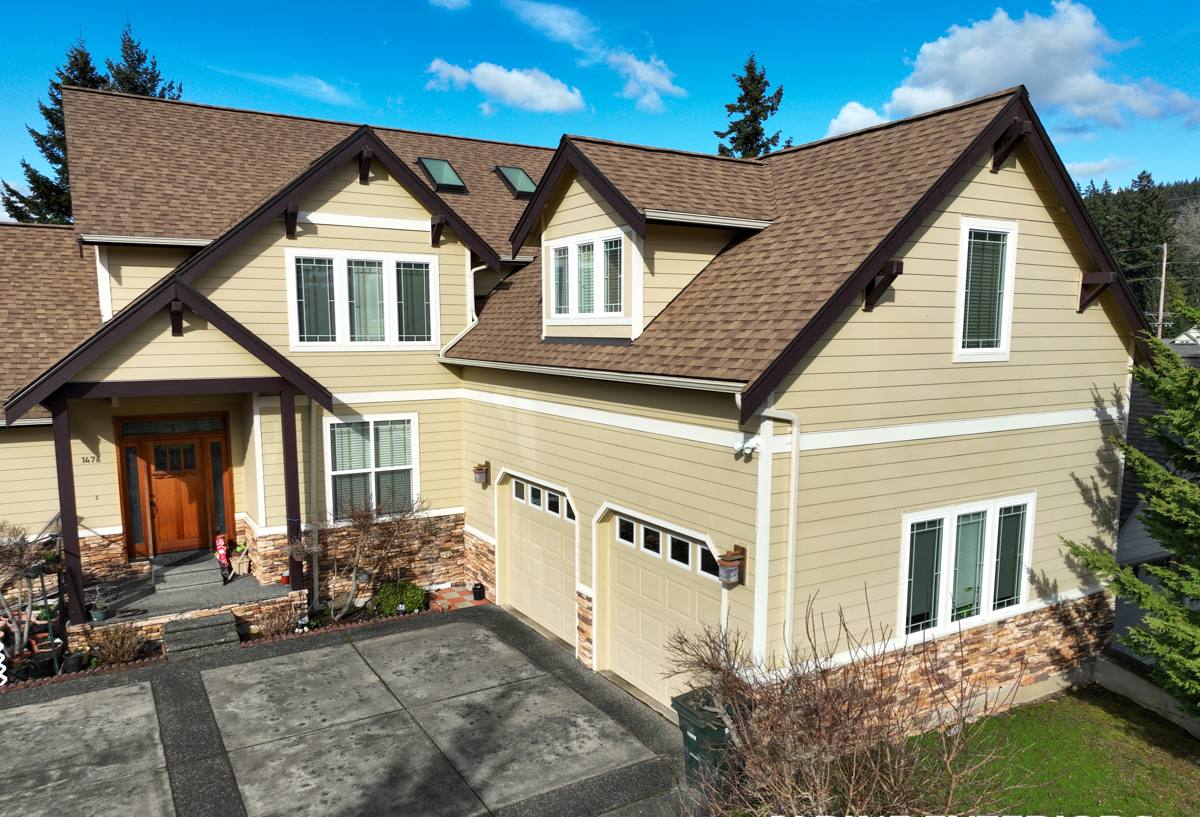
What Ferndale's Weather Actually Does to a Window Opening
Whatcom County sits in a marine climate, and Ferndale's location puts new construction here in the path of a few specific challenges that a window opening has to be built to handle for decades, not just survive on install day.
Salt Air
Proximity to the Salish Sea means airborne salt reaches fasteners, hardware, and unprotected metal trim well inland of the water itself. It doesn't rot vinyl or fiberglass, but it will corrode the wrong screw, hinge, or flashing metal over time if the materials weren't chosen with that exposure in mind.
Driving Rain
Wind-driven rain is a regular event here, not an occasional storm. That means water doesn't just fall on a window — it gets pushed sideways and even upward against the opening, which is exactly the condition that exposes a lazy flashing detail. A window opening that only sheds water straight down will eventually leak in Whatcom County.
A Long Moss Season
Months of damp, low-sun-angle weather give moss and algae plenty of time to take hold on any horizontal or slow-draining surface — window sills, nailing fins, and trim included. An opening that traps moisture instead of shedding it becomes a growth surface, and that organic buildup holds even more water against the wall over time.
None of these on their own is dramatic. Together, over years, they're exactly what separates a window opening that lasts the life of the home from one that needs attention in year eight or ten.
Getting the Flashing and Drainage Plane Right
This is the part of the job nobody sees once the siding is up, and it's also the part that determines whether the window performs for the next thirty years. A correct new-construction window install follows a specific sequence, and skipping or reordering a step is where most future leaks actually originate — not from the window unit itself, but from the opening around it.
- Sill pan first. A sloped, back-dammed pan goes in at the base of every rough opening so any water that ever gets past the window sheds back outward instead of pooling into the wall cavity.
- Jamb flashing before the window. Self-adhered flashing membrane covers the sides of the opening and laps over the sill pan, following a shingle-style sequence so water always moves down and out over the layer beneath it.
- Set the window level, plumb, and square. Shimmed and fastened to the manufacturer's fin-nailing pattern — an out-of-square window doesn't just look wrong, it won't operate correctly and won't seal correctly either.
- Head flashing with a drip cap and end dams so wind-driven rain can't wick back underneath the trim, which is the exact failure mode Whatcom County's weather is built to find.
- WRB integration. Housewrap or building paper laps over the top flashing and tapes down the sides, so the whole assembly drains as one continuous plane, not a patchwork of separate pieces hoping to line up.
Every one of these steps has to happen before the window ever gets photographed for a punch list and covered by trim. It's worth asking any contractor exactly how they sequence this — the answer tells you a lot about the crew.
Choosing Frame Materials for a Coastal Whatcom County Build
There's no single "correct" window frame material for every new build in Ferndale — the right choice depends on budget, style, and how much long-term maintenance a homeowner wants to take on. But given the salt air and moisture exposure here, some trade-offs matter more locally than they would inland.
| Frame Material | Salt Air & Moisture Behavior | Maintenance | Best Fit |
|---|---|---|---|
| Vinyl | Won't rot or corrode; hardware and fasteners are the real vulnerability in salt air, so quality matters there | Low — occasional cleaning | Budget-conscious new builds and spec homes |
| Fiberglass | Dimensionally stable and holds up well to sustained moisture and salt exposure | Low | Custom homes wanting long-term durability without wood upkeep |
| Wood-clad (aluminum or vinyl exterior) | Performs well if the cladding and flashing are detailed correctly; damaged cladding or exposed end-grain invites rot fast in this climate | Moderate to high — cladding seams need periodic inspection | Homeowners who want a wood interior look and are willing to stay on top of upkeep |
Whichever frame material a homeowner or builder specifies, we push for stainless or coated corrosion-resistant fasteners and hardware on any new-construction window in this area — it's a small line item that prevents a much bigger problem down the road.
Energy Performance and Washington State Energy Code
New-construction windows in Ferndale have to meet Washington State Energy Code requirements for the marine climate zone, and that shows up as minimum performance thresholds for U-factor and solar heat gain that vary depending on the compliance path your builder is using and how the rest of the home's envelope is designed. Rather than quote a number that may not match your specific plan, we work directly from the window schedule your builder or architect has already approved, confirm the specified units meet code for the path being used, and make sure everything is documented for inspection before the openings get covered by siding.
This is also the stage where an inspector will actually look at the flashing and sealing details described above — new-construction window installs typically get checked at rough-in, before insulation and siding hide the work. Getting the sequence right the first time keeps the build moving instead of waiting on a re-inspection.
Our New-Construction Window Process for Ferndale Builds
We treat new-construction window installation as one continuous job, not a series of disconnected steps handed off between trades. On a typical Ferndale project, that looks like:
- Confirming the window schedule against approved plans and verifying rough openings before units arrive on site
- Installing sill pans and flashing membrane at every opening, following the sequence above
- Setting, shimming, and fastening each window level, plumb, and square to the manufacturer's fin-nailing pattern
- Integrating head flashing and WRB laps so the whole wall assembly drains as one system
- Documenting flashing and sealing work with photos before it's covered by trim or siding
- Carrying straight through into siding installation, since that's our core trade — one crew accountable for the whole exterior envelope, not a handoff between separate window and siding contractors
That last point matters more than it might seem. When the same crew handles both the window opening and the siding around it, there's no gap for responsibility to fall through if something doesn't line up later.
Coordinating With Your Builder or General Contractor
Most of our new-construction window work happens as a scheduled trade on someone else's build — we're working around framing and sheathing crews, window supplier lead times, and a broader construction timeline we don't control. We plan around that rather than fighting it: confirming window specs match what the architect and builder intended, flagging any rough-opening discrepancies before install day instead of after, and getting sign-off on the flashing work before the siding trade starts. If you're a homeowner working with your own general contractor, we're glad to coordinate directly with them rather than requiring you to relay information back and forth.
Pre-Install Checklist for Ferndale New Builds
Whether you're a homeowner keeping an eye on your build or a builder lining up trades, these are the things worth confirming before and during window installation:
- Rough openings match the dimensions on the approved window schedule
- WRB is installed and properly lapped before windows are delivered to site
- Sill pans are set and sloped to drain outward at every opening
- Flashing tape or membrane is rated for the temperature conditions at install time
- Fasteners and hardware are corrosion-resistant, given the salt air exposure in this area
- Manufacturer installation instructions on site match the specific window line being installed
- Flashing and window install are photographed and signed off before siding trade begins
Why a Crew That Already Works Ferndale Matters
New-construction window installation isn't a specialty skill you can only find far away, but there's real value in hiring a crew that already knows this specific area. We're based nearby in Semiahmoo, and we've built our process around the exact conditions Whatcom County throws at a new window opening — the driving rain, the salt air, the long stretch of the year when moss has every opportunity to take hold. That's not theoretical for us; it shapes which flashing products we trust and how we sequence every install.
We're also familiar with local permitting expectations and inspection timing, which keeps a build moving instead of stalling on a callback. And because we carry the job from window opening through finished siding, there's no ambiguity later about which trade is responsible if a detail needs attention. For a new build going up in Ferndale, that continuity is worth more than it sounds.
If you're planning new-construction windows for a Ferndale project, we're happy to walk through your window schedule and talk through the details before work starts. Reach out for a free, no-pressure estimate using the form below.