 Semiahmoo Siding
 Why Ferndale Siding Takes a Different Approach
Ferndale sits close enough to Semiahmoo Bay and the Strait of Georgia that homes here deal with a specific combination of stresses most siding products were never designed to handle at once: salt-laden air drifting in off the water, long stretches of driving rain that come in sideways during winter storms, and a moss season that can run most of the year in shaded, north-facing spots. Any one of those on its own is manageable. Together, they shorten the life of the wrong siding material by years.
We install siding for homes across the Semiahmoo and Whatcom County area, and Ferndale properties consistently show the same pattern: siding that looked fine after five years starts showing soft spots, streaking, or panel separation by year ten or twelve if it wasn't matched to this climate or installed with the right details. This page walks through what a correct siding installation actually involves here, not just what goes on the wall, but what happens behind it.
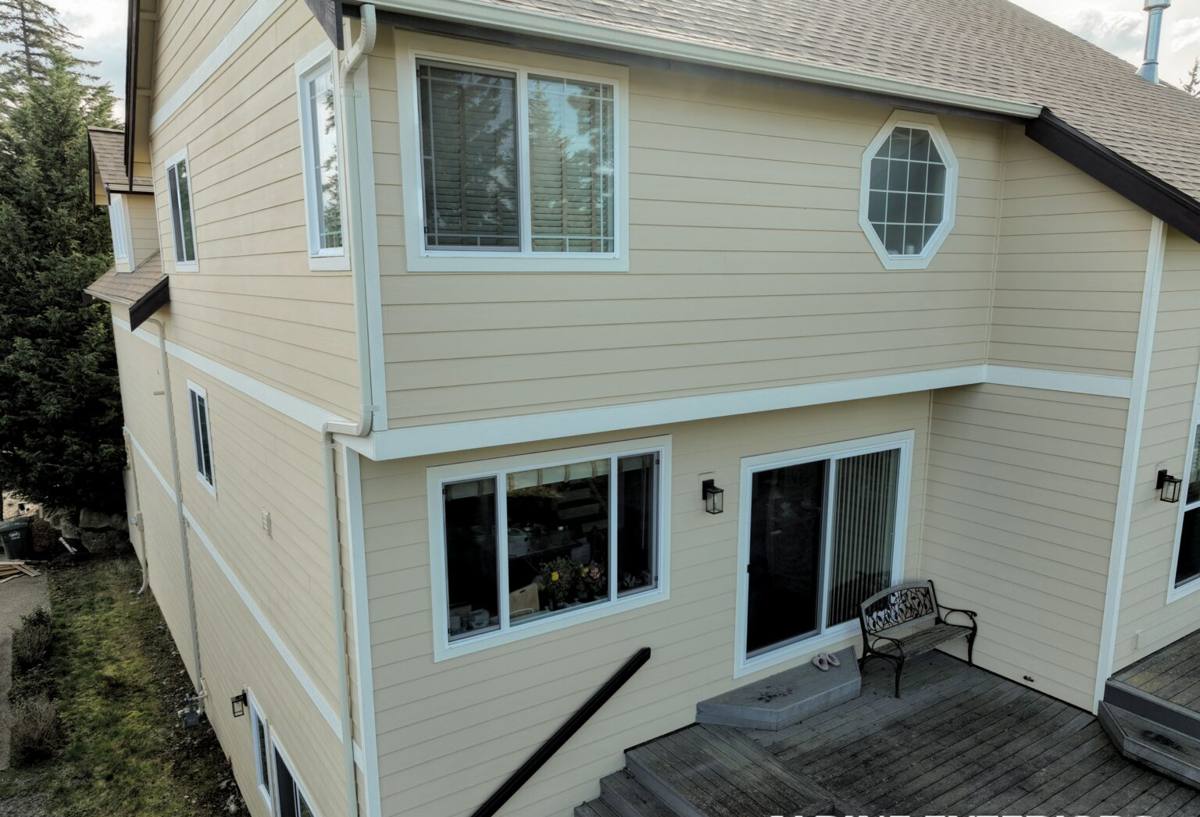
What Ferndale's Climate Actually Does to a Wall
Salt Air
Airborne salt is corrosive to exposed metal fasteners, flashing, and trim, and it accelerates the breakdown of finishes that aren't formulated to resist it. Over time, salt exposure also holds moisture against a surface longer than it would inland, which matters more than people expect — it's the combination of salt and moisture, not salt alone, that does the damage.
Driving Rain
Wind-driven rain doesn't just fall on siding, it gets pushed into every seam, lap, and penetration that isn't properly flashed and lapped. A siding job that looks good from the curb can still let water behind the cladding if the water-resistive barrier, flashing, and caulking details weren't done correctly. Once water gets behind siding and can't drain or dry out, the sheathing and framing underneath start to suffer long before the siding itself shows a problem.
Moss and Prolonged Dampness
Shaded north and west elevations in this area can stay damp for days after a storm system passes through. Moss and algae take hold on surfaces that don't shed water well or that have textured, porous finishes, and once established, moss holds moisture against the siding surface almost constantly. On wood-based products, that's a direct path to rot. On any product, it's an ongoing cosmetic and maintenance headache.
What a Correct Siding Installation Requires Here
Given those conditions, we treat a few details as non-negotiable on every Ferndale installation, not optional upgrades:
- A continuous water-resistive barrier installed and lapped correctly, with all penetrations (vents, hose bibs, light fixtures, meter bases) properly flashed before siding goes on.
- Rain screen gap or drainage plane so any moisture that does get behind the cladding has somewhere to drain and dry, rather than sitting against the sheathing.
- Corrosion-resistant fasteners rated for the coastal exposure this area gets, not standard interior-grade fasteners that will streak or fail early.
- Correct flashing at every horizontal trim piece, window, and door so driving rain sheds outward instead of tracking behind the siding.
- Factory-finished panels wherever possible, since a factory finish resists moss growth and salt exposure far better than a finish applied on site or in the field.
Skip any one of these and the siding may still look fine on installation day. The problems show up two, five, or ten years later, usually as rot, staining, or panel failure that's expensive to trace back to its source.
Why We Install Only James Hardie Fiber Cement
We made a deliberate decision to install only James Hardie fiber cement siding, and we don't install vinyl, LP SmartSide, or unfinished wood species like cedar or primed spruce. That's not a marketing position, it's a response to what we consistently see in this climate.
Fiber cement is non-combustible and dimensionally stable, meaning it doesn't expand and contract with moisture the way wood-based products do, which matters directly in a climate with this much sustained dampness. James Hardie's ColorPlus factory finish is baked on under controlled conditions and holds up to UV, salt air, and moisture far more consistently than a field-applied paint job, and it comes with its own finish warranty separate from the product warranty. James Hardie also engineers specific product lines (their HZ5 line, for example) for wetter climate zones like the Pacific Northwest, which is a level of climate-specific engineering that vinyl and most engineered wood products simply don't offer.
None of this means other products are without merit. Vinyl is inexpensive and low-maintenance in mild climates. Engineered wood siding can look warm and can perform well when detailing and maintenance are kept up religiously. But given what we see happen to those products under sustained salt exposure, driving rain, and moss pressure, we stopped installing them and standardized on fiber cement instead. It lets us stand behind one system we know works here.
Comparing Siding Options for a Ferndale Home
| Factor | James Hardie Fiber Cement | Vinyl | Engineered Wood / Untreated Wood |
|---|---|---|---|
| Salt air resistance | Strong, factory finish resists corrosion-related fading | Moderate; can chalk and become brittle over time | Weak without diligent maintenance |
| Moisture / moss resistance | Strong when installed with proper drainage detail | Doesn't rot, but seams can trap moisture | Vulnerable; moss holds moisture against the surface |
| Fire resistance | Non-combustible | Combustible, can melt or deform | Combustible |
| Finish longevity | Factory finish, separately warrantied | Color molded in, but fades over decades | Field-applied, needs recoating on a cycle |
| Typical maintenance | Occasional wash, minimal recoating | Low, but limited repair options if damaged | Regular inspection, caulking, and repainting/staining |
Our Ferndale Installation Process
- On-site assessment. We look at your home's specific exposure — which elevations take the most wind-driven rain, where shade and moss are already a problem, and the condition of the sheathing and trim underneath the existing siding.
- Tear-off and inspection. Removing the old siding lets us actually see the sheathing and framing. Any rot or water damage found here gets addressed before anything new goes up, not covered over.
- Water-resistive barrier and flashing. We install a continuous barrier and flash every window, door, and penetration correctly before any siding panel is installed.
- Rain screen installation. A drainage gap is built in so moisture that reaches behind the cladding can drain and dry instead of sitting against the wall assembly.
- Hardie panel installation. Panels are installed to James Hardie's specifications, with proper fastening, clearances, and caulking at joints.
- Trim, flashing, and final detailing. Corner boards, trim, and flashing are finished to shed water outward at every horizontal surface.
- Final walkthrough. We go over the finished work with you before calling the job complete.
Signs Your Ferndale Home May Need New Siding
- Visible moss or algae growth that returns quickly after cleaning, especially on shaded walls.
- Soft spots, bubbling, or a spongy feel when you press on the siding, particularly near the bottom courses.
- Persistent streaking or staining that doesn't wash off, often a sign the finish has broken down.
- Gaps, warping, or panels that have pulled away from the wall, which lets wind-driven rain track in directly.
- Peeling or bubbling paint on wood-based siding, a sign moisture is already trapped underneath.
- Rising energy bills without another clear cause, which can point to a compromised water and air barrier behind aging siding.
What to Expect From a Correct Installation
Whether you're hiring us or comparing quotes from other contractors, this is what a properly installed fiber cement siding job should include on any home in this climate:
- Full tear-off with sheathing inspected before new siding goes on, not siding installed directly over unknown conditions.
- A continuous, properly lapped water-resistive barrier.
- Correct flashing at every window, door, and penetration.
- A rain screen or drainage gap behind the cladding.
- Fasteners and hardware rated for coastal, salt-air exposure.
- Installation performed to the manufacturer's written specifications, not shortcuts based on "how we've always done it."
- A clear, written warranty covering both the product and the labor.
Why Local Experience Matters
Siding installation isn't one-size-fits-all, even within Whatcom County. A crew that mostly works inland jobs may not think twice about salt-air fastener corrosion or the moss pressure on a shaded, water-facing elevation, because they don't see it every day. A crew that already works Ferndale and the surrounding Semiahmoo area knows which elevations of a house typically take the worst of the driving rain, where moss tends to establish first, and which details actually matter versus which ones are just upsells. That local pattern recognition is the difference between a siding job that looks right on installation day and one that's still performing correctly a decade later.
Get a Straightforward Estimate
If your Ferndale home's siding is showing its age, or you're planning ahead for a replacement, we're happy to take a look and give you a straightforward, no-pressure estimate. There's a form below — tell us a bit about your home and we'll get back to you.