 Semiahmoo Siding
 Why Birch Bay Homes Take a Different Kind of Beating
Birch Bay sits right up against the water, and that changes what siding has to survive here. Homes a few miles inland in Whatcom County deal with plenty of rain, but Birch Bay adds salt-laden air off the water, wind-driven rain that hits west- and north-facing walls at an angle instead of falling straight down, and a wet season that runs long enough for moss and algae to get a real foothold on anything that stays damp. Siding that would be perfectly fine in a drier, more sheltered spot can fail early out here if it isn't installed with this exposure in mind.
Salt air is the part people underestimate most. It doesn't just sit on the surface — over years it works into fastener heads, trim joints, and any spot where the finish has been compromised. Combine that with near-constant moisture in the fall and winter and you have an environment that punishes shortcuts. This page is specifically about fiber cement siding for Birch Bay properties, not siding in general — the material choice matters, but so does the installation detail, and we treat both as part of the same job.
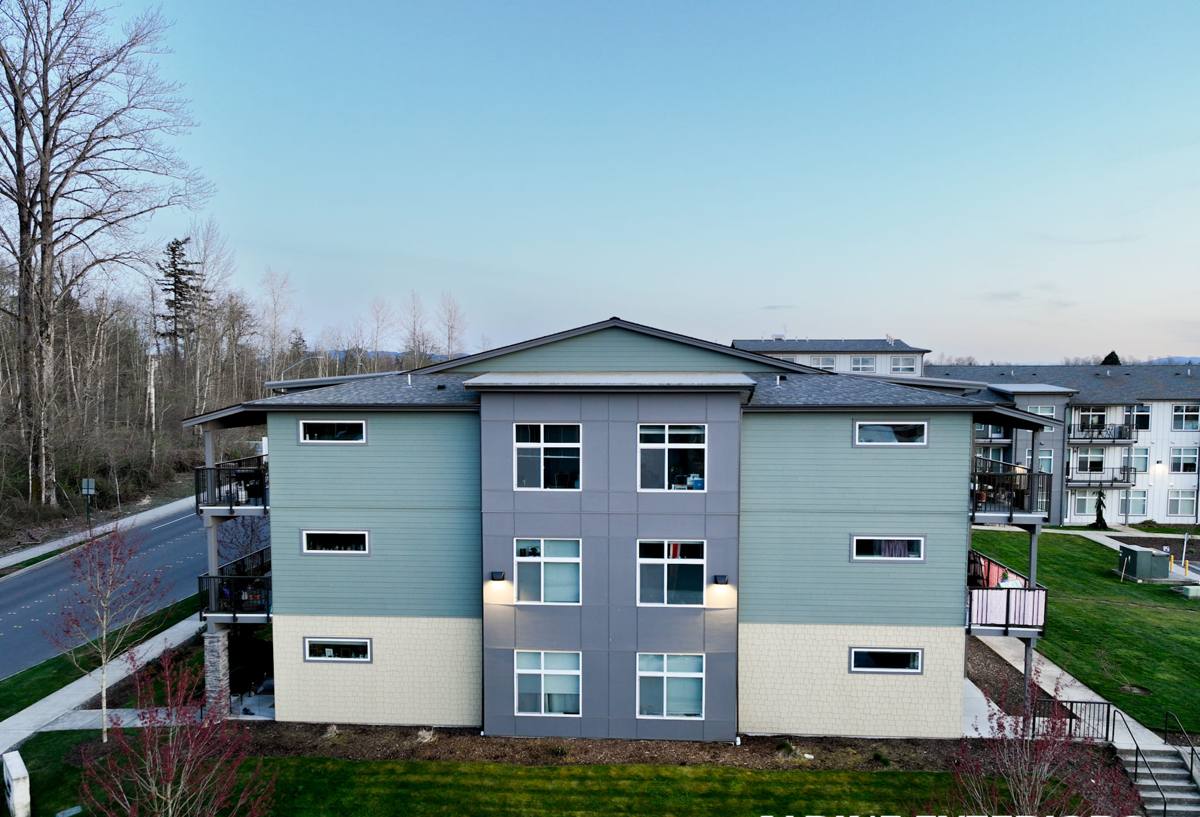
What Salt Air, Rain, and Moss Actually Do to Siding
Salt Air
Airborne salt accelerates corrosion on any exposed metal — fasteners, flashing, trim caps — and it can dull or chalk factory finishes over time if the coating isn't built to resist it. On lower-quality siding products, salt exposure combined with moisture is often what triggers early edge swelling or coating breakdown.
Driving Rain
Birch Bay's exposure to wind off the water means rain doesn't just fall on siding — it gets pushed sideways into joints, laps, and penetrations. A siding system that isn't lapped, flashed, and fastened correctly for wind-driven rain will let water behind the cladding, even if the face of the siding looks fine.
Moss Season
Whatcom County's wet season stretches long, and anything that stays damp on a north-facing wall or under tree cover becomes a moss and algae host. Moss holds moisture against the siding surface far longer than open rain does, which is what turns a cosmetic issue into a real moisture problem over time.
What Correct Installation Looks Like in This Climate
Fiber cement is only as good as the install behind it. In a coastal exposure like Birch Bay, a few details matter more than they would somewhere drier:
- Drainage plane / rainscreen gap — a ventilated gap behind the siding lets any moisture that does get past the cladding drain and dry out instead of sitting against the sheathing.
- Correct flashing at every penetration — windows, doors, hose bibs, and vents are where wind-driven rain finds its way in if flashing is skipped or done wrong.
- Proper lap and fastener spacing — James Hardie publishes specific nailing patterns and lap requirements for a reason; loose fastening or shallow laps are a common failure point in high-wind coastal areas.
- Ground and roofline clearance — siding installed too close to grade, decks, or roof lines stays wet longer and is more exposed to splash-back and moss growth.
- Sealed, not caulked-over, joints — factory-cut edges get sealed per manufacturer spec; caulk is used where it's designed to be used, not as a substitute for correct flashing.
None of this is exotic. It's standard fiber cement installation practice — but it only protects a home if it's actually followed, and that discipline matters more here than in a sheltered inland lot.
The James Hardie Product Lines We Use Here
We install James Hardie fiber cement exclusively, and for a Birch Bay property that generally means climate-engineered HardiePlank or HardiePanel products with a factory ColorPlus finish. A few reasons this combination fits the local exposure:
Climate-Engineered Formulation
Hardie manufactures different formulations for different climate zones, accounting for moisture exposure and temperature swings. For the Pacific Northwest coast, that means a product built to handle sustained wet conditions rather than a one-size-fits-all mix.
ColorPlus Factory Finish
A factory-applied, baked-on finish holds up to UV and salt exposure more consistently than field-applied paint, and it comes with its own finish warranty. In a salt-air environment, a factory finish is one less variable working against the home.
Non-Combustible Material
Fiber cement doesn't feed a fire the way some other siding materials can. It's not the primary reason we chose Hardie for coastal homes, but it's a real, permanent advantage over materials that are more moisture- or fire-sensitive.
Fiber Cement vs. Other Siding in a Birch Bay Exposure
| Factor | James Hardie Fiber Cement | Vinyl / Engineered Wood Alternatives |
|---|---|---|
| Salt air resistance | Factory ColorPlus finish holds color and integrity in coastal air | Finishes can chalk, fade, or degrade faster near saltwater exposure |
| Moisture behavior | Cement-based, doesn't swell or rot when installed with proper drainage | Wood-based products can swell at edges if moisture gets behind them |
| Wind-driven rain performance | Rigid panel holds tight laps when installed to spec | Can flex or gap under wind pressure depending on product and install |
| Moss/algae resistance | Surface doesn't feed organic growth the way porous or wood-based surfaces can | Varies; some wood-based products are more prone to surface growth |
| Fire resistance | Non-combustible | Combustible (vinyl melts/deforms; engineered wood burns) |
Our Process for a Birch Bay Fiber Cement Job
1. On-Site Assessment
We walk the exterior and look specifically at exposure — which walls take the most wind-driven rain, where moss has already established, where old flashing or trim has failed. This tells us where extra attention goes during install, not just what the finished siding will look like.
2. Tear-Off and Substrate Check
Once the old siding is off, we check the sheathing underneath for hidden moisture damage. In a coastal exposure this step matters more than people expect — problems behind old siding are common and need to be addressed before anything new goes up.
3. Weather Barrier and Drainage Plane
We install a proper weather-resistive barrier and drainage gap before any Hardie product goes on, so the wall assembly can shed and dry moisture the way it's designed to.
4. Flashing and Fastening to Spec
Windows, doors, and penetrations get flashed correctly, and the siding goes up following James Hardie's fastening and lap requirements for the climate zone — not a generic pattern.
5. Finish and Walkthrough
We finish trim and joints per manufacturer spec and walk the job with the homeowner before calling it done.
What It Costs to Do This Right
Every home is different, but the factors that move the number on a Birch Bay job are fairly consistent:
| Cost Factor | Why It Matters Here |
|---|---|
| Substrate condition | Hidden moisture damage from prior siding adds repair work before install can start |
| Wall exposure | West/north-facing walls exposed to wind-driven rain may need extra flashing detail |
| Home size and complexity | More corners, trim, and penetrations mean more labor for correct flashing and fitting |
| Product line and finish | Panel vs. plank profiles and ColorPlus color selection affect material cost |
| Access and site conditions | Waterfront lots and tight setbacks can affect staging and scaffolding needs |
We don't quote a number without seeing the house — anyone who does hasn't accounted for what condition the walls are actually in underneath the old siding.
A Homeowner's Checklist for Choosing a Crew Here
- Do they install to James Hardie's published fastening and clearance specs, or a generic pattern?
- Will they include a drainage plane / rainscreen gap, not just a weather barrier?
- Do they check and address sheathing condition during tear-off, not just after a problem shows up?
- Are they James Hardie factory-trained, and can they explain warranty terms clearly?
- Do they have experience specifically with coastal exposure, not just siding in general?
Why Local Experience in Semiahmoo Matters
A crew that mostly works drier, inland jobs can still install fiber cement correctly on paper and still miss what a Birch Bay wall actually needs — the extra flashing detail on an exposed gable, the drainage gap that matters more here than it would forty miles inland, the moss growth pattern that tells you where a wall stays wet longest. We work this stretch of Whatcom County regularly, and that means we're not guessing at how this climate behaves — we're building for the exposure we see on these homes every season.
If you're planning a siding project in Birch Bay or elsewhere on the Semiahmoo peninsula, we're happy to walk the exterior with you, point out what we see, and put together a free, no-pressure estimate — no obligation either way.