 Semiahmoo Siding
 Custer's Climate Puts Real Demands on Siding
Custer sits inland from Semiahmoo Bay but still close enough to Puget Sound and the Strait of Georgia that salt-laden air reaches homes here on a regular basis, especially during winter storms pushing in off the water. Combine that with Whatcom County's long wet season, driving rain that comes in sideways during a southwesterly blow, and the shade and moisture that keep moss and algae active for much of the year, and you have a climate that is genuinely tough on exterior cladding. Siding here doesn't just need to look good on installation day. It needs to shed water correctly, resist moisture intrusion at every seam and penetration, and hold up to repeated wet-dry cycling without swelling, cupping, or losing its finish.
Homes in and around Custer that were sided with wood, older vinyl, or lower-grade composite products often start showing their age faster than homeowners expect. That's not a reflection on any one homeowner's maintenance habits — it's what this climate does to materials that aren't built for it.
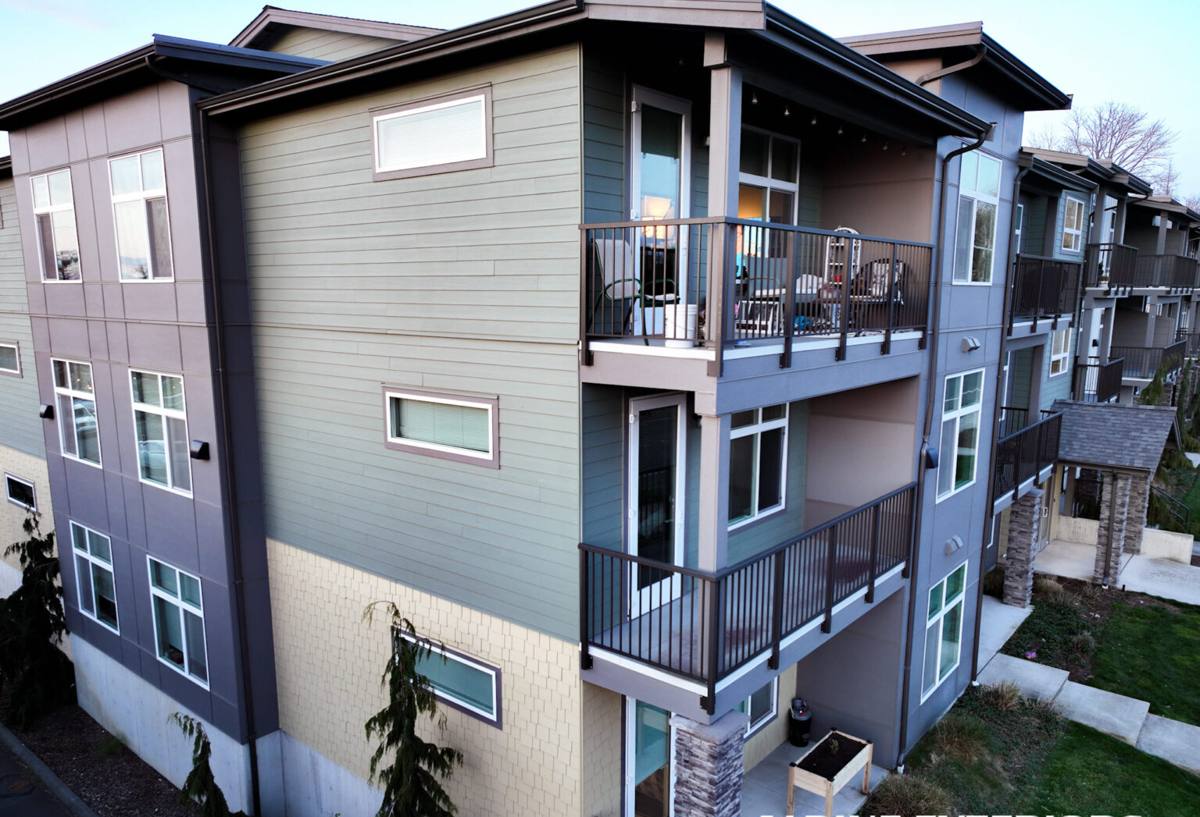
Why We Install Only James Hardie Fiber Cement
We standardized on James Hardie siding because it's engineered specifically for the kind of conditions Custer sees every year. It's non-combustible fiber cement, which matters given the wildfire smoke and ember exposure that has become a more regular concern across Western Washington in late summer. It carries a factory-applied ColorPlus finish that's baked on and warranted against fading and cracking, so the color isn't relying on a field-applied coat of paint to hold up against salt air and UV. And Hardie's HZ product lines are climate-engineered — the HZ5 formulation used in this region is built to perform in cold, wet, moisture-heavy conditions rather than the drier climates some fiber cement is optimized for elsewhere in the country.
We don't install LP SmartSide, vinyl, Cemplank, Allura, primed spruce, or cedar, and we're upfront about why. Each of those products has legitimate strengths, but none of them combine fire resistance, dimensional stability, and finish durability the way Hardie does when it's installed correctly. For a coastal Whatcom County home, that combination isn't a luxury — it's what keeps a wall assembly dry and a paint job looking right ten and fifteen years out.
How Hardie Compares in This Climate
| Factor | James Hardie Fiber Cement | Vinyl | Wood / Cedar |
|---|---|---|---|
| Moisture response | Dimensionally stable, engineered for wet climates | Won't rot, but can warp and gap with temperature swings | Absorbs water, prone to swelling and rot without diligent upkeep |
| Salt air exposure | Factory finish resists fading and chalking | Can chalk and become brittle over time | Finish breaks down faster near salt air; needs frequent recoating |
| Moss and algae | Hard, dense surface resists organic growth | Can host moss/algae in seams and laps | Porous surface, moss-prone in shaded, damp areas |
| Fire resistance | Non-combustible | Melts and deforms under heat | Combustible |
| Finish longevity | Factory ColorPlus, warranted | Color is baked into the material but can fade | Field-applied paint/stain, shorter recoat cycle |
What Correct James Hardie Installation Actually Involves
The product itself is only half the story. Fiber cement siding fails prematurely almost exclusively because of installation mistakes, not because the material itself gave out. In a climate like Custer's, the margin for error is smaller than in drier parts of the country, because any gap that lets water behind the siding has more opportunities to do damage before things dry out again.
The details that matter most on a coastal Whatcom County home
- Correct water-resistive barrier and rainscreen gap — allowing drainage and drying behind the siding rather than trapping moisture against the sheathing
- Proper flashing at every window, door, and roofline intersection — the majority of moisture intrusion happens at penetrations, not on the flat field of the wall
- Manufacturer-specified fastener spacing and type — corrosion-resistant fasteners driven correctly, not overdriven, which is critical this close to salt air
- Minimum clearance from grade, decks, and roof lines — Hardie specifies clearances precisely because ground and roof splashback are a real moisture source in high-rainfall areas
- Caulked and sealed joints only where Hardie's install guide calls for it — over-caulking traps water just as often as under-caulking lets it in
- Factory-cut and painted edges wherever possible — field-cut edges need to be sealed correctly or they become a weak point
Every one of these steps is spelled out in James Hardie's published installation instructions, and Hardie's own warranty coverage depends on following them. A crew that treats these as optional shortcuts, rather than the reason the product performs the way it does, is the single biggest risk factor in any Hardie installation.
Our Process for Custer Projects
We approach every Custer home the same disciplined way, adjusted for the specific exposure of that lot — homes with more direct wind and rain exposure toward the water get closer attention to flashing and rainscreen detailing than a more sheltered inland lot might.
- On-site assessment — we look at current siding condition, existing moisture damage, trim and flashing details, and the home's specific wind and rain exposure
- Product and color selection — choosing the right Hardie panel or lap profile and ColorPlus color for the home's style and the region's light
- Removal and sheathing check — old siding comes off and we inspect the sheathing underneath for hidden rot or moisture damage before anything new goes on
- Water-resistive barrier and rainscreen installation — building the drainage plane correctly before a single piece of siding is hung
- Hardie installation to manufacturer spec — fastening, flashing, and clearances done to the letter, not to a shortcut
- Final detailing — trim, caulking only where specified, and a walkthrough so you know exactly what was done and why
Signs Your Current Siding Is Already Struggling
Homeowners in this area often wait longer than they should to address siding problems, because early signs are subtle. Worth checking for:
- Soft or spongy spots when you press on wood or composite siding
- Persistent moss or dark streaking that returns shortly after cleaning
- Visible gaps, cupping, or warping at panel seams
- Paint that's peeling or chalking faster than it used to
- Interior signs like musty smells or discoloration on walls near exterior corners
Any of these can indicate moisture is already getting behind the siding — which, given how much rain Whatcom County sees in a typical year, is worth addressing before it reaches the sheathing or framing.
What a Custer Siding Job Typically Costs
Every home is different, but the main cost drivers are consistent. We'll always give you a specific number after seeing the house — the table below is meant to help you understand what moves the price, not to substitute for an estimate.
| Cost Factor | Why It Matters |
|---|---|
| Home size and wall complexity | More corners, dormers, and cutouts mean more labor and material waste |
| Existing siding removal and disposal | Tear-off adds labor, especially if old siding or sheathing needs remediation |
| Sheathing repair | Hidden rot found during removal has to be addressed before new siding goes on |
| Panel profile and trim detail | Lap siding, panel siding, and trim boards vary in material and labor cost |
| Site access and exposure | Homes closer to the water or with tricky access may need extra flashing and staging work |
Why Hiring a Crew That Already Works This Area Matters
Correct installation isn't generic — it's regional. A crew that mostly works drier inland climates may not instinctively over-engineer the rainscreen gap or flashing details the way a job near Semiahmoo Bay demands. We work in Custer and the surrounding Whatcom County communities regularly enough that the coastal-specific details — clearance from grade in a high-rainfall area, fastener corrosion resistance near salt air, drainage planning for a long moss season — aren't an afterthought. They're built into how we bid and build every job from the start.
That local familiarity also means we know what tends to go wrong on homes in this area specifically, which helps us catch problems during tear-off before they turn into a bigger repair.
What You Get With a Properly Installed Hardie System
Done right, James Hardie siding on a Custer home means a factory finish that isn't relying on field paint to fight salt air and UV, a wall assembly engineered to dry out rather than trap moisture, and a transferable warranty that reflects genuine confidence in the product when it's installed to spec. It's a long-term investment in not having to think about your siding again for a long time — which, in a climate that's this hard on lesser materials, is worth something real.
If you'd like a straightforward look at your home's siding and a free, no-pressure estimate, we're glad to come take a look and walk you through exactly what your house needs.