 Semiahmoo Siding
 Why Drayton Harbor Homes Wear Out Siding Faster
Drayton Harbor sits right where Semiahmoo's marine air meets the wind funneling off Boundary Bay and the Strait of Georgia. That combination is harder on exterior siding than most homeowners realize until they've lived with it a few winters. Salt-laden air drifts inland off the water and settles on every north- and west-facing wall, wind-driven rain finds its way into seams that would stay dry a few miles inland, and Whatcom County's long gray stretch from October through April keeps siding damp for days at a time. Add in the shade from mature evergreens common on harbor-adjacent lots, and you get a near-permanent moss and algae season that most siding products were never engineered to handle.
None of this means siding fails quickly here. It means the margin for error is smaller. A siding product or installation detail that's "good enough" in a drier inland climate can start showing problems — swelling, delamination, fastener corrosion, moss staining that never fully rinses off — years earlier on a home exposed to Drayton Harbor's weather. That's the lens we use on every job in this area: not "will this look right on install day," but "will this still be doing its job in fifteen years of salt air and wet winters."
James Hardie's Climate-Engineered Lines and Why They Fit Here
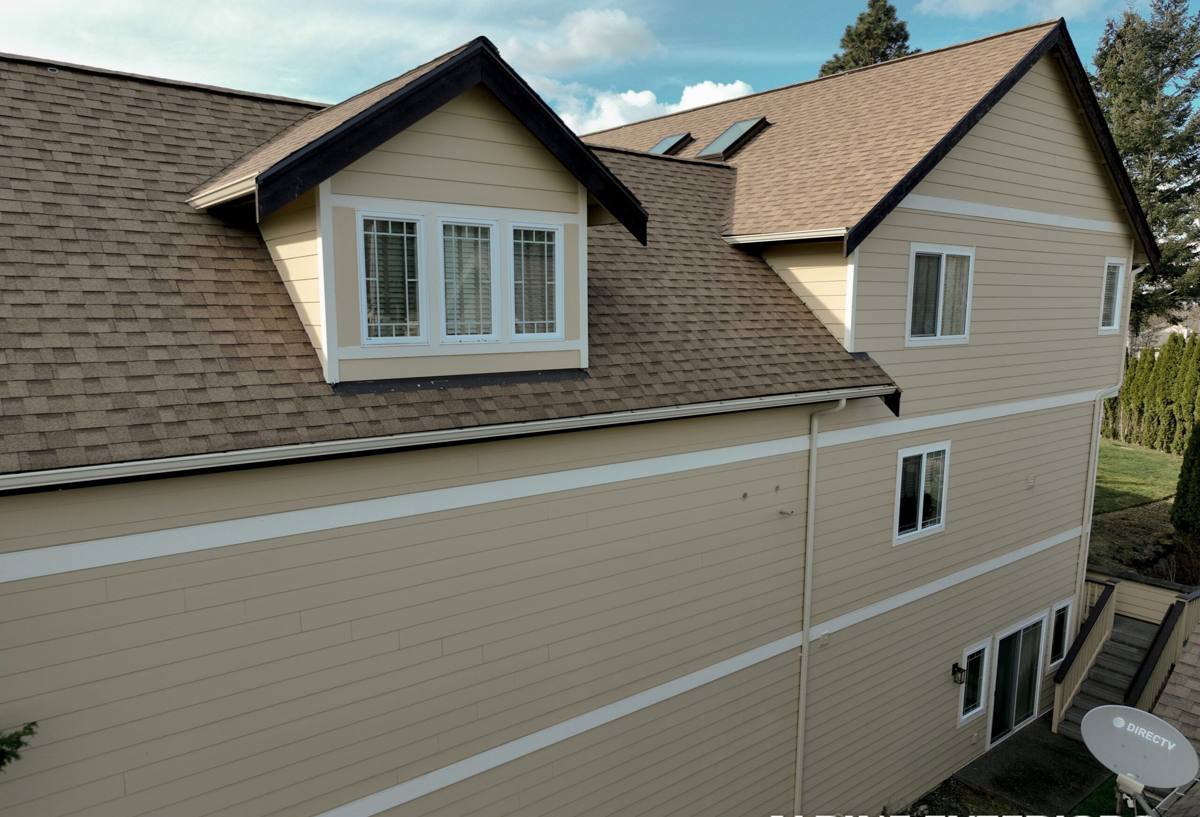
We install James Hardie fiber cement exclusively, and in a harbor climate the reason is straightforward: Hardie engineers its siding by climate zone rather than selling one product everywhere. For homes in wetter, more moderate coastal regions like ours, that means the HZ10 formulation, built specifically to resist the moisture cycling — wet, dry, wet again — that defines a Pacific Northwest winter. It's not a marketing label; it's a different manufacturing specification aimed at a different set of environmental stresses than the version sold in the arid Southwest.
Fiber cement itself is inert — it's cement, sand, and cellulose fiber, not wood and not vinyl. It won't rot, won't feed on moisture the way wood-based siding can, and it doesn't soften or warp when it stays damp for a stretch, which matters a great deal when a wall spends half the year in shade and drizzle. It's also non-combustible, a genuine advantage during dry summer stretches when wildfire smoke and ember exposure are a regional concern even this far north. The factory-applied ColorPlus finish is baked on and warranted separately from the substrate, which matters in salt air specifically — a finish that's cured and bonded at the factory holds up to airborne salt and UV far better than paint applied on site under variable weather.
What a Correct Install Requires Near the Water
James Hardie siding performs the way it's rated to perform only when the installation details are right. In a climate as unforgiving of shortcuts as Drayton Harbor's, three details matter more than anything else.
Flashing and Water Management
Every window head, door top, and horizontal trim transition needs flashing that actually sheds water outward rather than relying on caulk to do a flashing detail's job. Caulk is a maintenance item; it dries out, it cracks, and on a harbor-exposed wall it gets tested by wind-driven rain far more often than in a sheltered inland lot. We flash first and treat sealant as the backup, not the primary defense.
Fastening and Clearances
Hardie specifies exact nail patterns, fastener embedment depth, and — critical near salt air — corrosion-resistant fastener material. Standard fasteners that would be fine on an inland job can start rusting and staining panels within a few seasons this close to Semiahmoo Bay. We also hold the manufacturer's minimum clearance between the bottom of the siding and grade, decking, and roofing, so splash-back and standing moisture don't sit against the panel edge all winter.
The Moisture Barrier Behind the Panel
Fiber cement is not a moisture barrier by itself — it's a cladding, and it needs a proper weather-resistant barrier and drainage plane behind it to manage the water that inevitably gets past any siding in a driving rain. On older Drayton Harbor homes we often find this layer missing, degraded, or installed without a functioning drainage gap. Getting this right during tear-off is often more important to the home's long-term dryness than the siding itself.
How Hardie Compares for This Climate
| Material | Salt Air / Moisture Behavior | Moss & Algae Resistance | Long-Term Consideration |
|---|---|---|---|
| James Hardie fiber cement | Inert substrate; doesn't absorb and swell like wood-based products | Factory finish resists staining; surface cleans without damaging the material | Manufacturer warranty on both substrate and ColorPlus finish when installed to spec |
| Vinyl siding | Doesn't rot, but expands/contracts more with temperature swings, stressing seams and fasteners over time | Textured/matte styles show algae; color is molded through but fades with UV over years | No refinishing option — once faded or damaged, panels are replaced, not restored |
| LP SmartSide (engineered wood) | Treated to resist moisture, but it is still a wood-based product with cut edges and seams that need consistent sealing | Prone to moss/algae growth in shaded, damp exposures if maintenance lapses | Performance depends heavily on ongoing caulking and touch-up paint discipline |
| Cedar / primed spruce | Natural wood movement; most vulnerable of the group to sustained damp exposure and salt-driven decay | Highest susceptibility to moss, algae, and mildew without regular treatment | Needs the most frequent maintenance cycle of any option in this climate |
This isn't a claim that the alternatives are unusable — plenty of homes in this region are clad in each of them. It's why, after years of installing and repairing siding in Whatcom County's marine climate, we standardized on the one option that asks the least of the homeowner over a twenty- or thirty-year span.
Our Process, Start to Finish
- On-site assessment: we walk the exterior, check the current siding and whatever is behind it, and flag any moisture damage, rot, or missing flashing before we ever quote a number.
- Tear-off and sheathing check: old siding comes off and we inspect the sheathing underneath — this is where hidden water damage from years of harbor weather often surfaces, and it gets addressed before anything new goes up.
- Weather-resistant barrier and drainage plane: installed or corrected per current best practice, giving the wall an actual path to shed the moisture that gets past the cladding.
- Flashing at every penetration: windows, doors, hose bibs, light fixtures, and trim transitions — flashed before the siding closes in around them.
- Hardie panel installation: installed to manufacturer nailing, clearance, and fastener specifications, not general contractor judgment call.
- Final walkthrough: we go over caulking points, touch-up needs, and what to expect from the finish as it weathers in over the first year.
Living With It: Maintenance Through Moss Season
Hardie siding installed correctly is low-maintenance, not maintenance-free — no siding in this climate is truly the latter. A short annual routine keeps it performing the way it's designed to:
- Rinse siding gently once or twice a year, focusing on north- and west-facing walls and anywhere tree cover keeps a section shaded and damp longer than the rest of the house.
- Keep gutters clear going into the fall rains — overflowing gutters dump concentrated water directly onto siding sections that weren't designed to handle it.
- Trim back vegetation and tree limbs that hold moisture against the wall or block sun and airflow that would otherwise help siding dry out between storms.
- Check and refresh exterior caulking at trim and penetration points every couple of years — it's the one maintenance item that's on the homeowner, not the material.
- Watch for early moss or algae staining and address it promptly with a gentle wash; it's far easier to keep off than to remove once it's established.
- After any major windstorm, do a quick visual check for loose trim, damaged flashing, or panels knocked out of alignment.
Why Hiring a Crew That Already Works This Area Matters
Siding installation isn't uniform across climates, and it isn't uniform across a single county either. A crew that mainly works drier inland jobs and occasionally takes on a Drayton Harbor project doesn't have the same instinct for where water actually travels on a harbor-exposed wall, which corners take the worst of the wind-driven rain, or how much clearance really matters when a lot sits low and close to the water. A crew that works this area regularly has already seen what goes wrong on older homes here — where the flashing tends to fail first, which fastener choices hold up and which don't, how a shaded north wall behaves differently than the rest of the house — and builds that knowledge into every new install rather than learning it on your home.
That local pattern recognition is also why we install one product rather than juggling several. Knowing James Hardie's specifications cold, for this specific climate, means fewer judgment calls in the field and a more consistent result from one Drayton Harbor job to the next.
If you're planning a siding project in Drayton Harbor or elsewhere around Semiahmoo, we're happy to take a look and talk through what your home actually needs. Use the form below to request a free, no-pressure estimate.