 Semiahmoo Siding
 Board & Batten Siding Built for Laurel's Climate
Laurel sits inland from the water but still lives inside the same weather pattern that defines this whole stretch of Whatcom County: salt-tinged air pushing in off the Strait, driving rain that comes sideways more often than straight down, and a moss season that stretches from fall through spring. Board and batten siding has a distinctive vertical look that a lot of Laurel homeowners want, but that look only holds up if the siding underneath it is built to handle wet, moss-prone conditions year after year. A board and batten wall that looks sharp in month one and streaks, swells, or grows moss by year three isn't a good value no matter what it cost going in.
We install board and batten as a full system, not a decorative pattern nailed over whatever's already on the wall. That distinction matters more with board and batten than with almost any other siding style, because the vertical seams and batten strips create more joints, more fastener points, and more places for water to find a way in if the install isn't done right.
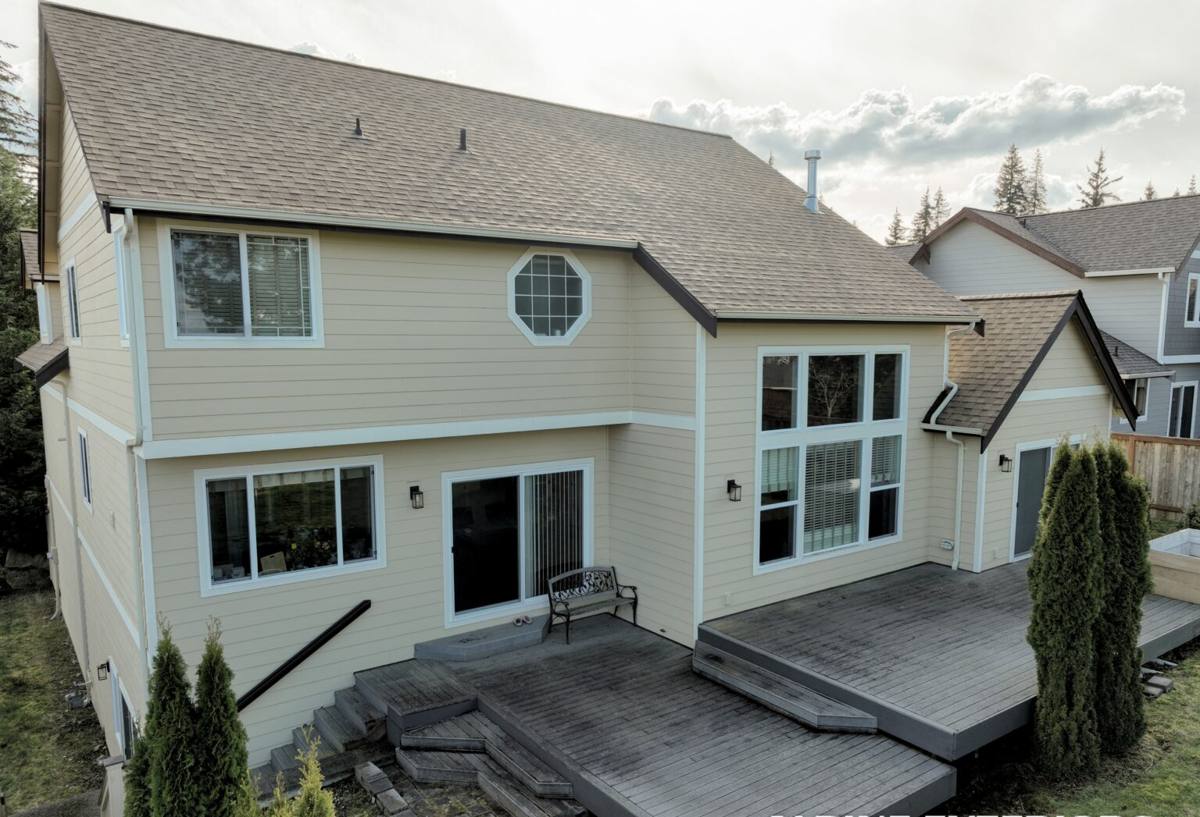
Why Board & Batten Needs Extra Attention in This Region
Every siding profile has to deal with Whatcom County's rain, but board and batten has a few characteristics that make correct installation even more important here:
- More vertical seams: Each joint between panels and each batten strip is a potential water entry point if flashing and fastening aren't done correctly.
- Moss and algae collect on flat batten faces: The wide, flat surfaces of battens hold moisture and organic growth longer than a sloped lap profile, especially on north-facing and shaded walls.
- Salt-laden air accelerates fastener corrosion: Standard fasteners rust and stain over time near the water; this shows up fast on light-colored board and batten because staining is highly visible against a flat, uniform surface.
- Driving rain tests the drainage plane: Board and batten profiles need a properly built rainscreen or drainage gap behind them so wind-driven rain that gets past the surface has somewhere to go besides your sheathing.
None of this means board and batten is a bad choice for Laurel. It means the installation details that a lot of crews skip past — the ones you can't see once the wall is finished — matter more here than they would somewhere dry and mild.
What a Correct Board & Batten Job Actually Involves
Weather-Resistive Barrier and Drainage Plane
Before a single panel goes up, the wall needs a properly lapped and sealed weather-resistive barrier, and behind the siding itself a drainage gap that lets any water that gets past the battens drain out and dry. Skipping or shortcutting this step is the single most common reason board and batten siding fails early in wet climates — the siding itself can be doing its job perfectly and the wall still rots behind it if there's nowhere for incidental moisture to go.
Panel and Batten Spacing
Panels need correct gapping for expansion and contraction, and battens need to be installed with the fastening pattern and spacing the manufacturer specifies — not just "close enough." Battens that are fastened incorrectly, or spaced past their rated span, are prone to cupping and separating from the wall over a few wet-dry cycles.
Flashing at Every Transition
Windows, doors, roof lines, and any point where the wall changes plane need site-built or manufactured flashing detailed correctly, with the drainage plane and weather barrier integrated so water sheds outward at every layer. This is detail work that either gets done right the first time or gets discovered later as a stain, a soft spot, or a moss patch that won't go away.
Fastener Selection
Near coastal air, fastener corrosion resistance isn't optional. Correct fasteners hold their finish and their grip for the life of the siding instead of bleeding rust streaks down a board and batten wall within a few seasons.
James Hardie Board & Batten: The Only System We Install
We install James Hardie fiber cement exclusively — we don't install vinyl, LP SmartSide, primed spruce, cedar, or other fiber cement brands. For board and batten specifically, that means HardiePanel vertical siding paired with HardieTrim battens, finished in a factory-applied ColorPlus finish rather than field-painted after installation.
A few reasons this system is what we put on Laurel homes:
- Non-combustible material: Fiber cement doesn't feed a fire the way wood-based products can, which matters for insurance and peace of mind alike.
- Engineered for wet Pacific Northwest climates: James Hardie's HZ5 product line is engineered specifically for regions with high moisture exposure — the category this part of Washington falls squarely into.
- Factory finish holds color and resists moss better than field paint: ColorPlus is baked on under controlled conditions and backed by its own finish warranty, which matters on flat batten faces where a hand-painted finish shows wear first.
- Dimensionally stable: Fiber cement doesn't swell, cup, or warp the way wood-based battens can when they take on and release moisture repeatedly through a wet winter.
- Transferable warranty: If you sell the home, the warranty coverage can transfer to the next owner, which is a real selling point on a house with premium siding.
We've explained our reasoning on other pages for why we don't install cedar, vinyl, or LP SmartSide — the short version is that each of those products asks a homeowner to accept a real maintenance burden, a moisture vulnerability, or an installation sensitivity that James Hardie doesn't. Board and batten in particular is unforgiving of those weaknesses because of how many joints and flat surfaces it has.
Board & Batten Compared to Other Siding Profiles
| Factor | Board & Batten (Hardie) | Lap Siding (Hardie) | Cedar Board & Batten |
|---|---|---|---|
| Look | Bold vertical lines, modern or farmhouse feel | Traditional horizontal shadow lines | Vertical lines, natural wood grain |
| Moisture behavior | Stable with correct drainage plane install | Stable, fewer vertical seams overall | Prone to cupping, checking, and rot without diligent upkeep |
| Moss/algae resistance | Good — factory finish resists growth on flat faces | Good | Poor without regular treatment and cleaning |
| Maintenance | Occasional wash; no repainting for the life of the finish warranty | Occasional wash | Regular refinishing, sealing, and inspection |
| Install complexity | Higher — more seams and battens to detail correctly | Moderate | Higher, plus wood-specific moisture management |
Board and batten is a design decision as much as a performance decision — plenty of Laurel homes suit the vertical look and it holds up well in fiber cement. The comparison is really about which material carries that look without the maintenance and moisture risk that comes with wood.
Our Process, Start to Finish
- On-site assessment: We walk the exterior, check the current siding and sheathing condition, and look specifically at drainage, grade slope, and any areas showing past moisture damage.
- Detailed estimate: You get a clear scope of what's being removed, what's being repaired if needed, and exactly which James Hardie board and batten products and colors are being installed.
- Prep and moisture barrier: Old siding comes off, any damaged sheathing gets addressed before it's covered up, and the weather-resistive barrier and drainage plane go in correctly — not shortcuts, not assumptions.
- Flashing and trim: Every window, door, and transition gets flashed and detailed before panels go up around it.
- Panel and batten installation: Installed to James Hardie's fastening and spacing specifications, which is also what keeps the manufacturer's warranty valid.
- Final walkthrough: We go over the finished job with you before calling it done.
Common Board & Batten Failure Points We See — and Prevent
- Missing or inadequate drainage plane: Leads to trapped moisture and rot behind the siding, often invisible until the damage is significant.
- Battens fastened directly through panel without proper backing: Creates weak points that loosen over repeated wet-dry cycles.
- Poor flashing at window and door transitions: The most common source of water intrusion on any vertical siding profile.
- Wrong fastener type: Leads to rust streaking and eventual fastener failure, especially in salt-influenced air.
- Field-painted wood battens instead of factory-finished fiber cement: Shows wear, fading, and moss growth years before a ColorPlus finish would.
Maintenance Checklist for Board & Batten Homes in Whatcom County
- Rinse the exterior once or twice a year to keep moss and algae from establishing, especially on shaded or north-facing walls.
- Walk the exterior after major windstorms and check for loose or shifted battens.
- Keep gutters clear so overflow doesn't run directly down siding faces.
- Keep plantings and irrigation from spraying directly onto the lower courses of siding.
- Watch caulking at trim and window transitions and have it renewed before it fails, not after.
- Note any soft spots, staining, or persistent moss patches and have them checked promptly rather than waiting.
Why Hiring a Crew That Already Works Laurel Matters
Board and batten is more sensitive to installation quality than most siding profiles, and the conditions that cause problems in this part of Whatcom County — salt air, driving rain, extended moss season — aren't the same conditions a crew from a drier region deals with regularly. A crew that already works in and around Laurel and the greater Semiahmoo area knows what drainage details actually hold up here, what fastener corrosion looks like a few years in, and where moss tends to establish first on a given wall orientation. That local pattern recognition is the difference between a board and batten install that's still tight and clean in ten years and one that's already showing problems.
We also only install one siding system, which means every crew member on a board and batten job has done this exact profile with this exact material many times over — not occasionally, alongside four other brands and styles.
Get a Straight Answer on Your Laurel Home
If you're weighing board and batten for a home in Laurel, we're glad to walk the exterior with you, talk through what your walls actually need given their exposure and orientation, and give you a straightforward estimate — no pressure, no upsell. Use the form below to request a free estimate.