 Semiahmoo Siding
 Laurel's Climate Is Harder on Siding Than Most Homeowners Realize
Laurel sits within the broader Semiahmoo and Whatcom County service area, where marine air off the water carries salt inland, rain arrives sideways more often than straight down, and shaded, tree-lined lots stay damp for months at a time. That combination is rough on exterior walls. Salt-laden air accelerates corrosion on fasteners and trim metal. Driving rain finds any gap in a wall system and pushes water where it doesn't belong. And a moss season that can run from fall through spring keeps north- and west-facing walls wet long after the rest of the house has dried out.
None of that is unique to one style of home in Laurel, but it does mean siding here works harder than siding in a drier inland climate. A product or installation that would hold up fine in a milder environment can fail years early once you add salt exposure, wind-driven rain, and sustained moisture on top of each other.
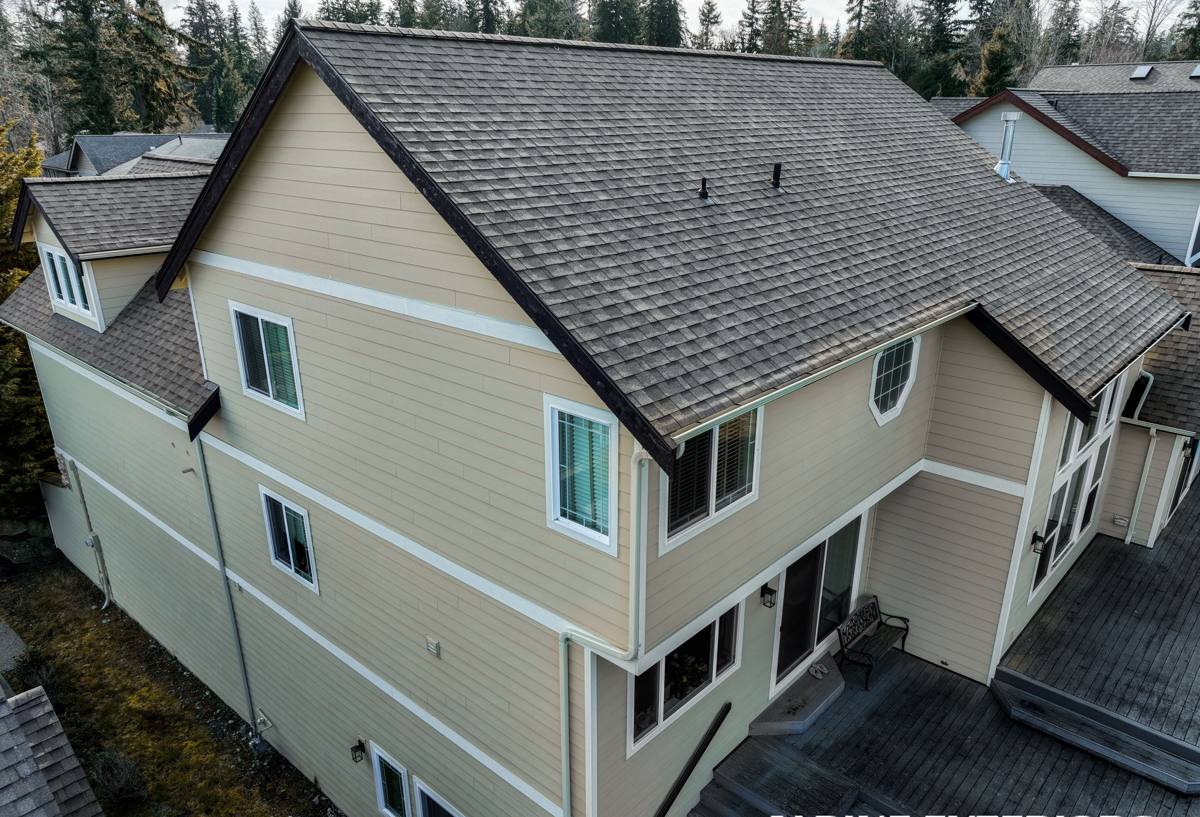
How This Climate Actually Damages Siding
Salt Air and Metal Fasteners
Salt accelerates oxidation. Nails, staples, and trim flashing that aren't rated for a coastal-influenced environment can corrode faster than the siding itself ages, leading to streaking, loose panels, and eventually water intrusion at the fastener points.
Driving Rain and Wall Assembly Gaps
Wind-driven rain doesn't just wet a surface — it gets pushed sideways and upward at laps, corners, and penetrations. A wall system depends on correct lap spacing, flashing, and a working drainage plane behind the siding to stay dry. Any shortcut in that assembly becomes a leak point during the next storm.
Moss, Shade, and Sustained Moisture
Moss itself doesn't eat siding, but it holds moisture against the surface for extended periods, which is hard on paint film, caulking, and any wood-based product. Shaded, low-airflow walls in Laurel's tree cover are the areas we see fail first.
Signs a Laurel Home Needs Siding Replacement — Not Just Repair
Some damage can be patched. Other damage means the wall assembly underneath has been compromised, and repair only delays a bigger repair bill later. Signs it's time to talk about full replacement:
- Soft, spongy, or visibly warped siding panels, especially on north- or west-facing walls
- Paint that keeps failing in the same spots within a year or two of repainting
- Persistent moss or algae growth that returns almost immediately after cleaning
- Visible gaps, buckling, or separation at seams and corners
- Rust streaks below fasteners or trim, or fasteners backing out of the surface
- Interior signs — musty smells, peeling interior paint, or soft drywall near exterior walls
- Siding that's original to a home built with a product not engineered for this climate
What a Correct Siding Replacement Job Involves
Replacing siding is not just swapping old panels for new ones. Done correctly, it's a full inspection and rebuild of the water management system behind the wall, which matters more in Laurel's climate than almost anywhere inland.
Tear-Off and Substrate Inspection
Full removal of the existing siding so the sheathing underneath can actually be inspected — not guessed at. Any soft or water-damaged sheathing gets identified and replaced before anything new goes up. Skipping this step is the single biggest reason siding jobs fail early.
Weather-Resistive Barrier and Flashing
A correctly lapped weather-resistive barrier, along with new flashing at windows, doors, and penetrations, gives the wall a drainage plane that can handle wind-driven rain even if some water gets past the siding face itself — which it will, eventually, on every home.
Correct Installation to Manufacturer Spec
Proper fastener type and placement, correct nailing patterns, minimum clearances at grade and roofline, and factory-specified lap and joint treatment. These details are exactly where corner-cutting shows up first in a salt-air, high-rain climate — usually within a few years, not decades.
Why We Install Only James Hardie Fiber Cement Siding
We don't install vinyl, LP SmartSide, primed spruce, cedar, or other fiber cement brands. That's a deliberate standard, not a sales preference. In a climate like Laurel's — sustained moisture, salt exposure, and real wind-driven rain — the products that struggle most are the ones sensitive to moisture cycling or dependent on paint film and caulking to stay sealed. James Hardie fiber cement is non-combustible, dimensionally stable in wet-dry cycling, and backed by a factory-applied ColorPlus finish that doesn't rely on field-applied paint holding up against salt air for its color and weather resistance.
That's the whole reason we standardized on one product line instead of offering several. We'd rather install one thing correctly than several things with compromises we'd have to explain to a homeowner five years later.
Choosing the Right Hardie Line for This Climate
James Hardie engineers its siding by climate zone, and homes in Western Washington fall into the HZ10 product line, built for wetter, milder coastal climates rather than the drier HZ5 zone used in much of the country's interior. That distinction matters more here than most homeowners expect — it affects the moisture performance of the product itself, not just the finish on top of it.
| Consideration | Why It Matters in Laurel |
|---|---|
| HZ10 climate engineering | Formulated for sustained moisture exposure typical of Western Washington, versus drier interior climates |
| ColorPlus factory finish | Baked-on finish resists fading and holds up against salt air better than field-applied paint over time |
| Panel vs. lap profile | Lap siding sheds driving rain differently than panel systems; profile choice should match wall exposure |
| Trim and fastener compatibility | Corrosion-resistant fasteners and compatible trim reduce the salt-air failure points described above |
Our Process, From Estimate to Final Walkthrough
- On-site assessment — we look at exposure direction, moisture staining, existing siding condition, and any signs of substrate damage before quoting anything.
- Written estimate — clear scope, product line, and what's included, with no pressure to decide on the spot.
- Tear-off and inspection — old siding comes off, sheathing gets inspected, and any repairs are discussed with you before we close the wall back up.
- Weather barrier and flashing installation — the part of the job that determines whether the wall stays dry for the next 30-plus years.
- Hardie installation to spec — correct fastening, clearances, and joint treatment, not shortcuts that only show up as problems later.
- Final walkthrough — we review the finished work with you and answer questions before calling the job done.
What Drives Cost on a Laurel Siding Replacement
Every home is different, but the same handful of factors drive most of the variation in scope and cost. Broad ranges only — an accurate number comes from an on-site look at your specific home.
| Cost Factor | Impact |
|---|---|
| Substrate condition | Water-damaged sheathing found during tear-off adds repair scope before new siding goes on |
| Home size and wall complexity | More corners, gables, and penetrations mean more flashing detail and labor time |
| Siding profile and trim selection | Lap width, trim style, and accessory choices affect material cost |
| Access and site conditions | Tree cover, slope, and staging space affect labor time on a given lot |
| Existing paint or coating removal | Some older siding types require extra handling or disposal steps |
Why Hiring a Crew That Already Works in Laurel Matters
A contractor who works this part of Whatcom County regularly already knows which wall orientations take the worst weather, how long moss season really runs on shaded lots, and what a wall assembly needs to hold up here rather than in a generic climate zone. That local pattern recognition shows up in small decisions — flashing details, fastener choice, where to expect the first signs of trouble — that a crew unfamiliar with this specific coastal-influenced climate might not think to prioritize.
It also means faster, more realistic scheduling around this region's wetter stretches, and a crew that isn't learning the local climate's failure points on your home for the first time.
Protecting Your Investment After Installation
Correctly installed James Hardie siding is low-maintenance, but "low-maintenance" isn't "no-maintenance" in a climate like this one. A few habits go a long way:
- Rinse siding periodically, especially shaded and north-facing walls where moss and algae take hold first
- Keep gutters clear so overflow doesn't run down the wall face during heavy rain
- Trim back vegetation that keeps a wall shaded and damp
- Have caulking and trim joints checked every few years, since these — not the Hardie panels themselves — are the most common maintenance item
- Address any new staining or soft spots promptly rather than waiting for the next dry season
If your Laurel home's siding is showing its age, or you just want an honest read on whether it's a repair or a replacement, we're happy to take a look. The estimate is free, there's no pressure, and you'll get a straight answer either way — just fill out the form below to get started.