 Semiahmoo Siding
 Storm Damage Roof Repair in Marietta: What Local Homes Are Up Against
Marietta sits close enough to the water that every winter storm system moving through Whatcom County brings the same combination: salt-tinged air, driving rain that comes in sideways instead of straight down, and a moss season that seems to run most of the year. None of that is unusual for this part of the Washington coast, but it does mean roofs here take a different kind of beating than roofs forty miles inland, and a repair that ignores that reality tends to fail again within a year or two.
Salt air and slow corrosion
Homes close to the water deal with airborne salt settling on exposed metal — flashing, fasteners, vent stacks, gutter hardware. It's a slow process, not a dramatic one, but it eats away at unprotected or mismatched metal over time and is often the real reason a flashing detail starts leaking years before the shingles around it are worn out.
Driving rain and wind-driven water
Storms off the water rarely drop rain straight down. Wind pushes it sideways and up under laps, ridge caps, and step flashing that would shed a normal rain shower without issue. After a wind event, damage often shows up not as missing shingles but as water finding its way in through a joint that was never designed to face rain coming from that angle.
A moss season that barely ends
Consistent moisture and shade from mature trees give moss a long growing window here. Moss holds water against the roof surface, lifts shingle edges as it grows, and works its way under flashing over time. A roof that's carrying a moss load going into a storm is already compromised before the wind even picks up.
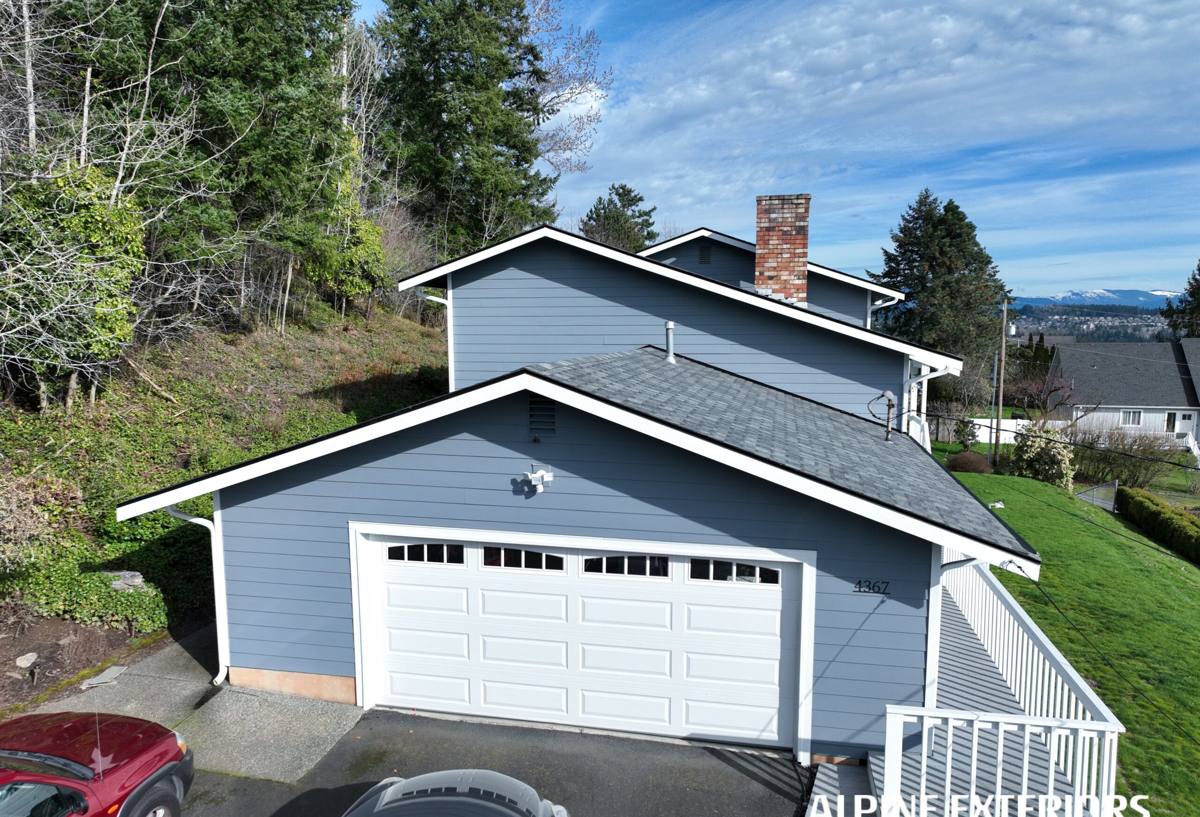
Signs Your Marietta Roof Has Storm Damage
Some storm damage is obvious. A lot of it isn't — it shows up weeks later as a stain on a ceiling or a soft spot underfoot. After any significant wind or rain event, it's worth doing a careful visual check from the ground and inside the attic if you can safely access it.
- Shingles that are cracked, curled, creased, or missing entirely, especially on the side of the roof that faces prevailing wind
- Granules collecting in gutters or at downspout outlets — a sign of impact or wind abrasion on asphalt shingles
- Lifted, bent, or separated flashing around chimneys, skylights, vent pipes, and roof-to-wall joints
- Gutters pulled away from the fascia, sagging, or clogged with debris that's forcing water to back up under the roof edge
- Water stains, discoloration, or a musty smell in the attic or on interior ceilings, particularly near exterior walls
- Visible sagging or a change in roofline that could point to sheathing or structural damage underneath
- Moss buildup at flashing lines or valleys that's holding water against the surface longer than the rest of the roof
What a Correct Storm Damage Repair Actually Involves
An assessment before any material goes on the roof
The most common mistake in storm repair isn't a bad shingle job — it's replacing visible damage while missing the hidden cause. A proper assessment walks the whole roof plane, checks the attic for moisture intrusion, and traces water stains back to their actual entry point, which is often several feet from where the stain shows up inside the house.
Matching materials and re-establishing the drainage plane
Roofing sheds water in layers, from underlayment out through shingles or panels, with each layer overlapping the one below it. A repair that just fills a gap without restoring that overlap sequence will leak again, even if it looks fine from the ground. Matching the existing material as closely as possible also matters for both appearance and how the repaired section will weather compared to the rest of the roof.
Flashing gets as much attention as the field
Most storm leaks trace back to flashing, not the shingle or panel field itself. Chimney flashing, valley metal, step flashing along walls, and pipe boots are where a repair earns its keep. We replace flashing rather than caulk over it when it's failed — caulk is a short-term patch, not a fix, on a detail that's supposed to shed water by geometry, not by sealant.
Roofing Materials Common in Marietta and How They Hold Up to Storms
Different roofing materials respond differently to the combination of wind, salt air, and moss pressure typical of this area. There's no single "best" material for every home — it depends on the roof's age, pitch, exposure, and the homeowner's priorities.
| Material | Wind/storm resistance | Salt air behavior | Moss resistance |
|---|---|---|---|
| Asphalt composition shingle | Good when properly nailed and sealed; vulnerable at edges and ridges if fasteners are undersized | Minimal issue — fiberglass mat and granules don't corrode | Moderate; benefits from periodic cleaning and zinc/copper strips |
| Standing seam metal | Excellent; panels resist uplift when properly fastened and clipped | Depends on coating and fastener metal — mismatched or uncoated fasteners corrode faster near salt air | Strong; smooth surface sheds moss more easily |
| Cedar shake | Fair; individual shakes can lift or split in high wind | Neutral, but retains moisture longer than other materials | Weakest; wood grain holds moisture and organic growth without regular maintenance |
| Low-slope membrane (TPO/modified bitumen) | Good on properly detailed roofs; seams are the main risk point | Minimal issue with quality membrane | Moderate; flat areas can pond water and need clear drains |
We'll walk you through which of these makes sense for your specific roof rather than pushing one system across every job. Where we do steer homeowners away from a product, it's a maintenance and moisture-behavior conversation — for example, cedar shake requires a real ongoing maintenance commitment in this climate, and that's worth knowing before a storm repair turns into a bigger decision about the whole roof.
Our Storm Damage Repair Process
- On-site inspection of the full roof, attic, and any interior areas showing water intrusion, with photos documenting the damage as found
- A written explanation of what's damaged, what's causing it, and what repair scope actually addresses the root issue
- A clear estimate before any work starts, including material and labor breakdown so there are no surprises
- Tear-out of damaged material only where needed, with underlayment and decking checked for hidden rot or soft spots
- Repair or replacement of flashing, underlayment, and roofing material, matched to the existing roof where possible
- A final walkthrough with the homeowner, including attic and gutter checks, before we consider the job done
Working Through Insurance After a Storm
Many storm damage repairs in this region get partly or fully covered by homeowners insurance, depending on the policy and the cause of damage. We're not an insurance company and we won't promise a specific coverage outcome, but we can document damage thoroughly with photos and a written scope that supports a claim, and we're glad to meet an adjuster on-site to walk the roof together. Getting the assessment done quickly after a storm matters — delayed documentation is one of the more common reasons a legitimate claim gets questioned.
Why a Crew That Already Works in Marietta Matters
Roofing crews who work this stretch of Whatcom County regularly know which flashing details tend to fail first in salt air, which roof orientations take the worst of the wind off the water, and how aggressive moss growth gets on a shaded roof plane by late fall. That local pattern recognition speeds up diagnosis and means fewer surprises once a repair is underway. It also means we're not learning the local building department's requirements on your job — permitting and inspection expectations for roof work in this area are already familiar to us.
Reducing the Odds of Repeat Storm Damage
A repair only holds up if the conditions that caused the damage are also addressed. A few things go a long way toward keeping a Marietta roof storm-ready:
- Clear moss and debris from the roof surface and valleys before the wet season sets in, not after
- Keep gutters and downspouts flowing freely so wind-driven rain has somewhere to go besides under the roof edge
- Have flashing and pipe boots checked every couple of years, since they wear out well before shingles or panels typically do
- Trim back tree limbs that shade the roof and keep it damp longer than open areas nearby
- Address small leaks immediately — a slow drip during one storm season often becomes sheathing damage by the next
If a recent storm has left you with damage, or you're just not sure whether what you're seeing needs attention, we're happy to take a look. Fill out the form below for a free, no-pressure estimate — we'll tell you honestly what we find, what it needs, and what it doesn't.