 Semiahmoo Siding
 Building New in California Creek Means Building for the Weather You Actually Have
If you're framing a new home in California Creek, you already know this stretch of Whatcom County doesn't play by the same rules as inland construction. You're close to the water, exposed to wind off the Salish Sea, and dealing with a wet season that runs long even by Pacific Northwest standards. Salt air corrodes hardware and fasteners faster than manufacturers' generic warranty language usually accounts for. Driving rain doesn't just hit windows head-on — it gets pushed sideways and upward by wind, testing every seam in a way that calm, straight-down rain never does. And the moss and algae season that stretches from fall through spring means anything that stays damp for long periods will grow something on it eventually.
New construction is actually the best possible time to get windows right for this environment. You're not fighting an existing wall assembly or covering up someone else's mistakes — you get to build the water management system correctly from the studs out. Get it right now, and you won't be back in ten years chasing rot behind the trim. Get it wrong, and the window itself might be fine while everything around it fails.
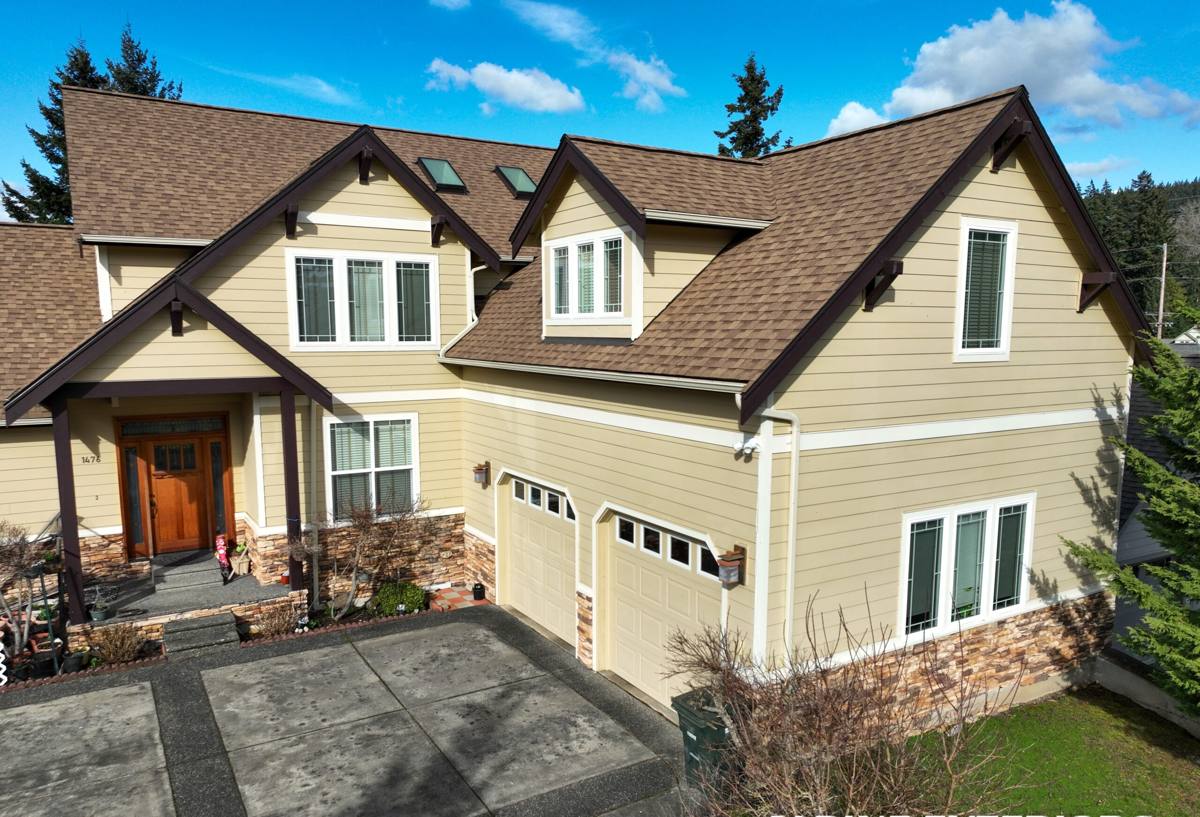
What "Correct" Actually Means in a Coastal New-Construction Install
A window that looks straight and locks properly can still be installed wrong. In a home near the water, correct installation is mostly about what you can't see once the siding goes on — the flashing sequence, the water barrier integration, and the sealant details that keep wind-driven rain from finding its way behind the window frame.
The Non-Negotiables
- Sill pan flashing under every rough opening, sloped to drain outward, not just a bead of caulk
- Weather-resistant barrier lapped shingle-style so water always sheds outward and downward
- Corrosion-resistant fasteners and hardware rated for coastal or marine exposure
- Head flashing integrated with the WRB above the window, not just applied over the trim later
- Backer rod and sealant at the right joints — sealed where it should be sealed, and left open where the assembly needs to breathe and drain
- Proper shimming and squaring so the window operates smoothly for decades, not just on install day
Skip any one of these steps and the window can still pass a casual walk-through inspection. The failure shows up later — as a soft spot in the sheathing, a stain on the interior sill, or moss creeping in at a corner that never fully dries out.
Choosing a Frame Material for This Microclimate
There's no single "best" window frame material for every home, but some hold up better than others under sustained salt air and moisture exposure. Here's how the common options compare for a California Creek build specifically.
| Frame Material | Salt Air / Corrosion Resistance | Moisture & Rot Risk | Maintenance |
|---|---|---|---|
| Vinyl | Good — won't corrode or oxidize | Low, if drainage details are correct | Low; occasional cleaning |
| Fiberglass | Very good — stable and dimensionally strong in temperature swings | Low | Low; holds paint well if you go with a color |
| Wood / Wood-Clad | Moderate — cladding protects the exterior face, but any breach exposes wood | Higher if seals fail or maintenance lapses | Higher; needs regular inspection near the coast |
| Aluminum | Poor to moderate unless marine-grade and properly finished | Low for the frame itself, but a poor thermal performer and prone to condensation | Moderate |
We don't push homeowners toward one brand or product line — every reputable manufacturer makes better and worse products within their own lineup. What matters more than the label on the frame is whether the hardware, weatherstripping, and finish are actually rated for coastal exposure, and whether the installation details around it are done correctly. A premium window installed with a sloppy flashing job will underperform a mid-grade window installed correctly, every time.
Glass and Hardware Considerations
For a California Creek build, we typically talk homeowners through dual-pane, low-E glass with argon fill as a baseline — it performs well against both our wet, mild winters and the condensation that comes with big temperature swings between indoor heat and cold, damp air outside. Hardware should be stainless steel or another corrosion-resistant alloy, not standard-grade steel that will start showing rust streaks within a few winters of salt exposure.
Our Process for New-Construction Window Installation
New construction gives us the chance to sequence things properly instead of retrofitting around existing conditions. Here's how a typical install runs on a California Creek project:
- Rough opening check — we verify every opening is square, correctly sized, and structurally sound before a single window goes in
- Sill pan flashing installation — sloped and sealed to direct any intrusion back outside, not into the wall cavity
- Window set and shim — leveled, plumbed, and squared, checked for smooth operation before final fastening
- Fastening — corrosion-resistant fasteners at manufacturer-specified spacing, torqued correctly rather than overdriven
- Flashing tape and WRB integration — jamb flashing first, then head flashing lapped over the housewrap so water always sheds down and out
- Sealant detailing — interior and exterior sealed per the manufacturer's installation instructions, with drainage paths left open where required
- Final operation and quality check — every window opens, closes, and locks the way it should before we sign off
We coordinate directly with your general contractor or builder on timing, since window installation has to happen at exactly the right point in the build sequence — after the weather barrier is on, but before siding closes everything in.
Why Flashing and Moisture Management Matter More Here Than Elsewhere
Whatcom County gets a lot of rain, but it's the combination of wind and moisture near the water that makes California Creek a tougher environment than a comparable home a few miles inland. Wind-driven rain can push water uphill along a wall surface and test flashing laps that would never see that kind of pressure in a sheltered location. Add in the long moss season, where surfaces stay damp for extended stretches, and any flaw in the drainage plane becomes an invitation for organic growth and slow rot rather than a quick, obvious leak.
That's why we treat flashing sequencing as the most important part of the job, not an afterthought behind the pretty trim work. A window opening built correctly the first time doesn't need to be revisited — no re-flashing, no chasing a mystery stain on an interior wall two winters later.
Energy Performance and Washington Building Code
Washington's energy code sets minimum performance requirements for new-construction windows, including U-factor limits that affect how much heat escapes through the glass and frame. For a Whatcom County build, meeting code is the floor, not the goal — a well-chosen window and door package also affects comfort near exterior walls, condensation on interior glass during cold snaps, and long-term utility costs. We size and spec window packages with your local code requirements and climate zone in mind, and we handle the documentation your building department will want to see at inspection.
Mistakes We See on Coastal New-Construction Jobs
Most window problems we get called out to fix in this area trace back to a handful of recurring issues from the original install:
- Caulk used as a substitute for proper flashing instead of as a supplement to it
- Housewrap taped over the flashing instead of properly lapped under it
- Standard fasteners used instead of corrosion-resistant hardware
- Sill pans skipped entirely on a "we'll just seal it well" assumption
- Windows installed out of sequence with the weather barrier, leaving gaps in the drainage plane
None of these show up on install day. They show up two, five, or ten winters later, usually as a repair that costs far more than doing it right the first time would have.
Why a Crew That Already Works California Creek Is Worth It
A window installer who mainly works drier, inland jobs doesn't think about salt air corrosion or wind-driven rain the same way a crew that works this specific stretch of coastline does. We've seen how homes here actually age — which details hold up and which ones don't — and we build that knowledge into every new-construction install, not just the repairs. That means fewer callbacks for you, a builder who doesn't have to explain coastal conditions to us, and a window installation that's sized and detailed for the microclimate it's actually sitting in, not a generic spec sheet.
We also know the practical side of working near the water in Semiahmoo — scheduling around weather windows, coordinating with other trades on an active build site, and communicating clearly with your general contractor so window installation doesn't become the bottleneck on your framing-to-dry-in timeline.
Get an Estimate for Your California Creek Build
If you're framing a new home in California Creek and want windows installed the right way from the start, we're happy to walk your plans and rough openings with you or your builder. Reach out for a free, no-pressure estimate using the form below.