 Semiahmoo Siding
 Building New in Sumas Means Building for Wind, Rain, and Moss
When you're framing a new home or addition in Sumas, the windows you choose and how they're installed will decide whether that structure stays dry for the next 30 years or starts fighting moisture problems within the first few winters. Sumas sits close to the Fraser Valley wind gap, so this part of Whatcom County catches outflow wind events that push driving rain sideways into wall assemblies in a way flatter, more sheltered lots don't experience as often. Add in the long stretch of damp, low-light months that let moss and algae take hold on anything that stays wet too long, and you have a climate that punishes shortcuts on window installation specifically.
New-construction windows give you one real advantage over a remodel: you get to build the water management system into the wall from scratch, in the correct order, before siding ever goes up. That's an opportunity worth doing right the first time, because once the siding and trim are on, fixing a bad flashing job means tearing back into finished work.
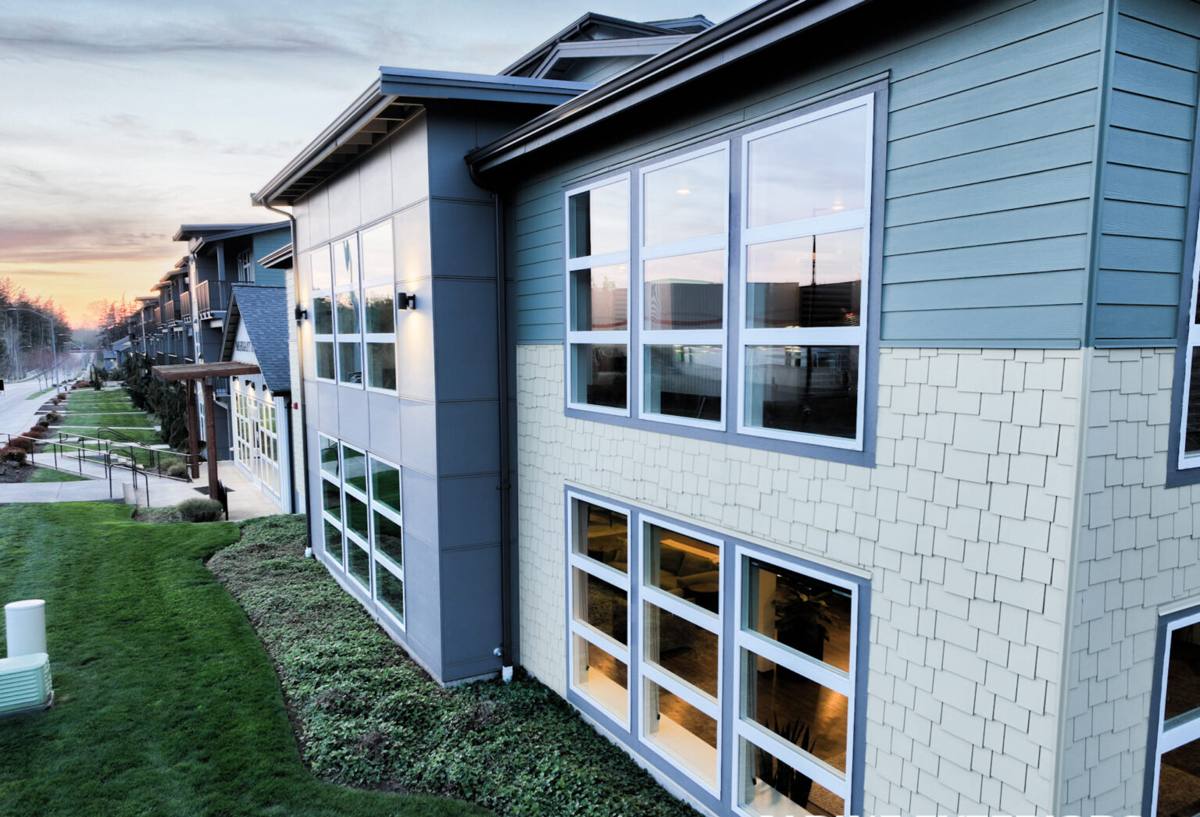
New-Construction Windows vs. Replacement Windows — Why the Distinction Matters
New-construction windows have a nailing flange (or fin) around the perimeter of the frame. That flange gets fastened directly to the sheathing before the weather-resistive barrier (WRB) and siding are installed, so the WRB and flashing can be layered over the flange in a proper shingle-lap sequence — each layer overlapping the one below it, so water is shed downward and outward no matter which direction the wind is pushing it.
Replacement or "pocket" windows are built without that flange, designed to slide into an existing opening without disturbing the siding around it. They're the right tool for a remodel, but they rely on different sealing methods and generally aren't what you want for a home going up from the studs out. If you're building new in Sumas, insist on true new-construction units installed with a flange and proper flashing — not a pocket window fitted into a rough opening because it happened to be on hand.
What Sumas Homes Actually Need From Their Windows
Wind Resistance
Windows carry a Design Pressure (DP) rating that tells you how much wind load and structural pressure the unit can take before performance suffers. On a lot exposed to outflow winds coming down the valley, it's worth confirming the DP rating fits the exposure of that specific wall — a window rated fine for a sheltered south wall isn't automatically the right call for a north-facing wall catching the brunt of a wind event.
Water Penetration Resistance
Beyond the glass and frame themselves, water penetration resistance comes down to the installation — sill pans, flashing tape, and correct lap order matter as much as the window's own rating. A well-built window installed out of sequence will still leak.
Moss and Organic Growth
Flat sills, wide horizontal trim ledges, and any spot where water can sit instead of running off will collect moss, algae, and debris over a damp Whatcom County winter. Good exterior trim detailing slopes water away from the window rather than giving it somewhere to pool.
Comparing Window Materials and Glass Packages
There's no single "best" window material — it depends on budget, maintenance appetite, and how the wall is built. Here's an honest comparison for a new build in this climate:
| Material | Typical Installed Cost per Window | Performance in Wet, Windy Climate | Maintenance |
|---|---|---|---|
| Vinyl | $450–$800 | Good — won't rot, handles moisture well, seams need quality welding | Low — occasional cleaning |
| Fiberglass | $700–$1,200 | Excellent — very stable in temperature swings and wind loading, holds paint well | Low |
| Wood-Clad | $900–$1,600+ | Good exterior durability if cladding and flashing are correct, but interior wood needs protection from any leak | Moderate — exterior clad is low-maintenance, interior wood may need refinishing over time |
On glass, a double-pane, low-E, argon-filled unit is the practical standard for this region — it balances energy performance against cost well for our mild-but-damp climate. Triple-pane glass adds cost and weight for a marginal gain here, since our winters are wet more than they are bitterly cold; it's worth considering on a north or west wall that takes the worst of the weather, but isn't a blanket requirement for every window in the house.
What a Correct New-Construction Installation Actually Involves
Sill Pan Flashing
Every rough opening should get a sloped sill pan before the window ever goes in. This is the single most important, most commonly skipped step — it gives any water that gets past the window a way out instead of a place to sit against the framing.
WRB and Flashing Sequence
The weather-resistive barrier and flashing tape need to be layered in shingle-lap order: sill pan first, then the window flange over the WRB at the sides and bottom, then flashing tape over the top flange last, lapping over the WRB above it. Get this order wrong and you've built a place for water to collect instead of drain.
Shimming and Fastening
Windows need to be shimmed plumb, level, and square, with shims placed at the manufacturer's specified points — not just wherever's convenient — so the frame isn't stressed and the sash operates correctly for the life of the window. Fasteners go in at the schedule the manufacturer specifies, not "enough to hold it."
Insulation and Air Sealing
The gap between the window frame and rough opening gets filled with low-expansion window foam or backer rod and sealant — never caulk alone, and never packed so tight with standard foam that it bows the frame. This is an air-sealing and insulation step, not a structural one.
Our Process for New-Construction Window Installs
- Plan and rough opening review — we check window schedules against actual framed openings before ordering, so there are no surprises on install day.
- Product selection consult — we walk through material, glass package, and DP rating options for each wall's specific exposure, in plain terms.
- Ordering and lead time — new-construction windows are typically special-ordered to size; we build that lead time into the schedule up front.
- Install day sequence — sill pan, window set and shimmed, flange fastened, WRB and flashing tape lapped correctly, foam and sealant, interior and exterior trim.
- Final check — we confirm every unit operates smoothly, seals correctly, and is documented for manufacturer warranty registration.
Common Mistakes We See on New Builds — and Avoid
- Caulk used as the only water seal instead of proper flashing tape and lap sequence
- Sill pans skipped entirely, leaving no drainage path if water gets past the window
- Flashing installed out of shingle-lap order, directing water into the wall instead of away from it
- Windows fastened without proper shimming, leading to sash binding or premature seal failure
- Manufacturer installation instructions not followed, which can quietly void the window's warranty even if the install "looks" fine
Checklist: What to Confirm Before Your Windows Go In
- Rough openings are framed square, level, and to the correct dimensions for the ordered windows
- Weather-resistive barrier is installed and inspected before window set
- Sloped sill pan flashing is in place at every opening
- Flashing tape is confirmed compatible with the specific WRB product being used
- Fastening follows the manufacturer's specified schedule and shim points
- Manufacturer install instructions are on-site and being followed, not assumed from memory
- Install is scheduled around weather where possible, since setting windows during active wind-driven rain works against the whole point of correct flashing
Why Hiring a Crew That Already Works in Sumas Matters
A lot of window installation advice online is written for a generic climate. Sumas isn't generic — the combination of Fraser Valley outflow winds and a long damp season means water management details that are optional elsewhere aren't optional here. A crew that already works new-construction jobs in this part of Whatcom County has seen which wall orientations take the worst of a wind event, which trim details invite moss instead of shedding water, and where a shortcut on flashing shows up as a callback two winters later instead of two weeks later.
That experience doesn't replace following manufacturer specs and standard flashing sequence — it just means fewer surprises, because the person on your roof or scaffold has already seen how this specific climate finds the weak point in a window installation.
If you're framing a new home or addition in Sumas and want windows installed the way this climate actually demands, we're happy to walk the plans with you and put together a free, no-pressure estimate — just fill out the form below.