 Semiahmoo Siding
 Why Blaine Roofs Wear Differently Than Roofs Inland
Blaine sits right on the water at the northern edge of Whatcom County, close enough to the Semiahmoo shoreline that salt-laden air is a daily fact of life, not an occasional weather event. That combination of salt air, near-constant driving rain off the Strait of Georgia, and a moss season that can run eight or nine months out of the year puts a different kind of stress on a roof than you'd see on a similar house twenty miles inland. Metal fasteners corrode faster near the water. Algae and moss get a head start in the shade of mature evergreens and never fully dry out between storms. And wind-driven rain finds every weak point in flashing, underlayment, and shingle seal that a calmer climate would never expose.
None of this means Blaine homes need exotic materials or gimmicks. It means the installation details — the parts nobody sees once the roof is finished — have to be done right the first time, because a roof here doesn't get many dry weeks to reveal a mistake before water finds its way in.
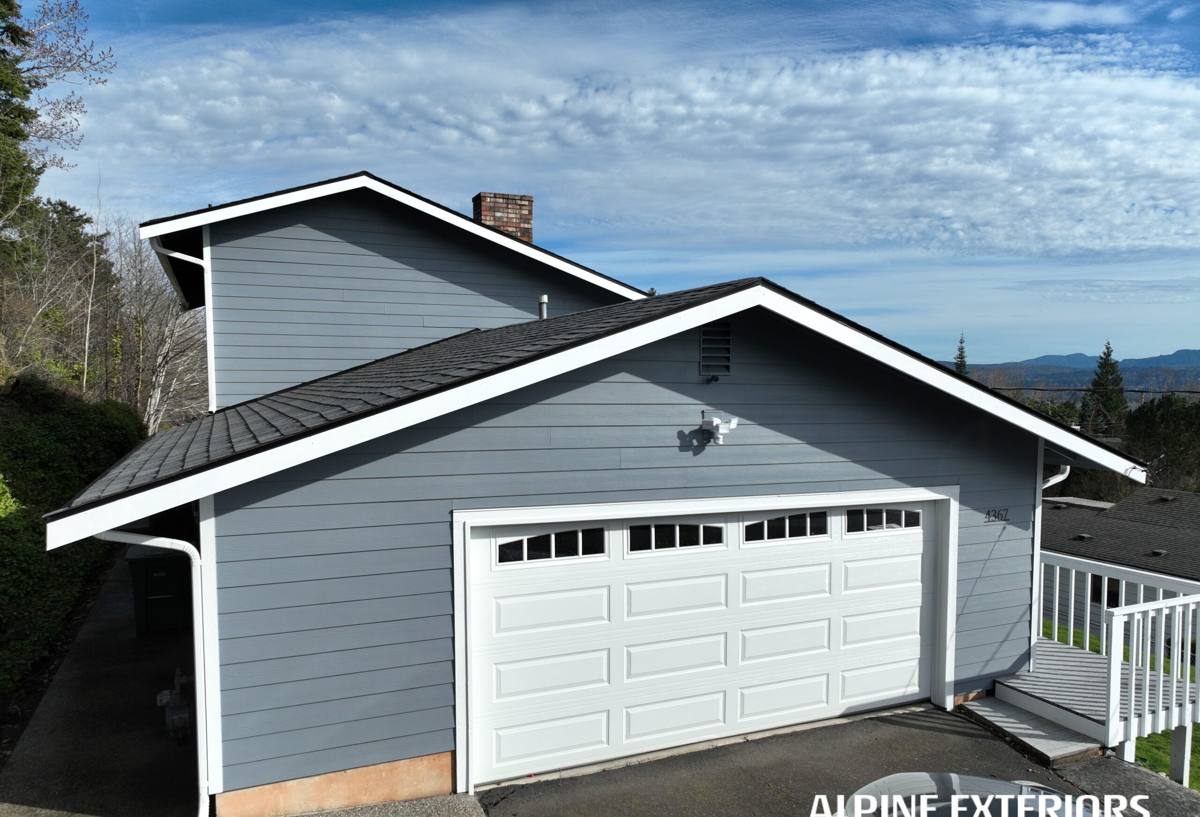
What a Correct New Roof Installation Actually Involves
A new roof is more than shingles nailed over the old ones. Every layer underneath does specific work, and skipping or shortcutting any of them is where most premature roof failures in this area start.
Tear-Off and Deck Inspection
We remove the existing roofing down to the deck rather than layering over it. This lets us check the sheathing for soft spots, rot, or delamination caused by years of moisture cycling — a common finding on older Blaine homes where a prior roof trapped condensation. Any damaged sheathing gets replaced before anything new goes down; installing new roofing over a compromised deck just hides the problem for a few more years.
Underlayment
Given how much wind-driven rain this area sees, we treat underlayment as a real second line of defense, not a formality. Synthetic underlayment across the field, with self-adhering ice-and-water membrane at eaves, valleys, and any low-slope transitions, gives the roof a backup layer that can shed water even if wind gets under a shingle edge during a storm.
Flashing
Flashing failure — not shingle failure — is the most common cause of roof leaks we find on this coast. Step flashing at wall intersections, counter-flashing at chimneys, and valley metal all need to be installed (or replaced) correctly, not just caulked over old flashing that's already corroding from salt exposure.
Ventilation
Balanced intake and exhaust ventilation keeps the attic close to outdoor temperature, which reduces condensation, slows moss growth on the roof surface, and protects the sheathing from the inside out. This gets its own section below because it's one of the most commonly skipped steps on budget re-roofs.
Choosing a Roofing Material for a Blaine, WA Home
There isn't one "correct" material for every house — it depends on your roofline, your budget, and how long you plan to be in the home. Here's how the common options actually perform in this specific climate.
| Material | How It Handles Salt Air & Rain | Moss Resistance | Typical Lifespan Here |
|---|---|---|---|
| Architectural asphalt shingle | Good; use corrosion-resistant fasteners and flashing near the water | Moderate — benefits from algae-resistant granules and periodic cleaning | 20-30 years |
| Standing seam metal | Excellent when using coastal-rated fasteners and coatings; sheds rain fast on steeper pitches | Very good — smooth surface holds less moisture and debris | 40-50+ years |
| Cedar shake | Requires more upkeep in constant damp; attractive but higher maintenance burden | Lower — porous surface holds moisture, needs regular treatment | 20-30 years with maintenance |
| Synthetic composite shake/slate | Good; doesn't absorb moisture the way wood does | Good | 30-50 years |
We're honest with clients about trade-offs rather than pushing one product. Cedar shake, for example, can look excellent on the right home, but it demands more regular maintenance in a climate that rarely lets a roof fully dry out — that's a maintenance-burden conversation we'll have with you upfront, not a knock on the material itself. Whatever you choose, matching the fastener and flashing metal to the shingle or panel material matters more here than almost anywhere else in the state, since dissimilar metals corrode faster in salt air.
Ventilation and Moisture Control: The Part That Prevents Callbacks
Moss doesn't grow because a roof is old — it grows because a roof surface stays damp longer than it should. On shaded, north-facing sections common in Blaine's tree-lined neighborhoods, that can mean moisture sitting on the shingles for days after a storm. Two things control that: roof pitch and airflow, neither of which a homeowner can change after the fact without real work.
We size intake vents (typically at the soffit) and exhaust vents (ridge or box vents) to move air continuously through the attic space. This does three things that matter specifically in this climate:
- Keeps the underside of the roof deck closer to outdoor temperature, reducing condensation that leads to rot and mold
- Helps the roof surface dry faster between rain events, slowing moss and algae growth
- Extends shingle life by reducing heat and moisture cycling that causes granule loss
Zinc or copper strips at the ridge can also help suppress moss regrowth on shingle roofs, and we'll discuss whether that's worth adding for a shaded lot during your estimate.
Our Installation Process
Every roof is different, but the sequence we follow on a Blaine re-roof is consistent:
- On-site inspection and estimate — we walk the roof, check the attic, and give you a written scope and price before any work starts
- Material selection — we go over the trade-offs above based on your roofline, budget, and how the home is shaded and oriented
- Permitting — we pull the required permit through the applicable local jurisdiction before work begins
- Property protection — landscaping, gutters, and exterior surfaces are protected before tear-off starts
- Tear-off and deck inspection — old roofing removed, deck checked and repaired as needed
- Underlayment and flashing installation — ice-and-water membrane, synthetic underlayment, and new flashing throughout
- Roofing material installation — installed to manufacturer specifications, which is what keeps the material warranty valid
- Ventilation check — intake and exhaust balanced for the attic size
- Final cleanup and walkthrough — magnetic sweep for nails, debris haul-away, and a walkthrough so you know exactly what was done
Signs a Blaine Home Needs a New Roof Rather Than a Repair
Not every roof problem means a full replacement, but there's a point where repairing an aging roof stops making financial sense. Watch for:
- Granule loss heavy enough that shingles look patchy or bald in spots
- Shingles curling, cracking, or lifting at the edges, especially on wind-exposed slopes
- Daylight visible through the attic roof deck
- Persistent moss or algae growth that returns within months of cleaning
- Soft spots or sagging when walking the roof or viewed from the ground
- Interior water stains on ceilings, especially after wind-driven rain events
- Roof is nearing or past the manufacturer's expected lifespan for its material
- Multiple isolated repairs in the last few years without the underlying issue improving
If your roof is showing two or more of these, it's worth having someone look at it before the next storm season rather than after a leak shows up inside the house.
Permits, Timeline, and What Affects Cost
A straightforward residential re-roof in this area typically requires a building permit, and timelines depend on weather windows as much as crew scheduling — we plan tear-offs around dry stretches whenever the forecast allows, since an open roof deck and driving rain don't mix. Here's what actually moves the price on a project, beyond the material itself:
| Cost Factor | Why It Matters |
|---|---|
| Roof pitch and access | Steeper or harder-to-access roofs take longer and require more safety setup |
| Layers being removed | Tearing off multiple existing layers adds labor and disposal cost |
| Deck condition | Rotted or delaminated sheathing found during tear-off requires replacement |
| Roof complexity | Valleys, dormers, chimneys, and skylights all add flashing work and time |
| Ventilation upgrades | Adding or improving intake/exhaust venting is worth the modest added cost here |
| Material choice | See the material comparison above — lifespan and upfront cost trade off differently |
We give a firm written estimate after the on-site inspection, not a phone-quote guess, because pitch, deck condition, and complexity vary too much house to house to price accurately any other way.
Why a Crew That Already Works Blaine Matters
Roofing crews that mostly work drier, inland areas sometimes underbuild for what this coastline actually throws at a house — lighter underlayment, standard fasteners instead of corrosion-resistant ones, or ventilation that's adequate for a dry climate but not for a shaded, damp lot near the water. A crew that regularly works Blaine and the surrounding Semiahmoo area already knows which details matter here: which fasteners hold up against salt air, which slopes need extra attention to moss and drainage, and how to sequence a tear-off around this region's rain patterns instead of getting caught with an open roof deck mid-storm. That local pattern recognition is the difference between a roof that performs quietly for decades and one that starts causing problems in year five.
We also know the practical side of working in this area — the permitting process through the relevant local jurisdiction, realistic weather windows for tear-offs, and what building inspectors here are looking for on final sign-off. None of that is complicated, but it's the kind of local familiarity that keeps a project on schedule instead of hitting avoidable delays.
Get a Free, No-Pressure Estimate
If your roof is showing its age, or you just want an honest opinion on whether repair or replacement makes more sense for your Blaine home, we're happy to take a look. There's no cost and no pressure — just a straight assessment and a written estimate you can take your time with. Use the form below to get started.