 Semiahmoo Siding
 Why Peace Arch Homes Need a Different Approach to Siding
Homes near the Peace Arch, tucked close to the water where Semiahmoo Bay meets the border, deal with a combination of weather stresses that most siding products simply weren't designed to handle for the long haul. Salt-laden air drifts in off the bay, wind-driven rain hits walls sideways during winter storms, and the shaded, moisture-heavy microclimate keeps moss and algae growing on north- and west-facing walls for most of the year. Any one of these on its own is manageable. Together, over a Whatcom County winter after winter, they expose the weak points in whatever is nailed to your studs.
Siding installation here isn't just a matter of matching a color and nailing up panels. It's a system decision: what the material is made of, how it's fastened, how water is managed behind it, and how it's finished at every seam and corner. Get any one of those wrong and a Peace Arch home will show it faster than a home fifteen miles inland.
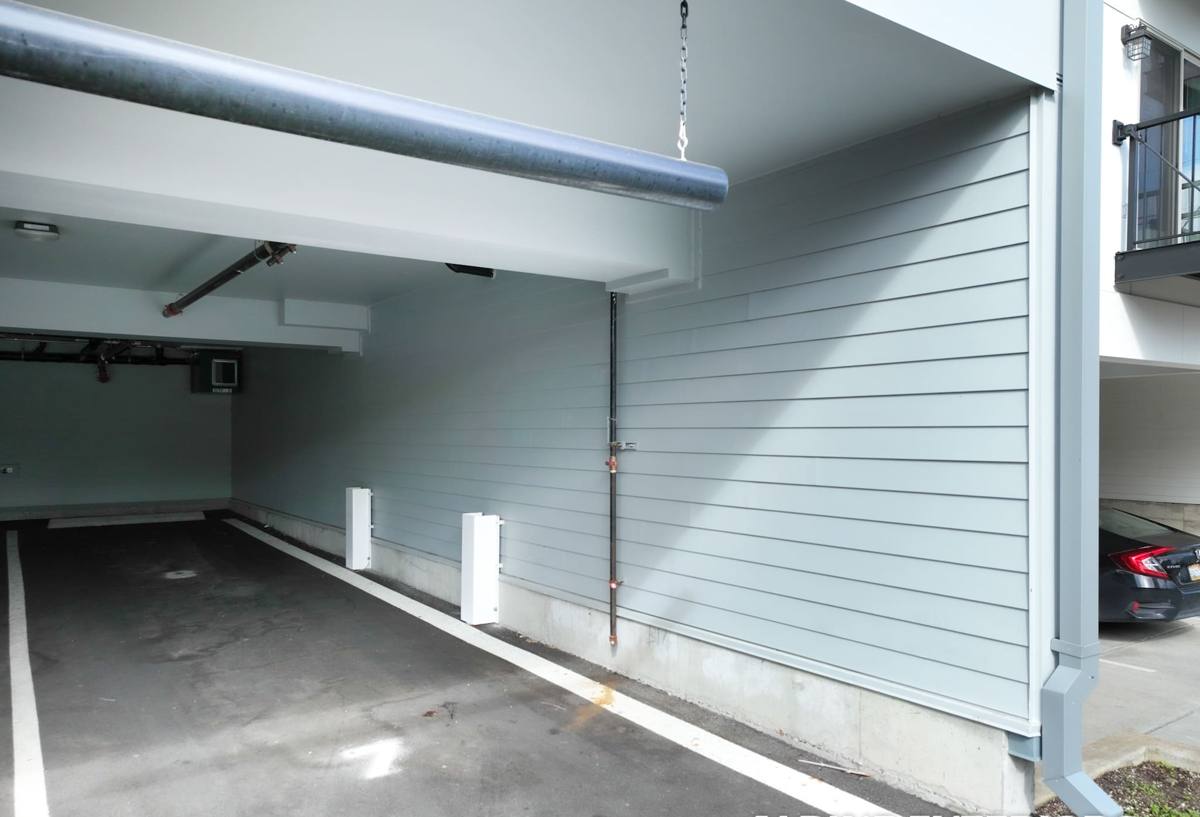
What the Local Climate Actually Does to Siding
Salt Air and Corrosion
Proximity to Semiahmoo Bay means airborne salt settles on exterior surfaces and fasteners year-round, not just during storms. Salt exposure accelerates corrosion in fasteners, flashing, and trim that aren't rated for it, and it degrades some paint and coating systems faster than manufacturers' inland warranties assume. Any siding installation this close to the water needs corrosion-resistant fasteners and flashing as a baseline, not an upgrade.
Driving Rain
Storms coming off the Strait of Georgia and Boundary Bay don't just fall straight down — they drive rain horizontally into wall assemblies, especially on street-facing and water-facing elevations. That means water is being forced at seams, butt joints, and penetrations under pressure, not just gravity. A siding system with weak lap details or poor house-wrap integration will let moisture in behind the cladding long before the surface itself looks damaged.
Moss Season
Tree cover, shade, and near-constant dampness through fall, winter, and spring create ideal conditions for moss and algae to colonize siding surfaces, especially on north-facing walls and anywhere airflow is restricted. Moss holds moisture against the surface for extended periods, which is a slow but real threat to any material that swells, delaminates, or absorbs water when its surface coating is compromised.
Why Fiber Cement Is the Right Material for This Exposure
We install James Hardie fiber cement exclusively, and in a location like this, the reasoning isn't abstract. Fiber cement is dimensionally stable and doesn't swell or rot when it stays damp under moss or algae growth the way wood-based products can. It's non-combustible, which matters less for salt air specifically but is part of why we standardized on the product across every home we work on. And James Hardie's ColorPlus factory finish is baked on and engineered to hold up to UV and moisture exposure better than field-applied paint, which matters enormously in a spot where siding stays wet for days at a stretch.
James Hardie also builds region-specific HZ product lines — HZ5 for harsher climates — engineered around moisture and temperature exposure rather than a one-size-fits-all specification. That regional engineering is part of why we don't treat "siding" as a generic commodity: the product needs to match the exposure it's going on.
How Fiber Cement Compares for This Kind of Exposure
| Factor | Fiber Cement (James Hardie) | Wood / Engineered Wood | Vinyl |
|---|---|---|---|
| Moisture/swelling risk under moss | Low — cement-based, doesn't swell | Higher — moisture can cause swelling or delamination | Low swelling risk, but seams can trap moisture |
| Salt air / coastal durability | Strong with factory finish | Depends heavily on coating maintenance | Can become brittle over time in coastal UV/salt exposure |
| Finish longevity | Factory-baked ColorPlus, long fade resistance | Field-applied paint, shorter repaint cycle | Color molded in, but fades and chalks over years |
| Combustibility | Non-combustible | Combustible | Melts/deforms under heat |
What a Correct Siding Installation Involves Here
The material is only half the equation. On a Peace Arch home, we treat the water-management details as equally important as the siding itself.
Water-Resistive Barrier and Flashing
Every installation starts with a properly lapped weather-resistive barrier, with flashing integrated at every window, door, and penetration so water that gets past the cladding has a drainage path out, not a path in. Given how much wind-driven rain this area sees, sloppy flashing work is the single most common reason siding fails early — and it's invisible until there's a problem behind the wall.
Rainscreen Detailing Where It Counts
On walls with heavy shade or limited airflow — the same walls prone to moss — a drainage gap behind the siding lets bulk water and trapped moisture escape and lets the wall assembly dry out between wet spells, instead of holding water against the back of the panel.
Fastening and Trim
We use corrosion-resistant fasteners throughout, sized and spaced to James Hardie's installation specifications, with correct nailing patterns at butt joints and corners so panels stay tight against wind loads coming off the water. Trim and caulking are detailed to shed water at every joint rather than relying on caulk alone to do the job long-term.
Finish Coating
ColorPlus factory-finished panels reduce the number of field-painted cut edges and touch-up points, which matters here because every unsealed cut edge is a spot where moisture can wick into the substrate during a wet Whatcom County winter. We seal cut edges per manufacturer spec as standard practice, not an afterthought.
Our Process for Peace Arch Homes
- On-site assessment: we walk the exterior, check current siding and sheathing condition, identify moss-prone and rain-exposed elevations, and check for any signs of past moisture intrusion.
- Tear-off and sheathing check: old siding comes off and sheathing is inspected before anything new goes up — no covering over hidden rot or soft spots.
- Water-resistive barrier and flashing installation: correctly lapped and integrated at every opening.
- Rainscreen and fastening: installed to James Hardie spec, adjusted for wind and rain exposure on each elevation.
- James Hardie panel installation: ColorPlus finished panels, cut edges sealed, trim detailed to shed water.
- Final walkthrough: we review the completed work with you before calling the job done.
What to Check Before Hiring a Siding Contractor Here
- Do they install to James Hardie's published fastening and clearance specifications, or "however it's always been done"?
- Do they inspect and address sheathing condition before installing new siding, rather than covering it up?
- Do they detail flashing at every window, door, and penetration — and can they explain how water exits the wall assembly?
- Do they use corrosion-resistant fasteners appropriate for coastal/salt-air exposure?
- Have they worked on homes in this specific area, with this specific rain and moss exposure, before?
- Do they offer a manufacturer-backed warranty on both product and workmanship?
Why Local Experience Matters for This Job
A crew that mostly works drier, inland neighborhoods can install siding that looks perfect and still underperforms near the water, because the failure points here — flashing under driving rain, drainage behind moss-prone walls, fastener corrosion — aren't things you notice on day one. They show up in year three or four. Working repeatedly in this specific area means we've seen which elevations take the worst of the weather, which details matter most, and where corners get cut on jobs that don't hold up. That's not a marketing point — it's the difference between siding that looks right for a season and siding that performs for decades.
Maintenance Realities for This Location
Even correctly installed fiber cement siding benefits from periodic attention in this climate. Moss and algae growth on shaded walls should be gently rinsed off before it builds up thick enough to hold moisture long-term — a soft wash, not pressure washing that can drive water into seams. Caulking at trim joints should be checked every few years, since UV and salt exposure age sealants faster here than inland. None of this is heavy maintenance; it's the kind of periodic check that keeps a properly installed system performing the way it's supposed to for its full service life.
Get a Straightforward Estimate
If your siding is showing moss staining that won't fully wash off, soft spots, or visible wear from wind and rain exposure, it's worth having someone look at it who works this exact area regularly. We're happy to walk your property, point out what we see, and give you a straightforward, no-pressure estimate for a James Hardie installation built for the conditions your home actually faces. Use the form below to request a free estimate.