 Semiahmoo Siding
 Storm Damage Roof Repair Built for Peace Arch's Coastal Weather
Peace Arch sits close enough to the water that homes here take a different kind of beating than roofs a few miles inland. Salt-laden air off the Strait, driving rain that comes in sideways during winter storms, and a moss season that stretches from fall through spring all work against asphalt shingles, flashing, and fasteners in ways that are easy to underestimate until a storm finds the weak point. We repair storm-damaged roofs across this Whatcom County community, and the approach we take is shaped by what actually fails here — not a generic checklist.
A storm doesn't have to be dramatic to cause real damage. A single windstorm with gusts strong enough to lift a row of shingles, or a heavy rain event that finds a flashing seam that's been slowly failing for a year, can turn into an interior leak within days. Our job is to find the actual cause, repair it correctly the first time, and document it clearly enough that you have what you need whether you're paying out of pocket or working with an insurance adjuster.
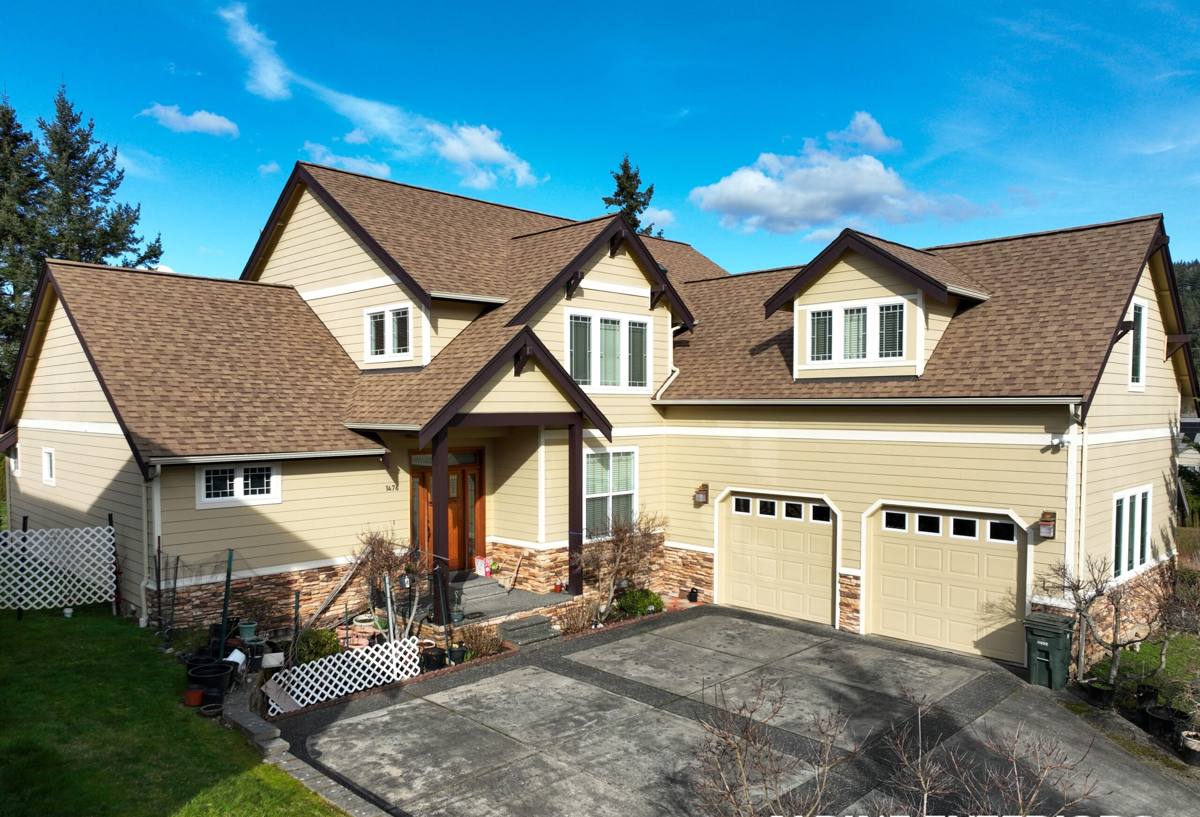
Why Peace Arch Roofs Take Damage Differently
Salt Air and Metal Fatigue
Homes closer to the water deal with airborne salt that accelerates corrosion on exposed metal — nail heads, flashing, gutter fasteners, and any exposed roofing hardware. Corroded fasteners lose their grip on shingles well before the shingles themselves wear out, which means a roof can look fine from the ground while individual tabs are barely holding on. After a windstorm, this is often where we find the damage: not torn shingles, but shingles that let go because the nail beneath them had already corroded.
Driving Rain and Wind-Driven Water
Storms coming off the water in this part of Whatcom County frequently bring rain at an angle rather than straight down. That matters because a roof system designed to shed water vertically can still leak when wind pushes rain up and under shingle edges, around chimney flashing, or into vent boots that have a slight gap. Wind-driven rain finds weaknesses that a normal rainstorm never would, which is why storm damage often shows up as a leak days after the wind has died down, once enough water has worked its way through.
A Long Moss Season
Between the marine humidity and the tree cover common in this area, moss has a long growing window here — often most of the year rather than just the wet months. Moss holds moisture against the shingle surface, lifts tabs as it grows under the edges, and adds weight. A roof already carrying moss growth is more vulnerable in a storm because the moss has been quietly prying at shingle edges that wind can then finish tearing loose. Storm repair on a moss-affected roof usually isn't complete until the moss itself is addressed, or the same spot fails again next season.
What a Correct Storm Damage Repair Actually Involves
Storm repair is easy to do poorly — patch the visible spot, move on, and let the underlying cause resurface next season. A repair done right addresses both the damage and whatever let the damage happen.
- Full roof inspection, not just the area where the leak or damage was reported — wind and water damage rarely stay confined to one spot
- Identification of the actual failure point: lifted or missing shingles, cracked or displaced flashing, failed pipe boots, damaged ridge caps, or fastener pull-through
- Inspection of the decking underneath damaged areas for water staining, soft spots, or rot before any new material goes down
- Matching replacement shingles and flashing as closely as possible to existing materials so the repair blends and performs consistently
- Re-securing or replacing corroded fasteners, not just the shingles they were holding
- Checking adjacent moss growth and drainage paths that may have contributed to the failure
- Clear photo documentation and a written scope, useful whether you're filing an insurance claim or just want a record for your files
Interior Signs Worth Checking After a Storm
Homeowners often wait for a visible leak before calling, but by then water has usually been moving through the roof assembly for a while. After any significant windstorm, it's worth checking:
- Ceiling stains or discoloration, especially near chimneys, vents, or roof valleys
- Musty smell in an attic or upper closet that wasn't there before
- Granules collecting in gutters or downspouts after the storm
- Visible daylight or gaps around roof penetrations from inside the attic
- Shingles or shingle pieces in the yard or gutters
Our Process for Peace Arch Storm Calls
1. Assessment First, Not a Sales Pitch
We inspect the roof — on the roof and from the attic side when accessible — before recommending anything. Some storm damage is a targeted repair; some reveals that the roof was already near the end of its useful life and the storm just exposed it. We tell you which one we're looking at and why, so you're deciding based on the actual condition of your roof, not a guess.
2. Documentation You Can Use
Every assessment comes with photos of the damage and a written description of cause and scope. If you're filing a homeowner's insurance claim, this is the kind of documentation adjusters want to see — specific, dated, and tied to a described weather event rather than general wear.
3. Repair Matched to Cause
We repair what actually failed and reinforce the conditions around it — corroded fasteners get replaced, not just re-driven; a flashing seam that failed once gets rebuilt properly rather than caulked over. A repair that doesn't address why the failure happened is a repair you'll likely pay for twice.
4. Honest Guidance on Scope
If a roof has multiple areas of storm-related wear, or if moss damage has weakened a broader section than the storm alone would have caused, we'll tell you plainly rather than stretching a small repair into unnecessary work — or the reverse, patching around a problem that really needs a fuller repair.
Repair vs. Replacement: How We Help You Decide
Not every storm-damaged roof needs full replacement, and not every roof that "just needs a patch" should stop there. The right call usually comes down to the roof's age, how widespread the damage is, and what condition the decking is in underneath.
| Factor | Favors Repair | Favors Replacement |
|---|---|---|
| Roof age | Under 10-12 years, otherwise sound | Nearing or past typical shingle lifespan |
| Damage extent | Localized to one section or slope | Spread across multiple slopes or recurring in different spots |
| Decking condition | Solid, dry, no rot found | Soft spots, staining, or rot present under damaged shingles |
| Moss history | Minor, manageable with treatment | Heavy, long-term growth that's compromised multiple areas |
| Prior repairs | Few or none in the area | Same spot repaired more than once before |
We'll walk you through where your roof falls on this before recommending either direction. If a repair is genuinely the right answer, that's what we'll propose — we don't upsell replacement on a roof that doesn't need it.
Cost Factors to Expect
Storm repair costs vary based on a few practical things rather than a flat rate:
- How many separate areas need repair versus one contained section
- Whether decking replacement is needed under the damaged shingles
- Roof pitch and access — steeper or higher roofs take longer to work safely
- Whether matching shingles are readily available or require a closer color/style match
- Flashing or vent boot replacement in addition to shingle repair
We give a written estimate after the inspection, not before — a phone estimate on storm damage is a guess, and we'd rather give you an accurate number than a fast one.
Insurance Claims: What We Can and Can't Do
We're not insurance adjusters and we don't represent your insurance company, but we do provide the documentation homeowners typically need when filing a wind or storm damage claim — dated photos, a written scope of damage, and an honest description of cause. If your insurer sends an adjuster to inspect the roof, we're glad to be present or available by phone to walk through what we found. What we won't do is inflate a scope of work to match what a policy might cover — the report reflects the actual damage, because that's what protects you if the claim is reviewed later.
Why Hire a Crew That Already Works Peace Arch
A roofer who works this stretch of Whatcom County regularly has already seen how salt exposure, storm direction, and moss growth interact on homes near the water — that's different knowledge than a crew that mostly works inland roofs and treats every storm call the same way. It shows up in small decisions: which fastener corrosion to flag even when it hasn't failed yet, which flashing details tend to be the actual leak source on homes near Semiahmoo, and when moss growth is contributing to storm vulnerability rather than just being a cosmetic issue. None of that replaces a careful inspection, but it means we're not guessing at what's common in this area — we're checking for it.
Maintenance That Reduces Future Storm Damage
Storm damage repair fixes what's already broken. A few ongoing habits reduce how much damage the next storm causes:
- Keep gutters and downspouts clear so wind-driven rain has somewhere to go instead of backing up under shingle edges
- Address moss growth before it spreads across a full slope, not after
- Have flashing around chimneys, vents, and skylights checked periodically — these are the most common failure points in wind-driven rain
- Trim back branches that overhang the roof, since they add debris load and shade that keeps moss growing longer into the year
- After any major windstorm, a quick visual check from the ground for missing or lifted shingles can catch a problem before the next rain gets into it
If a recent storm has left you with a leak, missing shingles, or just a nagging feeling that the roof took a hit, we're glad to take a look. We offer free, no-pressure estimates for Peace Arch homeowners — no obligation, just an honest read on what's going on and what it would take to fix it right. Fill out the form below and we'll get in touch to schedule a time.