 Semiahmoo Siding
 Decking at Semiahmoo Resort Faces a Different Set of Conditions
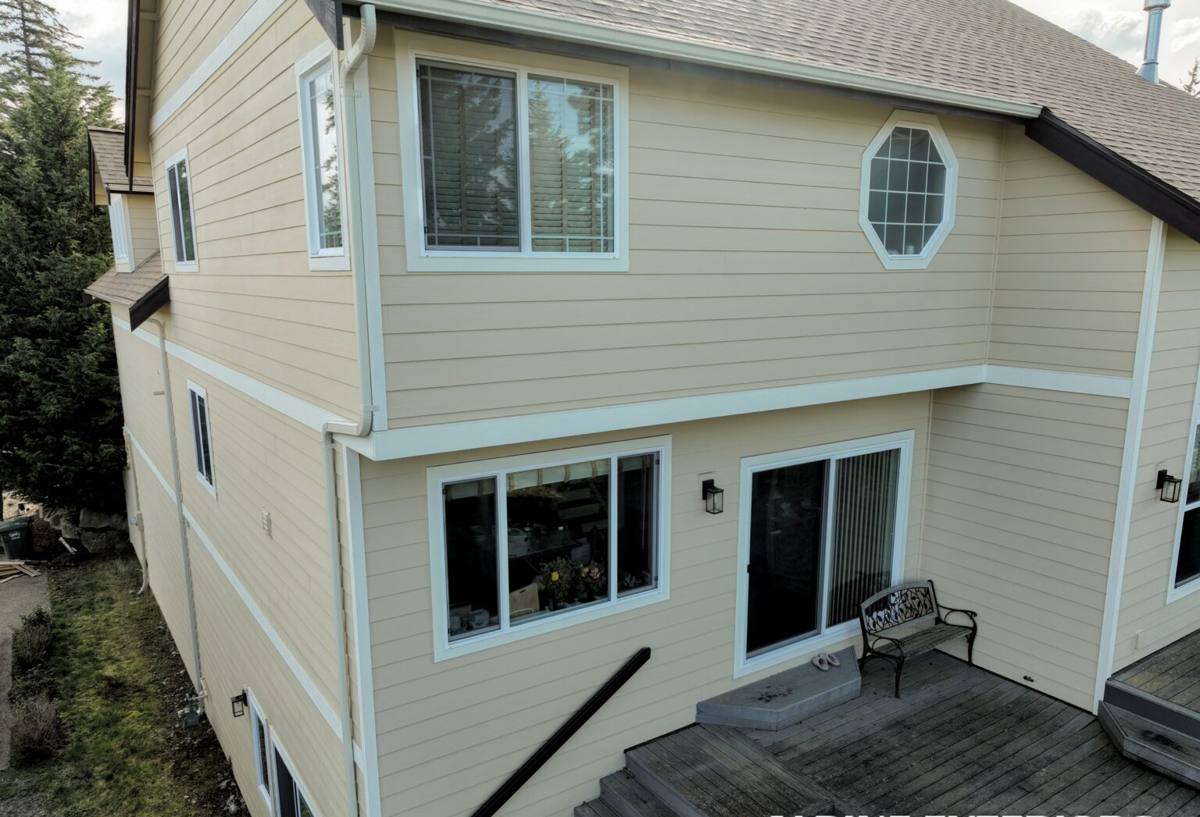
Homes around Semiahmoo Resort sit close enough to the water that decks take on a different kind of wear than a typical inland property in Whatcom County. Salt-laden air moves through screws, fasteners, and railing hardware. Wind-driven rain off the water gets pushed sideways under railings and against fascia in a way that straight-down rain never does. And the tree cover and marine humidity that make this part of Washington so green also mean decks spend a lot of the year damp, shaded, and slow to dry — exactly the conditions moss and algae need to get established.
None of that makes decking impossible here. It just means the material choice, the fasteners, and the way the substructure is built matter more than they would on a dry, sun-exposed deck somewhere inland. This page is about one job specifically: composite decking installed correctly for homes in and around Semiahmoo Resort.
What Salt Air, Rain, and Moss Actually Do to a Deck
Salt Air and Corrosion
Airborne salt doesn't just affect boats and railings on the waterfront — it settles on every exposed metal surface on a deck, including fastener heads, joist hangers, and structural screws. Standard zinc-coated hardware can start showing rust and pitting years earlier near the water than it would a few miles inland. Once a fastener starts to corrode, it weakens at exactly the point where it's holding boards or framing together.
Driving Rain and Trapped Moisture
Wind off the water pushes rain at angles that plain vertical rainfall doesn't. That means water gets driven under railing bases, behind ledger boards, and into any gap where flashing is missing or undersized. The problem isn't the rain itself — it's what happens when that moisture has nowhere to go and sits against wood framing or under a deck board that isn't ventilated properly.
Moss, Algae, and Long Shade Seasons
Whatcom County's marine climate means long stretches of overcast, damp weather, and many Semiahmoo Resort properties have mature tree cover that keeps parts of a deck shaded most of the day. Shade plus moisture plus mild temperatures is the exact recipe moss and algae thrive on. A deck surface that stays damp and shaded will grow something on it eventually — the question is how much that growth affects footing, appearance, and the surface underneath.
Why Composite Decking Makes Sense for This Environment
Composite decking doesn't absorb water the way solid wood does, doesn't need annual staining or sealing to keep moisture out, and holds up to the freeze-thaw and wet-dry cycling that's common near the Salish Sea shoreline. That said, "composite" covers a range of products, and not every board performs the same way in a salt-air, high-moisture environment. The table below is a general comparison of the material categories homeowners weigh against each other for this kind of application.
| Material | Moisture Behavior | Maintenance | Typical Concern Near Water |
|---|---|---|---|
| Uncoated wood (cedar, fir) | Absorbs and releases moisture; swells and shrinks seasonally | Annual cleaning, periodic sealing or staining | Faster rot at fastener points and end grain; moss takes hold quickly in shade |
| Uncapped composite | Resists rot but can absorb some surface moisture | Periodic cleaning; more prone to surface mold in constant shade | Can hold moisture at the surface longer in low-sun areas |
| Capped composite / capped polymer | Sealed outer shell resists moisture absorption | Occasional washing; low overall upkeep | Performs consistently well in salt air and shade when installed with proper ventilation |
We install capped composite boards specifically because the sealed surface holds up better against the combination of salt exposure and near-constant dampness this area sees. It's a professional standard we hold, not a claim that other materials can't be made to work — solid wood decks can absolutely be maintained well here, but they demand a maintenance schedule that most homeowners underestimate when they're planning the project.
What a Correct Composite Installation Actually Involves
Composite boards themselves are low-maintenance, but the deck's performance over the next 20-plus years is decided by what's underneath them, not just the surface. A correct installation for a coastal Whatcom County property includes:
- Corrosion-resistant fasteners and hardware rated for coastal or marine exposure, not standard interior-grade hardware
- Proper flashing at the ledger board where the deck attaches to the house, so driven rain can't work its way behind it
- Joist spacing and blocking that matches the specific composite board's engineering requirements — composite spans differently than wood
- Ventilation gaps between boards and beneath the deck surface so damp air can move and surfaces can dry between rain events
- Grading and drainage at ground level so water sheds away from posts and footings instead of pooling underneath
- Hidden fastener systems where appropriate, which reduce the number of exposed metal points exposed to salt air
Skipping any of these doesn't usually show up as a problem in year one. It shows up three, five, or ten years in — as soft framing under a deck that still looks fine on top, or as staining and streaking around fasteners that started corroding early.
Our Process, Start to Finish
- Site walk and assessment — we look at sun exposure, drainage, existing structure (if replacing an old deck), and how wind and rain typically hit that specific spot on the property.
- Substructure evaluation — for replacement projects, we check whether existing framing, posts, and footings are sound enough to reuse or need to be rebuilt.
- Plan for drainage and ventilation — this is decided before a single board goes down, based on how shaded and how exposed the deck footprint is.
- Framing and flashing — ledger flashing, joist hangers, and hardware are installed to coastal-appropriate standards before decking begins.
- Board installation — layout, fastening method (hidden or face-fastened), and expansion gaps are set according to the manufacturer's specifications for our climate.
- Railing, stairs, and trim — finished to match the board system, with the same attention to fastener corrosion resistance.
- Final walkthrough — we go over care basics with the homeowner before we consider the job done.
Choosing Boards, Colors, and Hardware for This Climate
Darker composite colors absorb more heat, which isn't usually a major concern in this part of Washington the way it is in hotter climates, but it does affect how quickly a surface dries after rain — a darker, sun-exposed section will dry faster than a light-colored board sitting in shade. For decks with significant tree cover, that's worth factoring into the color decision, not just the aesthetic.
Grooved-edge boards paired with hidden fastener clips give a clean look and reduce exposed metal, but they need to be matched with clips rated for the exposure level. Face-screwed boards are more serviceable — easier to spot-repair a single board later — but every visible screw is another point where corrosion-resistant hardware actually matters. We make this call with the homeowner based on the specific deck, not by default.
Maintenance Semiahmoo Resort Homeowners Should Actually Expect
Composite decking is low-maintenance, not no-maintenance. In this environment, a realistic annual routine looks like:
- Rinse or sweep debris (needles, leaves, pollen) off the surface regularly so it doesn't trap moisture in shaded areas
- Wash the deck surface once or twice a year with a soft-bristle brush and a composite-safe cleaner to keep moss and algae from establishing
- Check railing posts and fastener points annually for any early signs of corrosion staining
- Keep gutters and downspouts near the deck clear so roof runoff isn't dumping extra water onto or under the deck
- Trim back overhanging branches where practical to reduce shade and debris buildup on the most moss-prone sections
None of this is a big time commitment, but skipping it entirely for years is how a low-maintenance deck ends up looking neglected well before the material itself has actually failed.
What Affects the Cost of a Composite Deck Here
| Factor | Why It Matters Locally |
|---|---|
| Deck size and footprint shape | More cuts and edges around stairs, angles, or multiple levels add labor time |
| Substructure condition | Replacing rotted framing or undersized footings adds cost but is where long-term durability is actually decided |
| Board tier (uncapped vs. capped composite) | Capped boards cost more up front but handle this area's moisture and salt exposure with less long-term upkeep |
| Fastener and hardware grade | Coastal-rated hardware costs more than standard-grade but avoids early corrosion near the water |
| Railing style and material | Composite, metal cable, and glass railings all have different exposure and maintenance profiles |
| Site access | Waterfront and hillside lots common around Semiahmoo Resort can add setup and material handling time |
Why It Matters That We Already Work in Semiahmoo Resort
A crew that's built and repaired decks elsewhere in Whatcom County still has to relearn a coastal property's specific exposure — which direction the prevailing wind and rain come from, how much shade a given lot actually gets across the seasons, and which details tend to fail first on decks in this specific setting. Working regularly in Semiahmoo Resort means we're not guessing at any of that. We've seen which fastener grades hold up, which board colors and finishes actually stay looking good in this light and moisture combination, and where drainage tends to go wrong on the kinds of lots common in this area.
That local familiarity also means we're realistic with homeowners about what a deck in this exact spot will need — we're not selling a one-size-fits-all package that ignores the difference between a shaded, water-facing deck and a sunny inland one.
Get a Free, No-Pressure Estimate
If you're planning a new deck or replacing one at your Semiahmoo Resort property, we're happy to walk the site, look at your specific exposure and drainage, and give you an honest assessment of what the job actually needs. Use the form below to request a free estimate — no pressure, just a straight answer on what it'll take to get it done right.