 Semiahmoo Siding
 Windows Built for a Whatcom County Border Town
Sumas sits at the far edge of Whatcom County, tucked against the Canadian border in the Nooksack River valley below Sumas Mountain. It's a different setting than the coastal towns near Bellingham Bay — less direct salt air, more valley floor, more distance from open water — but the weather here still puts real, sustained pressure on a home's windows. Driving rain that comes in sideways during fall and winter storms, a moss and mildew season that runs most of the year on shaded walls and trim, and cold wind that funnels down from the Fraser Valley to the north all work on window openings in ways that a generic, off-the-shelf window installation doesn't always account for.
Custom windows for a Sumas home means more than ordering a unit in a non-standard size. It means selecting frame materials, glazing packages, and flashing details that match what this specific climate does to a house over a full year, and installing them with the same care whether the opening is a stock size or cut to fit an older farmhouse wall. This page covers what that actually looks like for homes in and around Sumas.
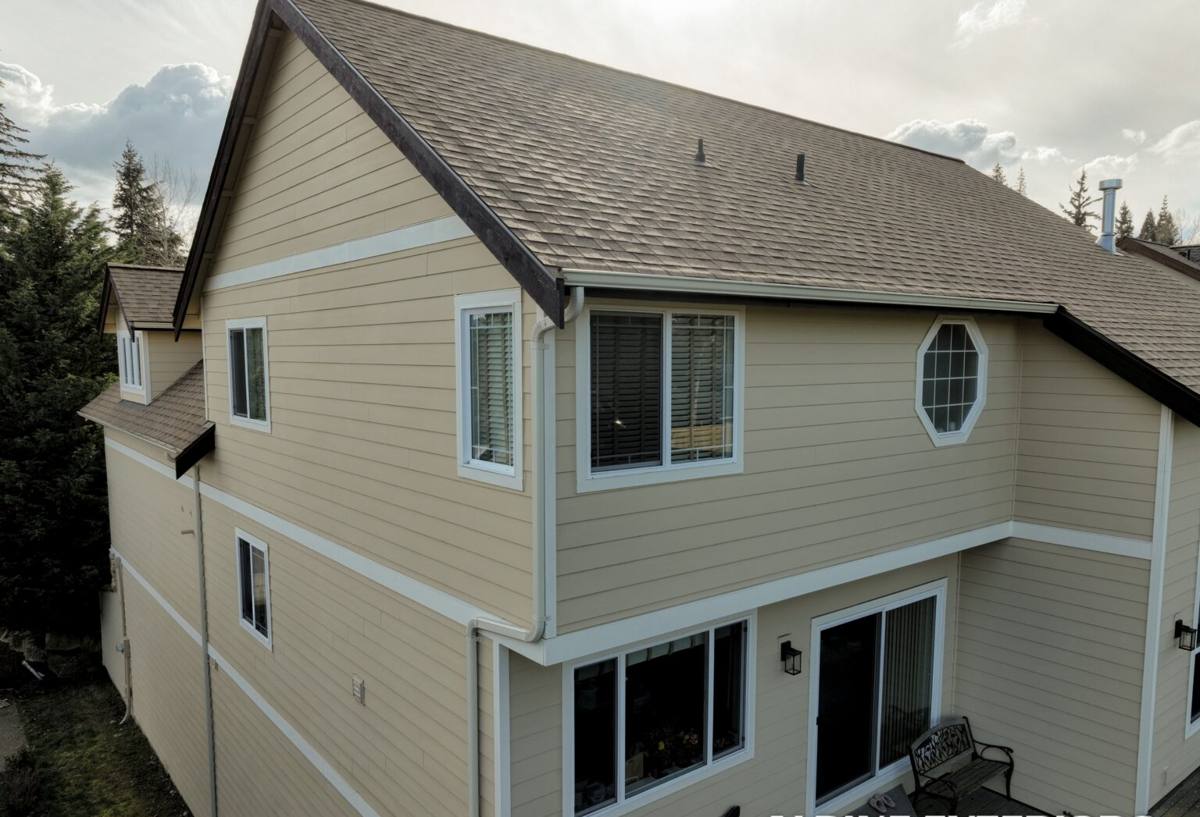
What Sumas's Climate Asks of a Window Assembly
Driving Rain and Flashing Details
Rain in this part of Washington rarely falls straight down. Wind pushes it sideways into wall assemblies, and a window opening is one of the most vulnerable points in that wall — it's a hole cut through the weather barrier, and every layer around it has to be sequenced correctly for water to shed outward instead of tracking inward. A window that looks fine from the curb can still be letting moisture into the wall cavity around its edges if the flashing wasn't lapped correctly during installation. That kind of problem often doesn't show up as visible damage until it's been going on for a while.
A Moss Season That Doesn't Take a Break
Mild temperatures and consistent moisture give Whatcom County a moss and mildew season that runs most of the year, and window sills, trim, and shaded frame surfaces are common places it takes hold. It's mostly a maintenance and appearance issue on the window itself, but organic growth that's allowed to sit against wood trim or a poorly sealed sill can hold moisture against the substrate long enough to cause real rot underneath it.
Valley Humidity and Winter Condensation
Sumas sits low in the Nooksack valley, where fog and humidity tend to linger longer after a storm than they do on higher or more exposed ground. Combined with a long, cool winter, that humidity shows up indoors as condensation on window glass and frames — and persistent condensation is one of the most common early signs that a window's glazing package or frame isn't performing the way it should for this climate.
Wind and Winter Cold Snaps
Sumas is close to the corridor that funnels cold air down from the Fraser Valley in British Columbia, and this area can see stronger, colder wind during winter cold snaps than towns farther south in the county. That wind finds its way through weak seals and undersized weatherstripping fast, which is why frame quality and installation tightness matter as much here as the glass itself.
What "Custom" Actually Means for a Window Project
"Custom" gets used loosely in this industry, so it's worth being specific about what it means on an actual job:
- Exact opening dimensions: Older Sumas homes, especially farmhouses and homes built before standardized window sizing, often have openings that don't match modern stock sizes. Custom units are built to the real opening rather than forcing a stock size into a space it doesn't quite fit.
- Frame material matched to the home: A vinyl-clad opening on a historic wood-trim home can look out of place and perform differently than the original construction intended. We match material and profile to the home's era and existing trim where that's a priority for the homeowner.
- Grille pattern and sightlines: Divided-lite patterns, simulated grilles, or a clean single-pane look are chosen to match the home's architecture, not defaulted to whatever's cheapest to stock.
- Glazing package selected for the room and exposure: A north-facing bedroom window and a south-facing living room window don't need identical glass. Orientation, sun exposure, and how the room is used all factor into the right glazing choice.
None of that changes the fundamentals of a correct install — flashing, sealing, and structural fit still come first regardless of how custom the unit is. Custom detailing without correct installation underneath it is just an expensive version of the same problem.
Frame Material Options for Sumas Homes
| Frame Material | Moisture Handling | Maintenance | Typical Fit |
|---|---|---|---|
| Vinyl | Good — won't rot, resists moisture well | Low; occasional cleaning | Most standard replacements; budget-conscious projects |
| Fiberglass | Excellent — very stable through wet-dry and freeze-thaw cycles | Low | Homes wanting a durable, low-maintenance option with a narrower sightline than vinyl |
| Wood-clad | Good on the exterior clad face; interior wood needs care | Moderate to higher; interior finish maintenance | Historic or traditional-style homes where interior wood trim matters |
| Aluminum | Fair; prone to condensation without a thermal break | Low | Less common for residential in this climate unless thermally broken |
We don't push one material as the only correct answer for every home. What we do insist on is that whatever material a homeowner chooses, the installation detailing around it — flashing, sealant, and shimming — is done to the same standard. A premium frame installed with shortcuts underneath it will still leak; a modest frame installed correctly usually won't.
Glazing and Energy Performance
Washington's energy code sets minimum performance requirements for replacement windows, and in a climate zone like Whatcom County's, glazing choice affects both code compliance and how comfortable a room actually feels in January. A few factors worth understanding before choosing a package:
- U-factor: Measures how well the window resists heat loss. Lower numbers mean better insulating performance, which matters through a long Whatcom County heating season.
- Low-E coatings: A thin coating that reflects heat back into the room in winter and blocks excess heat gain in summer, without noticeably changing how clear the glass looks.
- Argon or krypton gas fill: Inert gas between panes insulates better than plain air, improving the window's overall U-factor.
- Double vs. triple pane: Triple-pane glass improves insulation and condensation resistance further, which can be worth the added cost on north-facing or particularly exposed walls.
The right glazing package depends on the specific window's orientation, the room behind it, and the homeowner's budget — not a single default spec applied to every opening on the house.
Our Installation Process
- On-site assessment: We measure existing openings, check for water damage or rot around current frames, and note wall orientation and exposure before recommending materials.
- Material and glazing selection: We walk through frame material, glazing package, and trim options based on the assessment and the homeowner's priorities.
- Removal and inspection: Old units come out carefully so we can inspect the framing and sheathing underneath for hidden moisture damage before anything new goes in.
- Flashing and weather barrier integration: New flashing is installed and integrated with the existing weather-resistive barrier, lapped correctly to shed water outward.
- Setting, shimming, and sealing: The unit is set level and square, shimmed so it's not carrying structural load it shouldn't, and sealed with the correct sealant at the correct joints — not just a bead of caulk around the outside trim.
- Interior and exterior trim finish: Trim is finished to match the home, and the opening is checked for smooth operation before we consider the job done.
What to expect and have ready on install day:
- Clear access to the work area, inside and out, including moving furniture or window coverings away from each opening
- A general sense of how many openings are being replaced in one day versus staged over multiple visits
- A walkthrough of each finished window before we leave, checking operation, locks, and sealant lines
- Realistic weather planning — we don't force an exterior opening in active wind-driven rain if it can be scheduled around
Common Problems We See in Older Sumas Window Installs
A lot of what we get called out for isn't a bad window product — it's an installation shortcut from years ago finally catching up with the house. The patterns we see most often:
- Flashing skipped or replaced with caulk alone, which fails well before a proper flashing assembly would
- No pan flashing at the sill, leaving the bottom of the opening as the most likely place for water to collect and sit
- Spray foam used as the only air seal with no mechanical fastening plan behind it, leading to settling and drafts
- Units installed slightly out of square, which strains the frame and accelerates seal failure at the corners
- Interior trim reinstalled tightly over an unsealed gap, hiding a moisture or air leak instead of addressing it
Cost Factors for a Sumas Window Project
| Factor | What It Affects | Climate-Specific Note |
|---|---|---|
| Number and size of openings | Overall project cost and installation time | More openings means more flashing details that all have to be done correctly |
| Frame material | Unit cost, expected lifespan, maintenance | Material stability matters more here given seasonal wet-dry cycling |
| Full-frame vs. insert replacement | Labor cost, whether rot repair is possible during the job | Full-frame allows inspection and repair of hidden moisture damage; insert does not |
| Glazing package | Energy performance and comfort | Higher-performance glazing pays off over a long Whatcom County heating season |
| Existing damage found on removal | Whether additional framing or sheathing repair is needed | More likely on older homes with a history of caulk-only flashing |
We walk each property and give a real number based on what we find, rather than quoting a flat per-window price that ignores condition and access.
Why Hire a Crew That Already Works in Sumas
A crew that works across Whatcom County day to day sees how driving rain, valley humidity, and moss actually behave on real houses over a full year — not just how a product performs on a spec sheet. That matters for window work specifically because Sumas's inland, valley setting isn't identical to the coastal towns closer to Bellingham Bay. Less direct salt exposure, but more lingering fog and a distinct wind pattern funneling down from the north, changes which details deserve the most attention on a given house. A crew that already accounts for that difference plans the job correctly the first time instead of applying a one-size-fits-all approach to every town in the county.
Local experience also means knowing what local permitting and inspection expects, and having a realistic sense of how weather windows affect scheduling through a Sumas winter. That's the kind of thing that's hard to fake from a general contractor passing through the area for a single job.
If your Sumas home needs window replacement or repair, we're glad to take a look and walk you through the options honestly, with no pressure and no upsell script. Reach out using the form below to schedule a free estimate.