 Semiahmoo Siding
 Sumas Roofs Take a Different Kind of Beating Than People Expect
Sumas sits in a part of Whatcom County where weather doesn't do anything halfway. You're close enough to the water that salt-laden air still reaches roofing materials, low enough in the valley that fog and standing moisture linger long after a storm passes, and surrounded by enough tree cover that shaded roof sections rarely get a real chance to dry out. None of that is dramatic on its own. Over ten or fifteen years, though, it adds up to roofs that fail from the inside out — soft decking, rusted fasteners, and moss mats that hold water against the shingle long after the rain has stopped.
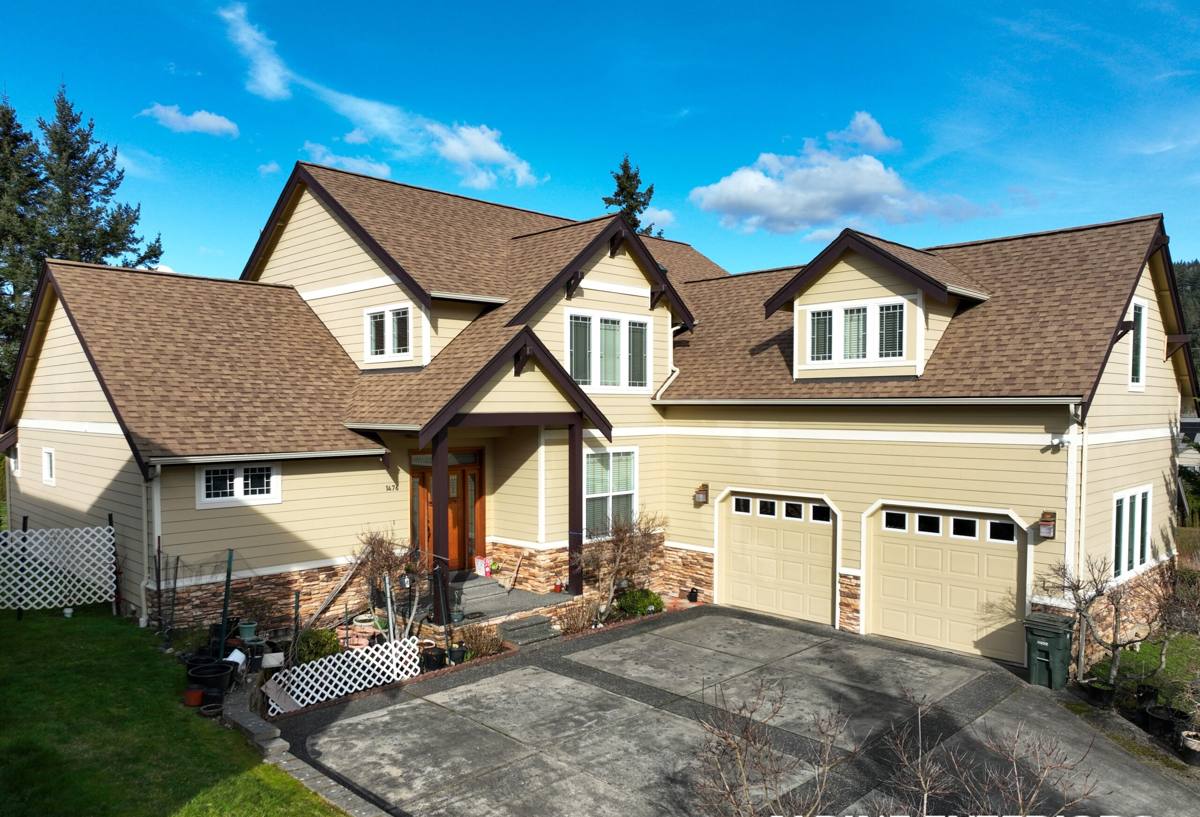
A new roof installation here isn't just a tear-off and a fresh layer of shingles. It's a chance to correct whatever the original roof got wrong, and to build in the details that actually matter for this specific stretch of Washington. That's the difference between a roof that looks good for two years and one that performs for twenty-five.
What the Local Climate Actually Does to a Roof
Salt Air and Metal Fatigue
Even homes that aren't right on the water pick up salt-carrying moisture off Semiahmoo Bay and the surrounding waterways. Salt accelerates corrosion on any exposed metal — nail heads, flashing, gutter fasteners, drip edge. A roof built with standard, unprotected fasteners in this environment will show rust streaks and loosening flashing well before the shingles themselves wear out. It's usually the metal that fails first, not the shingle field.
Driving Rain and Wind-Driven Water
Pacific storms here don't just fall straight down — they come in sideways, pushed by wind off the water. That matters because wind-driven rain finds every shortcut in a roof: under-lapped shingle courses, thin or missing ice-and-water barrier at eaves and valleys, and flashing that was caulked instead of properly integrated. A roof that would hold up fine in a calmer climate can leak here simply because it wasn't detailed for sideways rain.
A Long Moss Season
Between the shade, the humidity, and the number of months per year with damp conditions, moss isn't a cosmetic nuisance in this area — it's a structural one. Moss holds moisture against the shingle surface, lifts shingle edges as it grows, and works its way under tabs and around fasteners. A roof that isn't designed with moss resistance in mind will need moss treatment or removal every couple of years just to keep from degrading early.
Warning Signs Sumas Homeowners Shouldn't Wait On
Most roof failures here don't happen suddenly — they build for years before anyone notices water inside the house. Worth checking for, especially before or after the wet season:
- Dark streaking or thick moss growth concentrated on north-facing or heavily shaded slopes
- Granules collecting in gutters or at downspout outlets
- Shingle edges that curl, lift, or look uneven from the ground
- Rust staining running down from metal flashing, valleys, or vent boots
- Soft or spongy spots when walked on, or visible sagging along the roofline
- Daylight visible through the attic roof deck, or damp insulation below it
- A roof past 20-25 years old that has never had a full tear-off
Any one of these is worth a professional look. Several at once usually means the roof is closer to the end of its service life than the shingles alone would suggest.
What a Correct New Roof Installation Actually Involves
Full Tear-Off and Deck Inspection
We don't install over existing layers. A full tear-off is the only way to see the actual condition of the roof deck — and in this climate, hidden rot around valleys, chimneys, and eaves is common enough that skipping this step is a real risk. Any soft or water-damaged sheathing gets replaced before anything else goes down.
Ice-and-Water Barrier Where It Counts
Eaves, valleys, and roof-to-wall transitions get a self-adhering waterproof underlayment, not just standard felt. These are the spots where wind-driven rain and ice buildup cause the most leaks, and it's cheap insurance compared to the cost of fixing water damage later.
Balanced Attic Ventilation
A roof that traps heat and moisture in the attic ages faster from underneath than from weather on top. Intake at the eaves and exhaust at the ridge need to work together — not just one or the other — to keep the deck dry and to help control the humidity that feeds moss and mildew.
Flashing Done as Metalwork, Not Caulk
Step flashing at walls and chimneys, proper valley metal, and corrosion-resistant fasteners throughout. Caulk is a maintenance item, not a waterproofing strategy — if a detail depends on caulk holding up for the life of the roof, it's not detailed correctly.
Roofing Material Options for This Area
There's no single "best" roofing material — the right choice depends on the home, the budget, and how much long-term maintenance the owner wants to take on. Here's how the common options compare for a climate with heavy rain, salt exposure, and moss pressure:
| Material | Moss Resistance | Salt/Corrosion Resistance | Typical Lifespan | Maintenance |
|---|---|---|---|---|
| Standard asphalt composition shingle | Moderate — depends on granule quality | Fair, if fasteners are coated | 20-30 years | Periodic moss treatment on shaded slopes |
| Algae/moss-resistant (copper-granule) shingle | Good — granules actively resist growth | Fair to good | 25-30 years | Lower than standard shingle |
| Standing-seam metal | Excellent — sheds moss with slope and smooth surface | Good with proper coating and fasteners | 40-60 years | Low; occasional fastener/sealant check |
| Synthetic/composite shingle | Good | Good | 30-50 years | Low |
For homes with heavy tree cover or north-facing slopes that stay damp most of the year, we usually steer owners toward a moss-resistant shingle at minimum, or metal if the budget allows — the upfront cost difference tends to pay for itself in avoided maintenance and earlier moss-related repairs.
Our Process, Start to Finish
- Free on-site inspection, including attic and ventilation check, not just a look from the ground
- Written estimate with material options and a clear cost breakdown — no vague allowances
- Scheduling built around weather windows, since this area doesn't offer many long dry stretches
- Full tear-off, deck inspection, and any necessary sheathing repair before new material goes down
- Installation of underlayment, flashing, ventilation, and roofing material to manufacturer specification
- Full cleanup, including magnetic sweep for stray fasteners
- Final walkthrough with the homeowner and documentation of warranty coverage
Why Hiring a Crew That Already Works This Area Matters
A roofer who mainly works drier, inland climates will often under-detail a roof for conditions here — lighter underlayment, standard fasteners, ventilation that's adequate elsewhere but not enough for this level of humidity and shade. A crew that already works Sumas and the surrounding Semiahmoo service area knows which slopes need moss-resistant material by default, which flashing details actually hold up to driving rain, and how to sequence a job around a weather pattern that doesn't leave large dry windows. That local knowledge shows up less in the sales pitch and more in how the roof performs five and ten years out.
What a New Roof Typically Costs, and What Moves the Number
Every roof is priced on its own specifics, but the same handful of factors drive most of the variation we see on jobs in this area:
| Factor | Why It Matters Here |
|---|---|
| Roof size and pitch | Steeper roofs take longer to work safely and use more material |
| Number of layers to remove | Multiple existing layers add tear-off labor and disposal cost |
| Deck condition | Rot from long-term moss or leak exposure means sheathing replacement |
| Material choice | Standard shingle, moss-resistant shingle, and metal price very differently |
| Ventilation upgrades | Adding proper intake/exhaust where none existed adds labor but reduces future problems |
| Access and tree cover | Heavy tree cover common in this area can add setup and cleanup time |
Broadly speaking, a straightforward asphalt shingle re-roof on an average home runs on the lower end of the regional range, while metal roofing or jobs requiring significant deck repair run higher. The only way to get a real number is a walk of the actual roof — anything quoted without that is a guess.
Ready When You Are
If your roof is showing moss buildup, granule loss, or you just haven't had it looked at in a while, it's worth getting an honest opinion before the next wet season sets in. We offer free, no-pressure estimates for homeowners in Sumas and the surrounding Semiahmoo area — use the form below to get a time on the schedule.