 Semiahmoo Siding
 Building Decks for Wiser Lake's Shaded, Wet Microclimate
Wiser Lake sits in the kind of setting that makes for a great backyard and a genuinely tough environment for outdoor wood structures. Mature trees ring most of the shoreline, so a lot of decks out here spend a big part of the day in shade even at the height of summer. Layer in Whatcom County's long, wet shoulder seasons and the driving rain that blows through fall and winter, and you have a deck site that rarely gets a full chance to dry out between storms. Properties closer to Semiahmoo and the saltwater side of the peninsula also pick up a faint but real salt component in the air, which speeds up corrosion on any metal hardware that isn't rated for it. None of this means a deck out here can't last for decades — it means the deck has to be built for these specific conditions, not just built to a generic plan pulled off a lumberyard handout.
We've framed and finished enough decks around Wiser Lake to know where the trouble spots usually show up before we ever break ground: the north-facing side that never sees direct sun, the low corner where runoff collects after a storm, the ledger connection into a wall that's already weathered a few decades of Pacific Northwest winters. A deck built without those details in mind can look fine for a season or two, then start failing quietly — soft spots underfoot, black streaking on the boards, railings that work loose — long before it should.
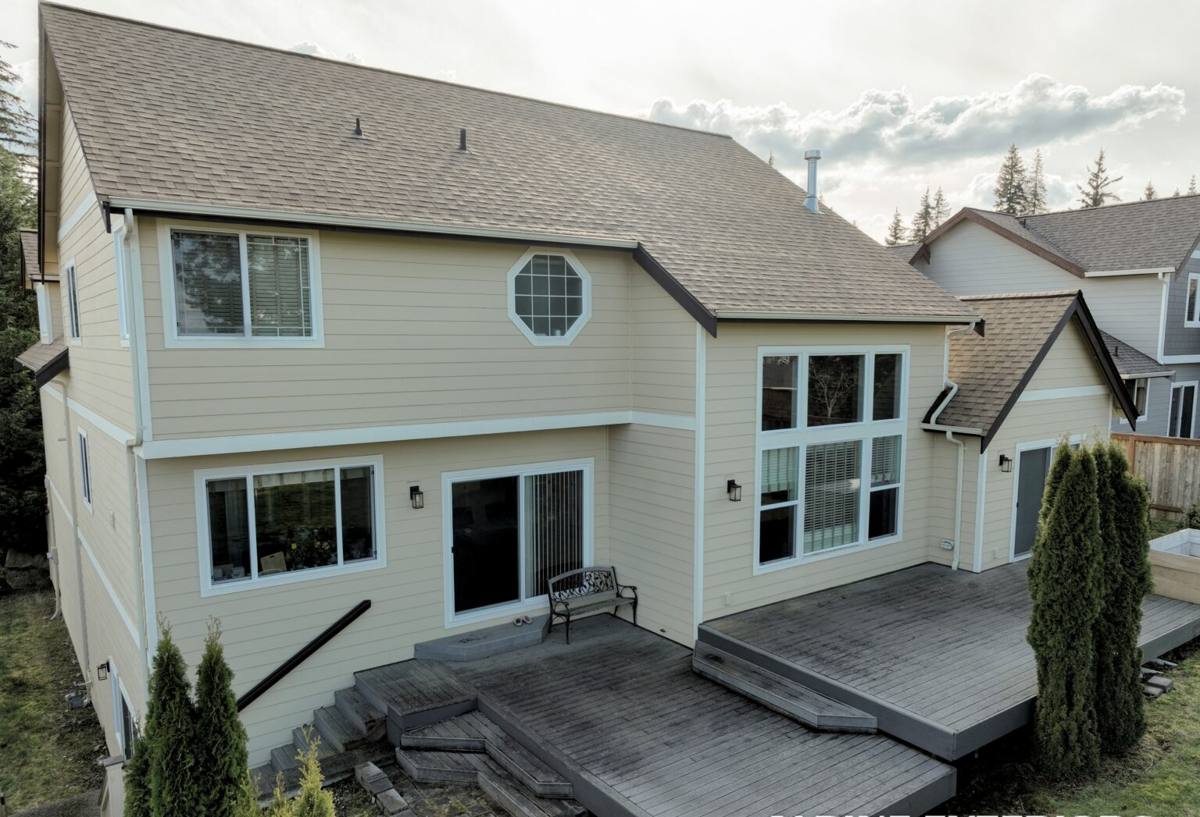
What a Correctly Built Deck Requires in This Setting
Ledger Attachment and Flashing
Most deck failures we get called out to inspect start at the ledger board — the piece that bolts the deck to the house. If that connection isn't flashed properly, water works its way behind it every time it rains, and with Wiser Lake's rain totals that can mean months of standing moisture against your home's framing every year. We flash every ledger with a code-compliant moisture barrier and set it off the wall enough for water to drain away rather than pool.
Fasteners and Hardware
Standard galvanized fasteners are fine in a lot of the country. Near the coast, they corrode faster than most homeowners expect, staining the decking and eventually losing their grip. On decks anywhere within reach of salt-tinged air off the peninsula, we use stainless steel or heavy-duty coated fasteners and connectors rated for coastal exposure — it costs a bit more up front and saves you a re-fastening job in five or six years.
Footings and Framing
Wiser Lake lots often sit on soil that stays damp longer than average, especially near the water. Footings need to be set below frost depth and sized for the load, and we protect the tops of joists and beams with a self-adhering joist tape so end-grain cuts and fastener holes — the two spots wood absorbs water fastest — aren't left exposed to sit wet all winter.
Choosing Decking Material for a Shaded, Moss-Prone Lot
The material question matters more here than it does on a sunny, open lot. A board that dries out fast in full sun can stay damp for days in the shade under a stand of trees near the lake, and damp wood is exactly what moss and algae need to take hold. There's no single right answer for every yard — it comes down to how much shade you're dealing with, how much maintenance you want to do, and your budget.
| Material | Moss/Mildew Resistance | Maintenance | Typical Lifespan |
|---|---|---|---|
| Pressure-treated wood | Fair — needs regular cleaning and sealing in shade | Annual cleaning, re-staining every 2-3 years | 15-20 years with upkeep |
| Cedar | Good natural resistance, but softens over time in constant damp | Cleaning and oiling most years | 15-25 years with upkeep |
| Composite decking | Very good — won't rot, but surface can still grow algae film in deep shade | Periodic washing, no staining or sealing | 25-30+ years |
| PVC/capped polymer | Best — fully synthetic, doesn't absorb moisture | Occasional washing | 25-30+ years |
Composite and PVC cost more up front than treated lumber, but on a deeply shaded Wiser Lake lot, the reduced maintenance and moisture resistance often make the difference between a deck that stays presentable and one you're fighting every spring. On lots with better sun exposure, a well-built and properly maintained wood deck holds up fine and costs less to install. We'll walk your specific lot with you and give you an honest read on which category makes sense before you commit either way.
Drainage, Spacing, and Airflow — the Details That Actually Stop Moss
Material choice only does part of the job. The bigger factor in whether a deck grows moss is how well air and water move through and under it. We set board spacing wide enough for water to shed and for air to circulate, avoid butting boards tight against the house or fascia where moisture gets trapped, and keep the area underneath the deck clear of debris and leaf buildup that holds moisture against the framing. On lots with heavy tree cover, we'll also talk through whether a bit of selective pruning to open up morning sun exposure would help the deck dry out faster — it's a simple change that makes a real difference over a wet Whatcom County winter.
Permits and Code Basics for Whatcom County
Most decks attached to the house, and any deck built a meaningful height above grade, need a building permit and inspection under the codes Whatcom County enforces. Guardrails are required once a deck reaches a certain height off the ground, stair and railing dimensions are spelled out in detail, and footing depth has to meet local frost and soil requirements. The exact requirements depend on your deck's height, size, and how it attaches to the house, so we handle the permit application and coordinate inspections directly rather than leaving you to sort it out. Skipping the permit step might save a little time up front, but it can cause real problems later — at resale, with insurance, or if the work doesn't hold up and needs to be redone to code anyway.
Our Process, Start to Finish
We keep the process straightforward:
- On-site walkthrough of your lot, including sun exposure, drainage patterns, and how the deck will tie into the house
- Honest material and design recommendations based on that specific site, not a one-size-fits-all pitch
- A clear written estimate covering materials, labor, and permit handling
- Permit filing and scheduling with Whatcom County before any framing begins
- Construction, with ledger flashing, fastener grade, and drainage details handled as standard practice, not an upgrade
- Final walkthrough and inspection sign-off before we consider the job done
Maintaining a Deck Near Wiser Lake
However well a deck is built, a shaded lake-lot setting means it needs a bit more upkeep than a deck on an open, sunny lot elsewhere in the county. A simple seasonal routine keeps most problems from ever starting:
- Sweep leaves and debris off the deck surface regularly through fall — trapped organic matter is what feeds moss and algae
- Rinse or lightly scrub the surface once or twice a year, more often on heavily shaded sections
- Check and clear debris from underneath the deck where airflow matters most
- Re-seal or re-stain wood decking on the schedule the product calls for — don't wait for it to look bad
- Inspect fasteners, railings, and stair connections annually for corrosion or loosening, especially closer to Semiahmoo where salt air is more of a factor
- Address any soft or discolored boards right away rather than waiting for them to spread
Why a Crew That Already Works Wiser Lake Matters
A lot of deck problems around here don't come from bad workmanship in general — they come from a plan that would work fine in a drier, sunnier part of the state but wasn't built for a shaded lot next to open water. We work this specific area regularly, so we already know how much shade a given lot tends to hold onto, how the local soil drains, and what permitting with Whatcom County actually involves. That local familiarity means fewer surprises during construction and a deck that's built to handle the conditions it will actually sit in, not a set of assumptions from somewhere else.
If you're planning a new deck or replacing one that's struggling with moss, soft spots, or corroded hardware, we're happy to take a look and give you a straightforward, no-pressure estimate — just fill out the short form below.