 Semiahmoo Siding
 Roofing in Wiser Lake: A Different Set of Demands
Wiser Lake sits in a part of Whatcom County where roofs work harder than they do almost anywhere else in the state. You've got salt-laden air moving in off the water, long stretches of driving rain that don't let up for days at a time, and a moss and algae season that can run eight or nine months out of the year on a shaded roof plane. None of that is unusual to hear about — but it's easy to underestimate how much it shortens the useful life of a roofing system that wasn't installed with those conditions in mind.
A roof that would hold up fine in a drier inland climate can fail early here — not because the shingles or panels were bad, but because the underlayment, flashing details, or ventilation weren't matched to what this area actually throws at a house year-round. A correct new roof installation in Wiser Lake accounts for that from the first layer down, not as an afterthought.
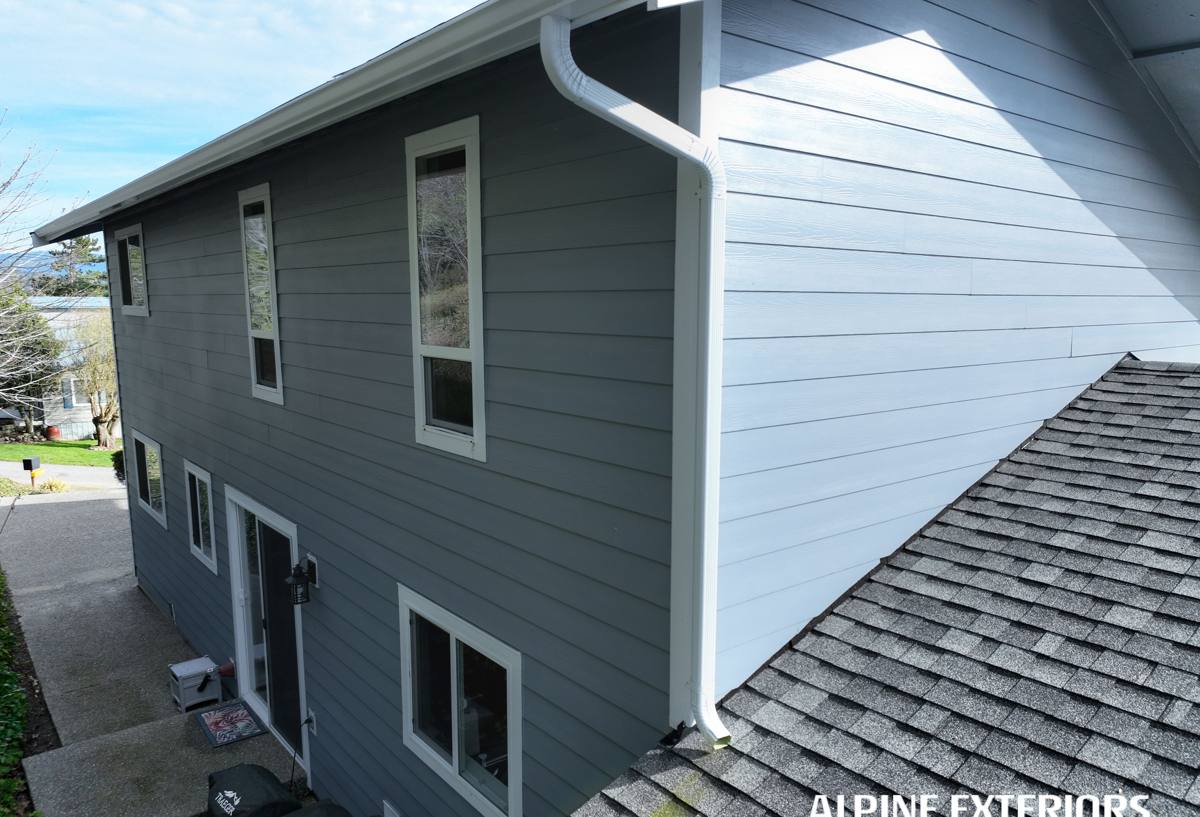
What Salt Air, Rain, and Moss Actually Do to a Roof
Salt Air
Airborne salt accelerates corrosion on any exposed metal — fasteners, flashing, drip edge, vent caps, and valley metal. Standard galvanized fasteners can start showing rust streaks years before the roofing material itself is due for replacement. This is a fastener and flashing spec issue as much as it's a shingle issue.
Driving Rain
Wind-driven rain doesn't fall straight down — it gets pushed sideways and upward under laps, around penetrations, and into valleys. A roof detailed for a calmer climate, with minimal underlayment overlap or standard nailing patterns, is more likely to let water find its way past the surface layer during a real storm.
Moss and Algae
Shade, moisture, and moderate temperatures are exactly what moss needs to establish itself on a roof plane, and once it takes hold it holds water against the surface, lifts shingle edges, and works its way under flashing over time. Roofs with poor airflow or north-facing, tree-shaded slopes are the first to show it.
Signs a Roof in Wiser Lake Needs Full Replacement
- Granule loss heavy enough that you can see bare asphalt on multiple shingles, not just a few scattered spots
- Moss or algae that keeps coming back within a season or two of cleaning
- Soft or spongy spots underfoot, or visible sagging along the roof plane
- Daylight visible through the roof deck from the attic, or water stains on attic sheathing
- Flashing around chimneys, skylights, or valleys that's rusted, cracked, or pulling away
- Shingles curling, cupping, or losing their seal in patches rather than uniformly
- The roof is past 20–25 years old (asphalt) and repairs are becoming frequent rather than occasional
If only one or two of these apply and they're localized, a repair may still make sense. Full replacement becomes the honest recommendation when the underlying deck, underlayment, or overall shingle life is compromised rather than just one section.
What a Correct Installation Actually Involves
A new roof is more than swapping old shingles for new ones. In a climate like this, the layers underneath the visible surface do most of the work.
Deck Inspection and Repair
Every square foot of decking gets checked once the old roofing is off. Soft, delaminated, or water-damaged sheathing gets replaced before anything new goes down — covering over a compromised deck just hides the problem for a year or two.
Underlayment
Given how much wind-driven rain this area sees, we don't treat underlayment as a formality. Self-adhered ice-and-water barrier goes in eaves, valleys, and around penetrations — the spots where wind-driven moisture is most likely to intrude — with synthetic underlayment across the rest of the field.
Flashing
Step flashing at walls, counter-flashing at chimneys, and properly lapped valley metal matter more here than in drier climates, because these are the exact spots where driving rain finds a way in if the details are rushed. We use corrosion-resistant flashing material given the salt exposure this area gets.
Ventilation
Balanced intake and exhaust ventilation keeps the attic and roof deck at a consistent temperature and moisture level. This does double duty — it extends shingle life and it reduces the damp, shaded conditions that moss depends on.
Fasteners
Corrosion-resistant nails and screws are used throughout, not just at the field, because salt air will find any weak point in standard fastener coatings over time.
Roofing Material Options for This Climate
There's no single "right" material for every Wiser Lake home — it depends on the roof's pitch, sun/shade exposure, and your budget. Here's how the common options stack up for this specific climate:
| Material | Moss Resistance | Wind/Rain Performance | Typical Lifespan | Notes |
|---|---|---|---|---|
| Architectural asphalt shingle | Moderate (algae-resistant granules help) | Good with proper underlayment and nailing | 25–30 years | Best balance of cost and performance for most homes here |
| Standing seam metal | Very good — sheds moss more easily due to slick surface | Excellent in wind and driving rain | 40–50+ years | Higher upfront cost; needs corrosion-resistant fasteners near salt air |
| Cedar shake | Poor without diligent maintenance — holds moisture | Good when properly installed | 20–30 years with upkeep | Requires the most ongoing maintenance in this climate |
| Synthetic composite shingle | Good | Good | 30–50 years | Worth considering on shaded, moss-prone slopes |
We'll walk through which option fits your roof's actual exposure — a heavily shaded north slope calls for a different conversation than a sunny, open one, even on the same house.
Our Installation Process
- On-site inspection. We look at the existing roof, attic ventilation, and any trouble spots before quoting anything.
- Written estimate. A clear scope of work and price — what materials, what underlayment, what flashing details, and why.
- Tear-off and deck inspection. Old roofing comes off, decking gets inspected and repaired where needed.
- Underlayment and flashing installation. Ice-and-water barrier at vulnerable areas, synthetic underlayment across the field, new flashing at all penetrations and valleys.
- Roofing material installation. Installed to manufacturer spec with attention to nailing pattern and exposure for wind resistance.
- Ventilation check. Intake and exhaust venting confirmed balanced for the attic's size and layout.
- Final walkthrough and cleanup. Site is cleared of debris and nails, and we go over the finished roof with you before we consider the job done.
Why Local Experience Matters for This Job
A roofing crew that regularly works Whatcom County knows which slopes on a given lot tend to hold moss, how much underlayment overlap actually holds up in a real coastal storm, and which flashing details fail first when salt air gets to them. That's not something you learn from a manufacturer's install manual — it comes from doing this work, on roofs like yours, in this exact climate, season after season. It also means we're a known, reachable crew if a warranty question or a storm-related concern comes up down the line, not a company that did one job in the area and moved on.
Cost Factors to Expect
| Factor | Why It Matters Here |
|---|---|
| Roof size and pitch | Steeper roofs and more complex layouts take longer and require more safety measures |
| Number of layers to remove | Tear-off of multiple old layers adds labor and disposal cost |
| Deck condition | Rot or delamination found during tear-off means sheathing replacement |
| Material choice | Asphalt, metal, and composite options carry different material and labor costs |
| Ventilation upgrades | Adding or correcting intake/exhaust venting is often worth the modest added cost |
| Flashing complexity | Chimneys, skylights, and multiple valleys add detail work and material |
We don't quote a number without seeing the roof — anyone who does is guessing. What we can tell you upfront is that the estimate will reflect the actual condition of your deck and the underlayment/flashing spec appropriate for this climate, not a stripped-down version of the job.
After Installation: A Short Maintenance Checklist
- Have gutters and downspouts cleared at least twice a year — clogged gutters back water up under eaves
- Check shaded roof planes annually for early moss growth and address it before it spreads
- Keep overhanging branches trimmed back to reduce shade and debris buildup
- Have flashing and roof penetrations inspected every few years, especially after major storms
- Don't power-wash the roof surface — it can strip granules and shorten shingle life
A new roof done right for this climate should need very little beyond that for its full service life.
If you're weighing repair versus replacement, or just want an honest read on where your roof stands, we're glad to take a look. Reach out for a free, no-pressure estimate using the form below.