 Semiahmoo Siding
 Siding Installation for Wiser Lake Homes
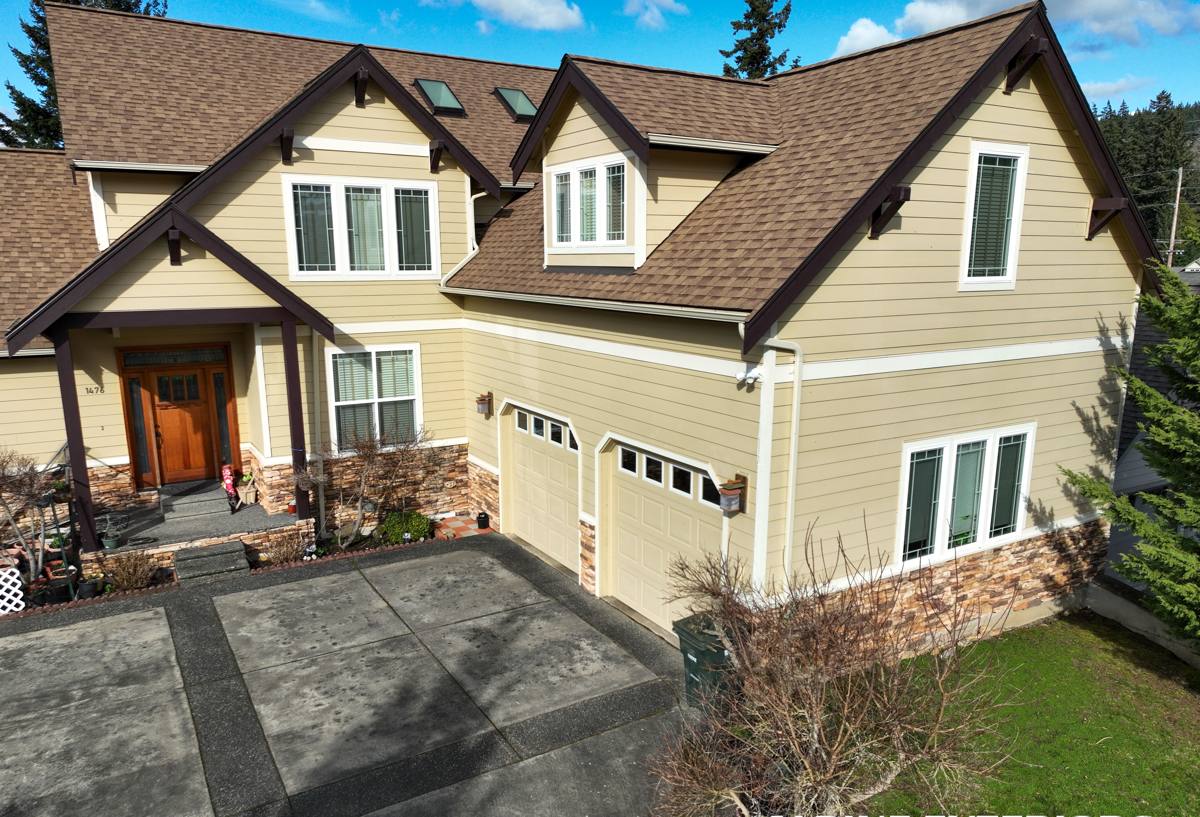
Wiser Lake sits inland from the Semiahmoo shoreline but still lives inside the same marine climate system that defines Whatcom County exteriors: damp air moving in off the water, long stretches of driving rain, and shaded, tree-lined lots that stay wet long after a storm has passed. Homes here don't get hit with direct salt spray the way a bluff-top house does, but the salt-laden regional air, combined with lake moisture and heavy tree canopy, creates its own version of the same problem — siding that never fully dries out between weather events. That's the environment any siding installation in this area has to be engineered for, not just installed in.
This page covers what a correct siding installation looks like specifically for Wiser Lake properties — what the climate demands, what the work actually involves, and why hiring a crew that already understands this micro-climate matters more here than it does in drier parts of the state.
What Wiser Lake's Climate Actually Does to Siding
Three conditions define the wear pattern on siding around Wiser Lake, and all three compound each other.
Driving Rain and Prolonged Dampness
Whatcom County's rain doesn't fall straight down for much of the year — wind off the Strait pushes it sideways into wall assemblies, wind-driven moisture that finds every gap, seam, and unsealed joint in a siding system. On a lake-adjacent lot with mature trees, that moisture also has a harder time evaporating off the wall surface once it lands, because tree cover blocks sun and airflow. The result is siding that stays wet for days at a time instead of hours.
A Long, Real Moss Season
Shade, humidity, and standing moisture are exactly what moss and algae need to establish themselves, and Wiser Lake's tree-lined lots deliver all three for most of the year. Moss doesn't just look bad — it holds water directly against the siding surface, which is a problem for any product that isn't dimensionally stable when wet. On north-facing walls and anywhere siding sits close to overhanging branches, moss growth can start within a couple of seasons if the siding and trim details weren't installed with drainage in mind.
Regional Salt-Laden Air
Even set back from the water, homes in the greater Semiahmoo and Whatcom County corridor sit inside air that carries some salt content, especially during onshore wind events. It's a slower, more diffuse effect than direct spray on a waterfront lot, but over years it still accelerates corrosion on fasteners, flashing, and any metal trim components that weren't specified for coastal-adjacent exposure.
None of this makes Wiser Lake an extreme environment — it makes it a demanding one, where small installation shortcuts show up faster than they would in a dry inland climate.
Why We Install James Hardie Fiber Cement — and Nothing Else
We install exclusively James Hardie fiber cement siding, and we don't install vinyl, LP SmartSide, Cemplank, Allura, primed spruce, or cedar. That's not a marketing position — it's a decision based on watching how different siding materials actually behave in this exact climate over time.
- Vinyl can warp and gap at the seams under the temperature swings and wind loads common here, and gaps are exactly what wind-driven rain exploits.
- Wood-based products (cedar, primed spruce, engineered wood like LP SmartSide) are organic materials in a climate that stays damp for extended periods — that combination is a maintenance commitment most homeowners underestimate until moss and moisture damage show up.
- Other fiber cement brands (Cemplank, Allura) are legitimate products, but we've standardized on one manufacturer so our crews, our detailing, and our warranty process are consistent across every job — and James Hardie's HZ5 product line, engineered specifically for the Pacific Northwest's wet climate, is the version we consider correct for this region.
James Hardie fiber cement is non-combustible, dimensionally stable when saturated, and finished with the factory-applied ColorPlus coating system, which resists the fading and peeling that field-applied paint struggles with under constant damp-dry cycling. It's also backed by a transferable limited warranty, which matters to homeowners who may sell within the product's service life.
What a Correct Installation Involves
Fiber cement siding performs exactly as well as its installation, and no better. The product itself doesn't compensate for skipped steps — in a climate like Wiser Lake's, a poorly detailed installation with premium siding will fail faster than a well-detailed installation with a lesser product. Correct installation includes:
Water-Resistive Barrier and Flashing
A continuous, properly lapped weather-resistive barrier goes on before any siding, with flashing integrated at every window, door, deck ledger, and penetration so water is directed out and down rather than into the wall cavity. This is the layer that actually keeps a home dry — the siding is the second line of defense, not the first.
Clearances and Drainage
Manufacturer-specified clearances at grade, roof lines, decks, and patios keep siding from sitting in standing water or trapped debris — a real risk on lake-adjacent lots where landscaping and grade can hold moisture against the foundation longer than on a well-drained slope. A drainage gap behind the siding lets any incidental moisture escape instead of wicking upward.
Fastening and Joint Treatment
James Hardie specifies fastener type, placement, and embedment depth precisely, and in a salt-influenced air environment, corrosion-resistant fasteners aren't optional. Butt joints and seams need to be treated to manufacturer spec so they don't become the first place moisture gets in.
Caulking and Sealant Details
Sealant is used at specific transitions, not as a substitute for proper flashing. Overuse of caulk to "fix" a bad flashing detail is a common shortcut that fails within a few wet seasons — we treat it as a last-resort detail, not a primary water management strategy.
Our Installation Process
| Step | What Happens | Why It Matters in This Climate |
|---|---|---|
| On-site assessment | Walk the property, check existing siding, trim, and moisture points; note shade patterns and drainage | Identifies where moss and wind-driven rain have historically caused problems |
| Tear-off and sheathing check | Remove old siding, inspect sheathing for rot or existing water damage | Hidden moisture damage is common under failed siding in shaded, damp lots |
| WRB and flashing installation | Install water-resistive barrier and integrate flashing at all penetrations | This is the layer that actually stops water intrusion |
| James Hardie installation | Install siding to manufacturer spec — clearances, fastening, joint treatment | Correct spacing and fastening prevent the gaps moisture exploits |
| Trim and detail work | Finish corners, window and door trim, and transitions | Poorly detailed trim is a leading cause of localized moss and staining |
| Final walkthrough | Inspect completed work with the homeowner | Confirms drainage paths and clearances are correct before we leave |
What Drives Cost on a Wiser Lake Project
Every project is different, but the same factors tend to move the price up or down on jobs in this area:
| Factor | Effect on Scope |
|---|---|
| Existing wall condition | Rot or hidden moisture damage under old siding adds sheathing repair before new siding goes on |
| House size and complexity | More corners, gables, and trim details mean more labor and material |
| Siding profile and color | Lap width, texture, and ColorPlus color selection affect material cost |
| Site access | Lake-adjacent lots with limited access or steep grade can slow staging and material handling |
| Tree cover and shade | Heavier canopy can mean more prep to manage moss-affected areas before install |
We give straightforward, itemized estimates rather than vague ranges, because a homeowner comparing bids should be able to see exactly what's included.
Choosing a Contractor for a Wiser Lake Home
A siding installer who mostly works dry, sun-exposed neighborhoods can still do competent work, but they may not instinctively account for a shaded, damp lot the way a crew that regularly works this specific climate will. When you're vetting a contractor for a Wiser Lake project, it's worth checking:
- Do they install to James Hardie's published specifications, including regional clearance and fastening requirements — not just "standard" spacing?
- Will they show you the flashing and water-resistive barrier detailing before it gets covered by siding?
- Do they have experience with moss-prone, shaded lots, and can they explain how their detailing accounts for it?
- Are they licensed and insured to work in Washington, and can they provide proof without hesitation?
- Do they offer a written, itemized estimate rather than a single lump-sum number?
- Is the warranty — both manufacturer and labor — explained clearly and in writing?
Living With Fiber Cement Siding in a Moss-Prone Climate
Even correctly installed, siding in a shaded, damp environment benefits from a bit of homeowner attention. James Hardie's factory finish resists moss better than raw wood or field-painted surfaces, but it isn't immune to organic growth if debris and shade are left unmanaged. A few habits go a long way:
- Keep gutters clear so overflow doesn't run down the wall face
- Trim back branches and vegetation that keep siding in constant shade
- Rinse visible moss or algae buildup with a garden hose and soft brush — avoid pressure washing directly into seams
- Check caulked transitions periodically and have any cracked sealant replaced
- Watch for staining at trim edges, which can signal a drainage detail worth having inspected
None of this is heavy maintenance — it's the kind of upkeep any exterior in this climate benefits from, and it's considerably lighter than what wood siding demands in the same conditions.
Get an Estimate for Your Wiser Lake Property
If your siding is showing moss buildup, staining, or visible wear, or you're planning ahead for a replacement, we're happy to walk the property and give you a straightforward, no-pressure estimate. Use the form below to get started.