 Semiahmoo Siding
 Windows Built for a Wiser Lake Winter, Not Just a Showroom
Homes around Wiser Lake sit in the same weather system as the rest of Whatcom County: long stretches of driving rain off the water, salt-laden air moving in from Semiahmoo Bay and the Strait of Georgia, and a moss season that can run eight months out of the year on shaded siding and trim. Windows here don't fail because the glass wears out. They fail because water finds a way behind the frame, salt and moisture slowly corrode fasteners and hardware, and moss and algae hold dampness against wood trim long after a storm has passed. A window installed correctly for this climate looks the same as one installed anywhere else. The difference is underneath the trim, where nobody looks until there's a problem.
We install windows for homes in and around Wiser Lake with that reality in mind. That means the flashing details, the sealant choices, and the frame material all get picked for a wet, salt-influenced marine climate, not a generic install sheet written for a dry region.
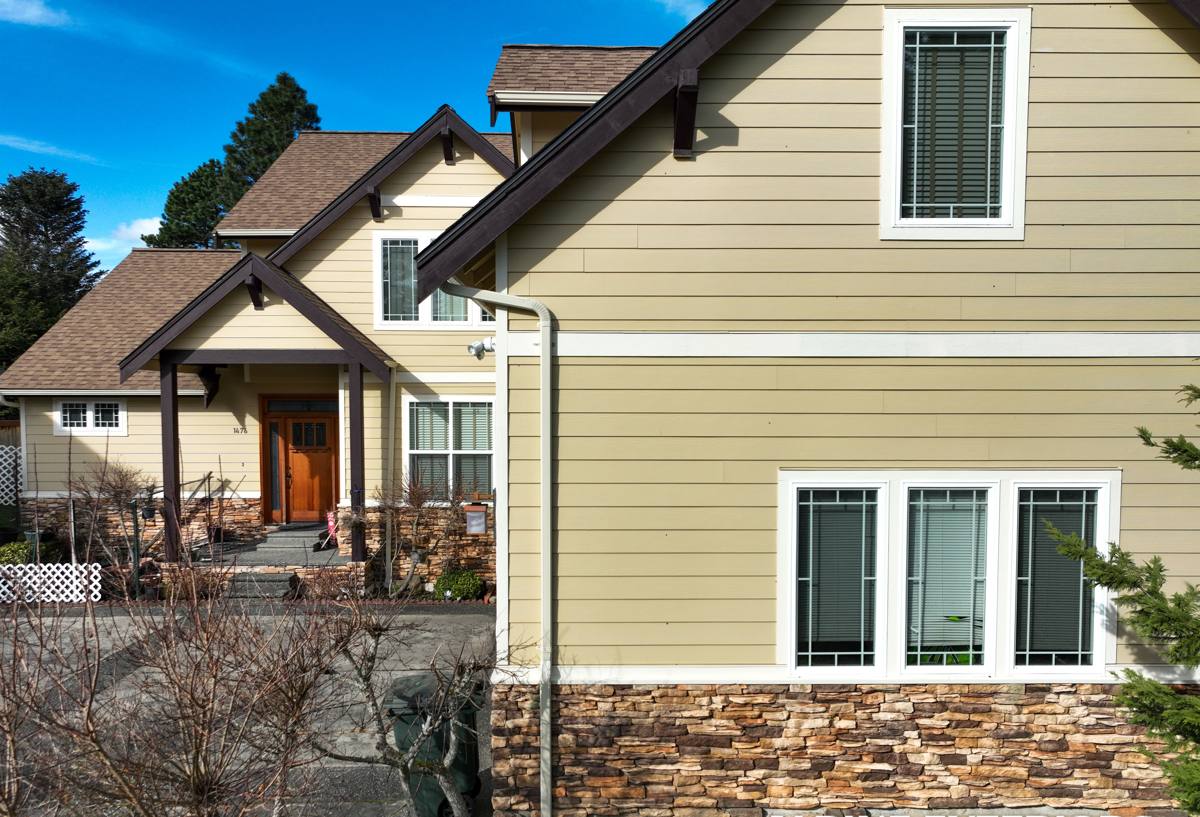
What Local Homes Actually Need From a Window Installation
Managing water, not just blocking it
No window and no sealant stays perfectly watertight forever. Caulk shrinks, gaskets age, and wind-driven rain can push moisture past even a good seal during a hard storm. The correct approach is a drainage plane and flashing system that assumes some water will get past the window and gives it a path back out, instead of trusting sealant alone to keep everything dry for the next twenty years.
Standing up to salt air
Homes closer to the water deal with airborne salt that settles on hardware, screws, and metal flashing. Over time, ungalvanized or poorly coated fasteners corrode, streak the siding, and can eventually fail structurally. Material choice and fastener spec matter more here than in an inland install.
Shedding moss and staying dry underneath
Moss doesn't grow on the glass, but it grows on the trim, sills, and siding around a window, especially on north-facing walls that stay shaded most of the day. Moss holds moisture against wood longer than open air would, which accelerates rot at exactly the joints where a window meets the wall. Trim details and paint or caulk maintenance around the window matter as much as the window unit itself.
What a Correct Installation Actually Involves
A window installation is really several smaller jobs stacked together, and skipping any one of them is usually what leads to a callback two or three winters later.
- Remove and inspect: pull the old window and check the framing, sill, and sheathing underneath for rot or prior water damage before anything new goes in.
- Repair before you cover it up: replace any soft or water-damaged framing rather than installing a new window over a compromised opening.
- Flash in the right order: sill pan first, then side flashing, then head flashing, layered so water is always directed down and out, never trapped behind the next layer.
- Seal with the right products: compatible sealants and tapes rated for the substrate and for sustained damp exposure, not whatever caulk happens to be on the truck.
- Set the window plumb, level, and square: a window that's slightly racked stresses the frame, strains the hardware, and can crack the seal on an insulated glass unit years early.
- Insulate the gap correctly: low-expansion foam or backer rod and sealant around the frame, without overfilling in a way that bows the frame inward.
- Finish the exterior trim: proper caulking and, where wood trim is used, primed and painted end grain, since end grain is where moisture gets in fastest.
Our Process for Wiser Lake Window Jobs
1. On-site assessment
We look at each window opening individually, not just the house as a whole. Sun exposure, wind direction, and how close the home sits to open water or shaded tree cover all affect what that specific window needs.
2. Product recommendation based on exposure
A window on a covered, inland-facing wall doesn't need the same spec as one facing open wind and rain. We recommend materials and glass packages window by window when it makes a real difference, not as an upsell.
3. Removal and structural check
Old windows come out carefully so we can see the condition of the rough opening. If there's hidden rot, we tell you before we move forward, not after the new window is already in.
4. Installation to a marine-climate standard
Sill pan flashing, correctly lapped side and head flashing, and sealants chosen for sustained damp exposure and salt air, every time, not just on request.
5. Exterior finish and cleanup
Trim is caulked, painted, or capped so water sheds away from the joint, and the site is left clean. We walk the job with you before we call it done.
Choosing a Window Material for This Climate
| Material | How it handles rain & salt air | Maintenance | Typical fit |
|---|---|---|---|
| Vinyl | Won't rot or corrode; UV can affect color over decades | Low — occasional cleaning | Most homes, best value |
| Fiberglass | Very stable in wet, temperature-swinging conditions | Low | Homes wanting a longer-term, higher-end option |
| Wood-clad | Good if the cladding and flashing details are done right; the wood interior still needs protection from any leak | Moderate — watch caulk joints and finish | Homes prioritizing a wood look inside |
| Aluminum | Conducts cold and can corrode faster in salt air without a quality coating | Moderate to high | Rarely our first recommendation here |
We don't push one material for every home. We'll tell you honestly where a cheaper option is genuinely fine and where it's worth spending more, based on that window's actual exposure.
What Drives the Cost of a Window Installation
| Factor | Why it matters |
|---|---|
| Number and size of windows | More openings and larger units mean more labor and material |
| Condition of the existing framing | Rot or water damage found during removal adds repair time before the new window goes in |
| Window material and glass package | Vinyl, fiberglass, and upgraded low-E glass all price differently |
| Exposure of the wall | Windows facing open wind and rain may warrant a more robust flashing and sealant approach |
| Trim and exterior finish work | Wood trim repair or repainting adds scope beyond the window unit itself |
Exact pricing depends on what we find once we're on site and looking at the actual openings, but these are the factors that move the number up or down.
Why Hiring a Crew That Already Works Wiser Lake Matters
A contractor who mainly works drier inland regions may install a technically fine window that still isn't set up for this area's rain and salt exposure. A crew that already works Whatcom County homes near the water has seen which details actually matter here: where moss tends to build up and hold moisture, which fastener types hold up over years of salt air, and which flashing sequence keeps water moving out instead of pooling. That familiarity shows up years later, not on install day, which is exactly when it counts.
A Simple Checklist Before You Hire Anyone
- Ask specifically how they flash the sill and head of the window opening, not just how they caulk it
- Ask what they do if they find rot or water damage once the old window is out
- Ask about fastener and hardware specs for a salt-air environment
- Get the manufacturer's warranty terms in writing, along with the installer's own labor warranty
- Ask how they handle exterior trim finishing, especially on wood trim
- Confirm they'll walk the finished job with you before calling it complete
Keeping Your Windows Performing After Installation
A correct installation is most of the battle, but a little seasonal attention keeps it that way. Rinse accumulated grime and salt residue off frames and glass periodically, especially on walls exposed to wind off the water. Keep an eye on caulk lines around the trim each fall before the rainy season sets in, and address any moss buildup on nearby siding or trim promptly so it doesn't hold moisture against the wood longer than it needs to. None of this is complicated, but it's the difference between a window installation that looks good for a season and one that performs for decades.
If you're weighing a window replacement for a home near Wiser Lake, we're happy to take a look and give you a straight assessment of what your windows actually need, no pressure and no upsell. Use the form below to request a free estimate.