 Semiahmoo Siding
 Window Replacement Built for Wiser Lake's Climate
Wiser Lake sits inland from the water, but it doesn't escape what makes Whatcom County exteriors work hard: salt-laden air moving off the Strait, driving rain that comes in sideways more often than straight down, and a moss season that can stretch for most of the year. Windows here don't just get old — they get worked on constantly by moisture, wind pressure, and temperature swings between damp mornings and warm afternoons. That combination is exactly what causes the seal failures, frame rot, and fogged glass we see most often on service calls in this area.
A window replacement done right in Wiser Lake has to account for all of that from the start — not just the glass itself, but the flashing, the sealant, the sill pan, and how the whole assembly ties into the wall behind it. Get any one of those wrong and the new window will fail the same way the old one did, just faster.
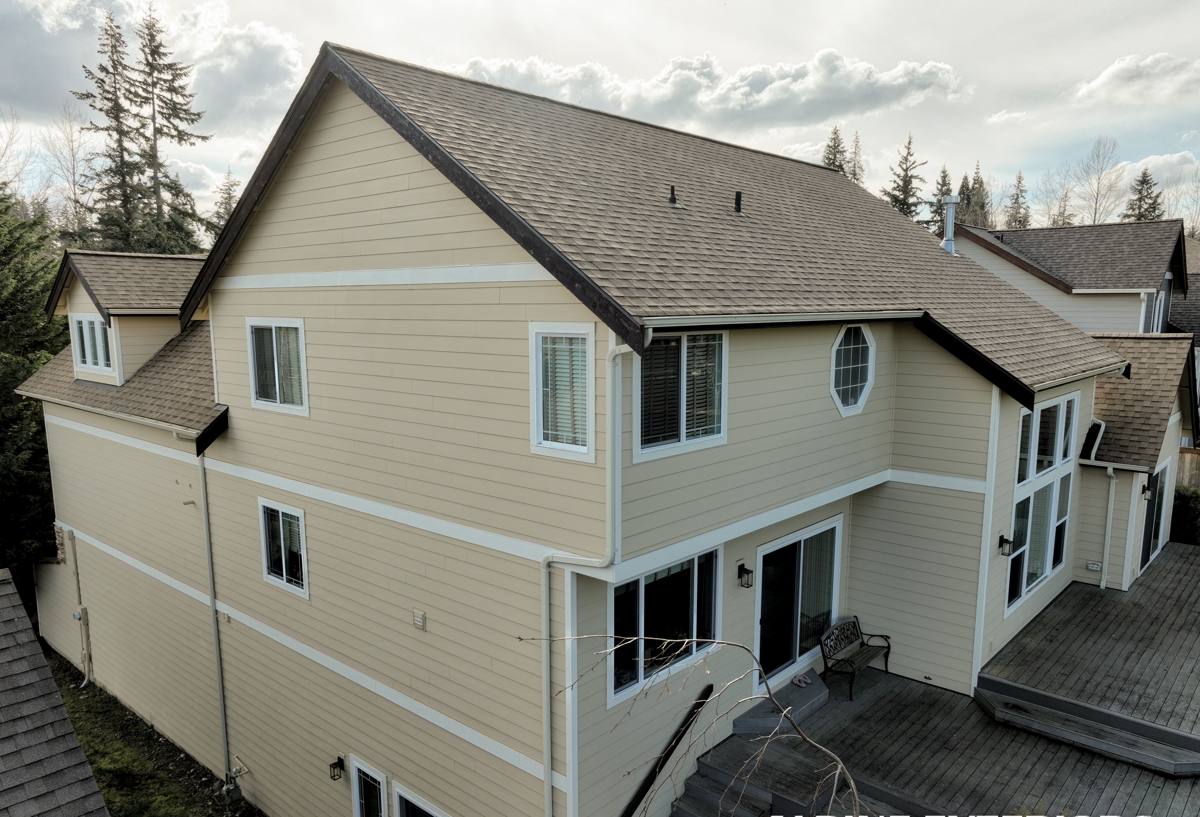
Signs Your Wiser Lake Home Needs Window Replacement
Most homeowners call us after noticing one or two obvious problems, but by the time a window shows visible damage, the moisture behind it has usually been active for a while. Here's what we look for and what you should watch for between visits:
- Fogging or a permanent haze between the panes — the seal on the insulated glass unit has failed
- Soft or spongy wood at the sill or bottom corners of the frame
- Visible moss or dark streaking on the frame or sill, especially on north- and west-facing walls
- Drafts you can feel even when the window is fully latched
- Windows that are difficult to open, close, or lock — frames have swelled or warped
- Condensation building up on the inside of the glass during cold, damp mornings
- Paint that's peeling or bubbling specifically around the window opening, not the wall in general
- A noticeable jump in heating costs without any other explanation
Any one of these on its own isn't necessarily an emergency. Several of them together, especially on the same window, usually means the assembly has been letting water in for a while and it's worth having someone look before it spreads to the framing.
Why Moss Season Matters More Than People Expect
Moss doesn't just grow on roofs. On window sills, trim, and the tops of frames, it holds moisture against wood and painted surfaces for months at a time instead of letting them dry between rain events. On older wood-frame windows especially, that constant dampness is what turns a cosmetic issue into a structural one. It's one of the most common reasons we find rot behind trim that looked fine from a few feet away.
What a Correct Window Replacement Actually Involves
Swapping a window sounds simple, and the window itself is often the easy part. The details that determine whether a replacement lasts 5 years or 25 are almost all in the installation:
Before the Old Window Comes Out
We check the rough opening for existing water damage, soft framing, or old flashing that failed. If there's rot behind the trim, that gets addressed before anything new goes in — installing a new window over damaged framing just hides the problem instead of fixing it.
Sill Pan and Flashing
A sloped sill pan directs any water that gets past the window itself back outside instead of letting it pool at the bottom corners, which is where most frame failures start. Flashing tape needs to be layered correctly — each piece overlapping the one below it, shingle-style — so water always has a path down and out, never a path in.
Sealing and Insulation
Gaps around the window unit get filled with low-expansion foam or backer rod, not just caulk. Caulk alone bridges gaps but doesn't insulate, and it's the first thing to crack under our seasonal temperature swings. The exterior sealant bead has to be continuous, with no skips, particularly along the bottom where wind-driven rain hits hardest.
Interior and Exterior Trim
Trim gets reset or replaced so it sheds water away from the frame rather than channeling it toward a seam. This is a small detail that gets skipped more often than it should, and it's a common cause of "new window, same leak" complaints.
| Step | Why It Matters in This Climate |
|---|---|
| Rough opening inspection | Catches hidden rot before it's sealed behind a new window |
| Sloped sill pan | Directs wind-driven rain back outside instead of pooling at corners |
| Layered flashing | Keeps water moving down and out through freeze-thaw and humidity cycles |
| Foam/backer rod insulation | Handles temperature swings better than caulk alone, reduces drafts |
| Continuous exterior sealant | Blocks the small gaps that salt air and rain exploit over time |
| Trim reset to shed water | Prevents moisture from tracking back toward the frame seam |
Choosing the Right Window for a Wiser Lake Home
There's no single "best" window material — the right choice depends on your home's age, exposure, and how much upkeep you want to take on. We'll walk through the honest trade-offs rather than push one option:
| Frame Material | Strengths Here | Trade-Offs to Know |
|---|---|---|
| Vinyl | Won't rot, low maintenance, resists salt air well, good value | Limited color/finish options; quality varies a lot by manufacturer |
| Fiberglass | Very stable in temperature swings, strong, low maintenance | Higher upfront cost than vinyl |
| Wood (clad exterior) | Classic look, good for older or historic-style homes | Exterior cladding still needs inspection; interior wood needs upkeep |
| Aluminum | Slim sightlines, strong for larger openings | Poor insulator unless thermally broken; can feel cold to the touch |
For most homes in this area, we lean toward vinyl or fiberglass because they hold up to sustained moisture and salt air without the ongoing maintenance that wood cladding or bare aluminum require. That's a maintenance and moisture-behavior judgment, not a knock on any manufacturer — wood-clad windows have their place, especially where matching an existing architectural style matters more than minimizing upkeep.
Our Process for a Wiser Lake Window Replacement
- On-site assessment — we look at each window individually, not just the ones you flagged, since problems often show up first on the least-visible units
- Honest recommendation — replace, repair, or wait, based on actual condition, not a sales quota
- Written estimate — clear line items so you know what you're paying for and why
- Removal and opening inspection — old windows come out, framing gets checked and repaired as needed
- Installation — sill pan, flashing, insulation, and sealant done to the standard above, on every window, not just the ones facing the weather
- Final walkthrough — we check operation, seal integrity, and clean up before we consider the job done
What Affects the Cost
Every project is different, but these are the main variables that move the price up or down:
| Factor | Impact |
|---|---|
| Number of windows | Larger jobs generally lower the per-window cost |
| Frame material | Vinyl is typically the most budget-friendly; fiberglass and clad-wood cost more |
| Hidden rot or framing damage | Repairs to the rough opening add labor and material beyond the window itself |
| Window size and configuration | Larger openings, bays, and custom shapes cost more than standard sizes |
| Access | Second-story or hard-to-reach windows take more time and equipment |
We won't quote a firm number without seeing the windows in person — anyone who does is either guessing or padding the estimate to cover surprises. What we can tell you upfront is that hidden framing damage is the single biggest reason project costs move once work is underway, which is exactly why we inspect openings before finalizing anything.
Why Local Experience in Wiser Lake Matters
A crew that works this specific area regularly knows which sides of a house take the worst of the wind-driven rain, how much moss buildup is normal versus a warning sign, and how salt air behaves differently on windows facing open water versus windows tucked behind tree cover. That's not something you get from a general contractor who mostly works drier inland climates or a crew that treats every job the same regardless of exposure. It shows up in small decisions — how much flashing overlap to use, which sealant holds up best through a wet winter, when a window needs replacing versus when a repair will genuinely hold.
It also matters for accountability. A local crew is easy to reach if something needs a follow-up look after the first real storm tests the seal, and that follow-through is part of doing the job right, not an afterthought.
Simple Maintenance That Extends the Life of New Windows
- Rinse frames and sills periodically to keep salt residue and moss spores from building up
- Check exterior caulk lines once a year, especially after winter, and re-seal any cracks early
- Keep gutters and downspouts clear so runoff doesn't sheet directly down over window openings
- Trim back vegetation that shades window sills and keeps them from drying out between rains
- Operate each window a few times a year so hardware and weatherstripping don't seize up
If your windows in Wiser Lake are drafty, fogged, or showing signs of moisture damage, we're happy to take a look and give you an honest read on what's going on — no pressure, no obligation. Use the form below to request a free estimate and we'll get back to you to schedule a time.