 Semiahmoo Siding
 Roofing in Sumas Isn't a One-Size-Fits-All Job
Sumas sits inland from the coast, but that doesn't spare it from the same weather patterns that shape roofing decisions across Whatcom County. Marine air still pushes through the region, storms off the water still arrive as long, soaking systems rather than quick showers, and shaded lots with tree cover hold onto moisture for months at a time. A roof here isn't fighting one bad storm a year — it's fighting a slow, steady accumulation of water, humidity, and organic growth that never fully dries out between rain events.
That's a different problem than a roof faces in a dry climate, and it calls for a different set of priorities: materials rated for wind and wet-weather exposure, ventilation that actually clears moisture instead of trapping it, and installation details that don't leave gaps for water to find its way in. An asphalt shingle roof done right for Sumas looks similar to one done anywhere else on the surface — but the underlayment, flashing, and venting choices underneath it are where the real difference shows up ten years later.
What a Correct Asphalt Shingle System Includes Here
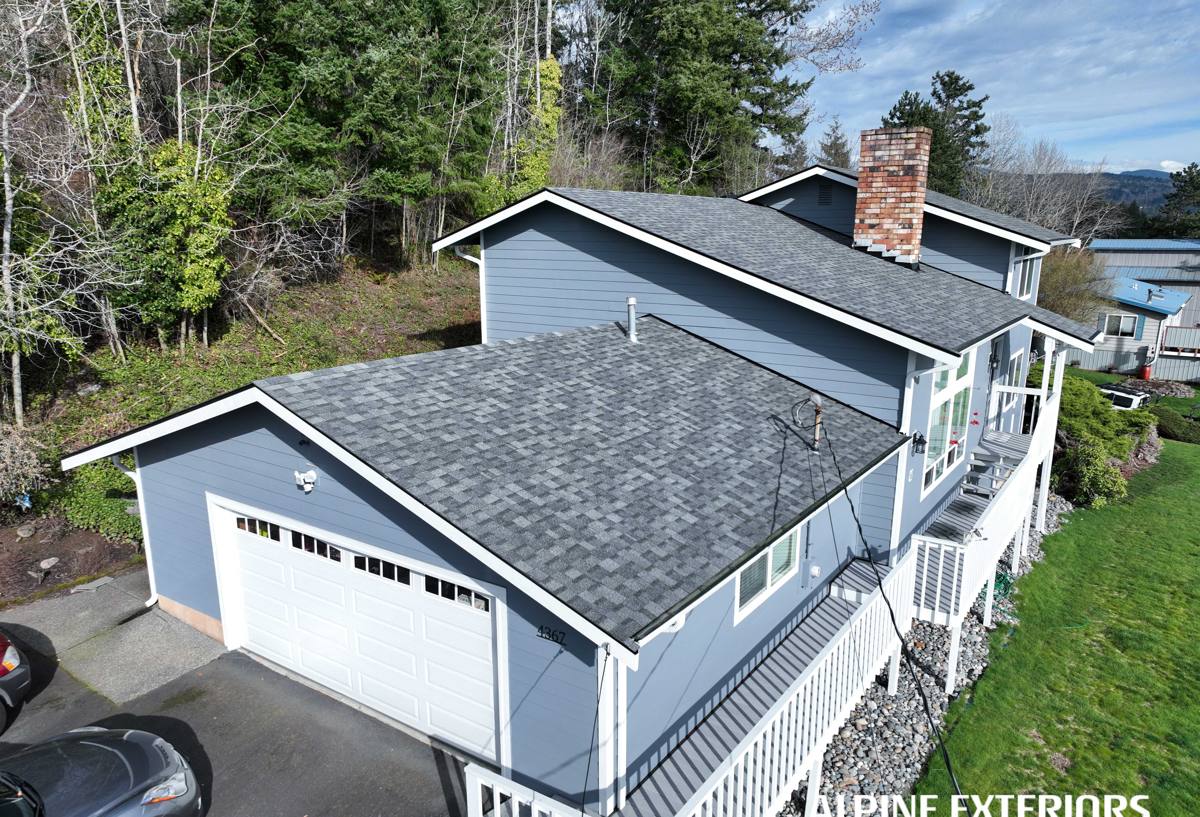
Asphalt shingles remain the most common roofing material in this part of Washington for good reason — they're durable, reasonably priced, and available in wind ratings and algae-resistant formulations that hold up to the long wet season. But the shingle itself is only one layer of a system. A roof built for local conditions includes:
- A synthetic or felt underlayment rated for the exposure time our weather demands — roofs here often sit uncovered longer during install than in drier climates, and cheap underlayment doesn't tolerate that well.
- Ice and water shield at eaves, valleys, and around penetrations, even though hard freezes aren't the main concern — this membrane also stops wind-driven rain from working backward under the shingle edge.
- Shingles rated for higher wind speeds, since driving rain in this area is almost always paired with wind gusts strong enough to lift poorly fastened tabs.
- Balanced intake and exhaust ventilation, so moist attic air actually leaves the structure instead of condensing against the underside of the roof deck.
- Corrosion-resistant flashing at every roof-to-wall transition, chimney, and skylight — the single most common source of slow, hidden leaks we find on older Sumas roofs.
Skip any one of these and the shingles on top can look fine for years while the deck underneath quietly deteriorates.
Moss, Algae, and the Long Wet Season
Moss is the most visible sign of a roof that isn't shedding water and drying out the way it should. It tends to take hold first on north-facing slopes, under tree cover, and in valleys where debris collects and holds moisture against the shingle surface. Once established, moss does more than look bad — its root structure lifts shingle edges, which lets water underneath, and a moss-covered roof stays wet far longer after a storm than a clean one.
Algae staining (the dark streaking many homeowners assume is dirt or soot) is a related but separate issue — it's a organism that feeds on limestone filler in some shingles. Algae-resistant shingles, which use copper granules woven into the shingle surface, resist this staining for the life of the roof rather than just the first few years. Given how long our wet season runs, we treat algae resistance as a standard spec for this area rather than an upgrade.
Prevention matters more than treatment. Keeping branches trimmed back so shingles get sun and airflow, clearing valleys and gutters before the fall rains set in, and choosing algae-resistant shingles up front all do more good than any moss removal after the fact. Pressure washing or aggressive scraping to remove moss can strip the protective granules off shingles and shorten their life — we treat that as a last resort, not routine maintenance.
Ventilation: The Part Nobody Sees Until It Fails
Most roof problems we get called out for in wetter climates trace back to ventilation, not the shingles themselves. An attic that can't breathe traps warm, moist air against the roof deck. Over a long wet season, that moisture condenses, soaks into the sheathing, and creates the exact conditions mold and rot need — all while the shingles on top look perfectly normal.
Correct ventilation balances intake (usually at the soffits) with exhaust (ridge vents, or in some cases roof-mounted vents). Both sides need to work together and be sized to match the attic's square footage — a ridge vent installed over blocked or undersized soffit intake does very little, because there's nowhere for replacement air to come from. When we replace a roof, we check the existing ventilation as a matter of course rather than assuming it was done right the first time, because plenty of older homes in this area were built before current ventilation standards existed.
Flashing and the Details That Actually Leak
Shingles rarely fail in the open field of a roof. Leaks almost always start at a transition — where the roof meets a wall, chimney, skylight, or another roof plane. Flashing is the metal or membrane detail that seals those transitions, and it has to be installed in layers that shed water downward at every step, not just caulked over and hoped for.
Caulk and roofing cement are not substitutes for proper step flashing, counter-flashing, or valley metal — they're short-term patches that fail faster than the shingles around them, especially under the kind of driving rain that pushes water sideways and upward under gaps. When we tear off an old roof, flashing condition is one of the first things we check, because a roof with worn-out flashing and otherwise decent shingles is often the reason for a leak that's been misdiagnosed as a shingle problem.
Where Flashing Fails Most Often
- Chimney bases, where age and thermal movement work the metal loose over time
- Roof valleys, where the volume of water running through is highest
- Skylight perimeters, especially on older or builder-grade units
- Sidewall transitions, where siding and roofing meet and are often installed by different trades
Our Process, Start to Finish
- On-site inspection. We walk the roof and attic, check ventilation, flashing, and deck condition, and take photos of anything that affects the estimate.
- Straightforward estimate. You get a written scope covering materials, tear-off, disposal, and any deck repair or ventilation work needed — no vague allowances.
- Tear-off and deck check. Old roofing comes off down to the deck, and we inspect the sheathing before anything new goes down. Soft or water-damaged decking gets replaced, not covered over.
- Underlayment and ice-and-water shield. Installed to current standards at eaves, valleys, and penetrations before a single shingle goes on.
- Flashing. New or renewed flashing at every transition point, tied properly into the underlayment layers.
- Shingle installation. Installed to manufacturer nailing patterns and exposure specs — the details that actually determine the wind rating hold up in practice.
- Ventilation check and correction. Intake and exhaust balanced to the attic's actual size, not assumed from the old setup.
- Final walkthrough. We review the finished roof, gutters, and site cleanup with you before calling the job done.
Shingle Options: What Actually Differs
Homeowners are usually choosing between a few tiers of asphalt shingle. Here's how they compare on the factors that matter most in this climate:
| Shingle Type | Typical Wind Rating | Algae Resistance | Expected Lifespan |
|---|---|---|---|
| Three-tab | Lower | Rarely included | Shorter end of asphalt range |
| Architectural (laminate) | Higher | Usually available as an option | Mid-to-long range |
| Premium / impact-rated | Highest | Standard on most product lines | Long end of asphalt range |
For most Sumas homes, we recommend architectural shingles with algae resistance as the baseline — the wind rating and moss/algae protection are worth the modest cost difference over three-tab given how long our shingles stay wet each year. Impact-rated shingles make sense for homes with more tree exposure or a history of storm damage, but they're not a requirement for every roof.
Repair or Replace? What We Actually Look At
Not every roofing call ends in a full replacement, and we don't push one when a repair will genuinely hold. The honest factors we weigh:
- Age of the roof relative to its material's expected lifespan
- How widespread the damage is — a few damaged shingles after a storm is a repair; granule loss and curling across the whole roof is not
- Deck condition underneath — soft spots or rot change the math regardless of how the shingles look
- Flashing condition, since failing flashing on an otherwise sound roof is often repairable on its own
- How many repairs you've already made — a roof needing its third patch in five years is usually cheaper to replace than to keep chasing
We'll tell you plainly which category your roof falls into, including when a repair is the right call even if a replacement would be the bigger job for us.
Why It Matters to Hire a Crew That Already Works Sumas
Roofing crews who work across Whatcom County regularly see how local conditions actually play out on real houses — which slopes hold moss longest, which older neighborhoods tend to have undersized attic ventilation, which flashing details get shortcut most often on production-built homes. That background shapes the choices we make on your roof before problems show up, rather than reacting to them after the fact.
It also means we're not guessing at permit requirements, disposal logistics, or realistic project timing around the wetter months. A crew unfamiliar with the area might spec a roof that would perform fine somewhere drier and miss the details that matter here — ventilation balance, algae resistance, wind-rated fastening — because those details simply aren't as critical in their usual climate.
Simple Maintenance That Extends Roof Life
A well-installed asphalt shingle roof still needs basic upkeep to reach its full lifespan in this climate:
- Clear leaves, needles, and debris from valleys and gutters before fall rains set in
- Trim back overhanging branches to reduce shade and improve airflow across the roof surface
- Have the roof looked at after any major windstorm, even if nothing looks obviously wrong from the ground
- Check attic ventilation isn't blocked by insulation or storage that's crept over the soffit vents
- Address small leaks or lifted shingles promptly — they get more expensive to fix the longer water has access to the deck
None of this requires climbing on the roof yourself, and we'd rather you call us to look at something questionable than wait until it's a bigger repair.
If your roof is showing granule loss, moss buildup, or you're just not sure how much life it has left, we're happy to take a look. Reach out using the form below for a free, no-pressure estimate — we'll give you a straight answer on what your roof actually needs.