 Semiahmoo Siding
 Salt Air, Rain, and Moss: Bellingham's Siding Challenge
Bellingham sits in a stretch of Whatcom County where the weather doesn't let up on a house. Moisture rolls in off the water for months at a time, driving rain hits siding sideways during winter storms, and the humidity that settles into shaded north walls barely lets up long enough for anything to fully dry. Add in the salt-laden air that drifts inland from Semiahmoo Bay and the greater Salish Sea coastline, and you have a climate that's genuinely tough on exterior building materials.
Most homeowners notice the result before they understand the cause: green-black streaking on north-facing walls, soft or swollen trim boards, caulk joints that crack and pull away years before they should, and paint that fails from the inside out because moisture got behind it. None of that is bad luck. It's what happens when siding that wasn't engineered for this climate, or wasn't installed correctly, meets a long wet season and a long moss season back to back.
This page is specifically about fiber cement siding installation for homes in the Bellingham area. Not siding in general — this one product, in this one climate, done the way it needs to be done here.
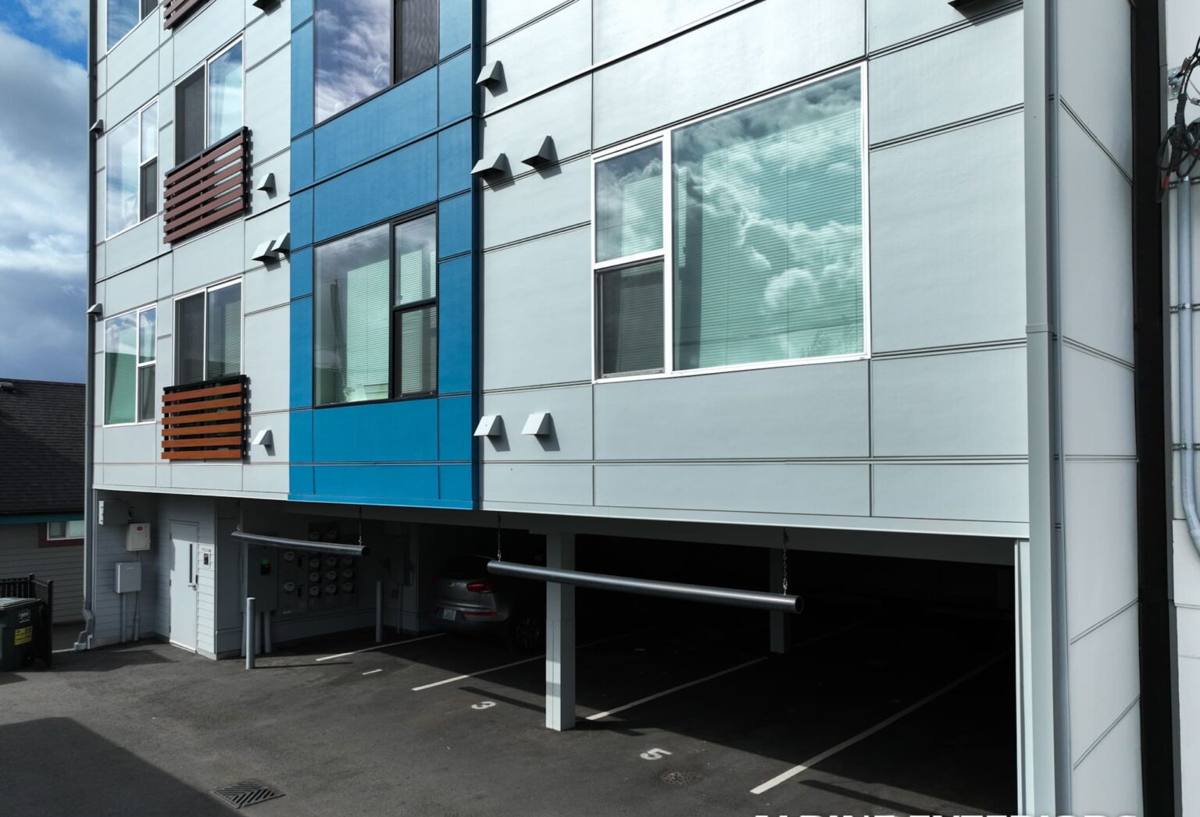
What "Correct" Fiber Cement Installation Means in This Climate
Fiber cement is a good material in a wet coastal climate, but it isn't automatically a good installation. The material can be installed poorly, and a poor installation in Bellingham's weather will show its problems faster than it would in a dry inland climate. Correct installation here means paying attention to a handful of details that matter more on the coast than almost anywhere else in the state:
- A drainage plane behind the siding. A weather-resistive barrier, properly lapped and taped, gives any moisture that does get past the siding a path to escape instead of soaking into the sheathing.
- A rainscreen gap where conditions call for it. On walls that take the brunt of wind-driven rain, a small air gap between the siding and the wall assembly lets bulk water drain and lets the wall breathe, instead of trapping moisture against the back of the boards.
- Correct fastener spacing and type. Fiber cement has specific nailing patterns for field and edge fastening, and in a salt-air environment the fastener material matters — corrosion-resistant fasteners are not optional here, they're the difference between trim that stays tight and trim that stains and loosens in a few years.
- Proper clearances at grade, decks, and roof lines. Siding that's installed tight to a deck surface, a roof, or the ground will wick moisture no matter how good the board itself is. Whatcom County's wet ground and heavy plantings make this an easy detail to get wrong and a costly one to ignore.
- Caulking only where it belongs. Butt joints, trim intersections, and penetrations get sealed with the right sealant; field joints and drainage paths don't get caulked shut, because doing so traps water instead of letting it out.
Every one of these is a manufacturer-specified detail. None of them is exotic. But skipping any one of them is exactly how a "fiber cement" job ends up with the same rot and staining problems people install fiber cement to avoid in the first place.
The James Hardie Products We Install
We install James Hardie fiber cement siding exclusively — no LP SmartSide, no vinyl, no primed spruce or cedar, and no other fiber cement brand. That's a deliberate standard, not a default, and it matters most in a climate like this one.
HZ5 Engineering for the Pacific Northwest
Hardie engineers its siding in region-specific formulations, and the HZ5 line is built for climates with sustained moisture exposure like Bellingham's. The board composition is matched to how much rain and humidity the material will actually face here, rather than treating a house in Whatcom County the same as one in a dry climate.
ColorPlus Factory Finish
Most of the failures we see on older siding aren't the substrate — they're the paint. Field-applied paint on any siding material is only as good as the prep and the weather conditions on the day it went on, and it's the first thing to fail in a climate this wet. Hardie's ColorPlus finish is baked on in a controlled factory environment, which gives it far more consistent adhesion and UV resistance than a site-painted finish, and it comes with a dedicated finish warranty separate from the substrate warranty.
Board Profiles
For most Bellingham homes we're working with lap siding in a traditional or modern reveal, sometimes paired with shingle-style accent siding or vertical panel siding on gables and accent walls. The right profile is a design decision as much as a technical one, and we walk through the options during the estimate rather than defaulting to one look for every house.
Fiber Cement vs. Other Siding Options in This Climate
Homeowners comparing bids often get quotes across several materials. Here's an honest comparison of how the common options actually hold up against Bellingham's combination of salt air, driving rain, and moss.
| Material | Moisture Behavior | Moss/Algae Resistance | Maintenance |
|---|---|---|---|
| James Hardie Fiber Cement | Does not swell, rot, or delaminate; correctly installed drainage handles incidental moisture | Non-organic substrate resists growth better than wood; factory finish sheds surface grime | Occasional rinse; no repainting on typical cycles |
| Vinyl Siding | Can warp or buckle with heat/cold cycling; seams are a moisture entry point | Grows moss/algae readily in shaded, damp areas; texture holds grime | Low, but panels can crack or fade and are hard to color-match when replaced |
| Primed Wood (Spruce/Cedar) | Organic material; absorbs moisture at end grain, joints, and any coating failure | Highly susceptible in shaded, humid conditions without regular treatment | Repainting/staining and moss treatment on a recurring cycle |
| Other Fiber Cement Brands | Varies by manufacturer formulation and factory QC | Varies; finish quality and warranty structure differ by brand | Depends on finish type — field-painted versions need repainting |
The pattern that matters most for this specific climate is moisture behavior at the seams and end grain, and finish durability under constant humidity. That's where wood and lower-grade vinyl installations tend to lose ground fastest here.
Our Installation Process
The process itself doesn't change much from house to house, but the sequencing and attention to detail is what keeps a job performing well in this climate for decades instead of years.
- On-site assessment. We look at existing siding, trim, flashing, and any signs of moisture already in the wall assembly before quoting anything.
- Tear-off and sheathing check. Old siding comes off and we inspect the sheathing underneath for soft spots or existing rot — this is the point where hidden problems get caught, not after the new siding is up.
- Weather-resistive barrier and flashing. A properly lapped and taped barrier goes on, with flashing detailed at every window, door, and penetration.
- Rainscreen installation where warranted. On exposed elevations, we install furring to create a drainage gap behind the siding.
- Fiber cement installation to manufacturer spec. Correct fastener type, spacing, and clearances at every edge, corner, and penetration.
- Trim and joint detailing. Caulking only at the joints designed to be sealed, with a sealant rated for this climate's UV and moisture exposure.
- Final walk-through. We go over the finished work with the homeowner before calling the job done.
Signs Your Current Siding Is Already Losing the Battle
Before deciding whether it's time to replace siding, it helps to know what to actually look for. Most homeowners in this area are dealing with one or more of these:
- Dark green or black staining that returns within months of being cleaned, especially on north- and west-facing walls
- Trim boards or panel edges that feel soft, spongy, or visibly swollen
- Paint that's peeling, bubbling, or chalking well before its expected repaint cycle
- Caulk joints that have cracked, shrunk, or separated from the siding
- Visible gaps or warping at butt joints and corners
- Interior signs — musty smell, peeling interior paint, or staining near exterior walls
- Siding that feels tight against a deck, patio, or grade with no visible gap
Any one of these on its own might be minor. Several together, especially combined with siding that's approaching or past its expected service life, usually means it's worth having someone look at the wall assembly, not just the surface.
What Correct Installation Costs — And Why
Fiber cement siding costs more up front than vinyl and is comparable to or somewhat more than primed wood, depending on profile and trim complexity. The real cost drivers on a coastal Whatcom County home are usually these:
| Cost Factor | Why It Matters Here |
|---|---|
| Existing wall condition | Rot or moisture damage found at tear-off needs repair before new siding goes on — skipping this just seals the problem in |
| Rainscreen vs. direct-applied | Exposed elevations benefit from a drainage gap, which adds labor but reduces long-term moisture risk |
| Trim and detail complexity | Homes with more corners, window trim, and roof intersections take more time to flash and detail correctly |
| Board profile and accent siding | Shingle-style accents or vertical panels on gables add material and labor cost over straight lap siding |
| Access and site conditions | Multi-story walls, tight lots, and heavy landscaping around the foundation affect labor time |
We give a firm, itemized quote after the on-site assessment rather than a rough number over the phone, because these factors vary enough house to house that a phone estimate isn't a responsible one.
Why Hire a Crew That Already Works in Bellingham
Siding installation isn't exotic work, but installing it correctly for this specific climate is a matter of experience, not just certification. A crew that regularly works Bellingham and the surrounding Whatcom County coastline has already seen which walls take the worst of the driving rain, which north-facing elevations hold moisture longest, and which older homes have moisture already trapped behind their existing siding before a single board comes off.
That local pattern recognition is what keeps small details — a rainscreen decision, a flashing detail, a clearance at grade — from getting skipped. It's also what makes a warranty mean something: a manufacturer warranty only holds up if the installation followed spec, and that's easiest to guarantee with a crew that installs this exact product, in this exact climate, as a matter of routine rather than as an occasional job.
If you're weighing a siding replacement or want a second opinion on a quote you've already received, we're happy to take a look and give you a straightforward, no-pressure estimate — no obligation, just an honest read on what your home actually needs.