 Semiahmoo Siding
 Decks Take a Different Kind of Beating in Birch Bay
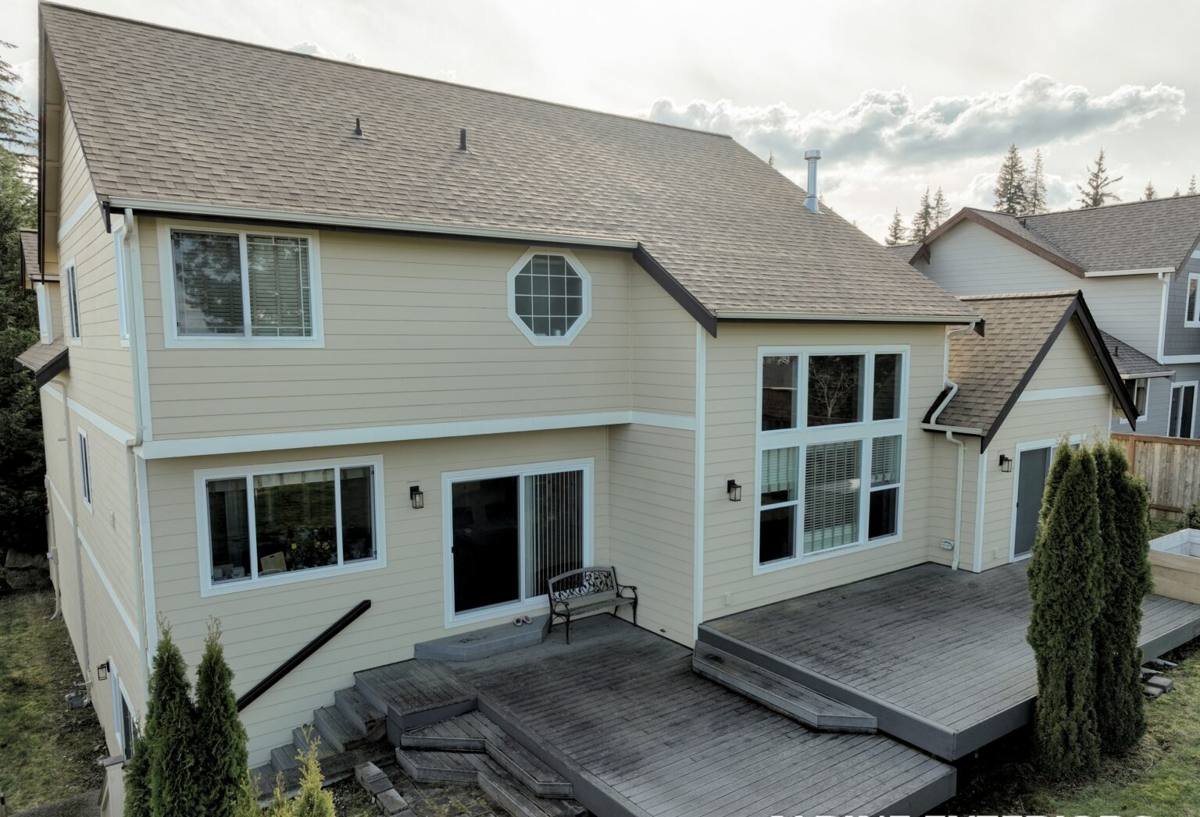
A deck in Birch Bay doesn't fail the same way a deck fails inland. The combination of salt-laden marine air, long stretches of driving rain, and a moss season that can run from fall through spring works on wood, fasteners, and footings in ways that don't show up right away. By the time a deck looks bad, the damage underneath is usually further along than the surface suggests.
We work throughout the Semiahmoo area and see the same pattern on deck after deck: boards that look fine from a distance but are soft at the joints, ledger boards holding moisture against the house, and hardware that's corroding faster than the wood around it. Replacement done right accounts for all of that, not just the parts you can see from the yard.
Why Salt Air, Rain, and Moss Matter More Here
Salt Air and Metal Fasteners
Proximity to Semiahmoo Bay means airborne salt settles on everything, including screws, joist hangers, and structural bolts. Standard hardware corrodes faster in this environment than it would twenty or thirty miles inland. Corroded fasteners are one of the most common hidden failure points we find when we pull up old decking — the boards can look salvageable while the connections holding them down are already compromised.
Driving Rain and Water Intrusion
Whatcom County storms don't just fall straight down — wind-driven rain gets pushed sideways into gaps, under flashing, and behind ledger boards. Any deck that wasn't detailed with proper flashing and drainage in mind will trap water against the house framing, which is where the expensive damage happens — not in the decking itself, but in the rim joist and sheathing behind it.
Moss and Constant Moisture
A long moss season means decks here stay damp longer than decks in drier climates, even between rain events. Moss holds moisture against the board surface, which accelerates rot in untreated or poorly sealed wood and keeps composite surfaces slicker and greener than they'd be elsewhere. A deck built without this in mind will need more frequent cleaning and will show wear years before it should.
Signs a Deck Needs Replacing, Not Just Repairing
Not every tired-looking deck needs to come out. But there's a point where patching individual boards stops making sense and a full replacement becomes the honest recommendation. Signs we look for:
- Soft, spongy spots when you press on the decking, especially near the house or stair landings
- Visible rot or dark staining at the ledger board where the deck meets the house
- Rusted or heavily corroded fasteners, joist hangers, or post bases
- Railings that flex or feel loose when leaned on
- Gaps opening up between boards that weren't there when it was built
- Footings that have shifted, cracked, or heaved
- A deck more than 15-20 years old built with older wood-preservative standards or undersized framing by today's code
If most of the deck shows one or two of these issues, targeted repair can make sense. If several of these are present, or the structural framing itself is compromised, replacement is usually the more honest and cost-effective path — repeated patch repairs on a failing structure end up costing more over time than doing it once, correctly.
What a Correct Deck Replacement Actually Involves
A deck replacement is more than swapping old boards for new ones. Done correctly, it starts from the structure and works outward:
Structure First
Framing, ledger attachment, joist spacing, and footings all get evaluated against current code, not just replaced to match what was there before. In this climate, that usually means upgrading to corrosion-resistant structural hardware rated for exterior and coastal-adjacent use, not standard interior-grade fasteners.
Flashing and Water Management
The ledger-to-house connection is the single most important detail on any deck. Proper flashing — installed so water sheds away from the house rather than behind the siding — is non-negotiable, especially given how much wind-driven rain this area sees. This is also where we most often find prior damage on older decks that were never flashed correctly to begin with.
Decking Surface
The visible boards are the last decision, not the first. Material choice should be driven by how the deck will be used, how much upkeep the homeowner wants to take on, and how it will hold up specifically to salt air and moss — covered in more detail below.
Railings, Stairs, and Code Compliance
Railing height, baluster spacing, and stair geometry all have code requirements that older decks frequently don't meet. Replacement is the natural point to bring these up to current standard, which matters both for safety and for resale down the line.
Decking Material Options for This Climate
There's no single "best" decking material — there's a best material for a given budget, maintenance appetite, and exposure. Here's how the common options actually perform in a Birch Bay-type environment:
| Material | Salt Air / Moisture Performance | Moss Resistance | Maintenance |
|---|---|---|---|
| Pressure-treated wood | Good if properly sealed and re-sealed on schedule; hardware corrosion is the main risk factor | Needs regular cleaning to avoid moss buildup | Annual/biennial sealing recommended |
| Cedar | Naturally rot-resistant but still needs sealing in a wet marine climate | Moderate — still needs periodic cleaning | Regular sealing, more sensitive to neglect |
| Capped composite (e.g., Trex, TimberTech-type products) | Excellent — doesn't absorb moisture or rot | Good, but surface can still get slick with moss/algae film and benefits from periodic washing | Low — occasional cleaning, no sealing |
| PVC decking | Excellent — fully synthetic, no wood fiber to rot | Good, similar cleaning needs to composite | Low, generally the lowest-upkeep option |
Our professional standard leans toward capped composite or PVC decking for most Birch Bay replacements, specifically because of the moisture and moss factors above — not because wood is a bad product, but because wood in this climate demands a maintenance commitment a lot of homeowners underestimate when they're comparing sticker prices. If a homeowner wants the look and feel of real wood and is prepared to keep up with sealing, we'll build that correctly too. It's a trade-off conversation, not a one-size-fits-all answer.
Our Process, Start to Finish
- On-site assessment. We look at the existing structure, footings, ledger condition, and any moisture damage before quoting anything.
- Honest scope and estimate. You get a clear breakdown of what's structural, what's cosmetic, and what your material options cost — no vague allowances.
- Demo and disposal. Old decking, railings, and any compromised framing come out; we haul it off.
- Structural rebuild. Framing, ledger flashing, and hardware are brought up to current code with corrosion-resistant materials appropriate for this climate.
- Decking, railings, and finish work. Installed to manufacturer spec for whichever material you've chosen.
- Final walkthrough. We go over the finished deck with you, including what maintenance (if any) it'll need going forward.
Permits and Local Requirements
Deck replacements in Whatcom County frequently require a permit, particularly when structural framing, footings, or railing height are involved — this depends on the specifics of the project and the jurisdiction your property falls under. We handle the permit process as part of the job rather than leaving it to the homeowner to sort out, and we build to the code requirements that apply at the time of construction rather than just matching what was there before.
Maintaining a New Deck in a Salt-Air, Moss-Heavy Climate
Whatever material you choose, a little seasonal attention goes a long way here. A basic maintenance checklist for Birch Bay conditions:
- Sweep debris and standing leaves off the deck regularly, especially in fall — trapped organic matter is what feeds moss growth
- Rinse the surface periodically to clear salt residue and slow moss/algae buildup
- Check and reseal wood decking on the schedule recommended for the product used — don't wait until it looks dry and gray
- Inspect fastener heads and hardware yearly for early signs of corrosion
- Keep gutters and downspouts near the deck clear so runoff isn't dumping extra water onto or under the structure
- Check the ledger flashing area for any staining or soft wood at the house connection, since this is the first place hidden water damage shows up
Why a Crew That Already Works Birch Bay Matters
A deck built to a generic national spec isn't necessarily built for this specific environment. A crew that regularly works Semiahmoo-area properties already knows which hardware holds up against the salt air, where wind-driven rain tends to find gaps in flashing, and how much moss exposure to plan for when recommending a decking material. That local pattern recognition is the difference between a deck that needs attention again in five years and one that holds up for decades.
If you're weighing repair versus replacement, or just want an honest look at what your current deck actually needs, we're happy to come take a look. The estimate is free, there's no pressure attached to it, and you'll walk away with a clear picture of your options — just fill out the form below to get started.