 Semiahmoo Siding
 Decking Built for Blaine's Coastline, Not a Showroom Floor
Blaine sits close enough to the water that salt air, wind-driven rain, and shade-grown moss are just part of owning a deck here. A deck that looks right in a catalog photo doesn't always hold up once it's facing Semiahmoo Bay weather twelve months a year. We build and replace composite decks for homes in this stretch of Whatcom County with that reality in mind — not as an afterthought, but as the starting point for every material and framing decision we make.
This page covers composite decking specifically for Blaine properties: what the local climate actually does to a deck over time, what a correctly built composite deck involves underneath the boards, how our process works from first look to final walkthrough, and why it matters to hire a crew that already works in this area rather than one passing through.
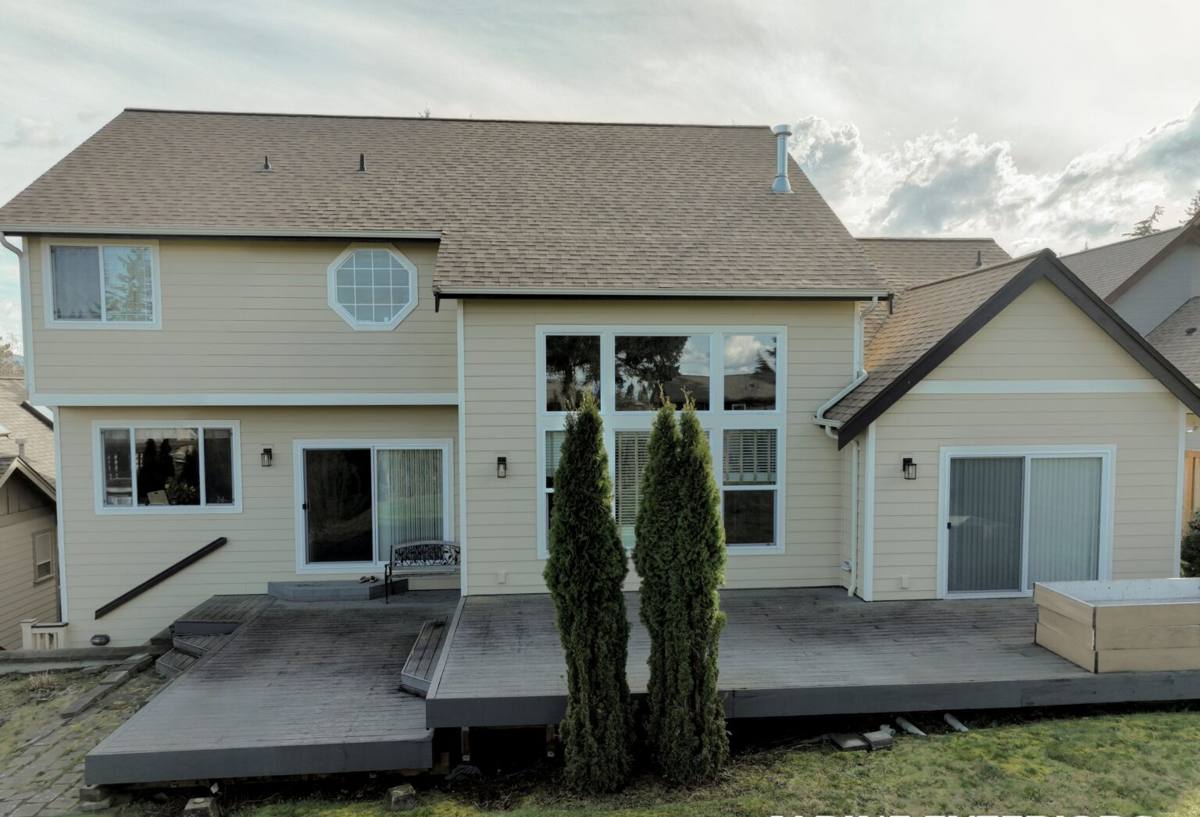
What Blaine's Climate Does to a Deck
Salt Air
Proximity to the water means airborne salt settles on everything outdoors, including fasteners, flashing, and any exposed metal in your deck structure. Over years, salt exposure accelerates corrosion on lower-grade hardware — which is why fastener selection isn't a minor detail on a Blaine deck, it's one of the first things we check on any bid.
Driving Rain
Storms here don't just fall straight down — wind pushes rain sideways into ledger boards, under rail posts, and into any gap where water can find a way behind the decking. A deck that's fine in a dry climate can fail early here if the water management underneath wasn't done right the first time.
Moss and Shade
Long stretches of overcast, damp weather plus tree cover on many Blaine lots means moss and algae growth is a near-constant battle on wood decking, and it can build up on composite boards too if airflow underneath is poor. Board spacing, joist height, and ventilation all affect how much moss pressure a deck sees over its life.
None of this means composite decking is a bad fit for Blaine — quite the opposite. It's one of the better-performing options for this climate when it's installed correctly. But "correctly" is doing a lot of work in that sentence, and it's worth understanding what that actually means before you hire anyone.
Why Composite Makes Sense Here
Composite decking (a blend of wood fiber and recycled plastic, capped with a protective outer shell on most modern boards) resists the specific problems Blaine weather causes for a traditional wood deck: it won't absorb water and swell, it won't splinter or cup the way untreated wood does after repeated wet-dry cycles, and it doesn't need annual staining or sealing to keep moisture out. For a coastal Whatcom County property, that's a real maintenance win.
That said, composite isn't maintenance-free — a claim you'll sometimes hear that we don't make. It still needs periodic cleaning to keep moss and mildew from taking hold in shaded, damp spots, and the framing underneath still needs to be built to shed water, because the substructure is wood or engineered lumber even when the surface boards aren't.
Composite vs. Wood vs. PVC — Honest Trade-Offs for This Climate
| Material | Moisture Behavior in Blaine's Climate | Maintenance | Typical Lifespan Here |
|---|---|---|---|
| Pressure-treated wood | Absorbs water, prone to cupping and splitting with repeated wet-dry cycles | Annual sealing/staining recommended | 10-15 years before major repair or replacement |
| Composite (capped) | Non-absorbent surface; resists swelling and rot; still needs airflow underneath | Periodic washing to prevent moss/mildew buildup | 25-30+ years, backed by manufacturer warranty |
| PVC/vinyl decking | Fully non-absorbent; very stable in wet conditions | Low; occasional cleaning | Long-lasting, but higher upfront cost and a different look/feel than wood-composite |
We install composite for most Blaine homeowners because it strikes the best balance of upfront cost, appearance, and long-term performance against this specific climate. PVC is a reasonable option for a homeowner who wants the lowest possible maintenance and doesn't mind the cost or the more plastic look; we're happy to walk through both.
What a Correct Composite Deck Build Involves
The composite boards themselves get most of the attention, but the parts of the deck you don't see are what determine whether it holds up to Blaine's rain and salt air over the next twenty-plus years.
Framing and Substructure
Joists and beams need to be rated for the load and spaced correctly for the specific composite board being installed — manufacturers publish joist-spacing requirements, and shortcuts here cause boards to flex, bounce, or sag prematurely. We also favor treated or naturally rot-resistant framing lumber, since that structure is doing the real work of holding the deck up long after the surface boards are installed.
Ledger Attachment and Flashing
Where the deck attaches to the house is the single most common source of water damage on any deck, wood or composite. Proper flashing — installed so water is directed away from the ledger board and the home's exterior wall — is not optional in a climate that gets driving rain. This is also where we most often find problems on older Blaine decks we're asked to inspect or replace.
Fasteners and Hardware
Given the salt-air exposure this close to the water, we use fasteners and structural hardware rated for coastal or high-corrosion environments, not standard-grade hardware that's fine inland but starts rusting and staining within a few seasons here.
Ventilation and Drainage
Composite boards need airflow underneath to dry out properly and resist moss and mildew buildup, especially on shaded lots. Deck height off grade, joist spacing, and any skirting design all factor into how well a deck breathes.
Board Spacing and Fastening
Composite boards expand and contract with temperature more than most homeowners expect. Gapping and fastening according to the manufacturer's specifications keeps the deck surface flat and prevents buckling — another detail that separates a deck built right from one that develops problems within a few years.
Signs Your Current Deck Needs Attention
- Soft, spongy spots in the decking surface or noticeable flex when walked on
- Water staining or discoloration on the siding directly above or behind the deck ledger
- Persistent moss or algae film that returns quickly after cleaning
- Rusted, corroded, or loose fasteners and railing hardware
- Visible gaps or separation where the deck meets the house
- Boards that have cupped, split, or noticeably faded unevenly
- Railing posts that wobble or feel less solid than they used to
Any one of these on its own might be minor. Several together, especially near the ledger, usually point to a water intrusion problem worth having looked at before it spreads into the framing or the house structure itself.
Our Process for Blaine Homeowners
- On-site assessment. We look at the existing deck or build site, check drainage and sun/shade exposure, and talk through how you actually use the space.
- Material and layout discussion. We go over composite board options, color and finish choices, and any structural changes (stairs, rail style, multi-level layout) you're considering.
- Written estimate. A clear scope of work and price before anything is scheduled — no surprise line items added mid-project.
- Demo and framing (if replacing an existing deck). Old decking and any compromised framing is removed and inspected; we flag anything we find, like ledger rot or undersized framing, before covering it back up.
- Installation. Framing, flashing, and fastening done to manufacturer spec and built for this climate specifically, not a generic install.
- Final walkthrough. We check the finished deck with you and cover basic care so it stays looking right through Blaine's wet seasons.
Why a Local Crew Matters for This Job
A deck built for a dry inland climate and a deck built for a property exposed to Semiahmoo Bay conditions aren't the same job, even if the materials look identical on a spec sheet. A crew that regularly works Blaine and the surrounding Whatcom County coastline already knows which fastener grades hold up here, how much airflow a shaded lot needs to keep moss from taking over, and where driving rain typically finds its way into a poorly flashed ledger. That's knowledge built from doing the work in this specific environment, not from a general contractor's checklist.
It also means someone local is available if a warranty question or minor issue comes up down the road, rather than trying to track down a crew that installed your deck once and moved on to the next region.
Cost Factors to Expect
Composite decking costs more upfront than pressure-treated wood, and pricing varies based on square footage, board tier, structural complexity (stairs, multiple levels, built-in seating or rail systems), and site access. Rather than quote a number that won't reflect your actual property, we walk the site and give a written estimate based on what your deck actually needs — including any framing or flashing repair the existing structure may require.
If your Blaine deck is showing wear, or you're planning a new build and want it done right for this climate the first time, we're glad to take a look and put together a straightforward, no-pressure estimate using the form below.